
TURNER TERRACES
2022
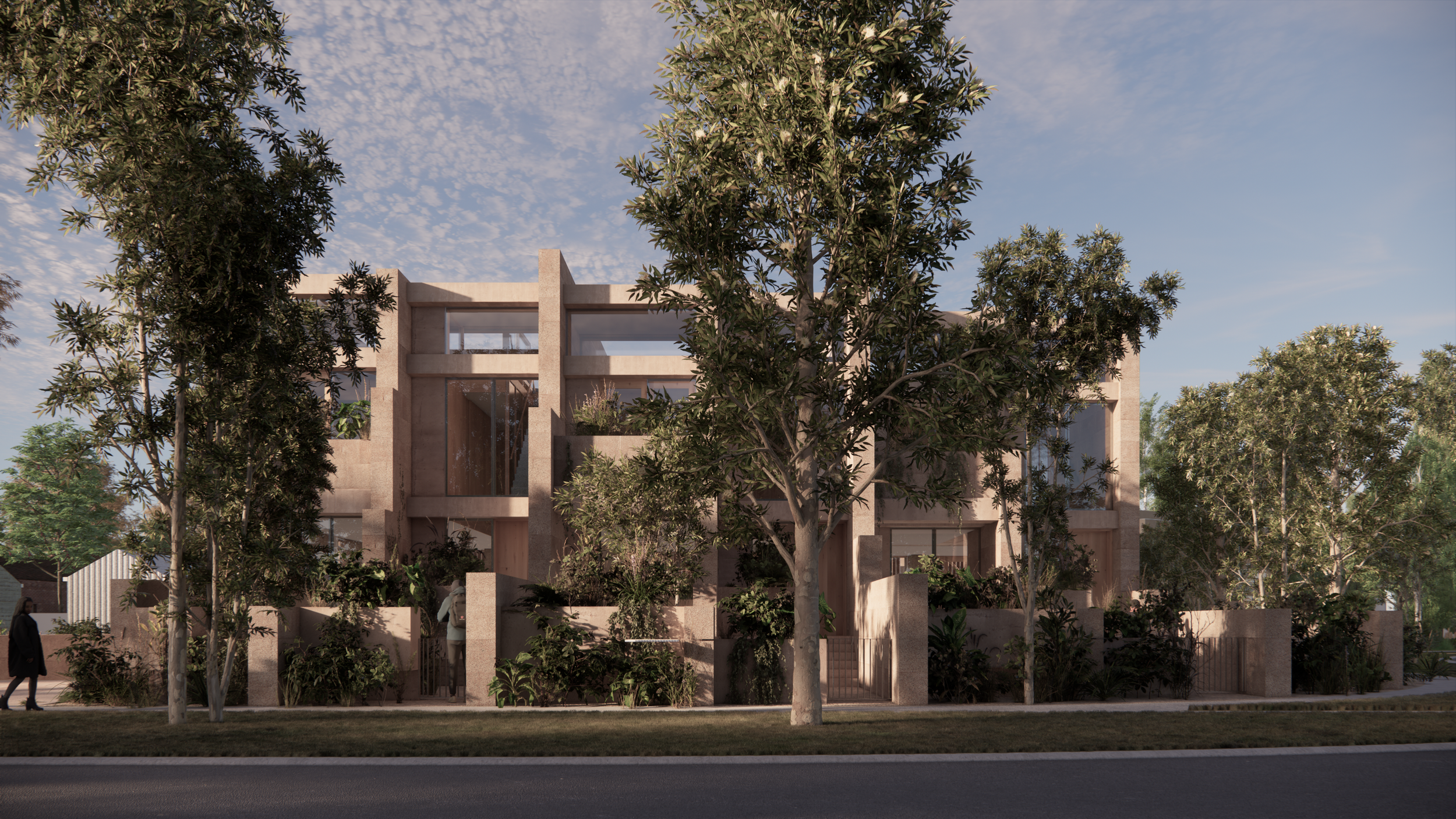
From the Australian War Memorial Annexe to the Campbell Park Offices, Canberra has a rich history of brutalist concrete architecture. The design of Turner Terraces seeks to draw upon and extend this lineage, reinterpreting it for a residential context.
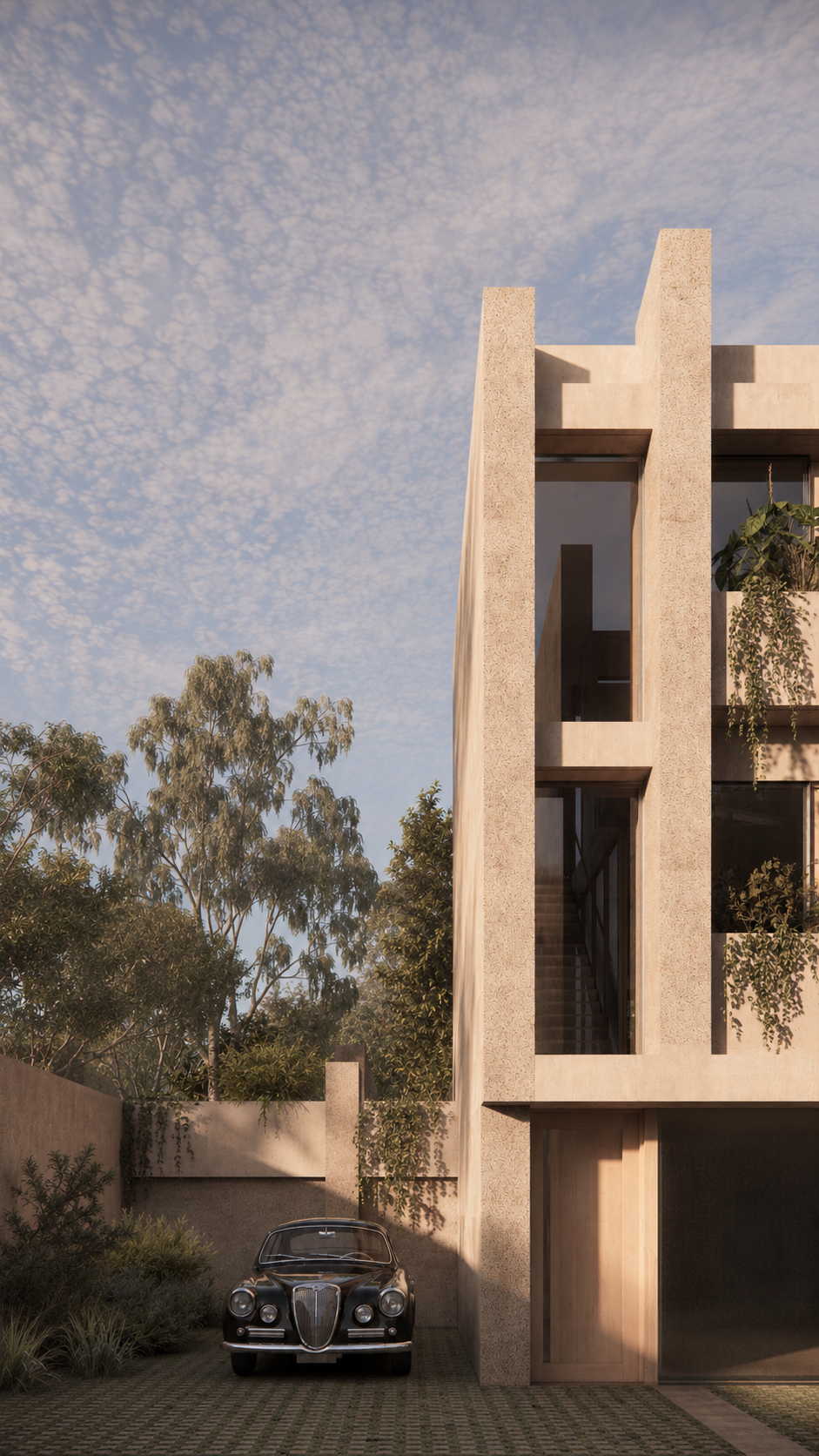
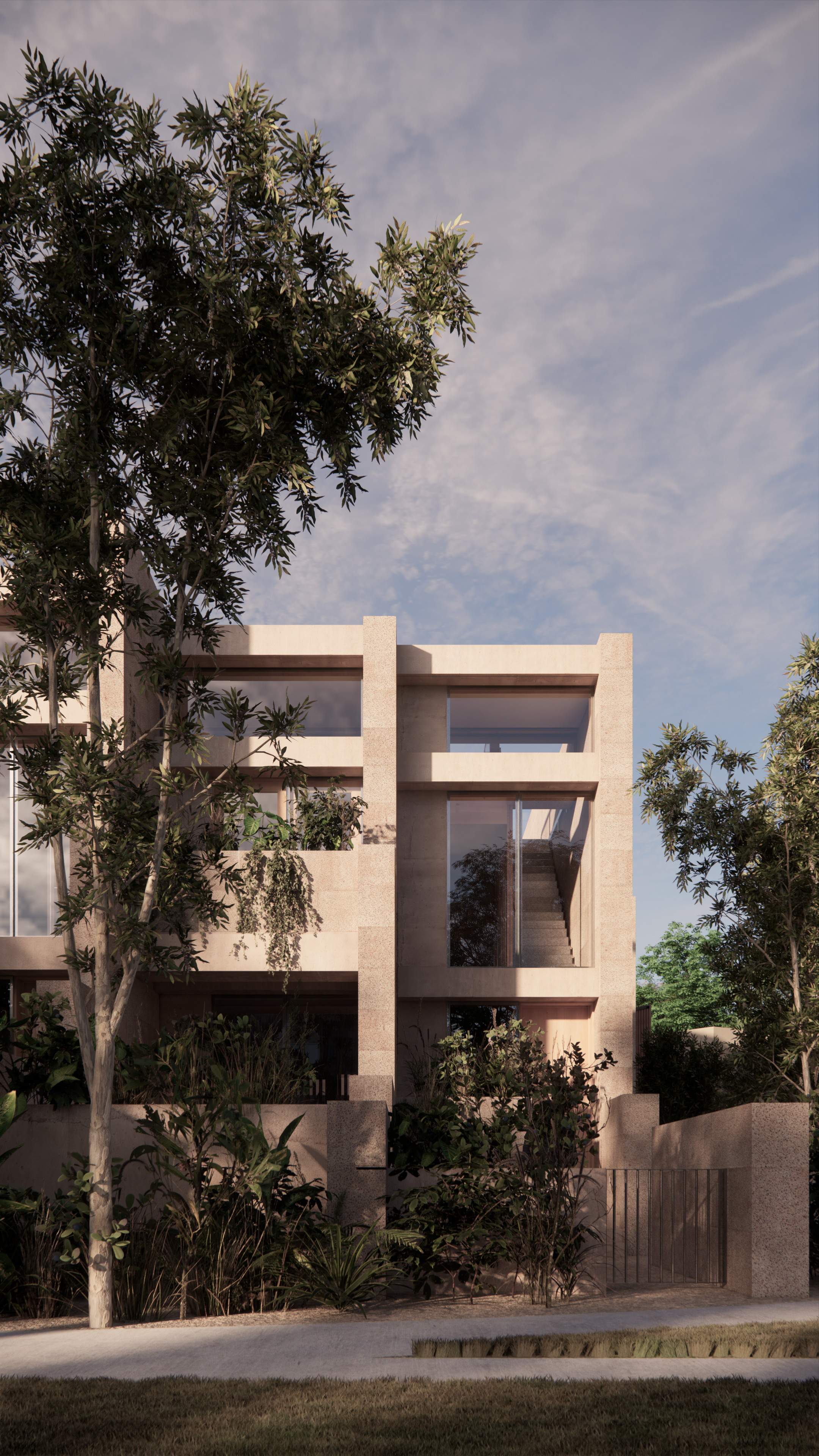
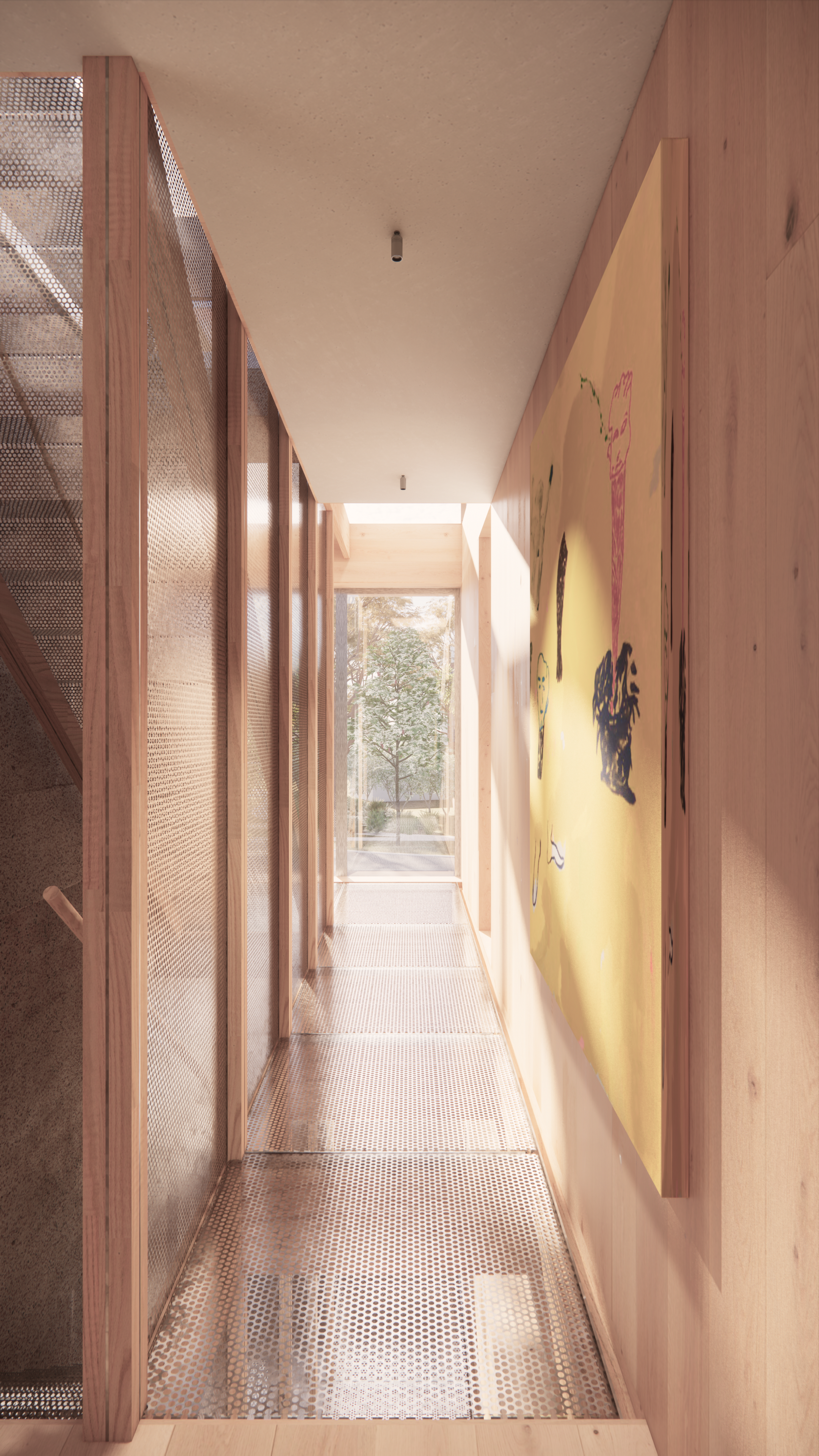
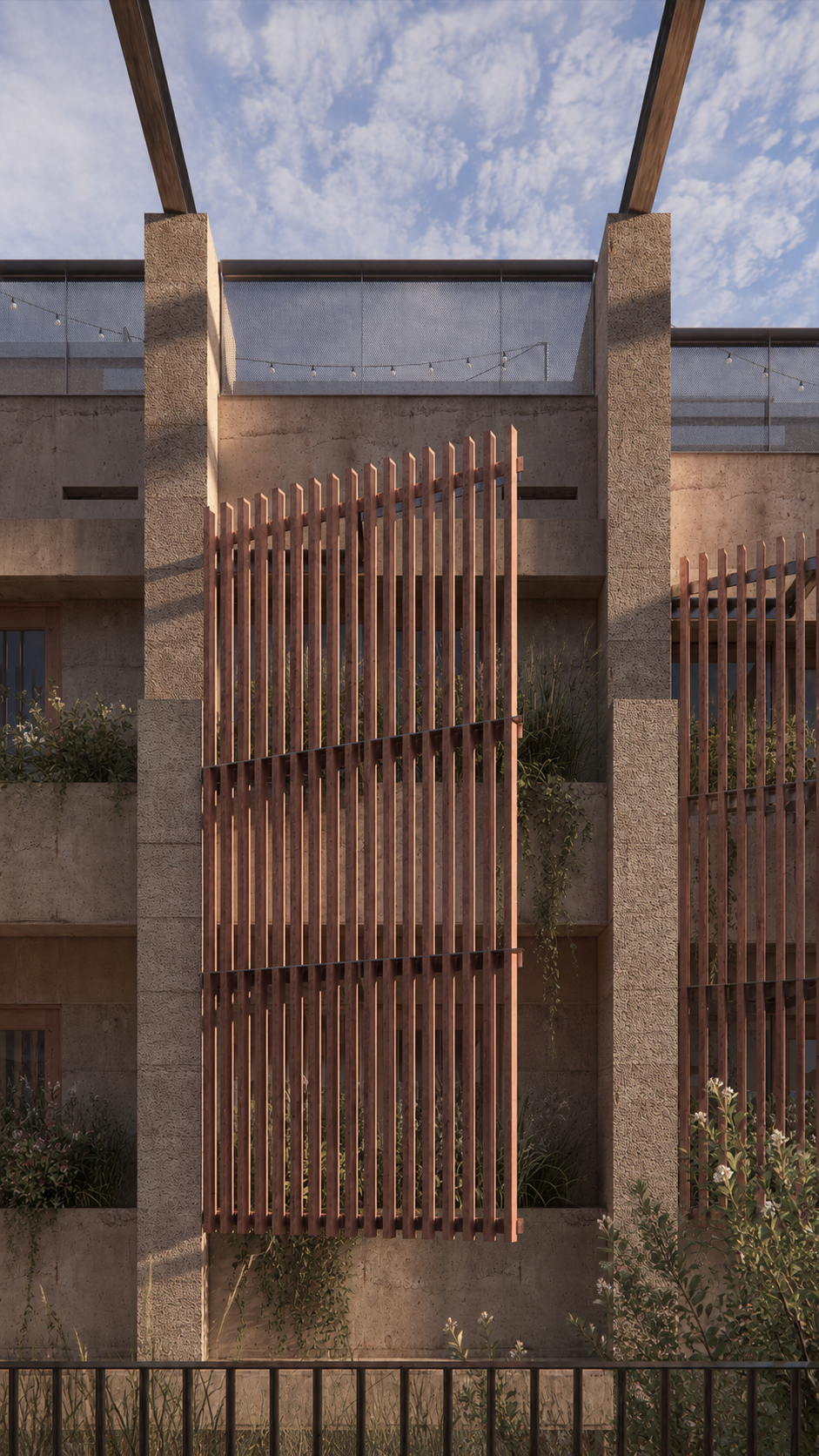
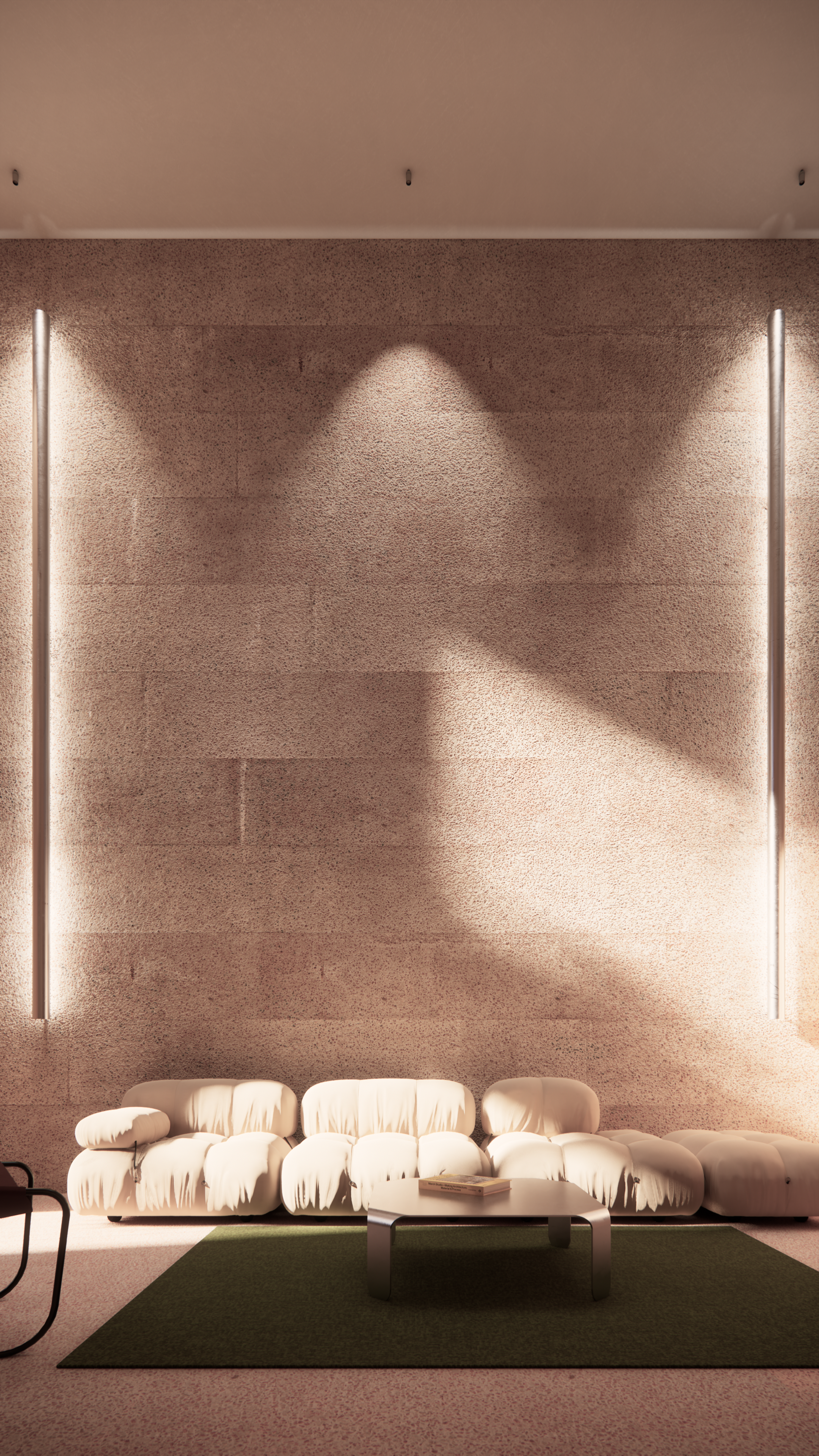
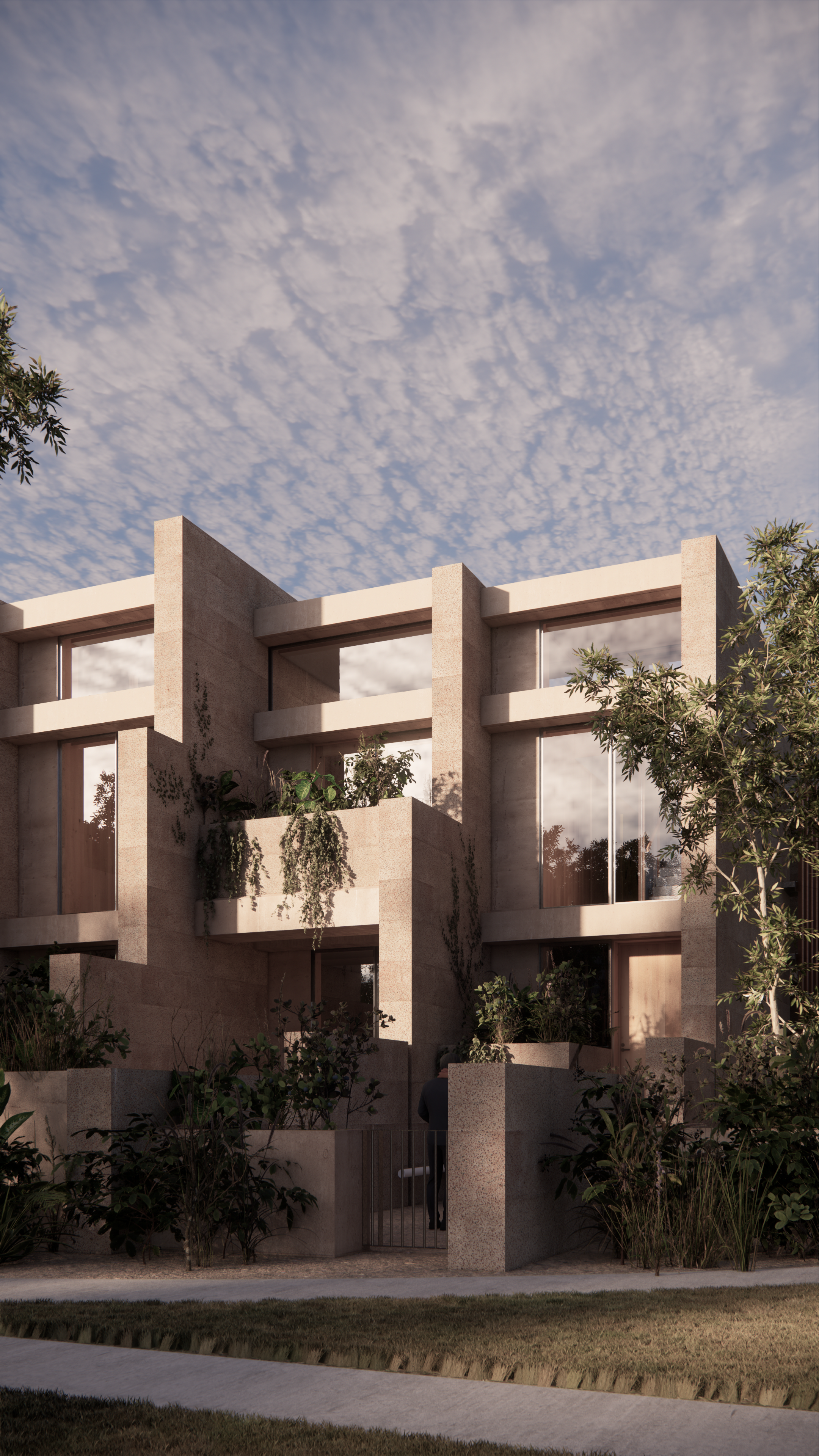
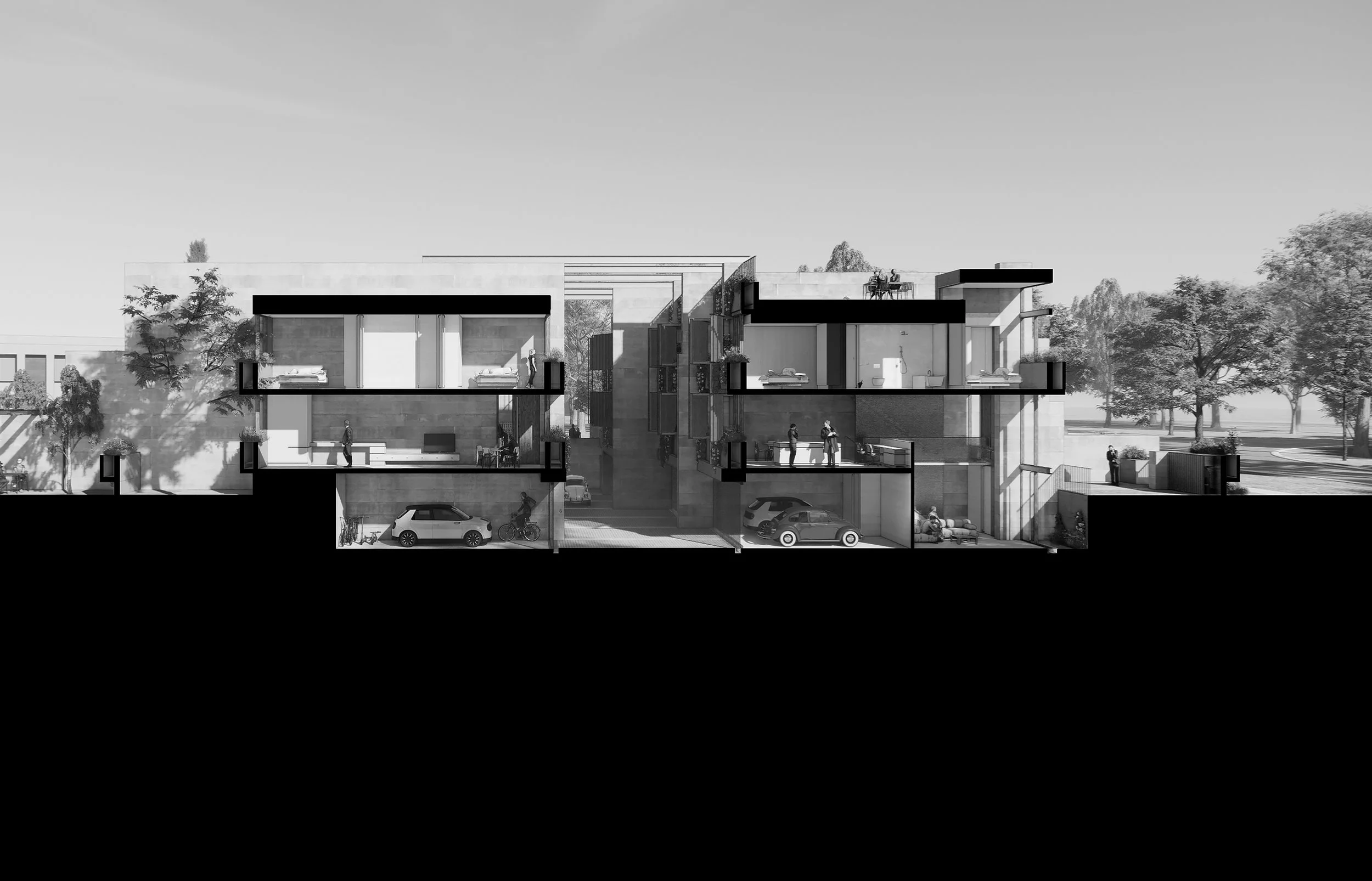
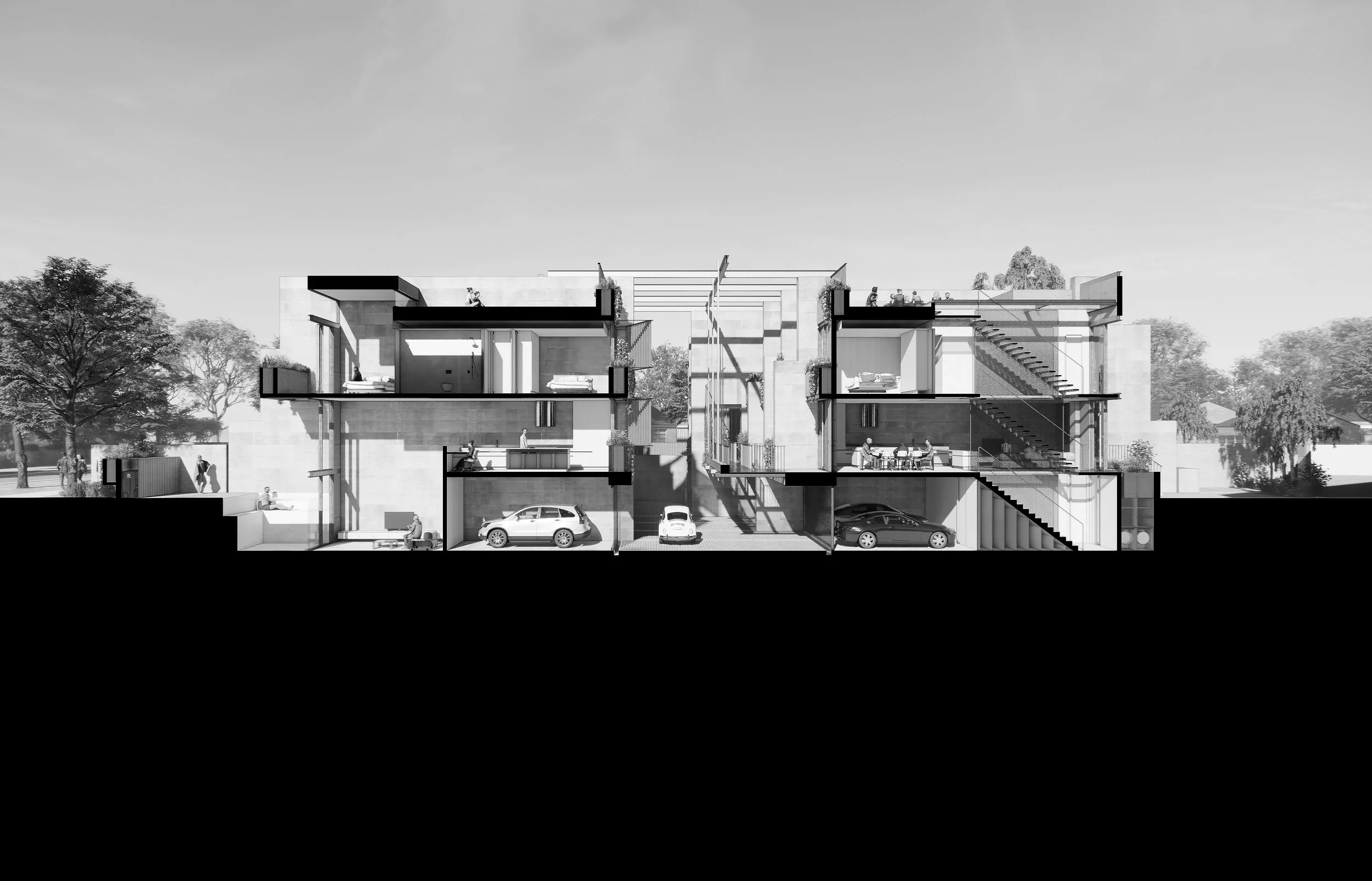
At an early stage of planning, the project set out to challenge the conventional suburban response typical of the area while maximising the developable footprint. Stringent planning controls — including deep planting zones, setbacks and height limits — meant that a traditional approach would have been to follow the curve of the cul-de-sac, wrapping the dwellings around its geometry. While legible from the street, this strategy would have significantly compromised amenity, relegating rear terraces to shaded, residual spaces overshadowed by the fronting dwellings.
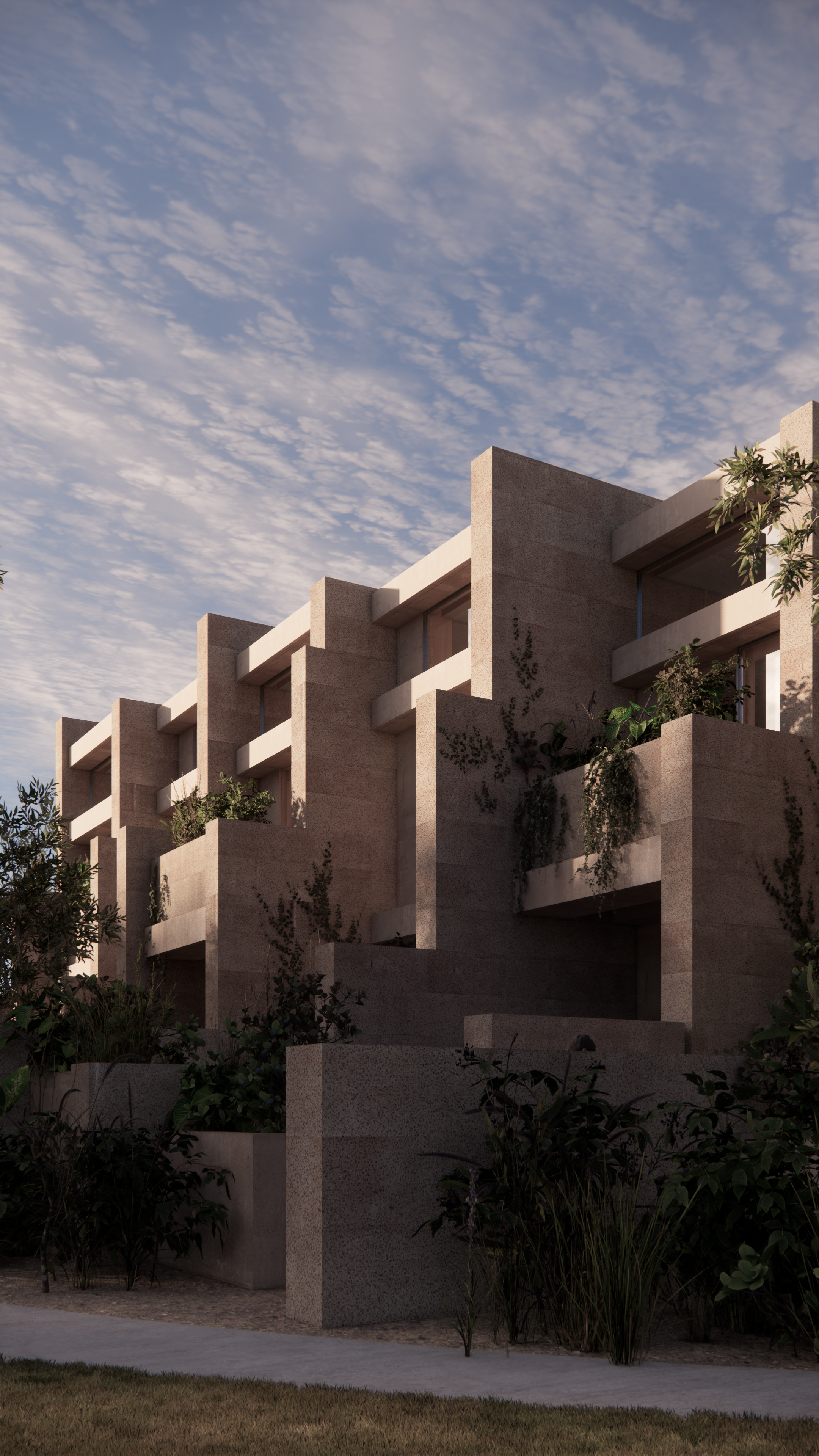
Instead, the project adopts a deliberate reorientation of the terraces toward the northern light. By prioritising solar access over a predictable planning outcome, the dwellings are aligned to maximise daylight penetration, passive heating and long-term comfort. This shift in planning logic generates a varied sequence of homes, each responding subtly to light, outlook and landscape. As a result, no two terraces are the same, with diversity emerging not as a stylistic gesture but as a direct consequence of environmental performance and site-specific planning.
This planning strategy is reinforced through a series of rammed concrete blade walls that cut the site into ribbons, establishing a fine-grain rhythm to the street edge — a key town planning requirement — while clearly defining each dwelling. Traditionally, this fine grain is articulated in the area through the use of multiple materials. Here, the fine grain is instead achieved through a single, unified material language.
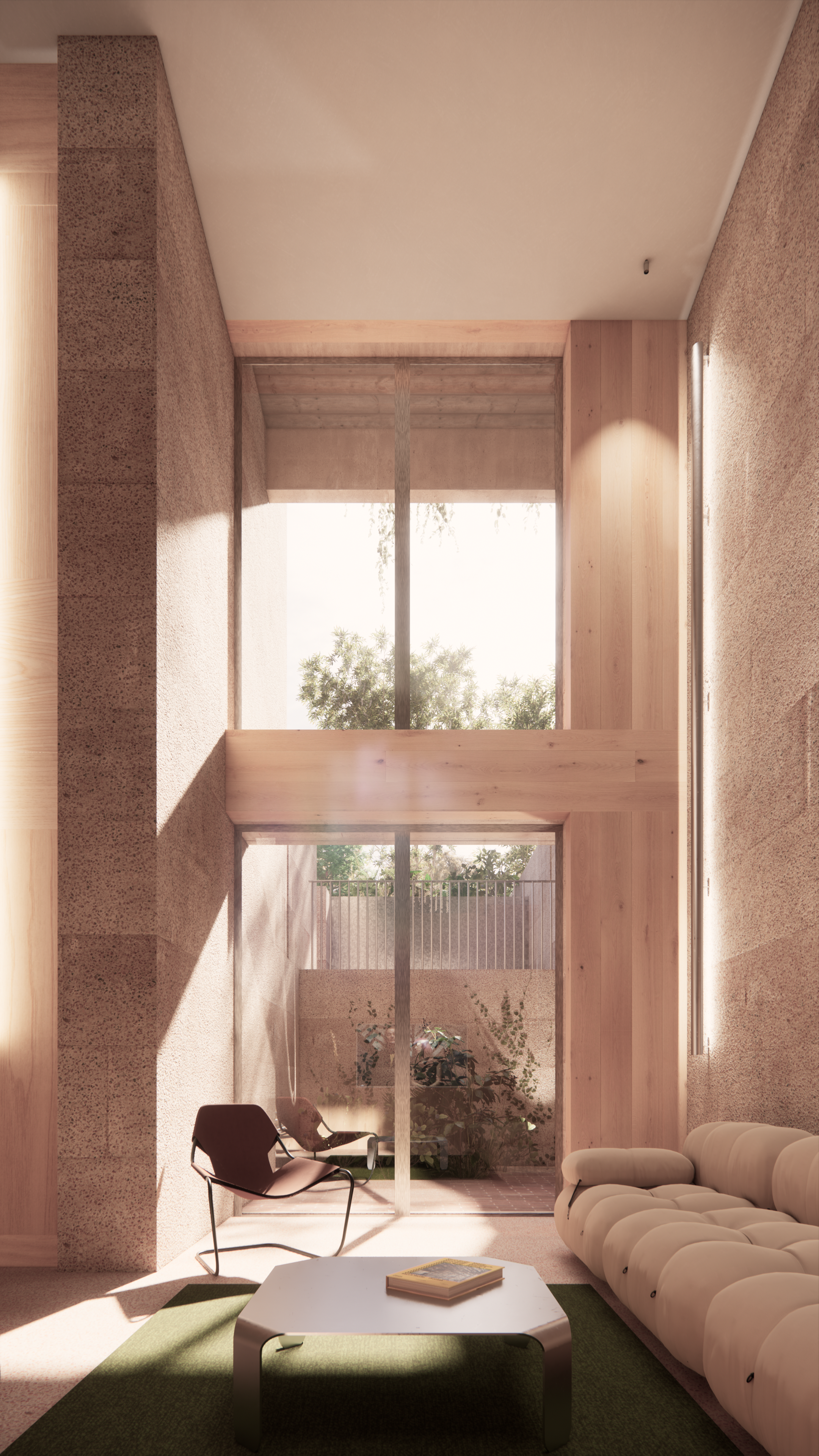
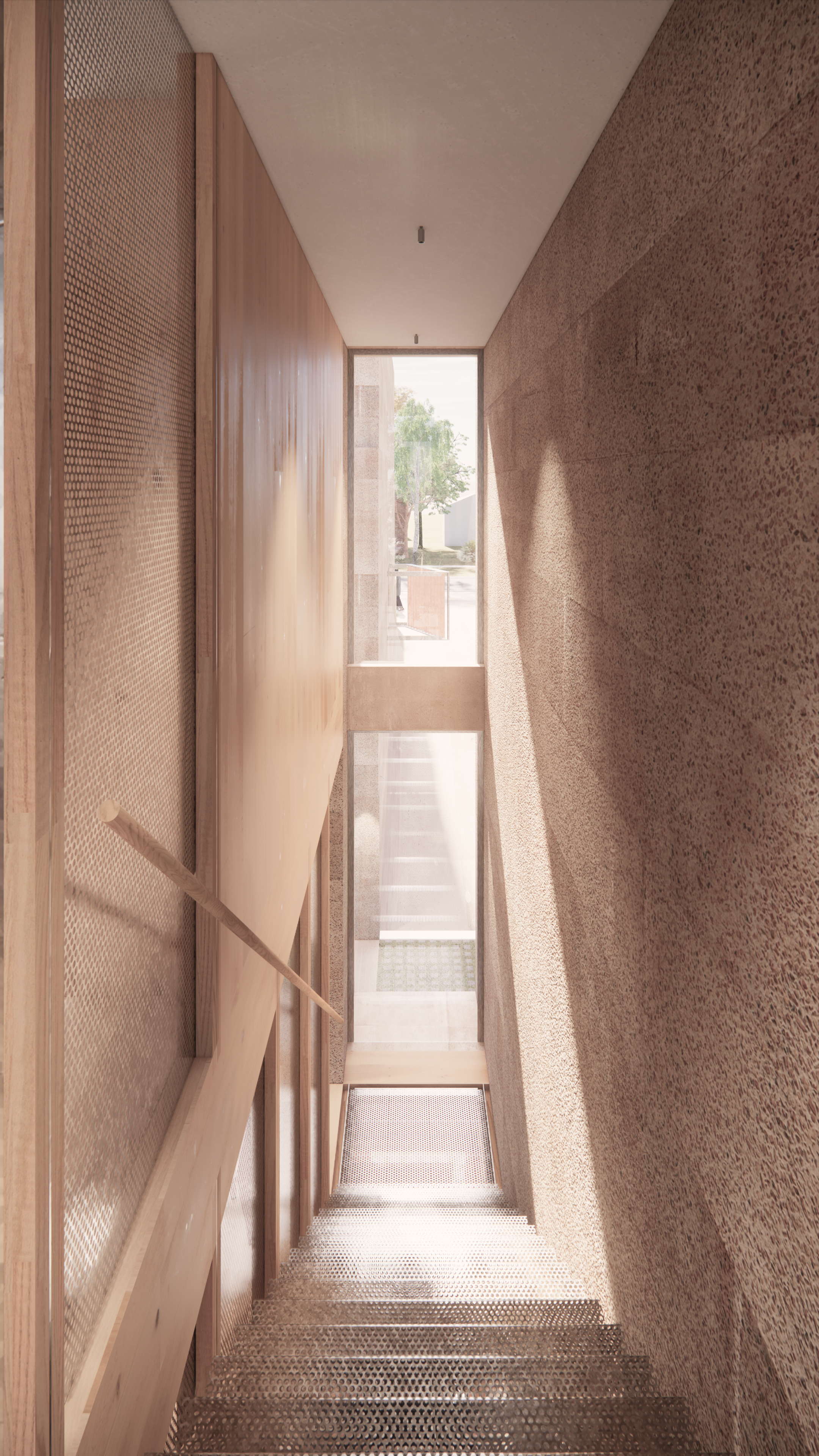
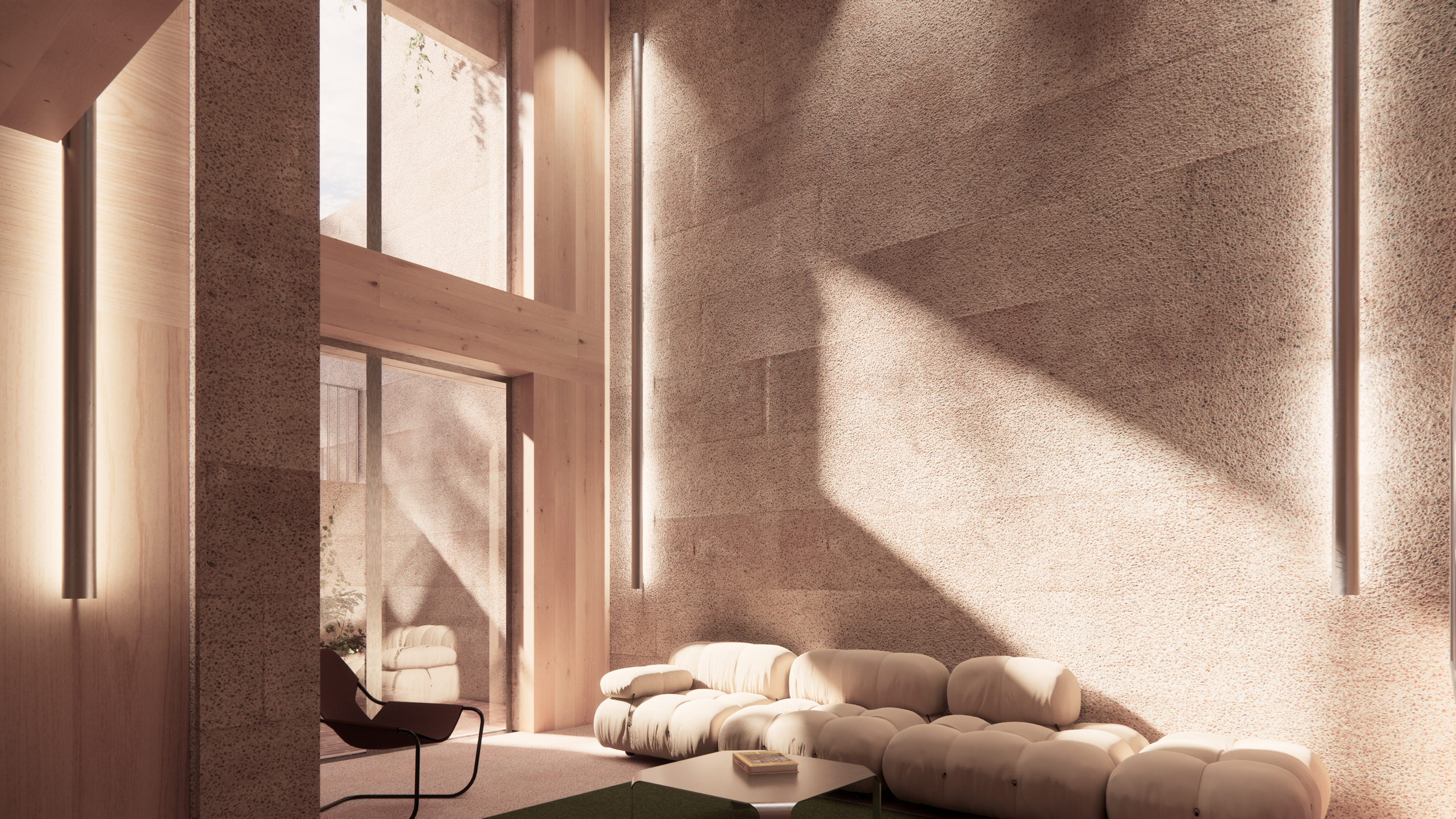
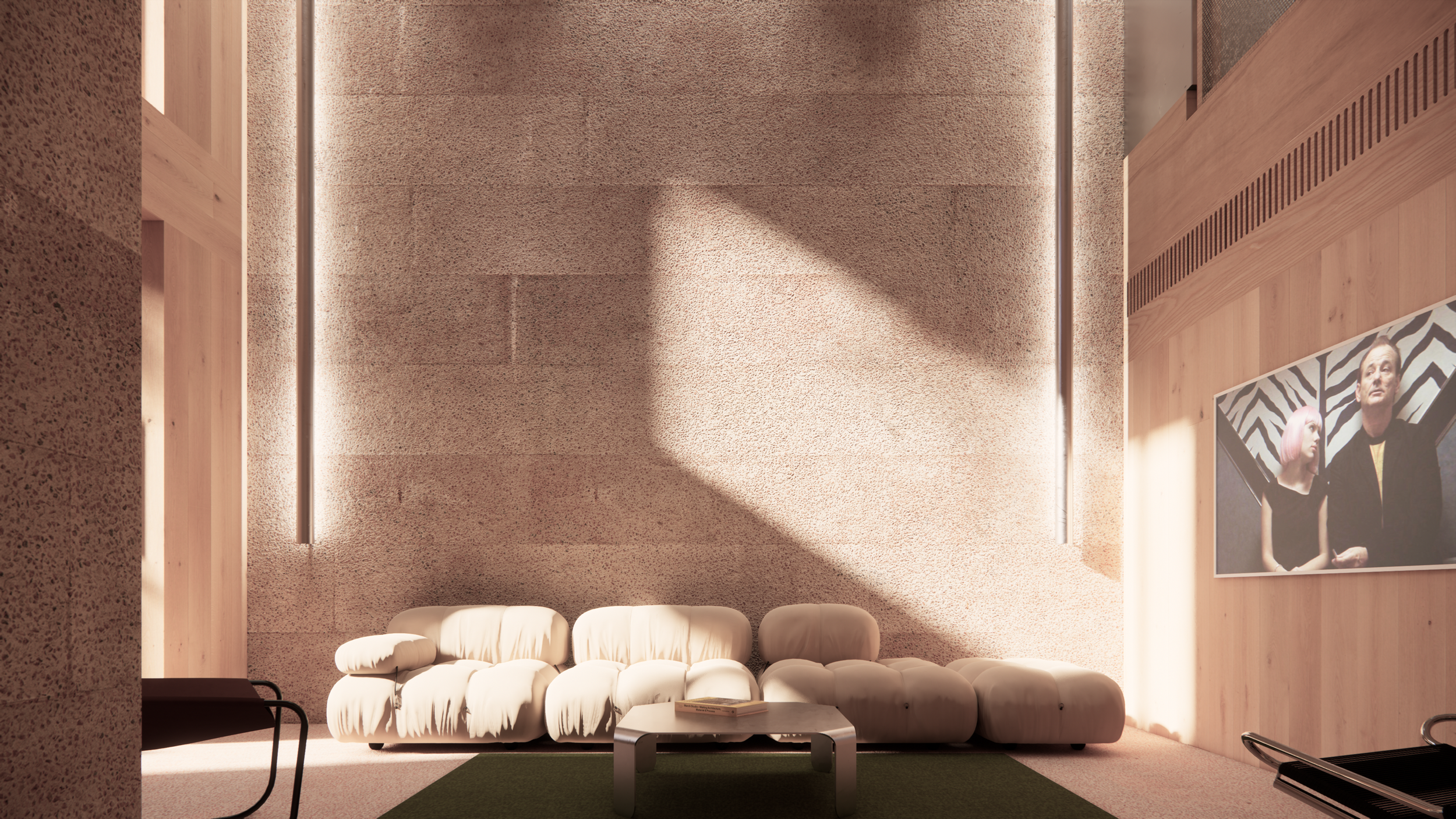
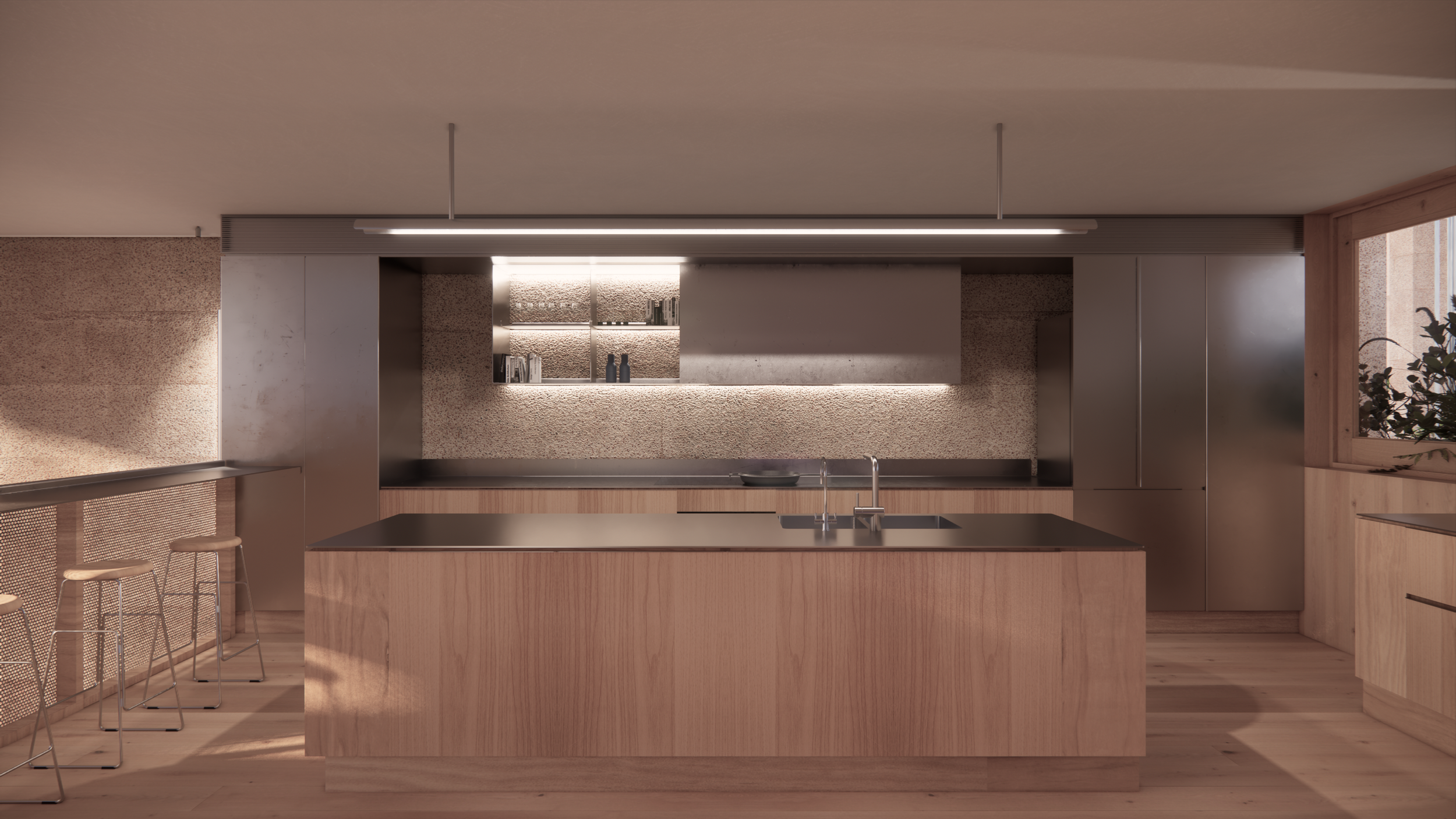
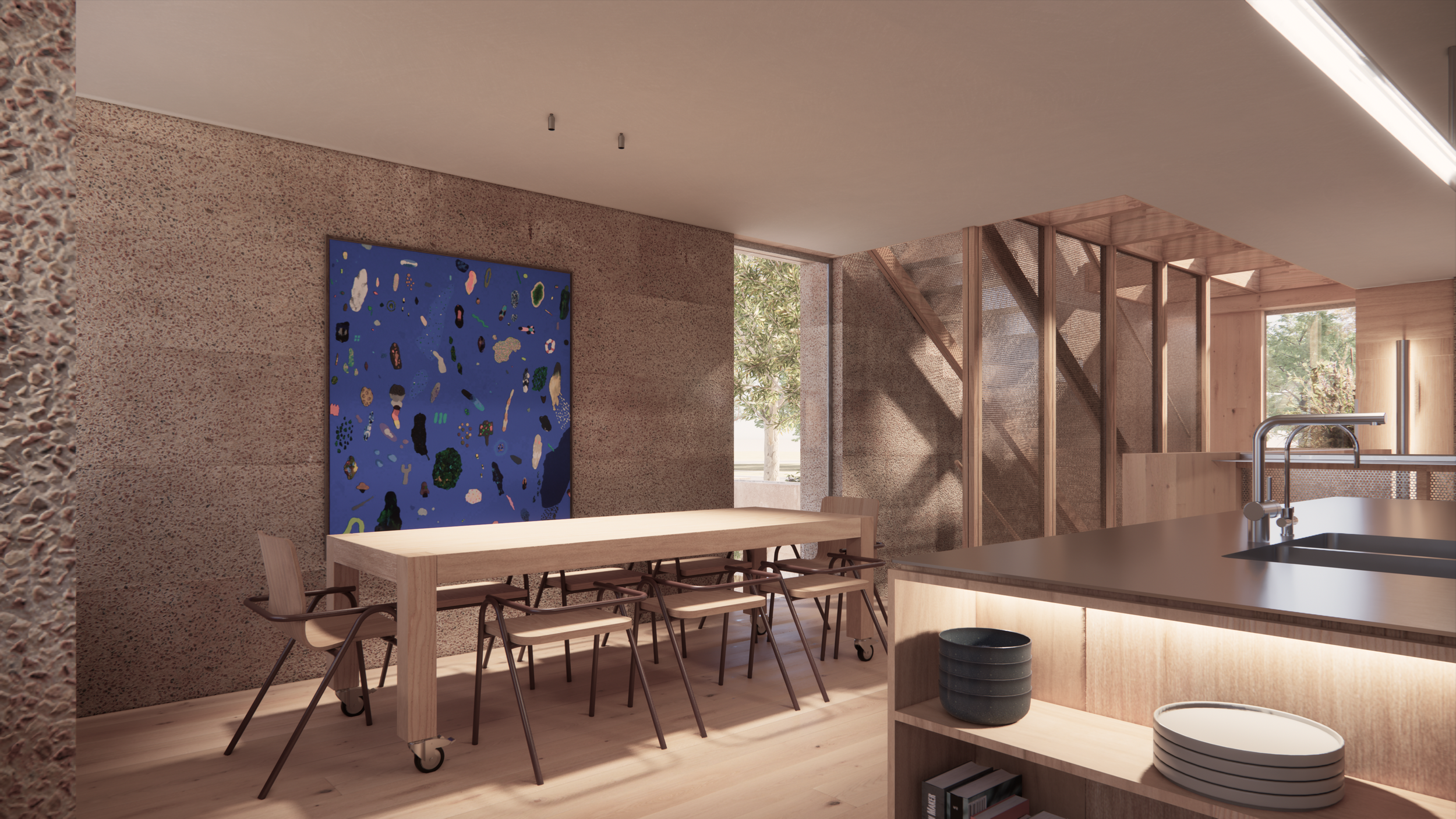
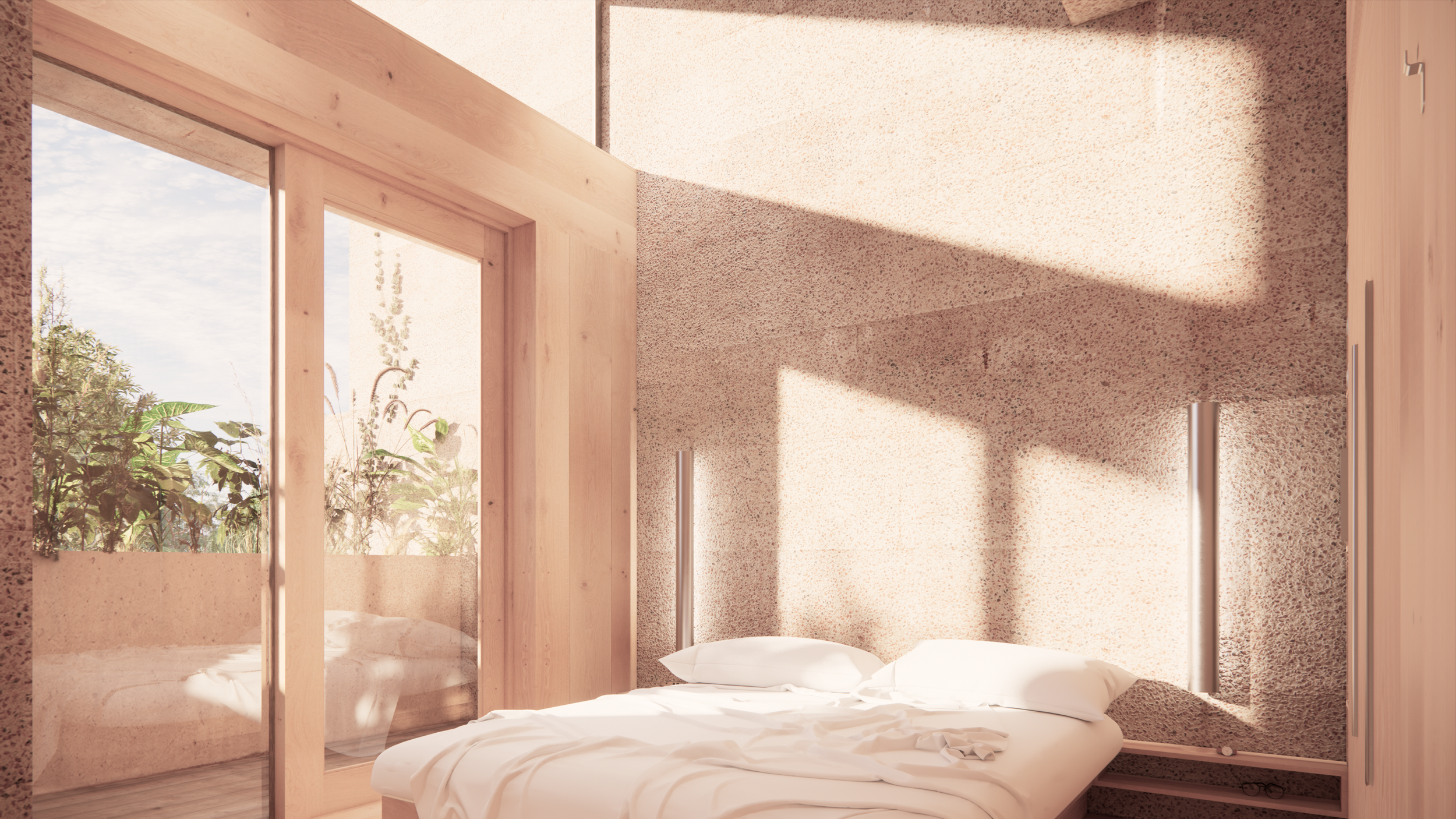
Embedded within the blade walls is crushed recycled brick sourced from the site’s existing single-storey red brick dwelling. Locally sourced Ginninderra Red Granite is introduced into the mix, adding warmth and texture to both the interiors and exteriors. Together, these materials provide structure and substantial thermal mass, contributing to a stable and comfortable internal climate.
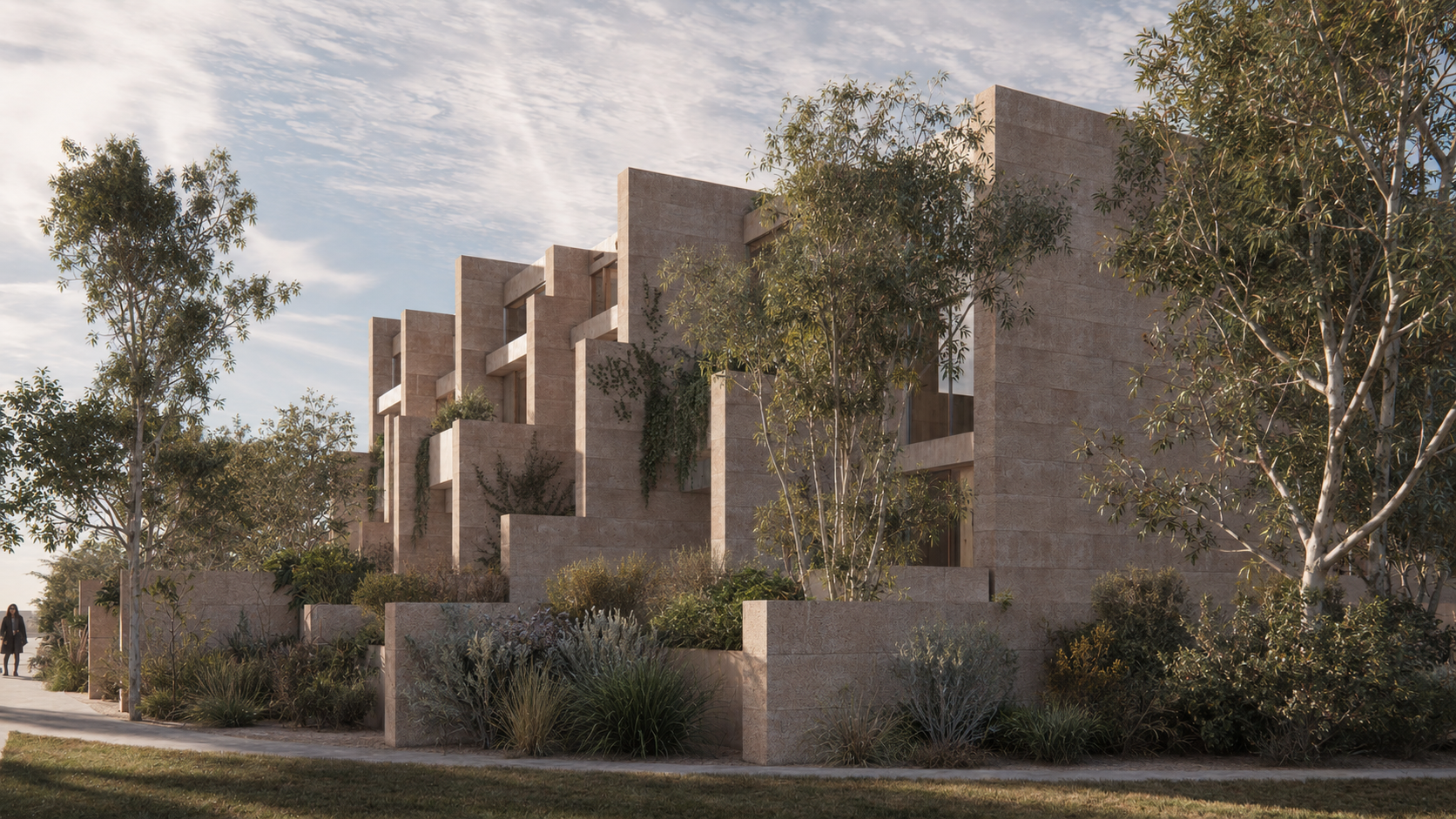
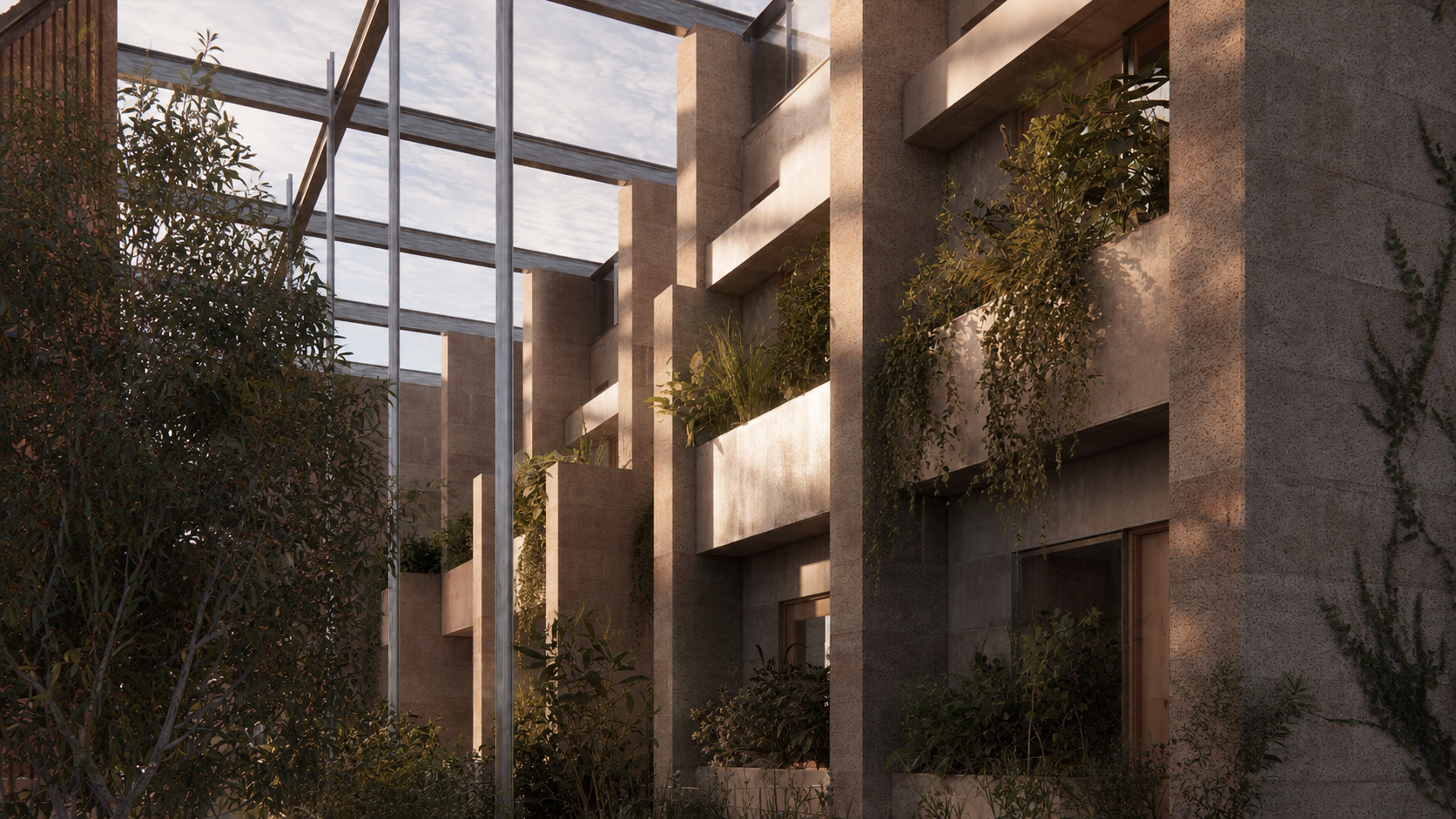
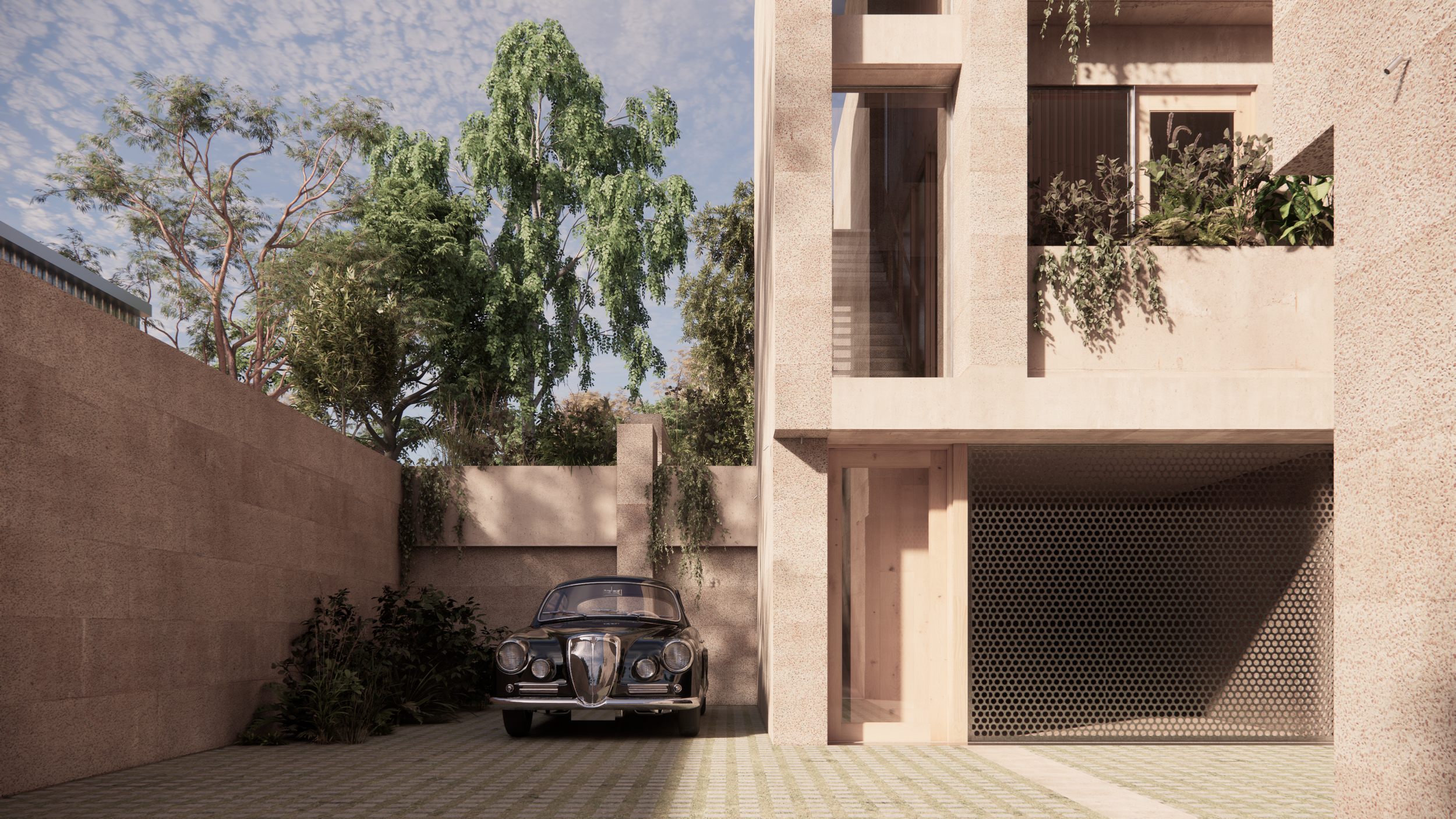
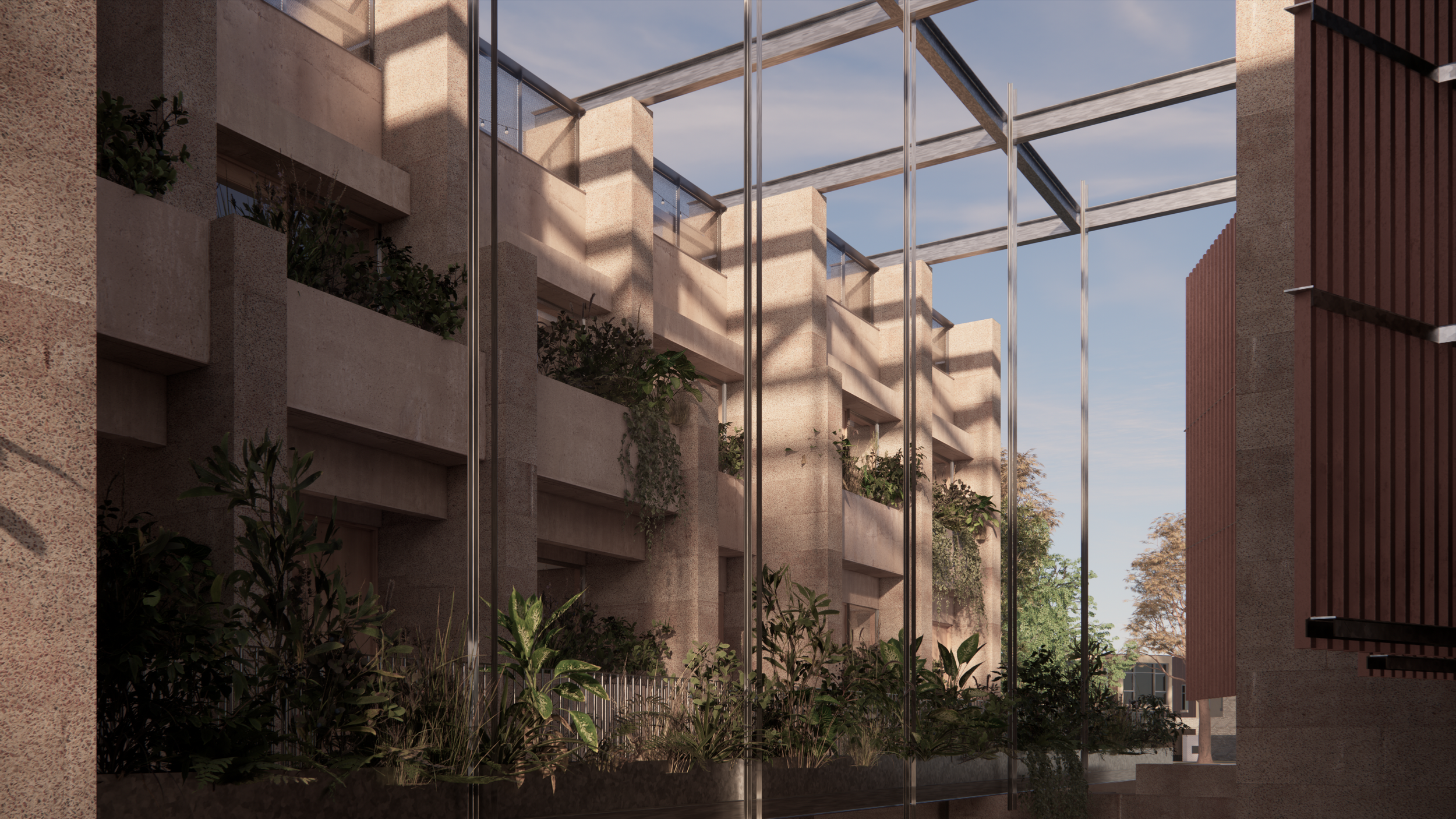
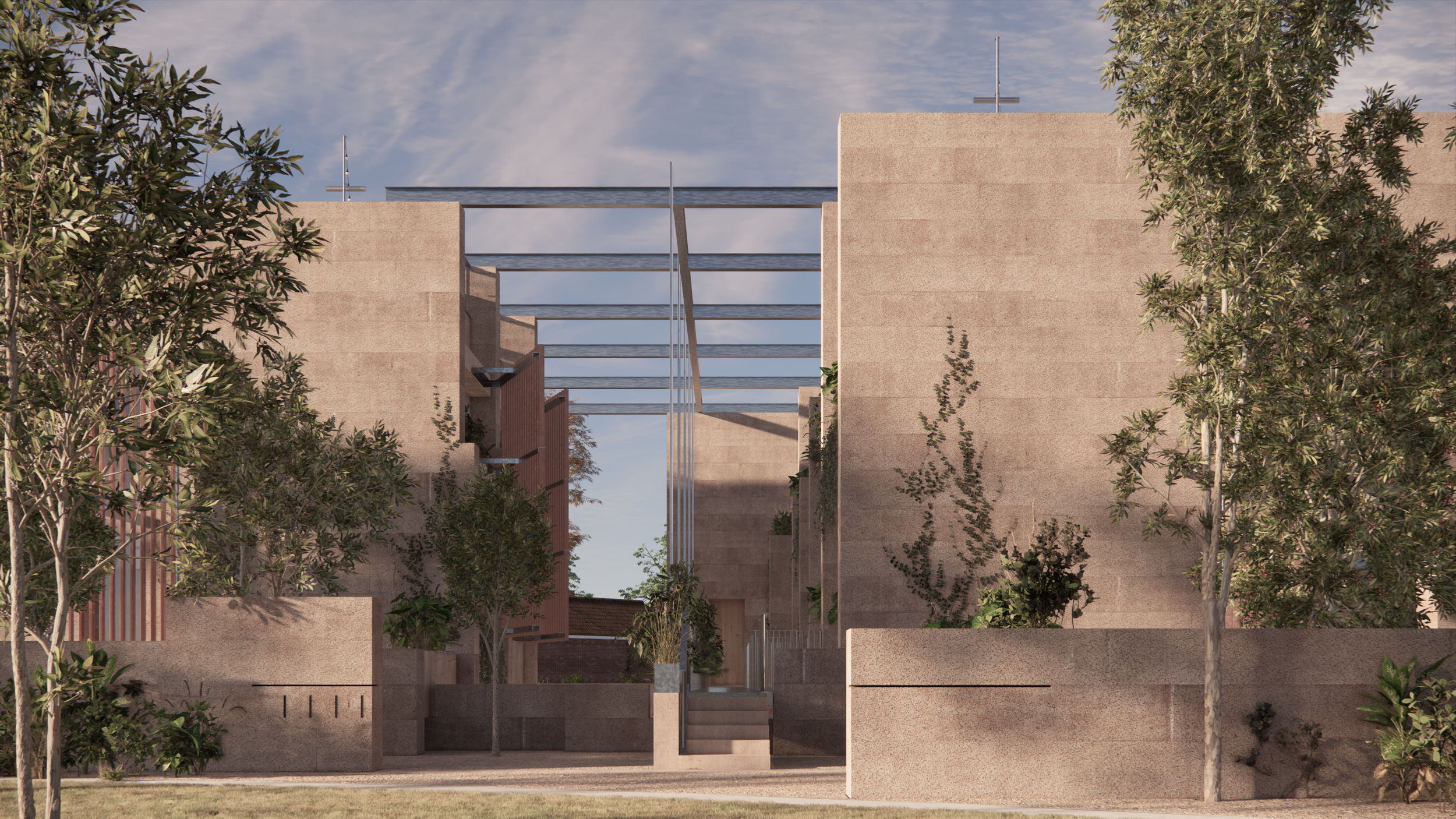
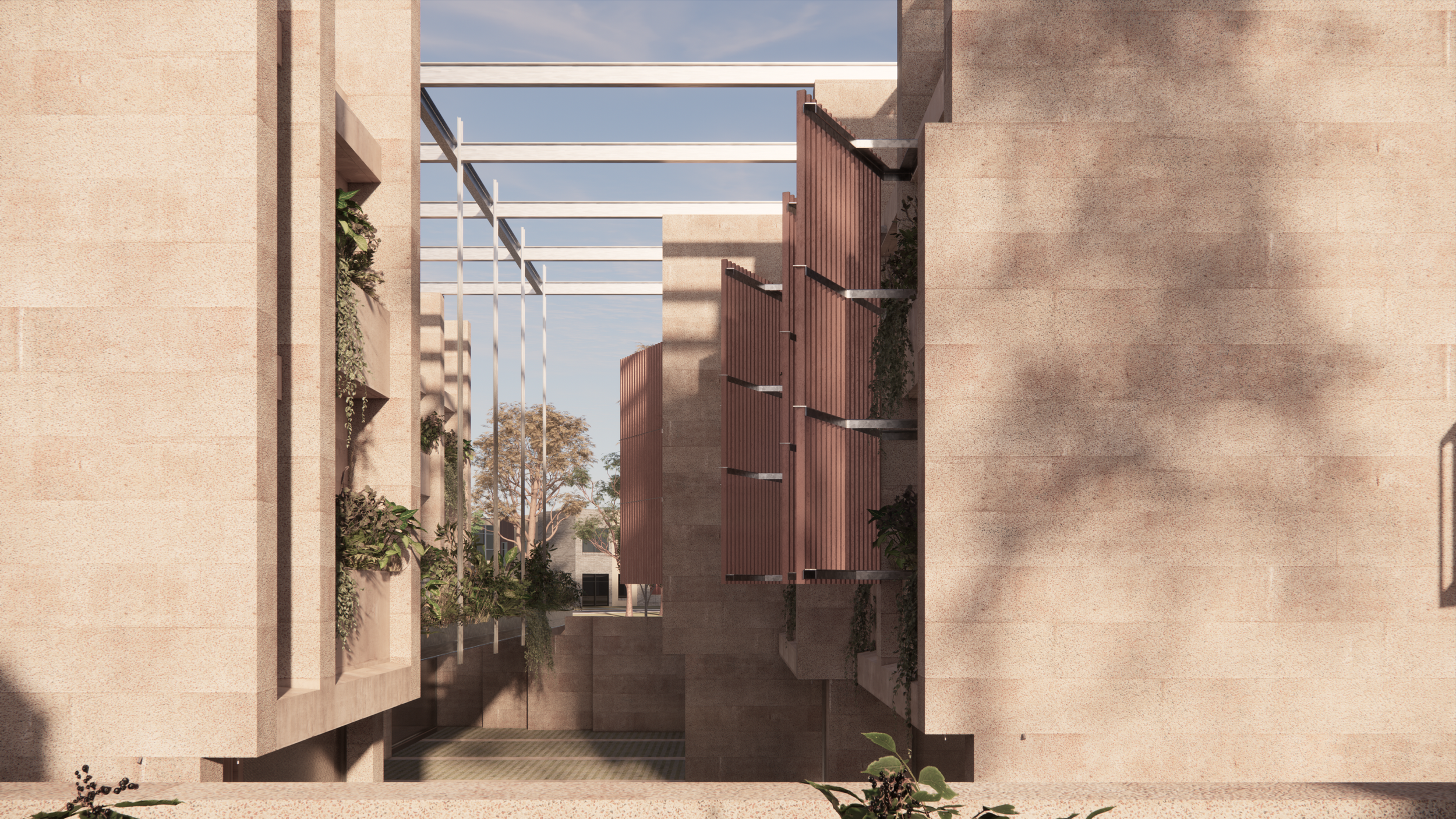
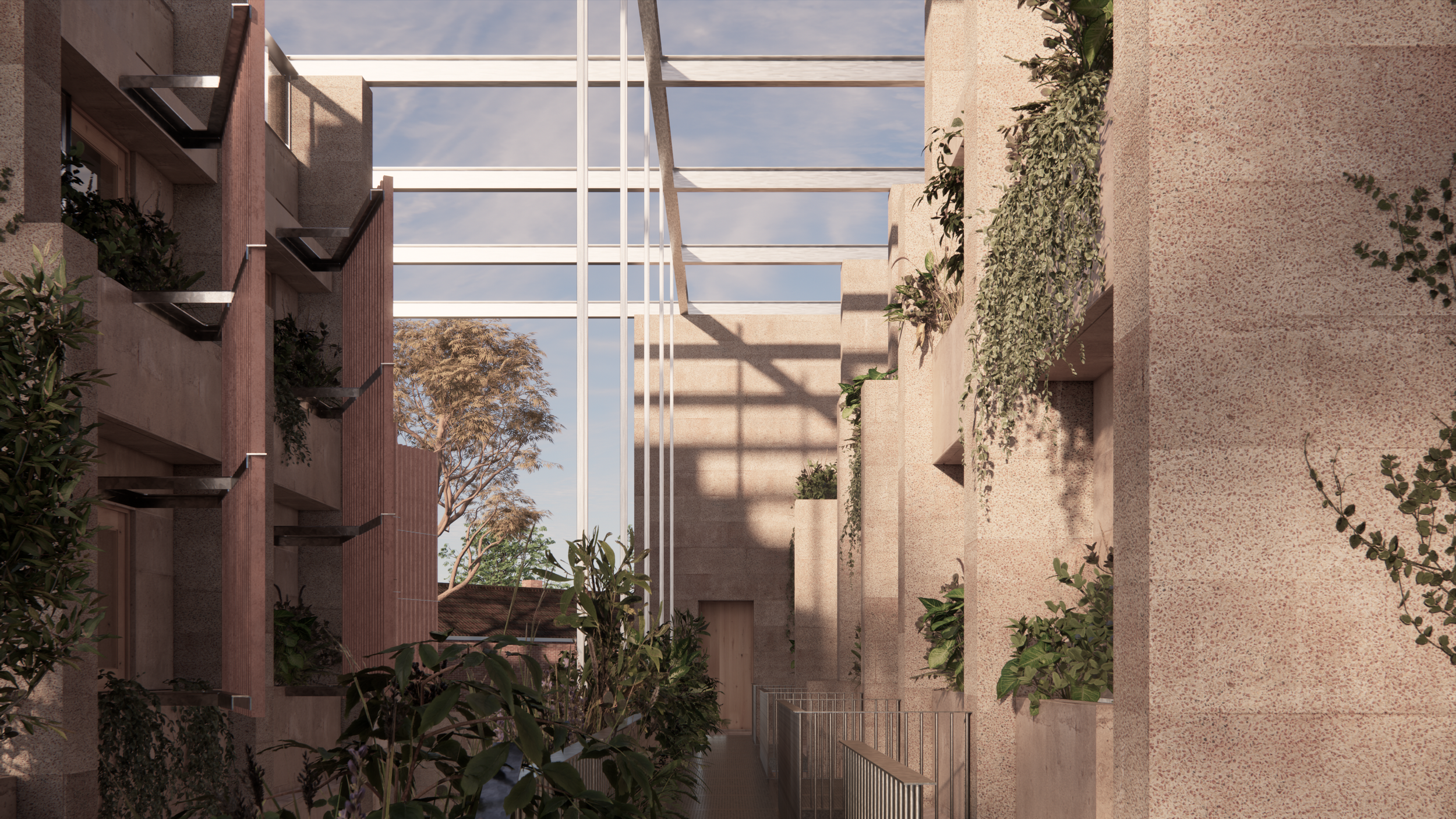
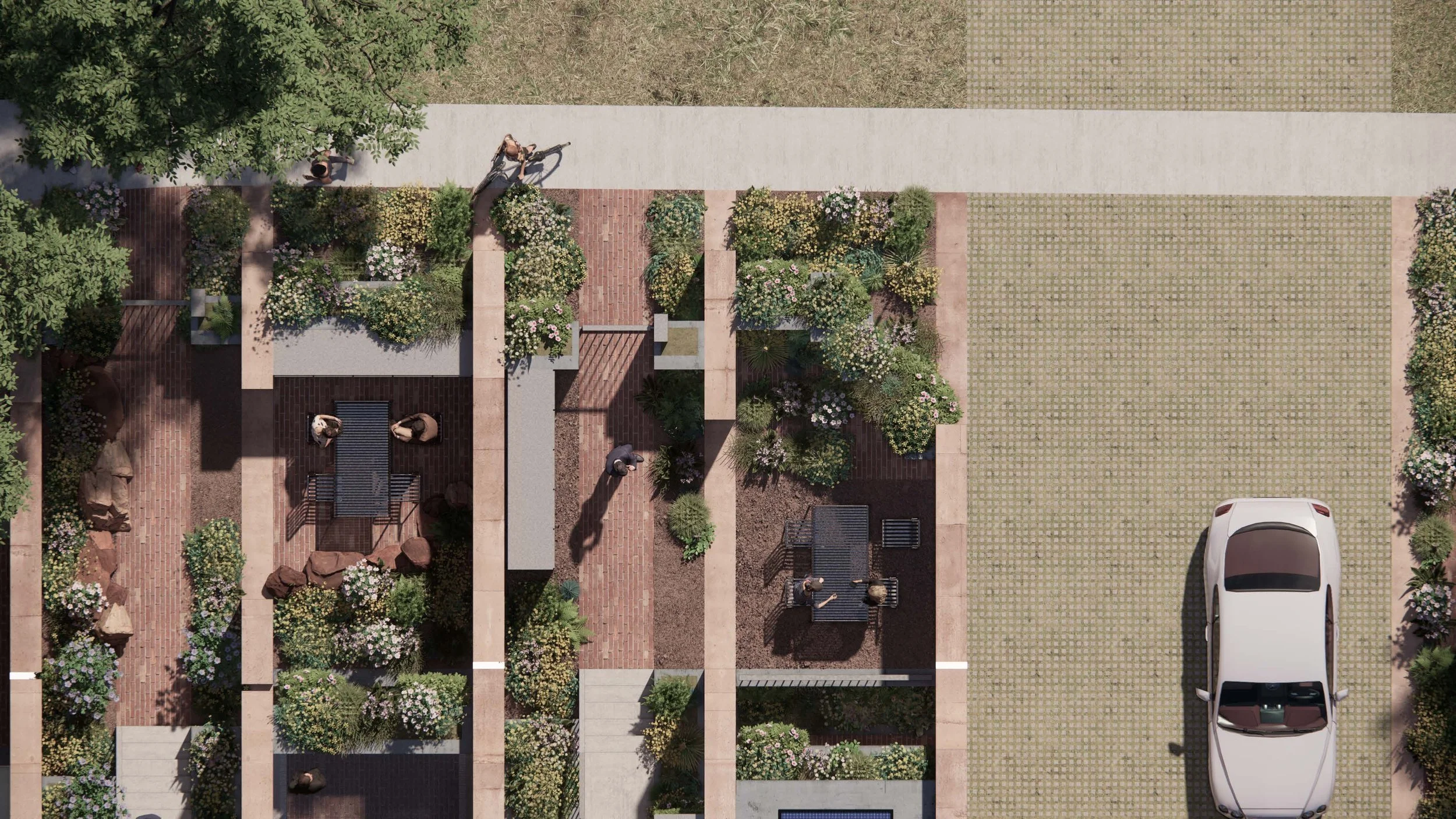
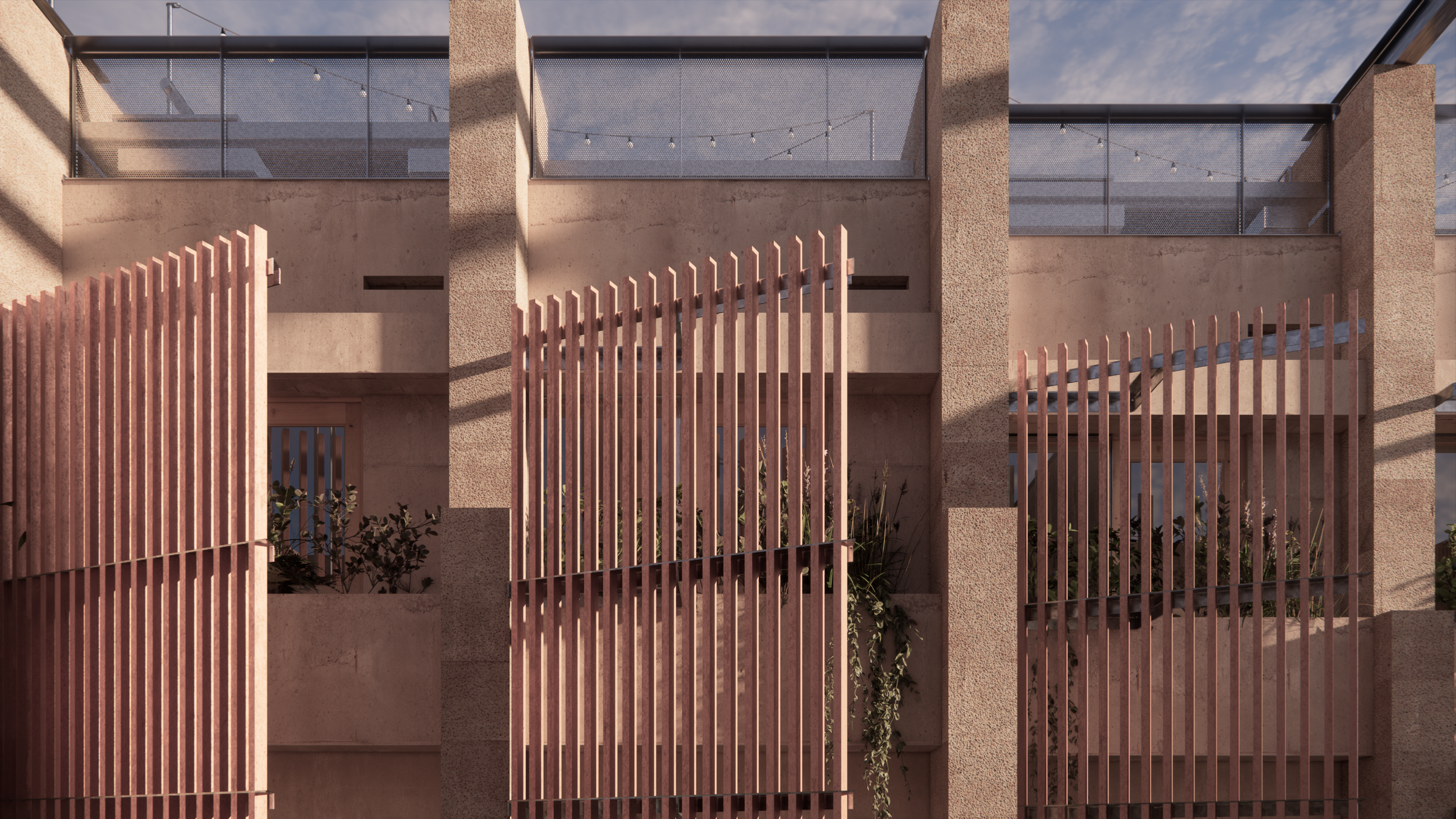
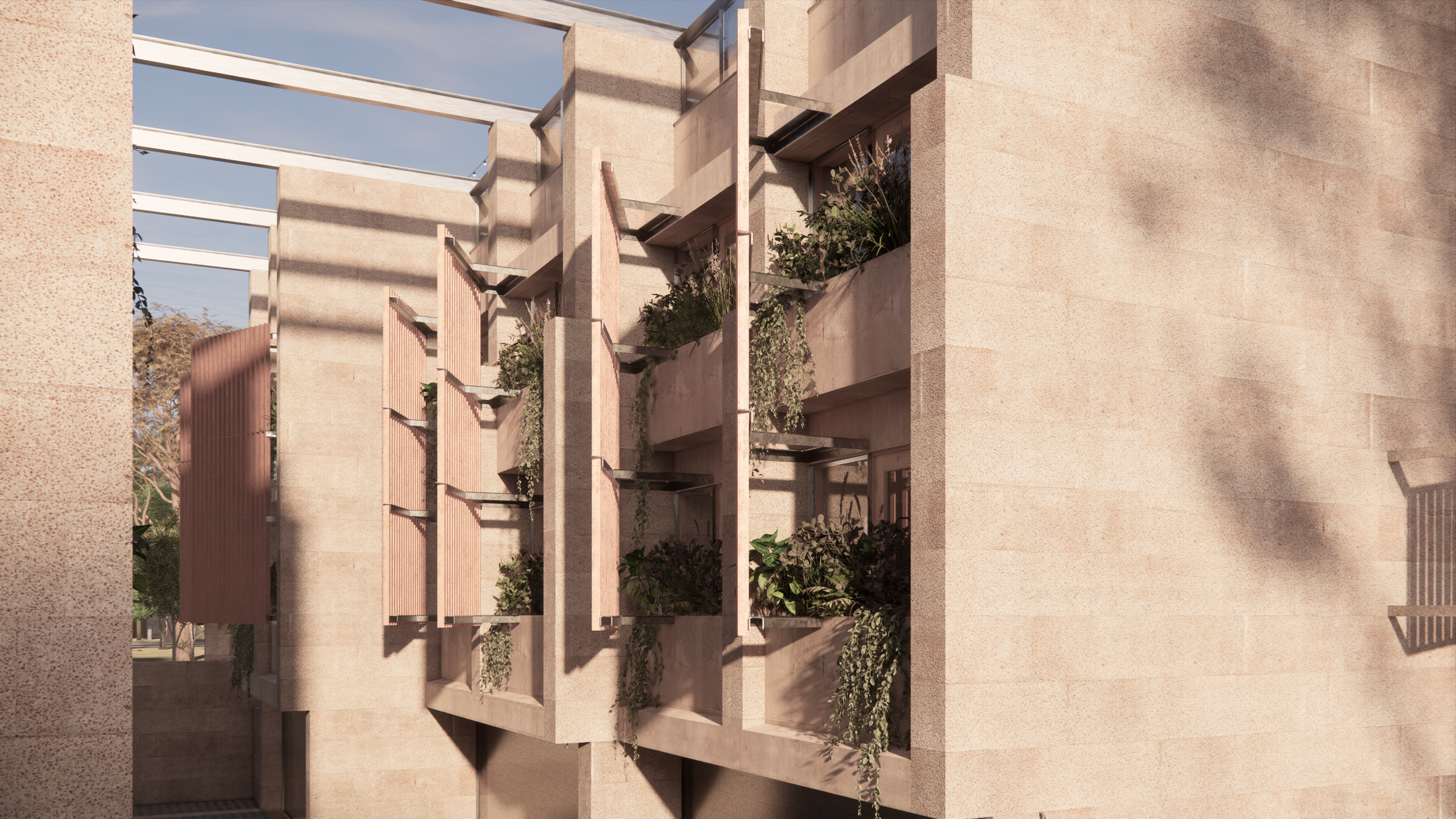
A central, carved access void provides all seven dwellings with direct access to northern light. Privacy is mediated through deciduous vines and extruded terracotta screens, carefully balancing separation and shared space.
Nesting between the blade walls, endemic plants and trees populate the façade edges and groundscape, strategically placed and carefully selected by Oculus to thrive in the local climate. Deciduous trees and vines line the northern edges of the townhouses, offering summer shade while allowing winter solar access.
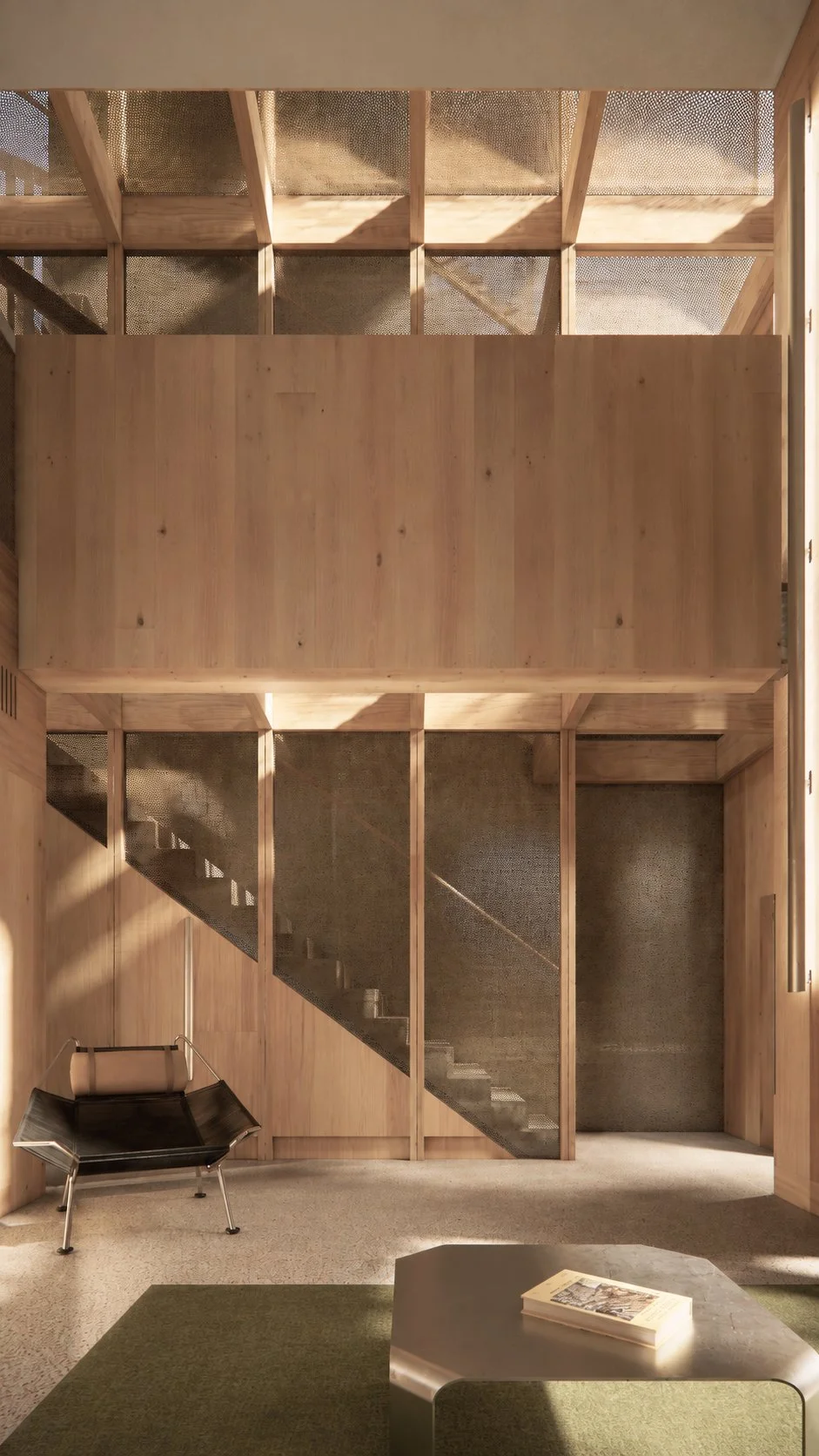
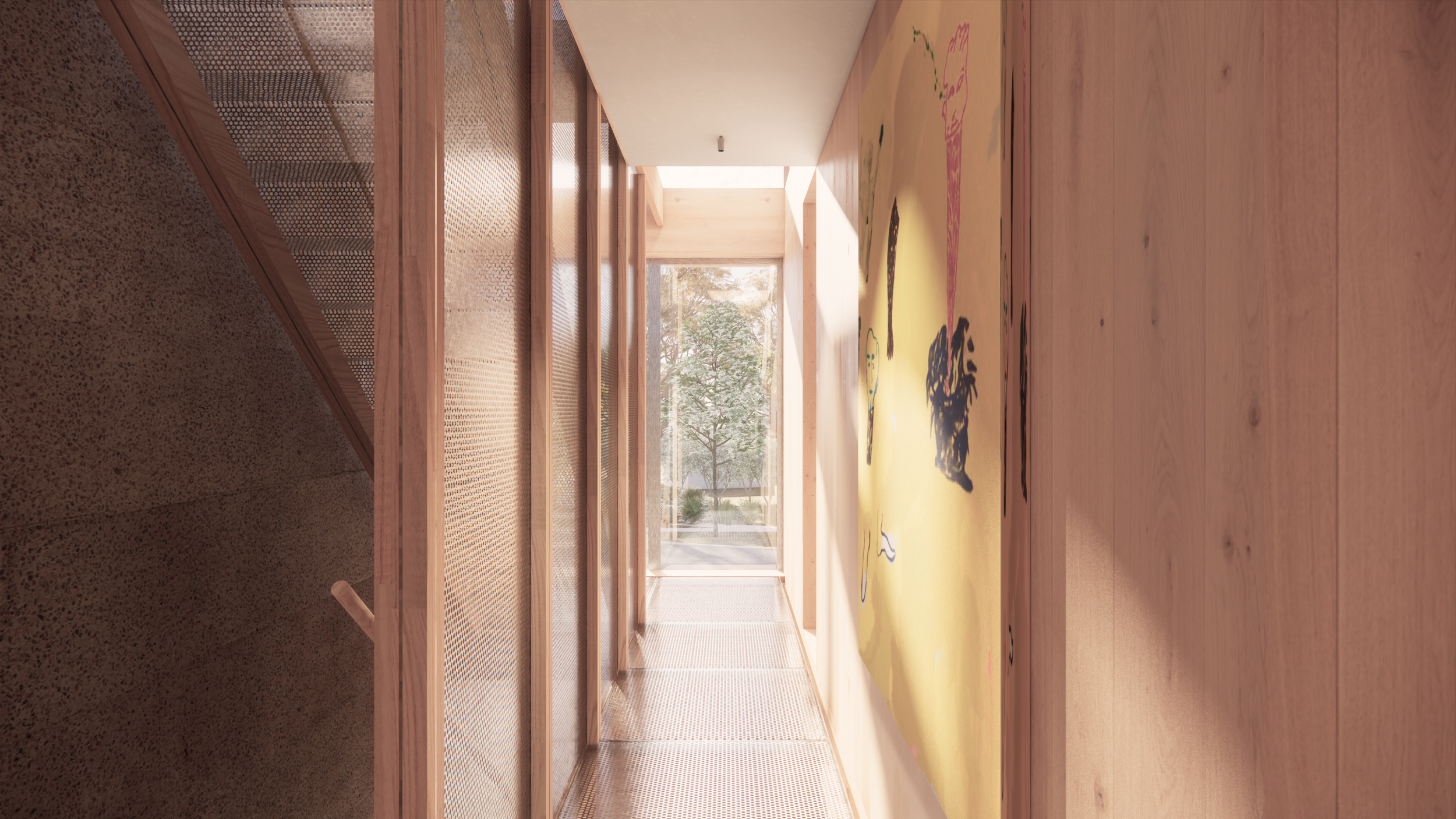
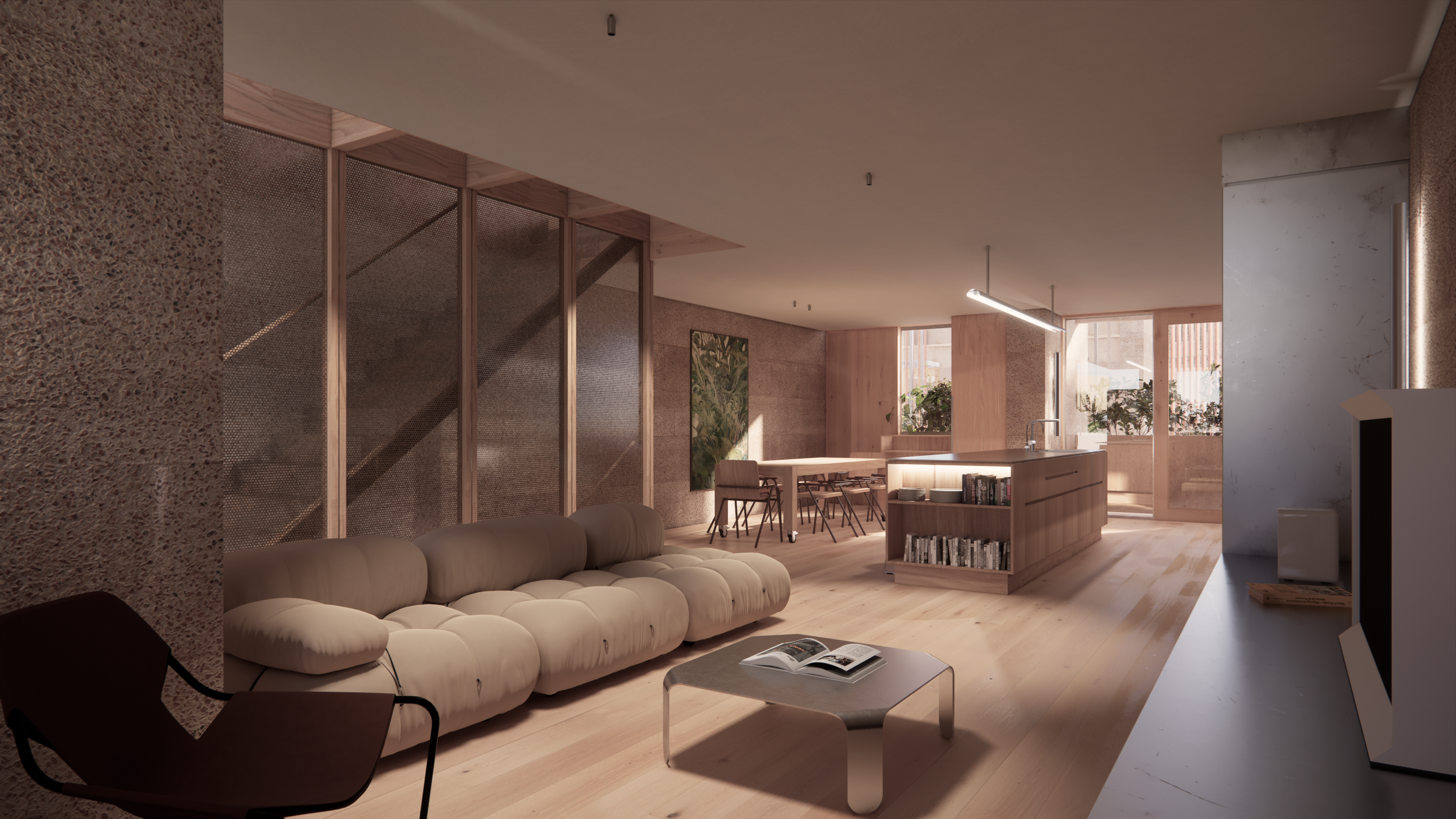
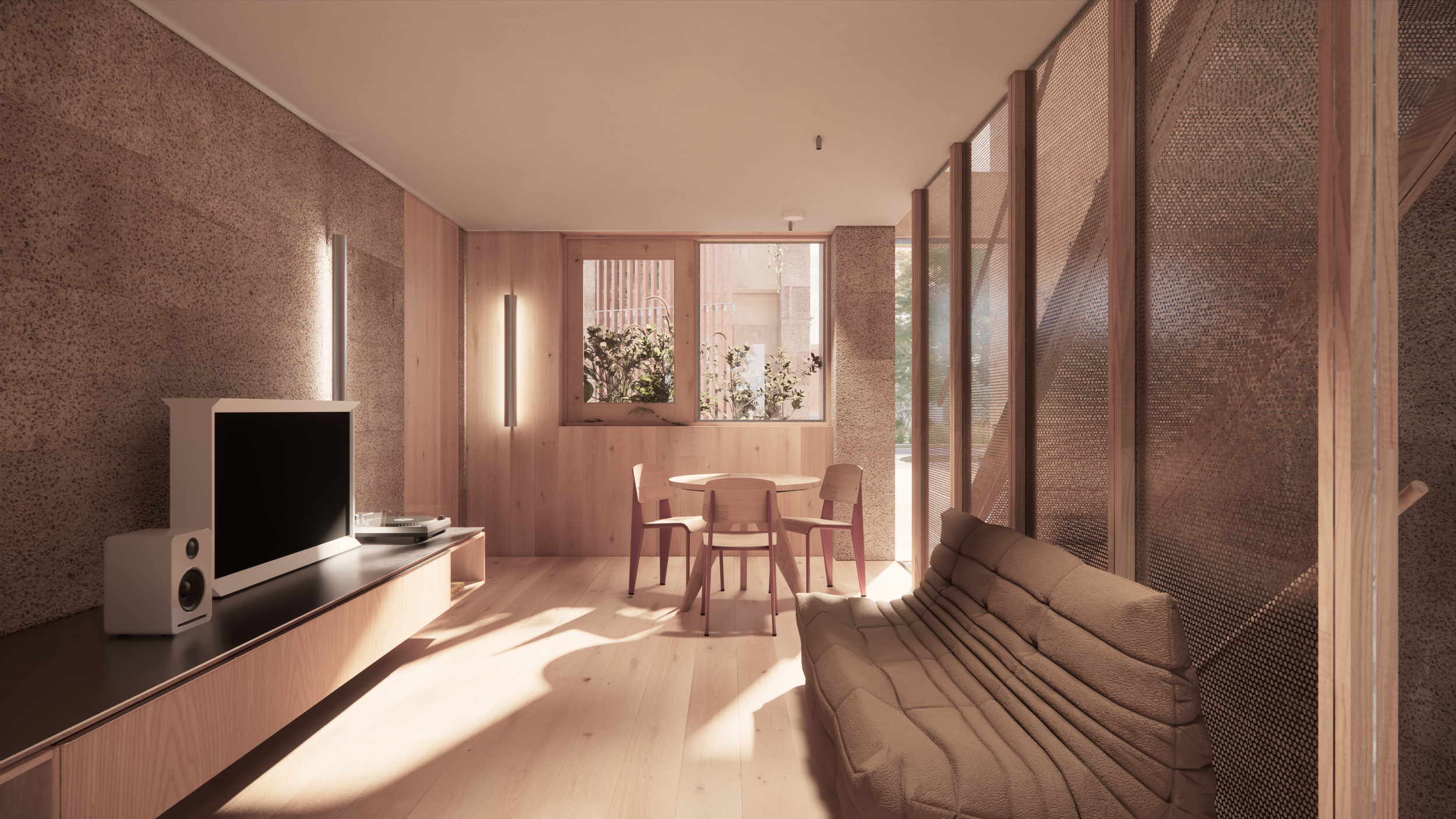
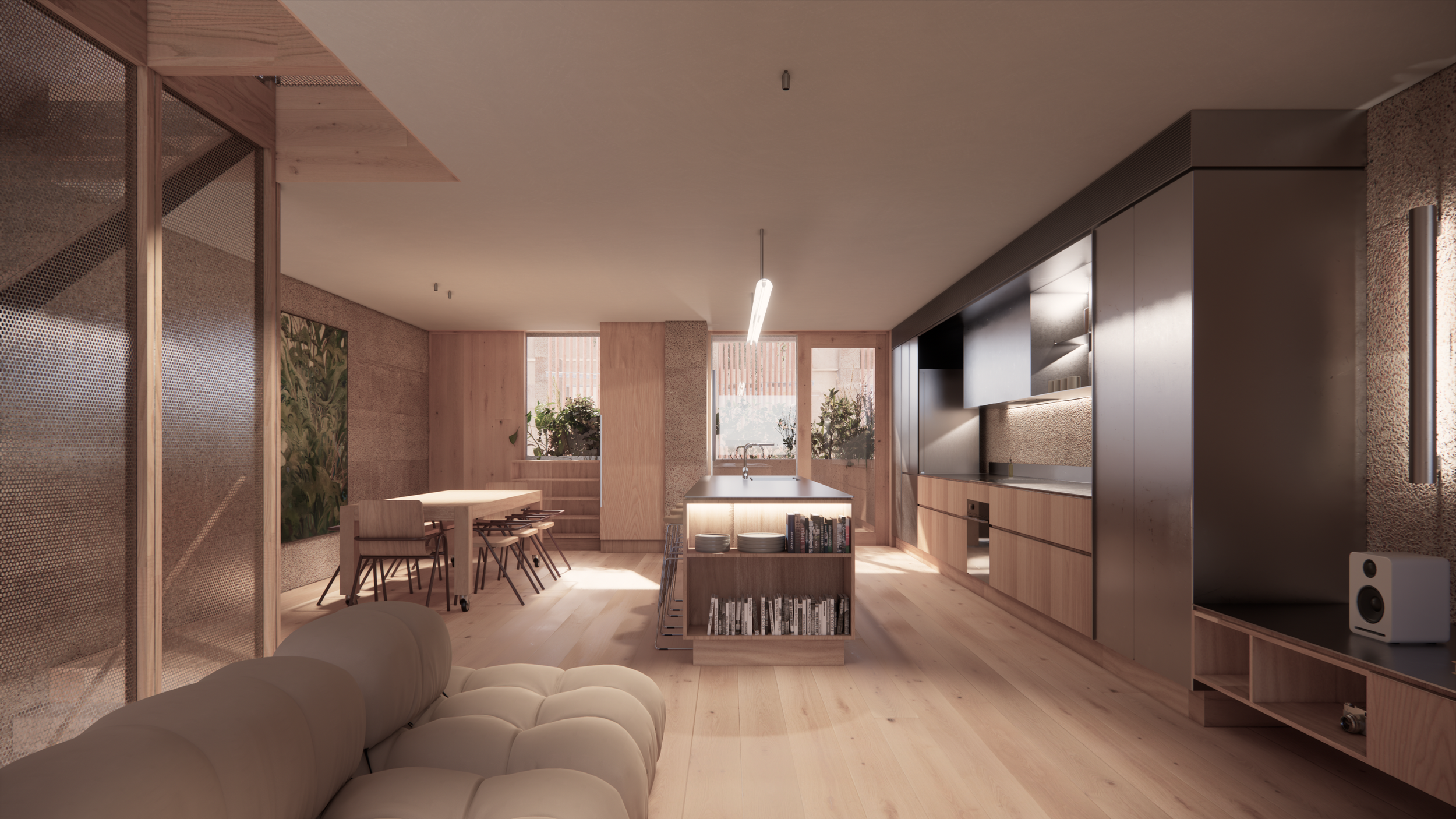
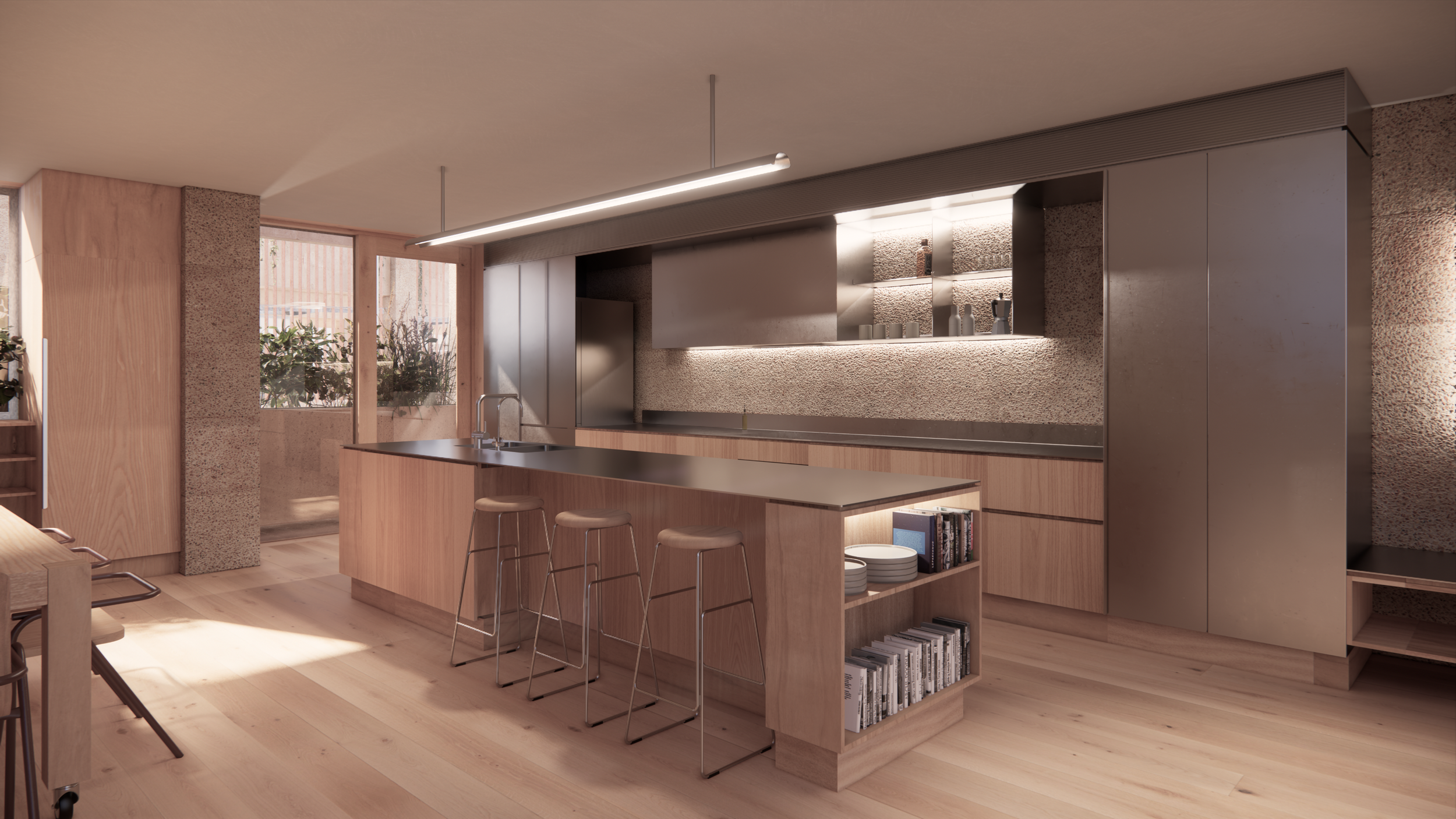
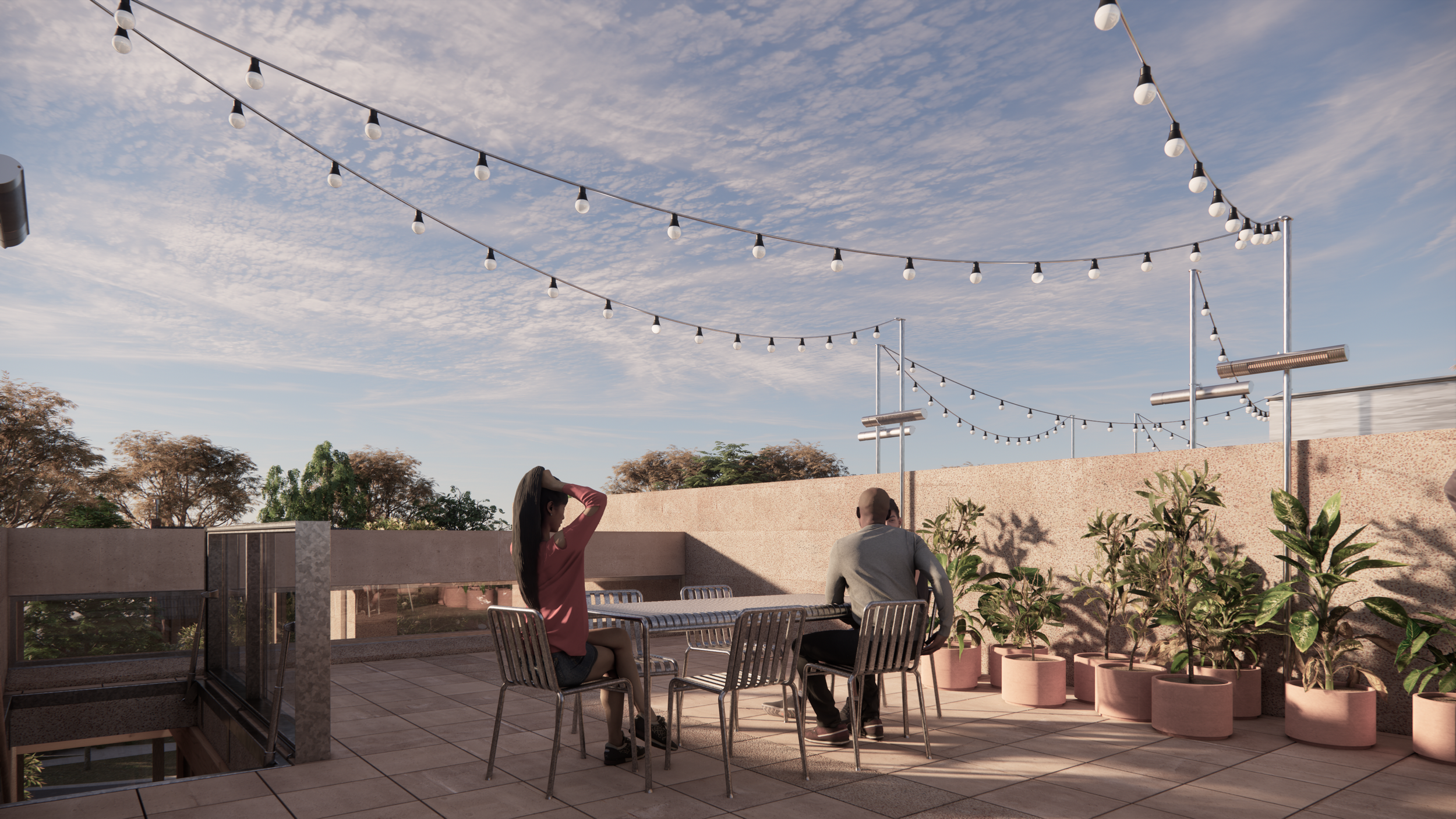
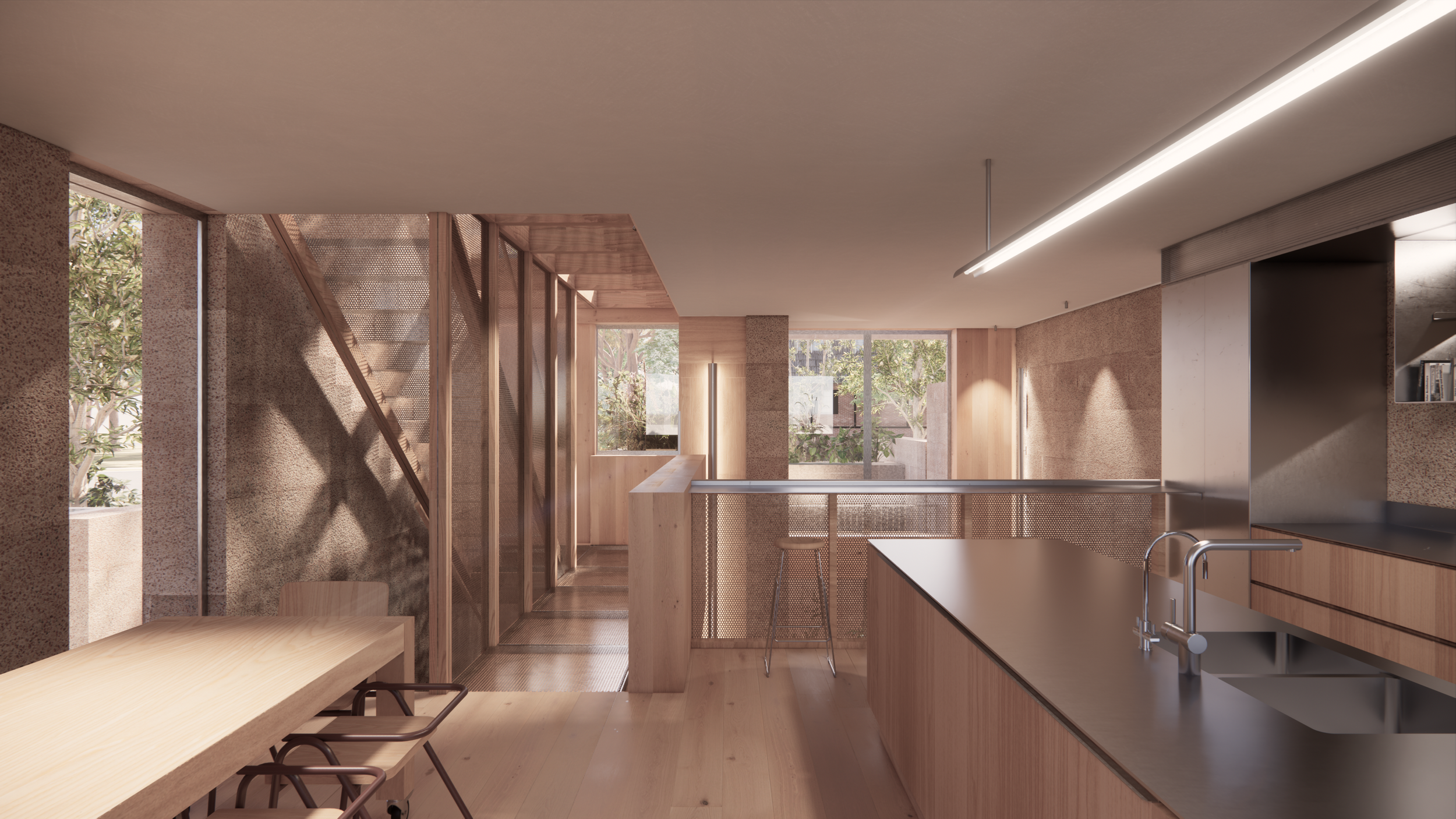
The seven terraces, varied in scale, are finished in robust and durable materials. Central voids create dramatic double-height living spaces, while perforated steel staircases draw natural light deep into the dwellings. Generous rooftop terraces activate the roofscape. Sustainability underpins the design, with passive cooling strategies, solar panels, rainwater harvesting, high-efficiency heat pumps, enhanced insulation and low-energy lighting integrated throughout.
-
MULTI-RESIDENTIAL
-
TENDER
-
NGUNNAWAL / TURNER, CANBERRA
-
LANDSCAPE - OCULUS
-
ALL RENDERS BY MARCH STUDIO
-
ALL RENDERS BY MARCH STUDIO