
SOMERS BEACH HOUSE
2012
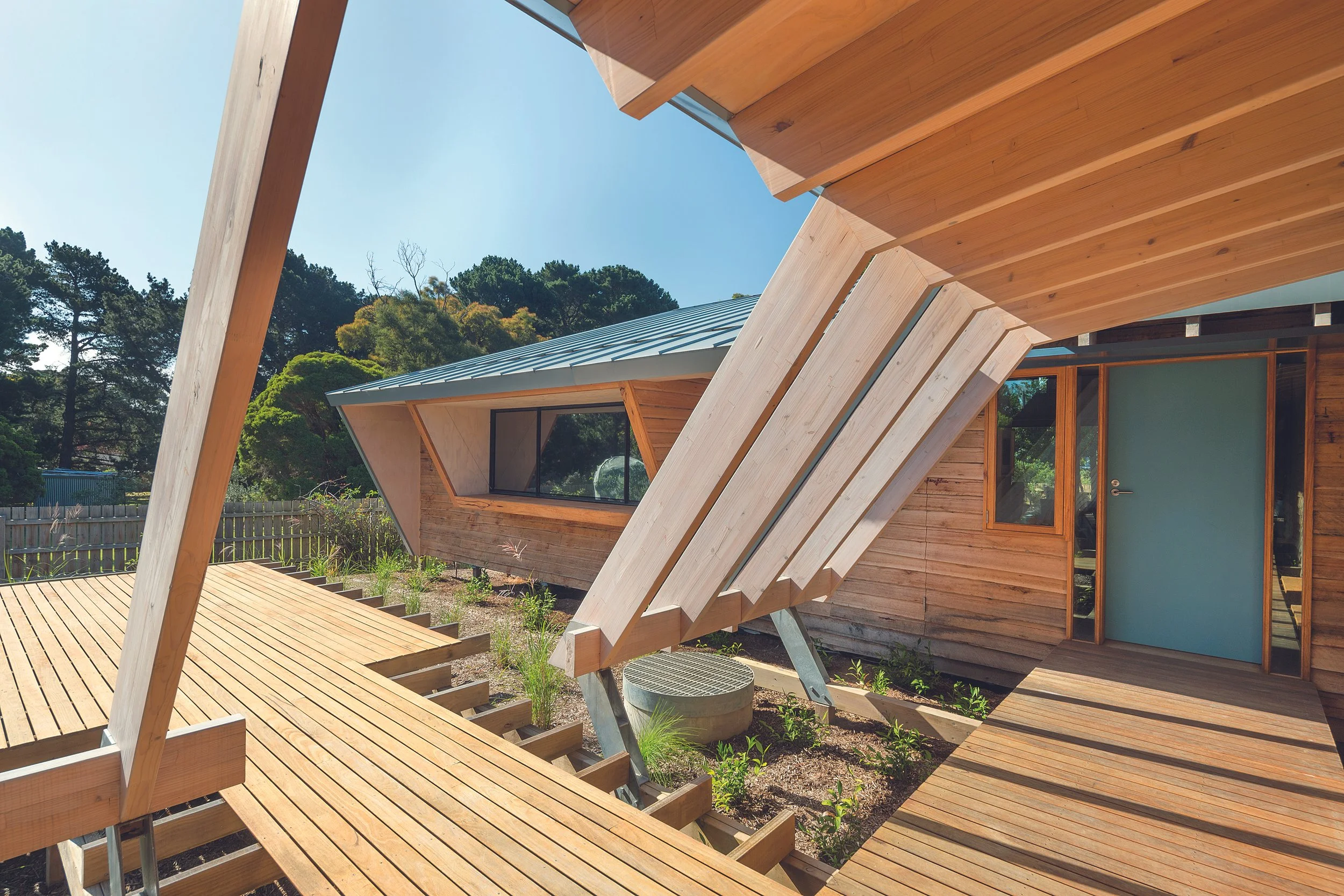
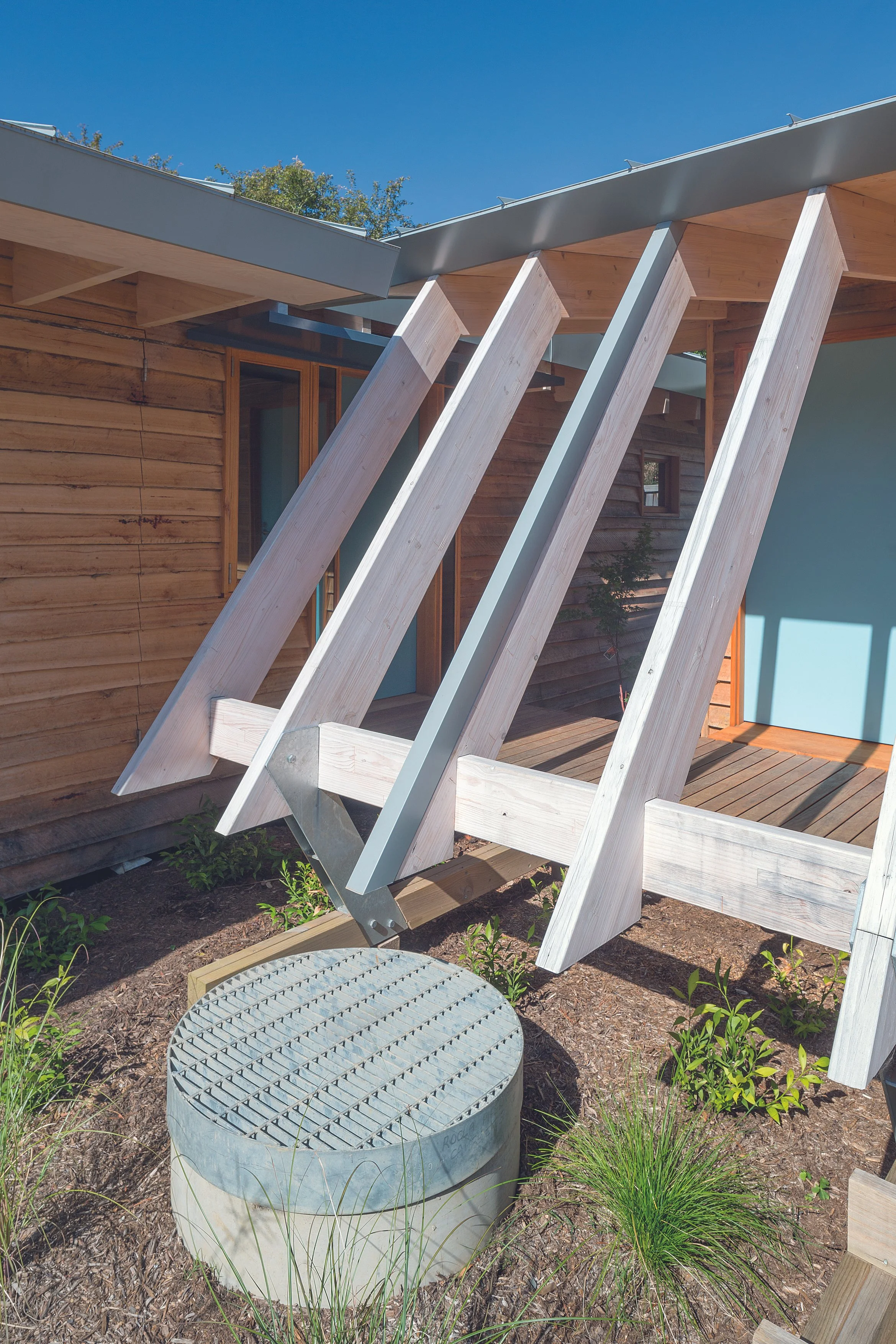
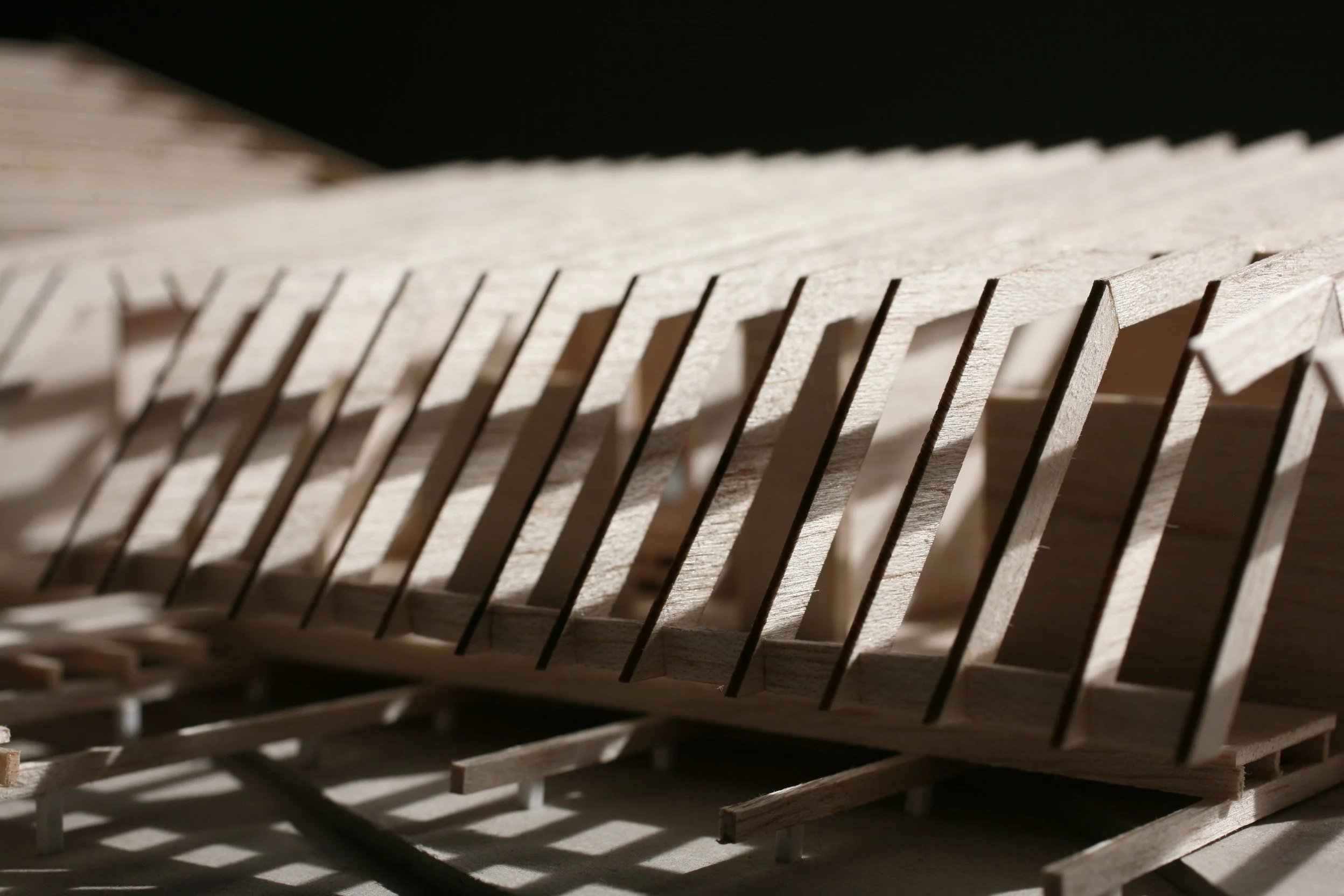
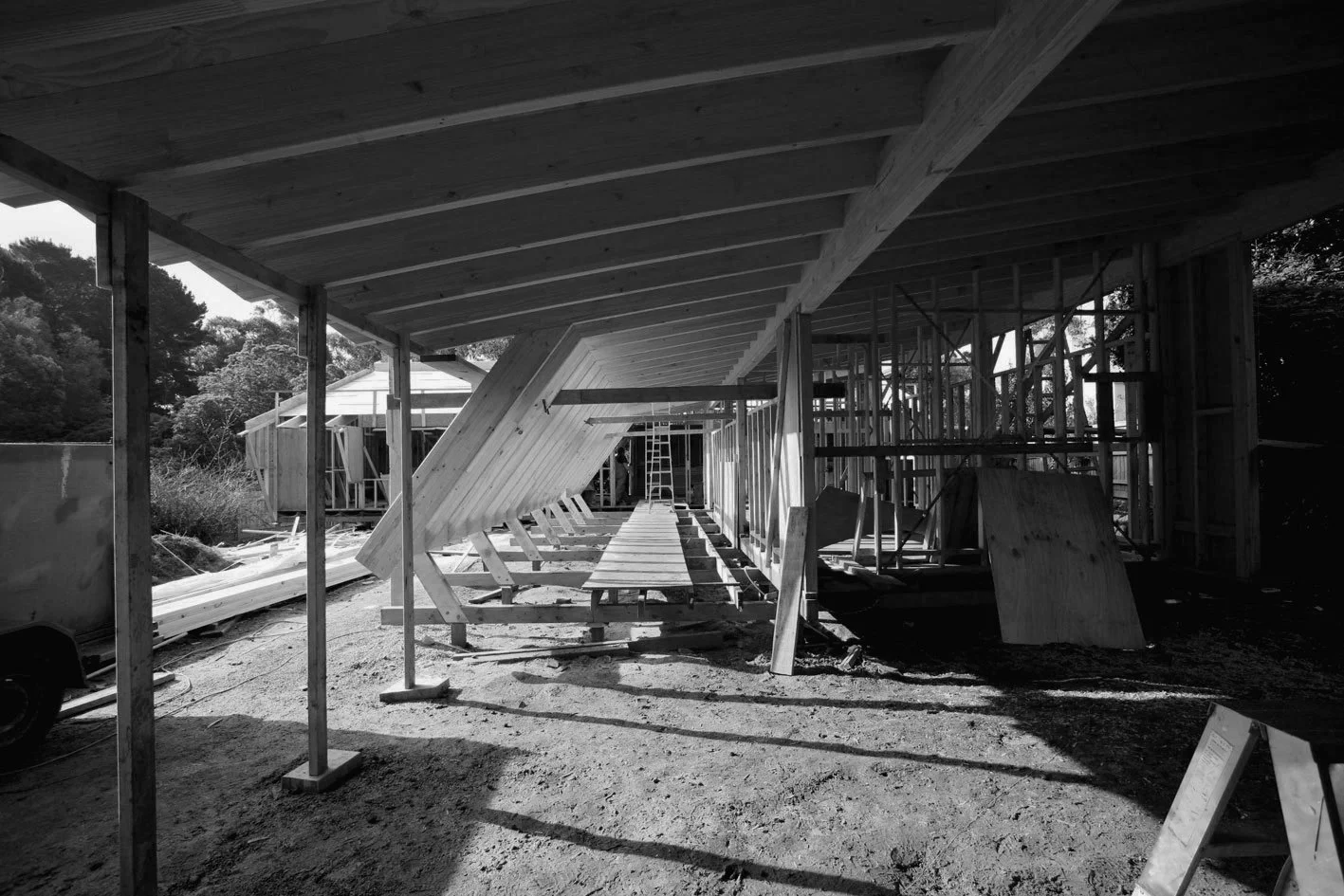
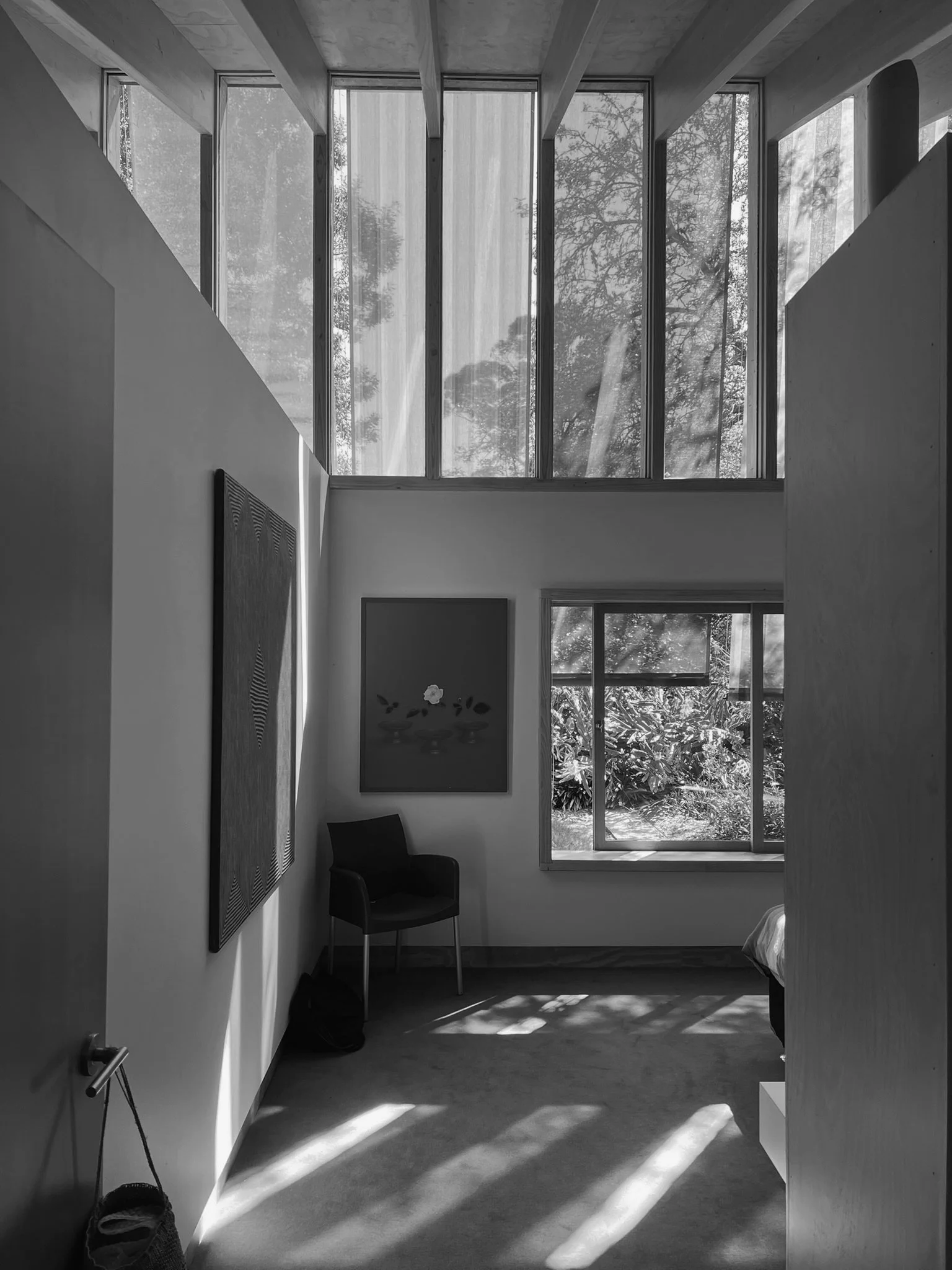
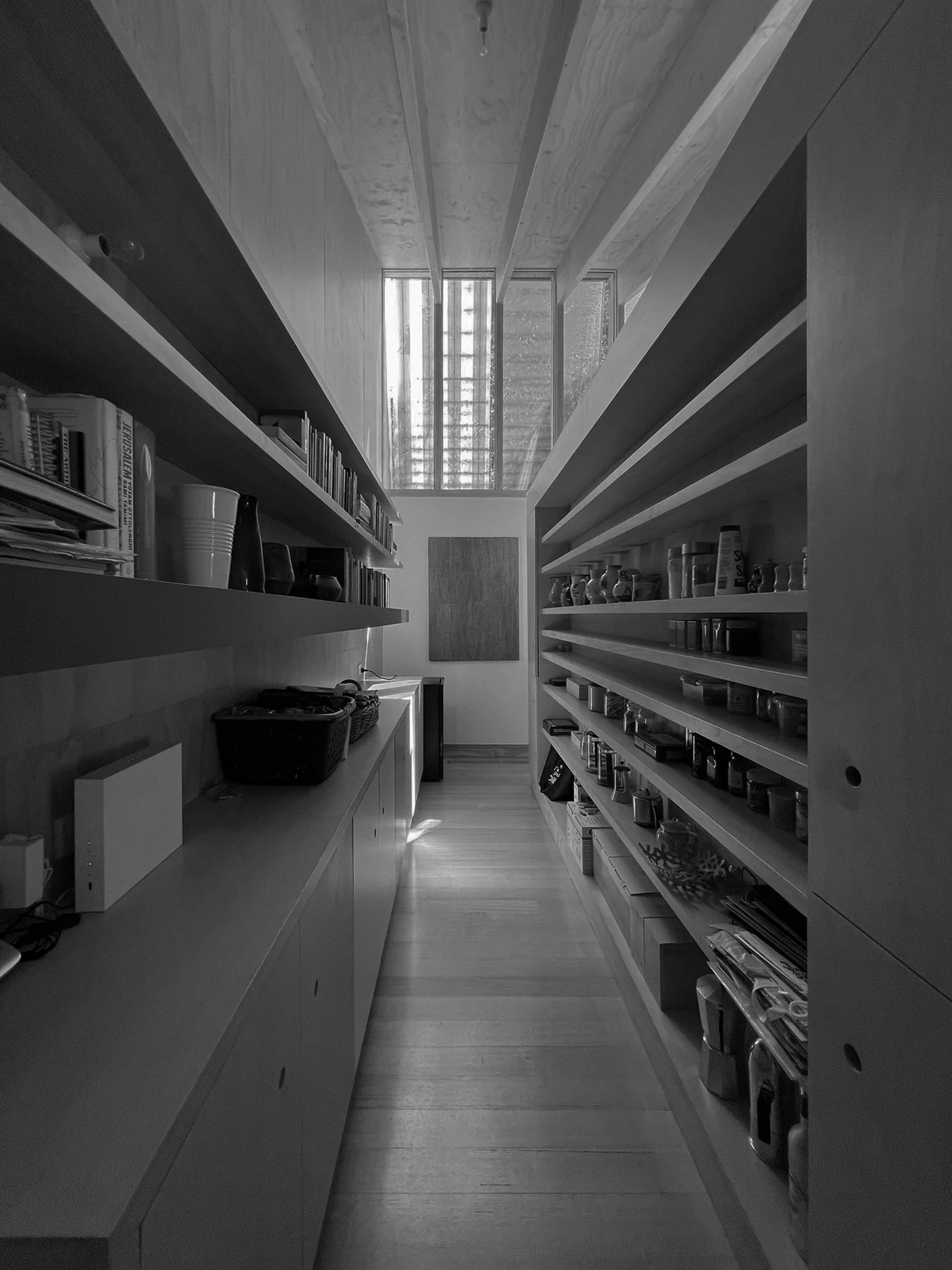
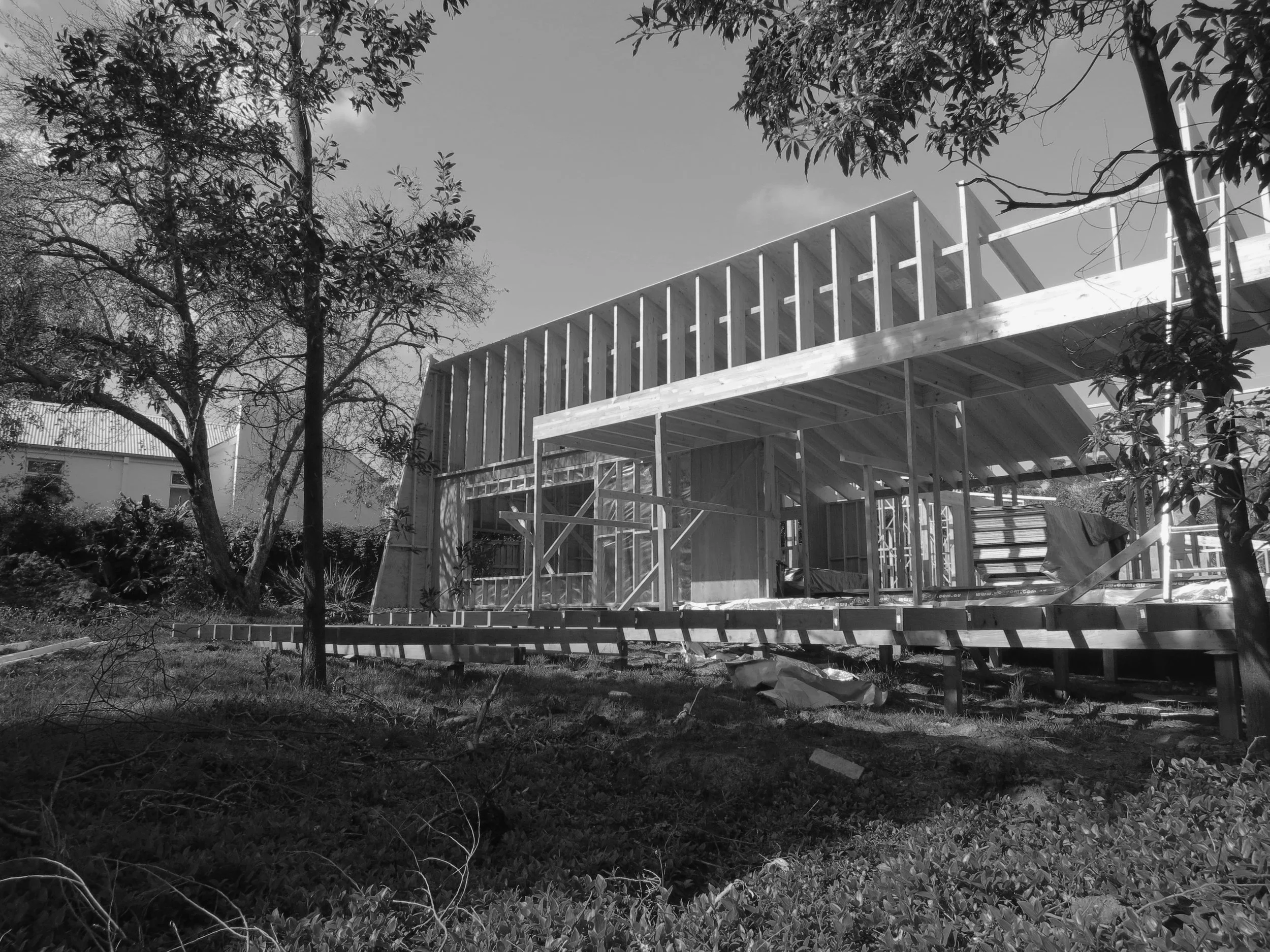
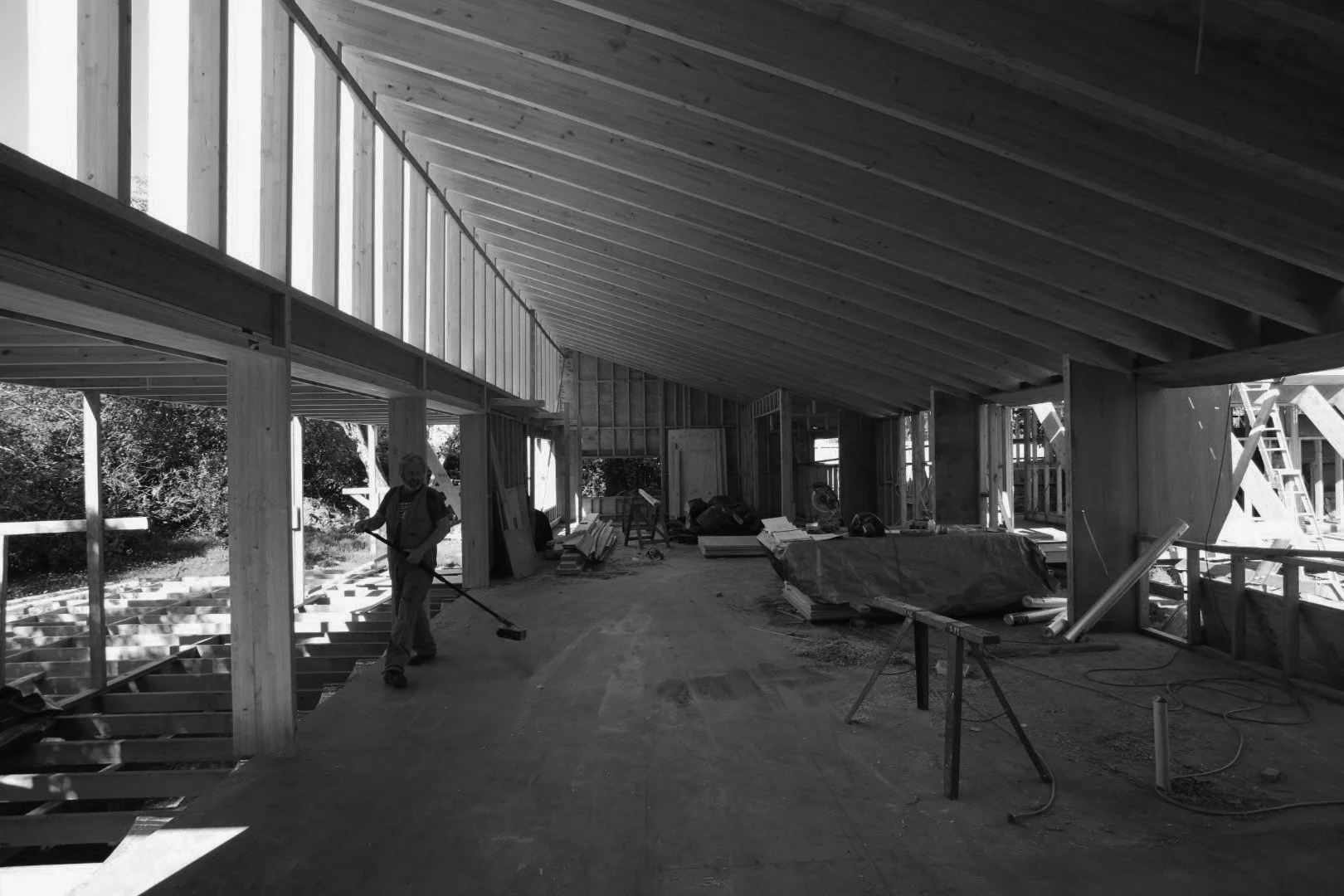
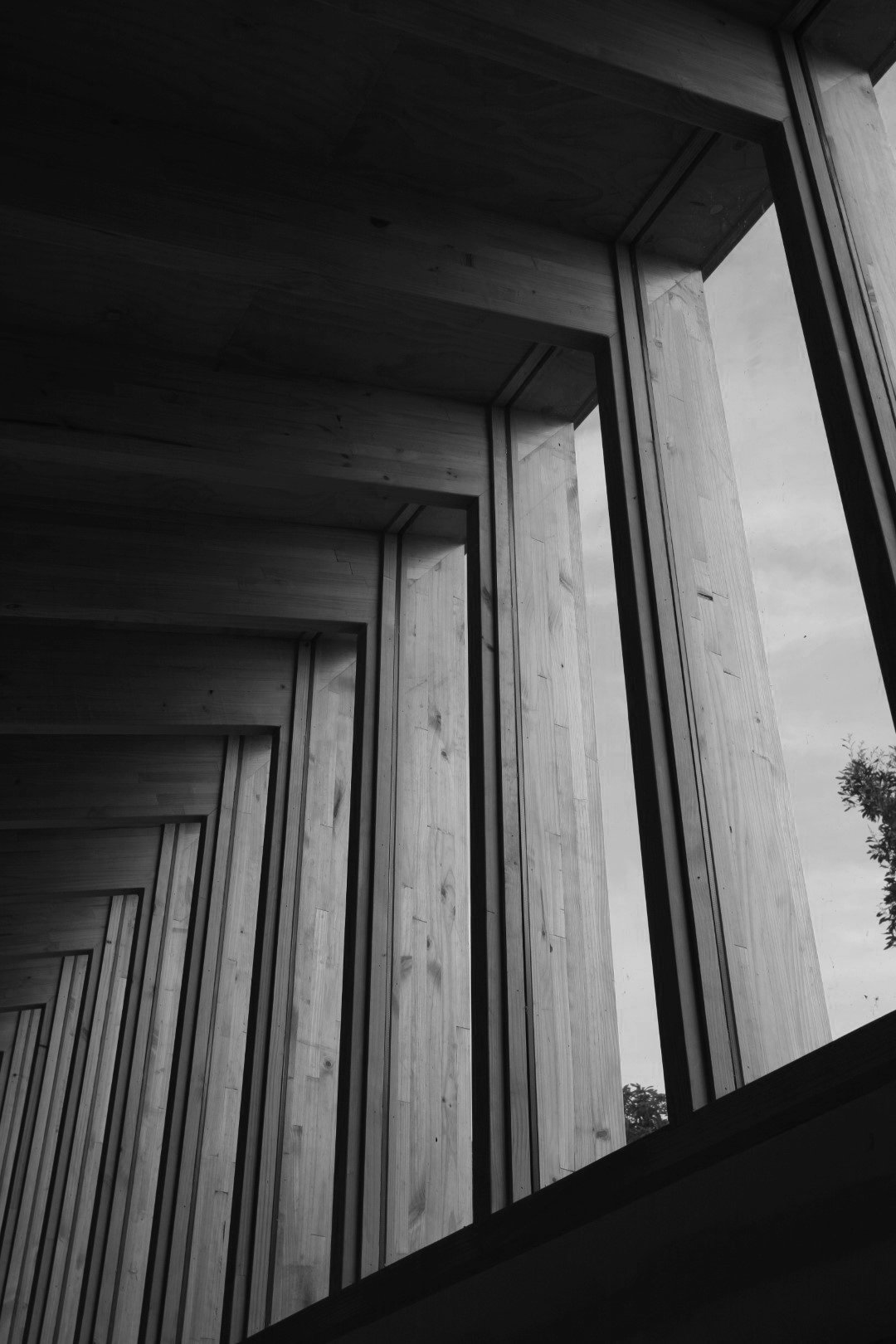
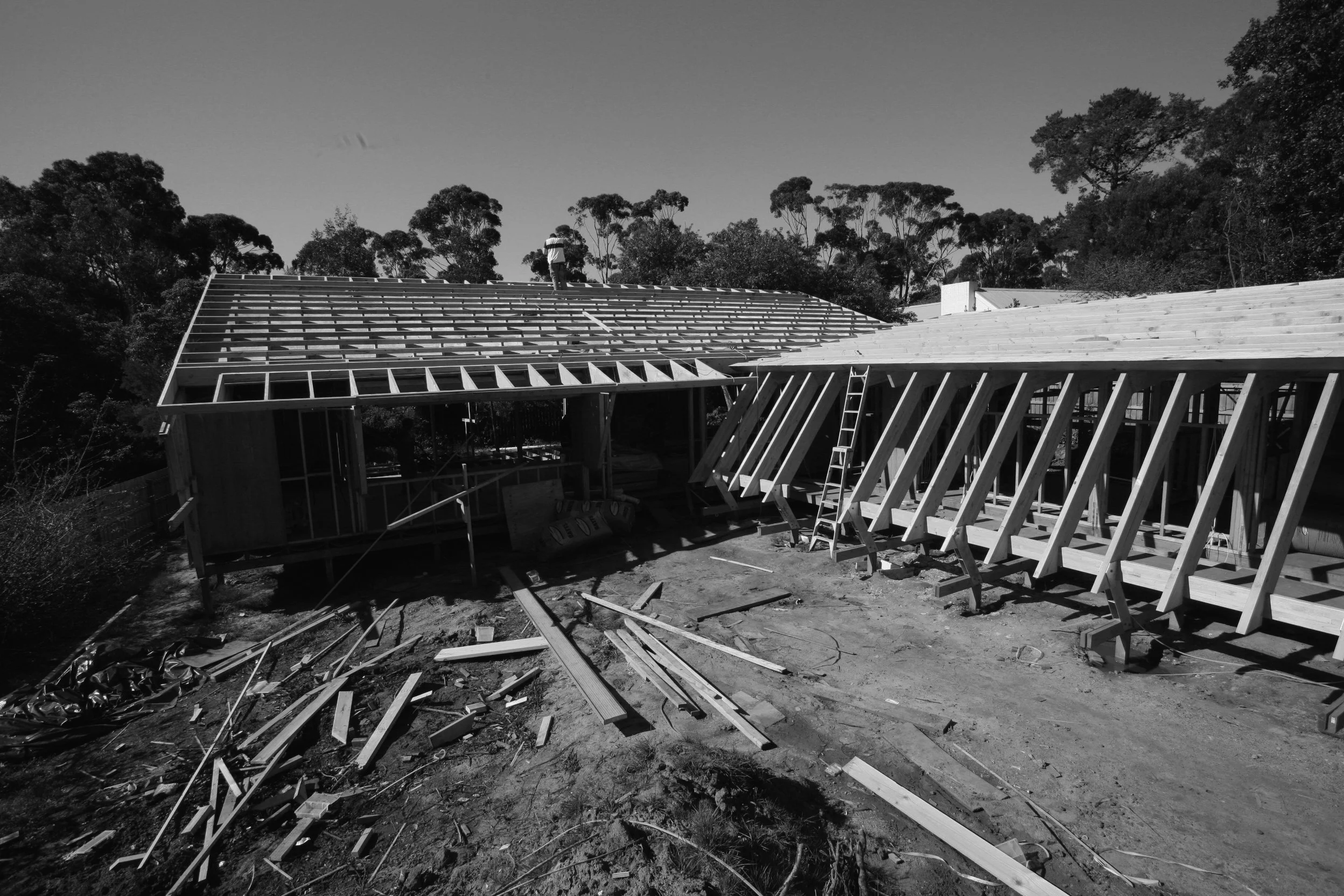
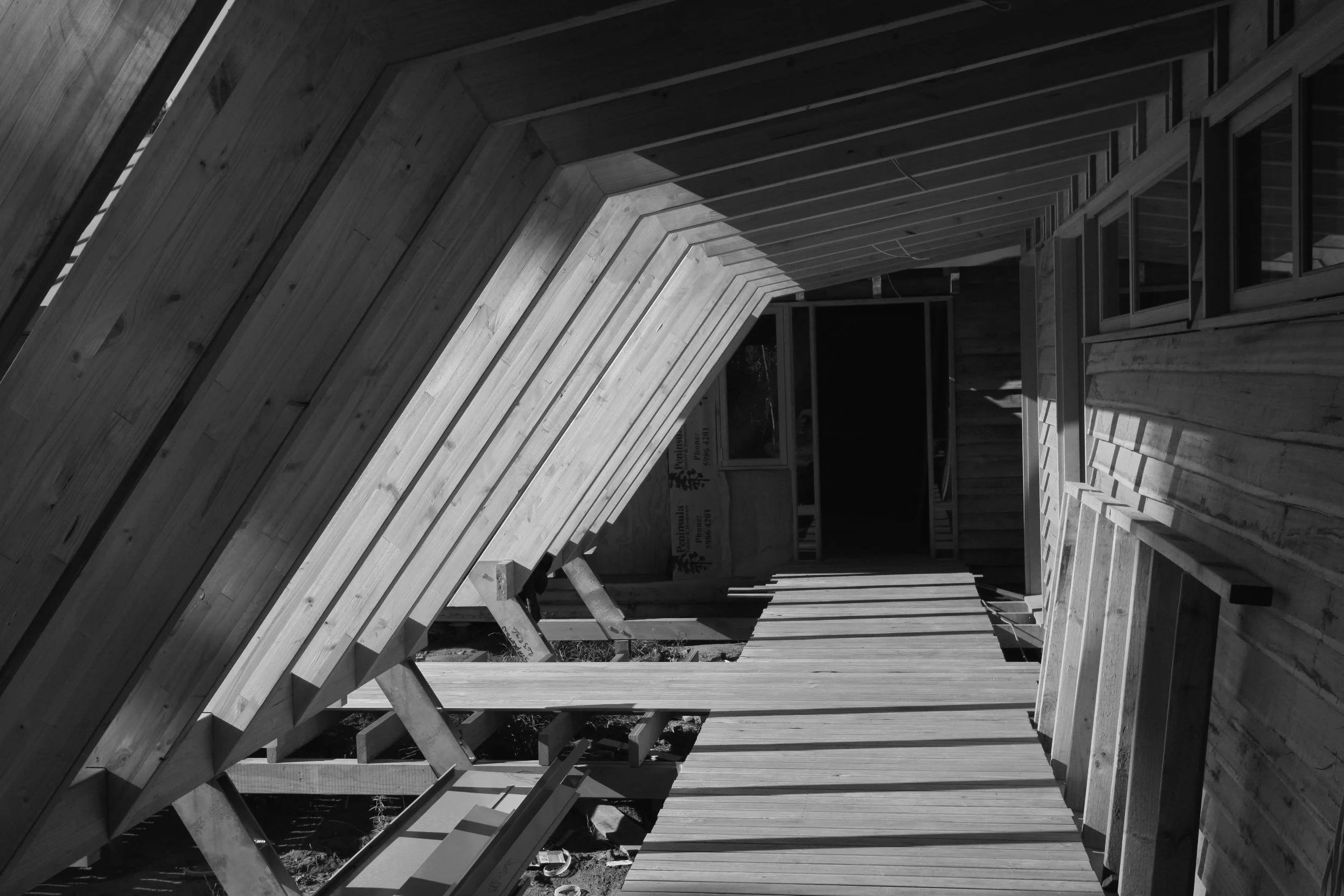
‘Each pavilion celebrates its construction by repeating the chunky Glu-Lam timber portal frame as a fundamental element, echoing the simple, economical detail of the mid-century holiday houses that once dominated the landscape.’
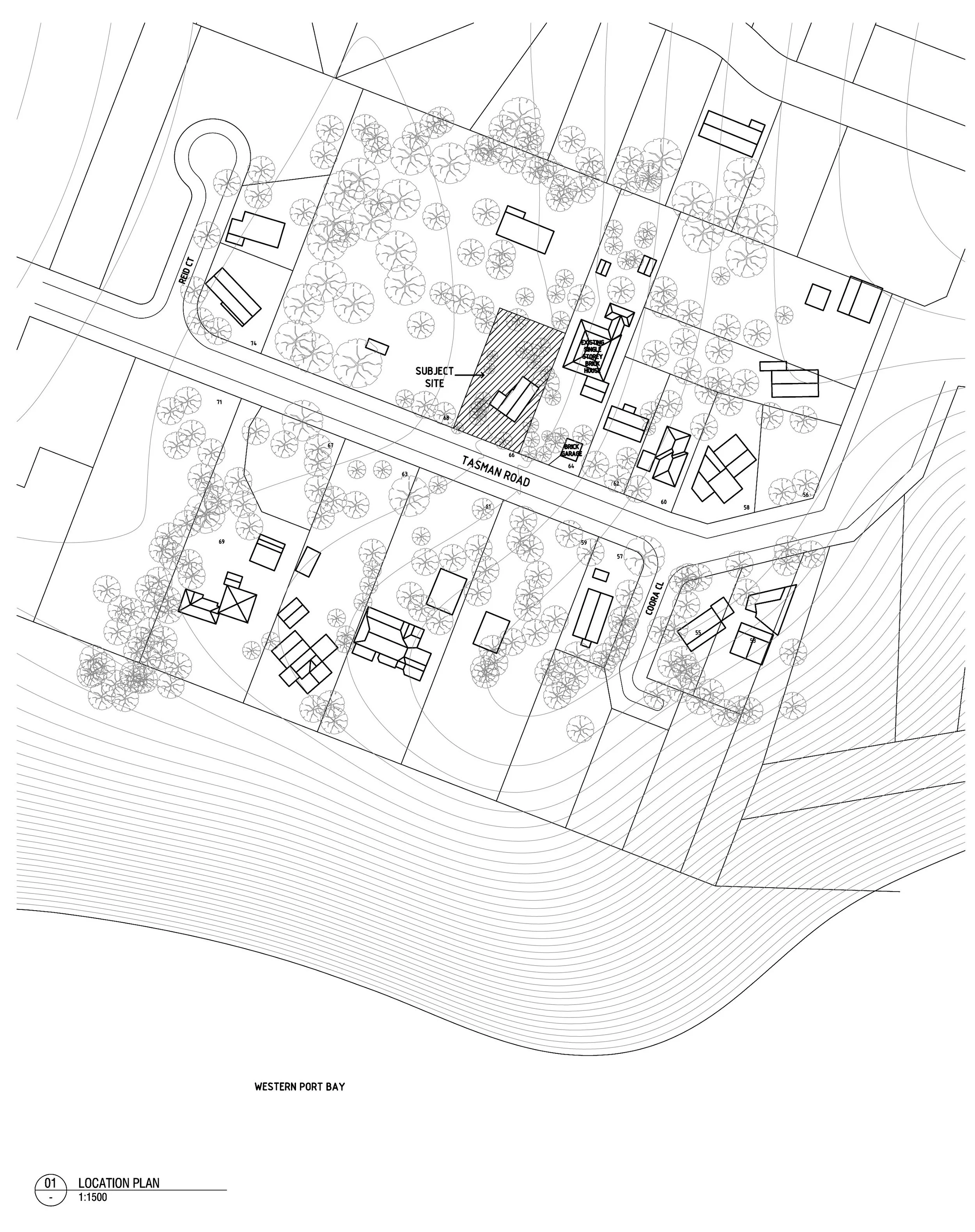
Located on the Mornington Peninsula, Somers Beach House revisits the core values of the Australian beach house within a quiet Victorian seaside town. It draws from the rapidly disappearing mid-century dwellings that once defined the area, offering a relaxed and flexible setting for weekends by the coast.
The project replaces a 1970s brick veneer that had turned its back on the site for over forty years. The brief was direct: to open the house to light, landscape and community, and to restore a sense of connection to the beach that had long been lost.
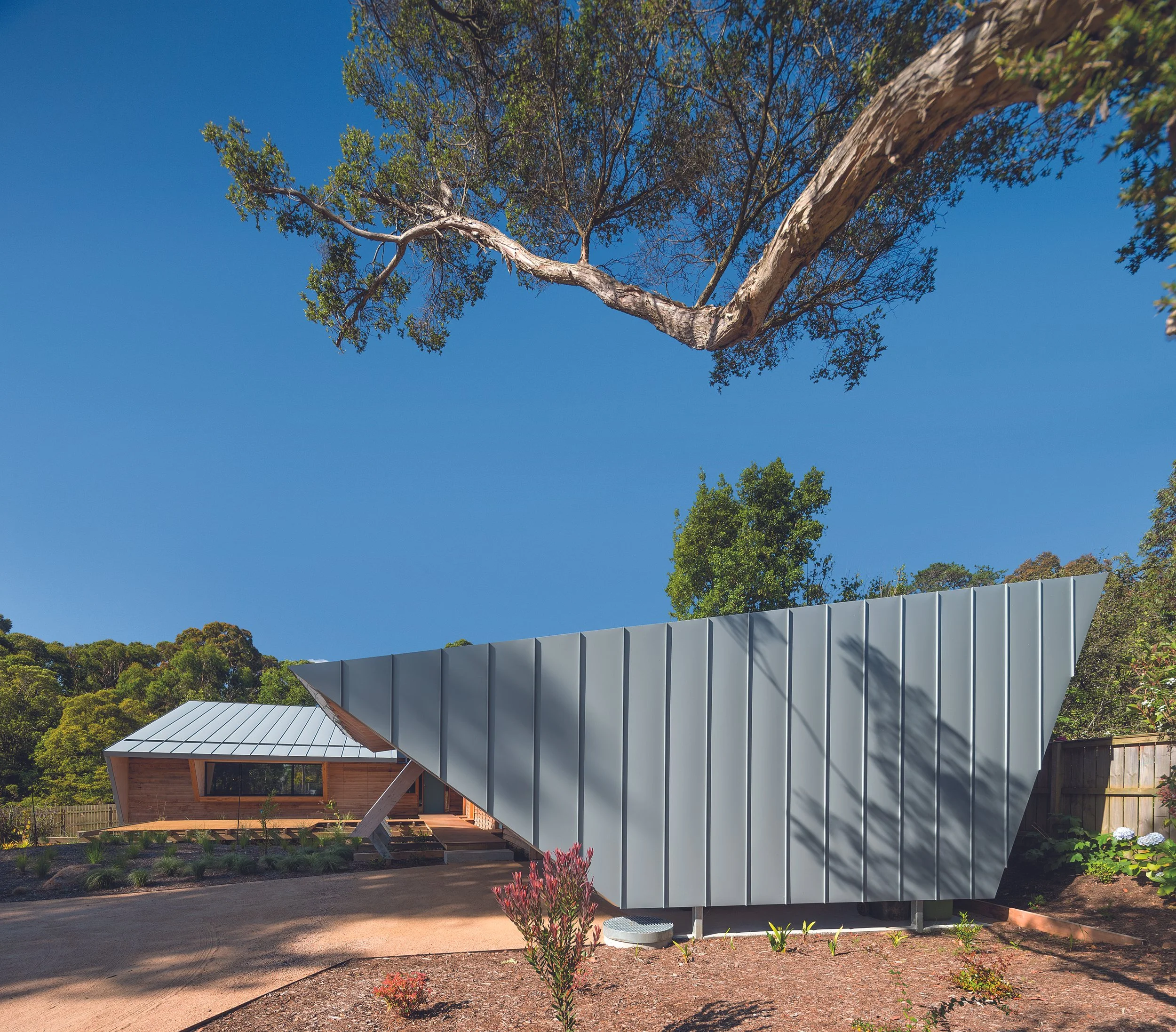
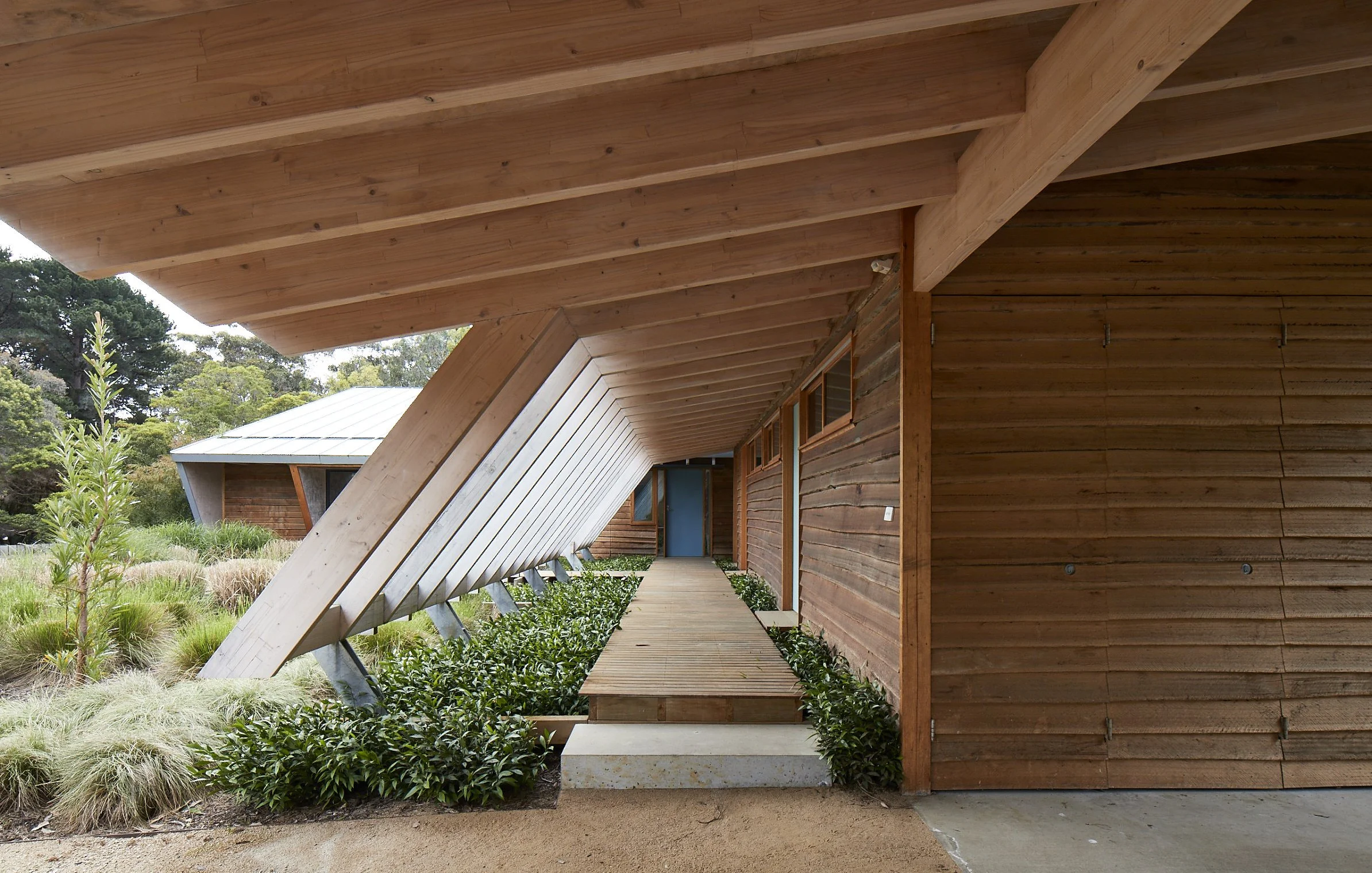
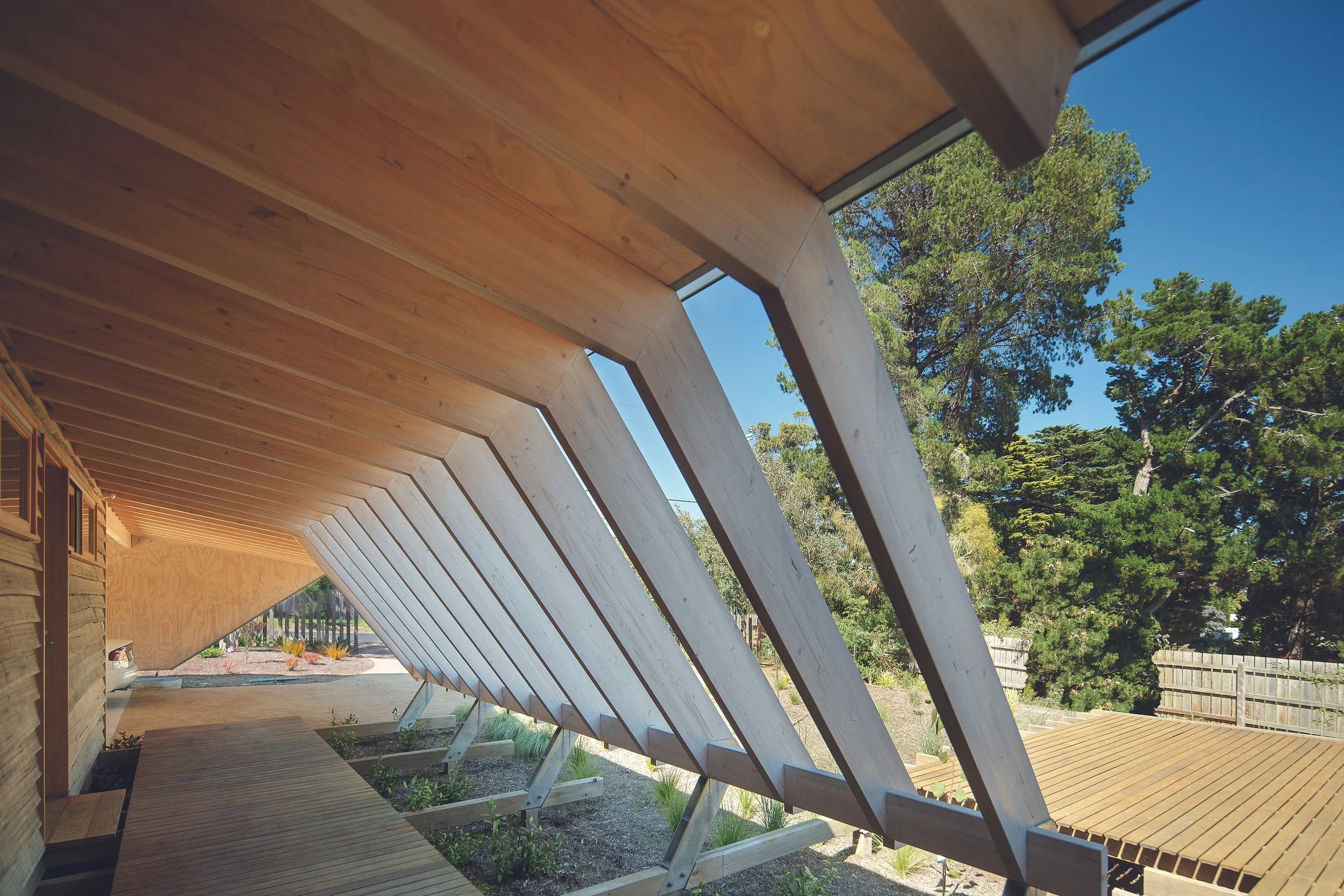
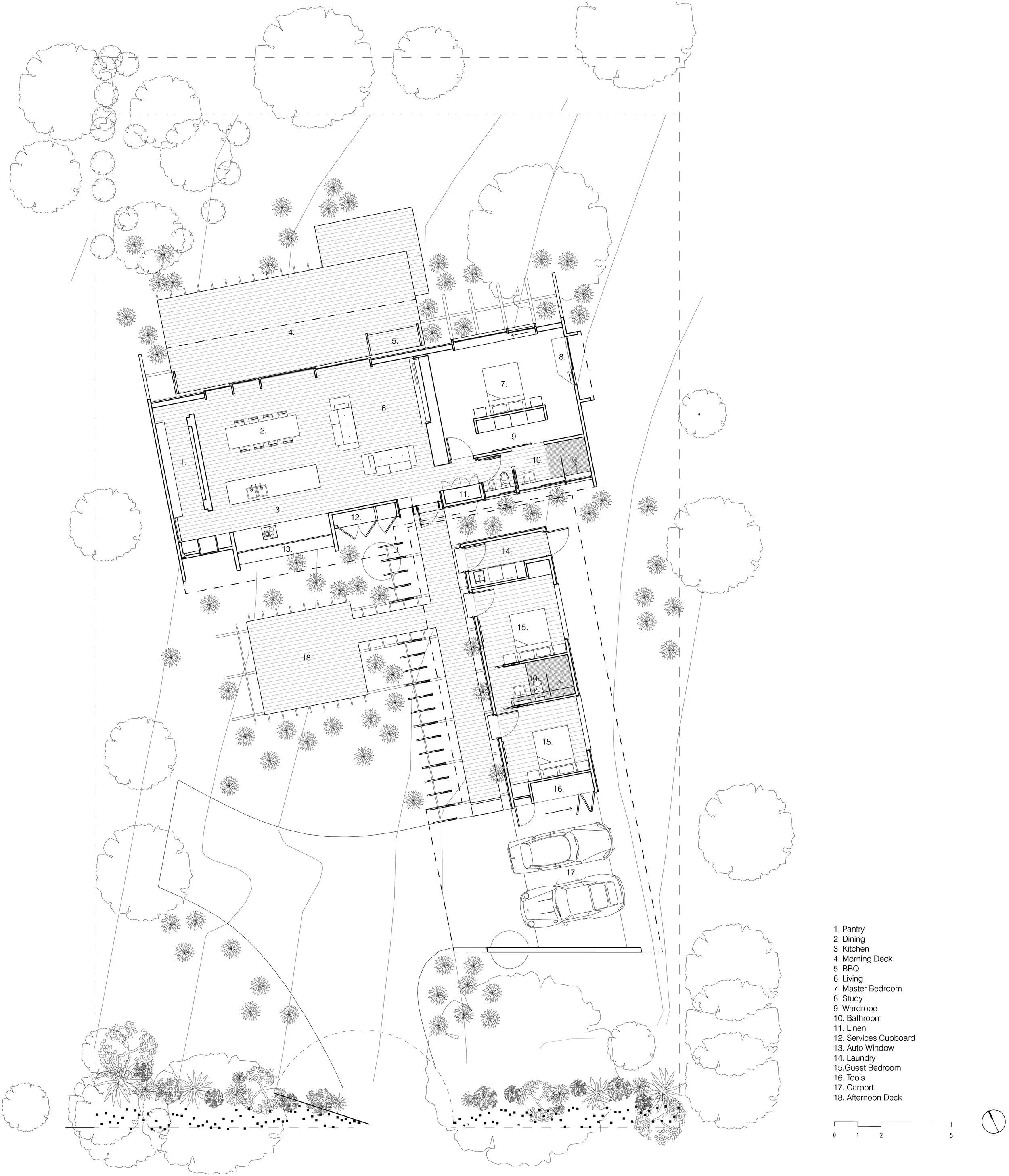
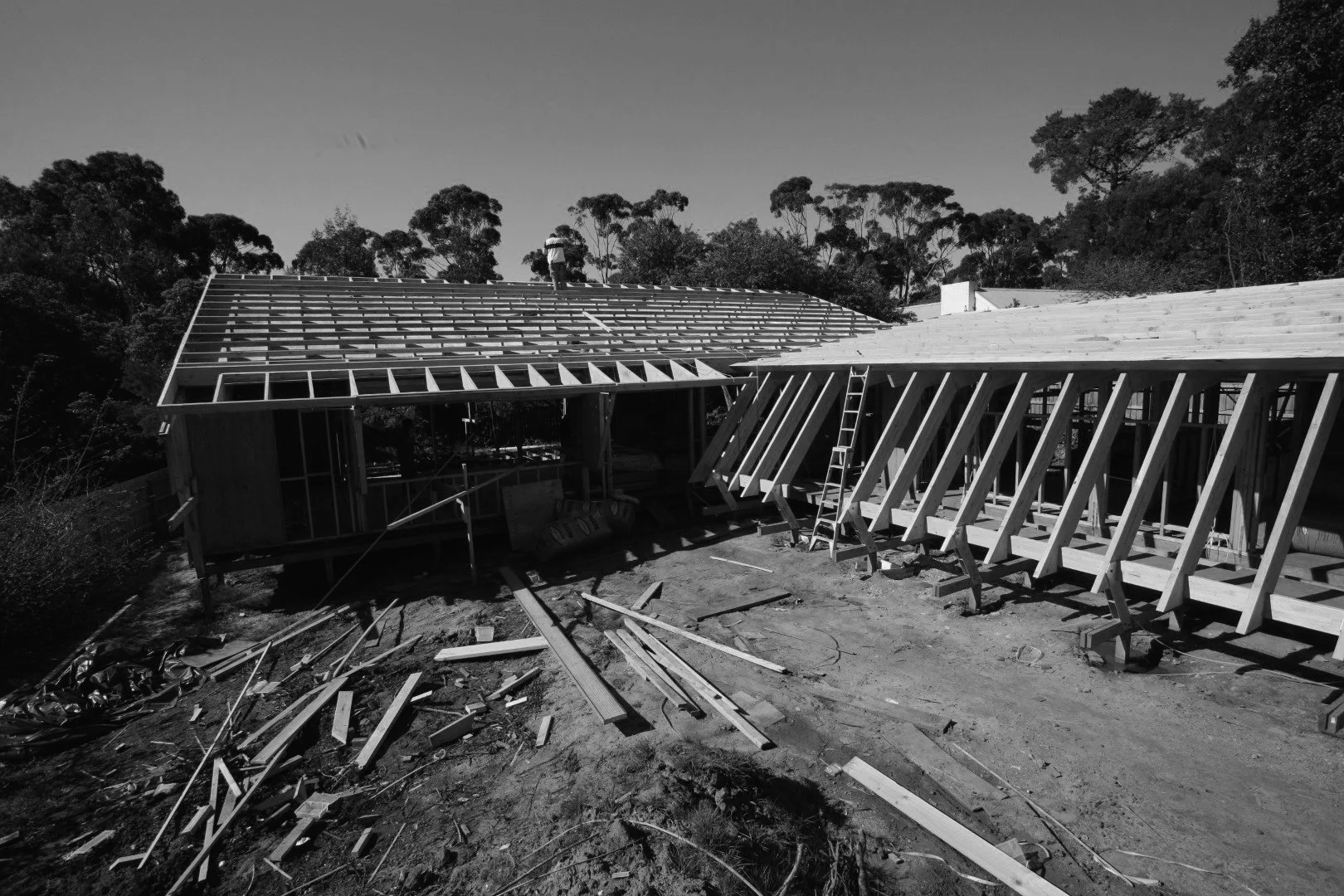
The primary move aligns the house due north, opening it to sunlight and a new native garden while engaging with the street. To the north, brightly striped operable blinds animate the facade, moderating solar gain while reinforcing the familiar language of the coastal weekender. These elements shift throughout the day, giving the building a changing expression tied to climate and occupation. The composition is organised as two simple volumes in an L-shape. A linear eastern pavilion containing bedrooms, bathrooms and laundry extends along the boundary and connects to the carport, recalling the pragmatic logic of a country motel.
This intersects with a more expansive north-facing pavilion containing the living areas, kitchen and master suite. Together, the two volumes establish a flexible domestic arrangement that can expand or contract over time. The primary pavilion operates independently for everyday use, while the secondary wing is engaged when guests arrive, supporting a larger, more social mode of occupation.
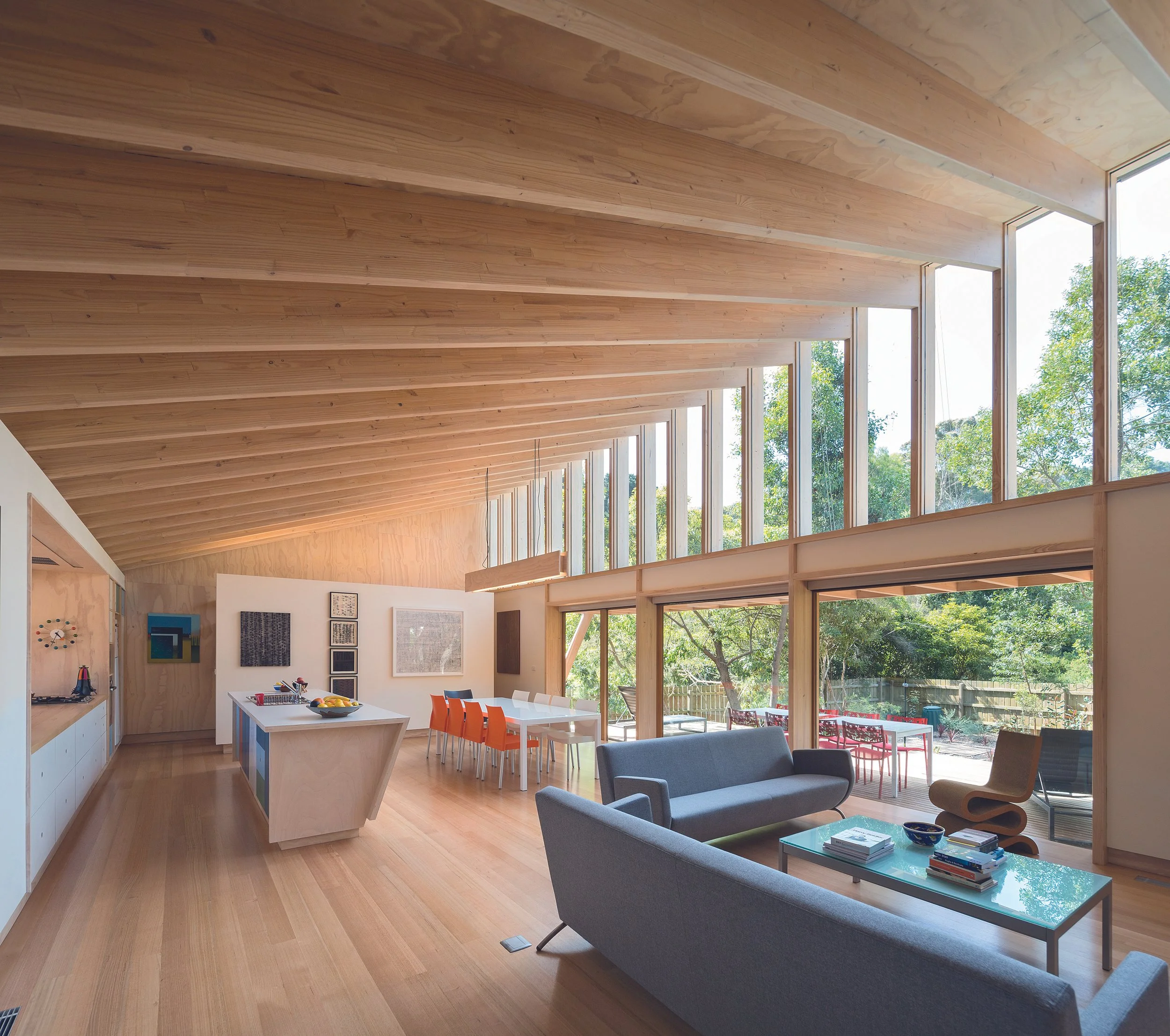
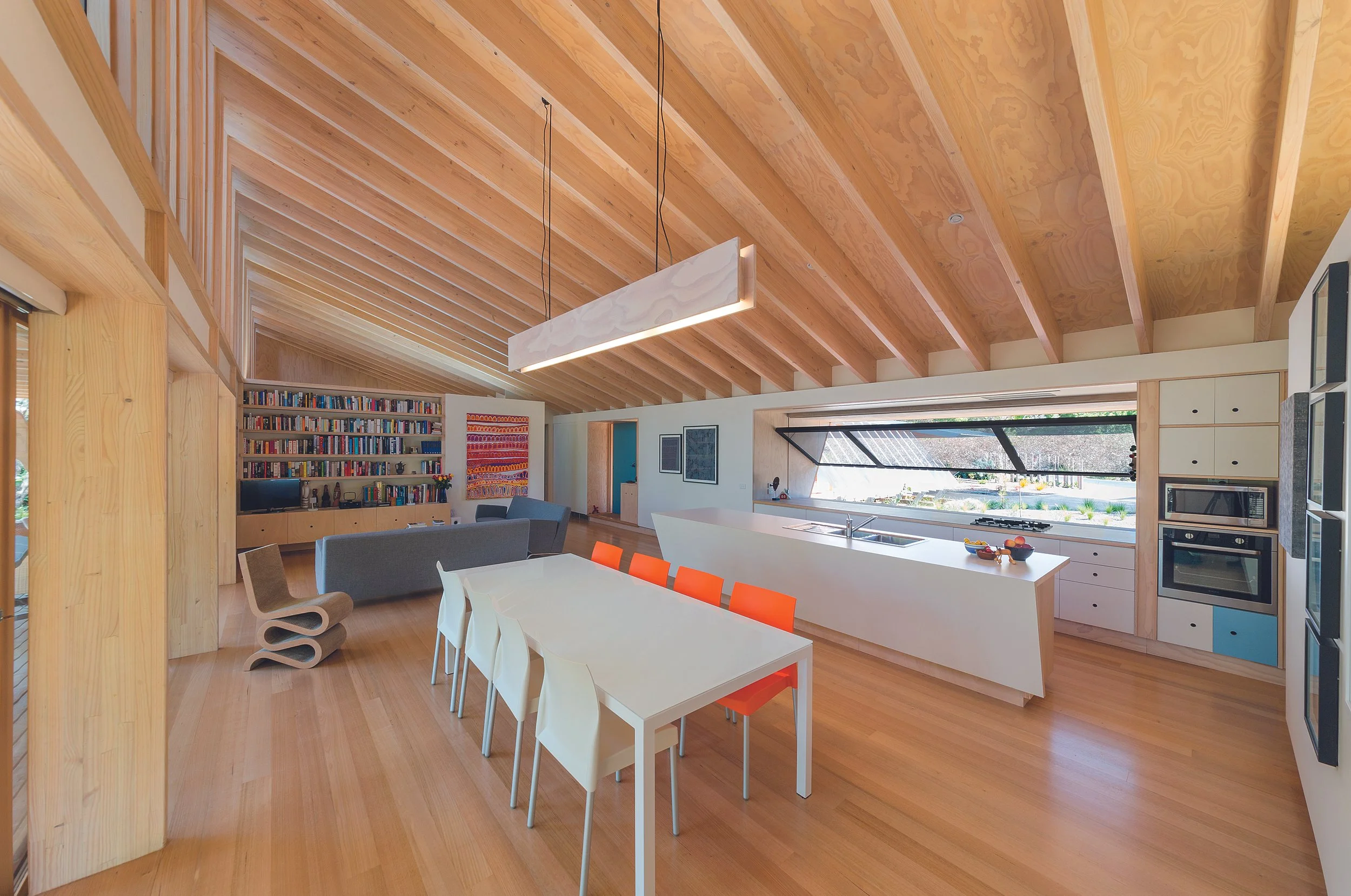
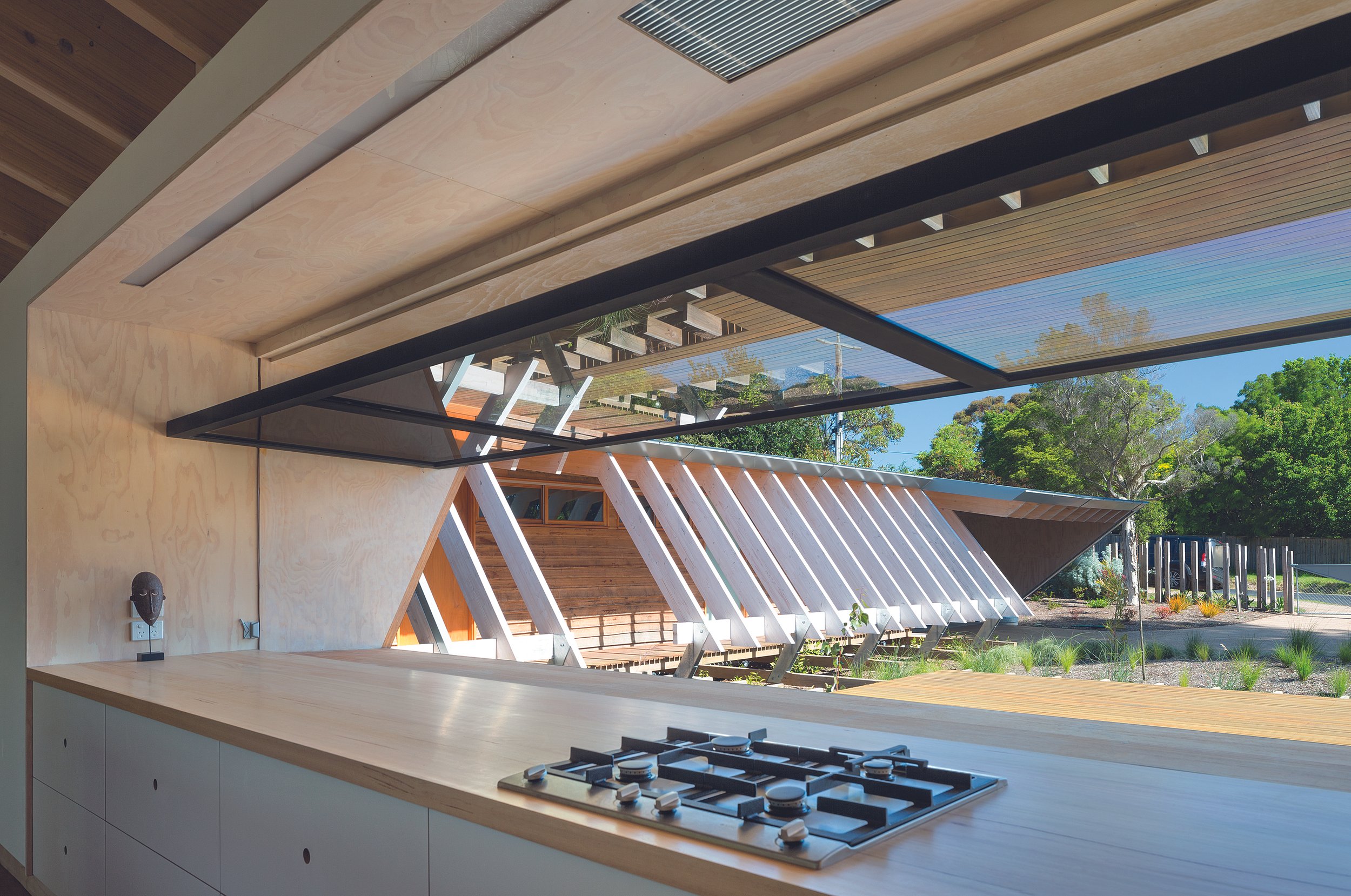
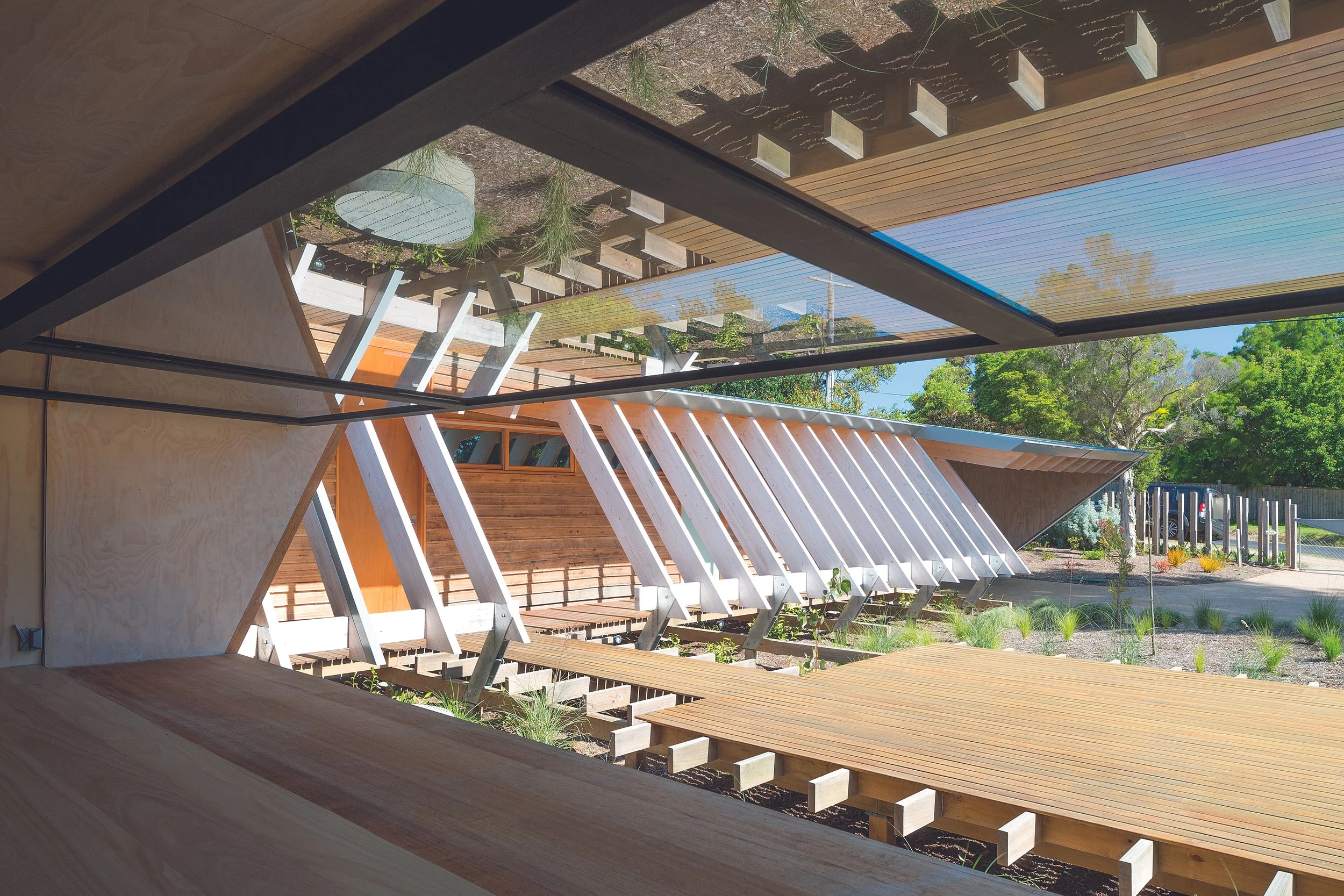
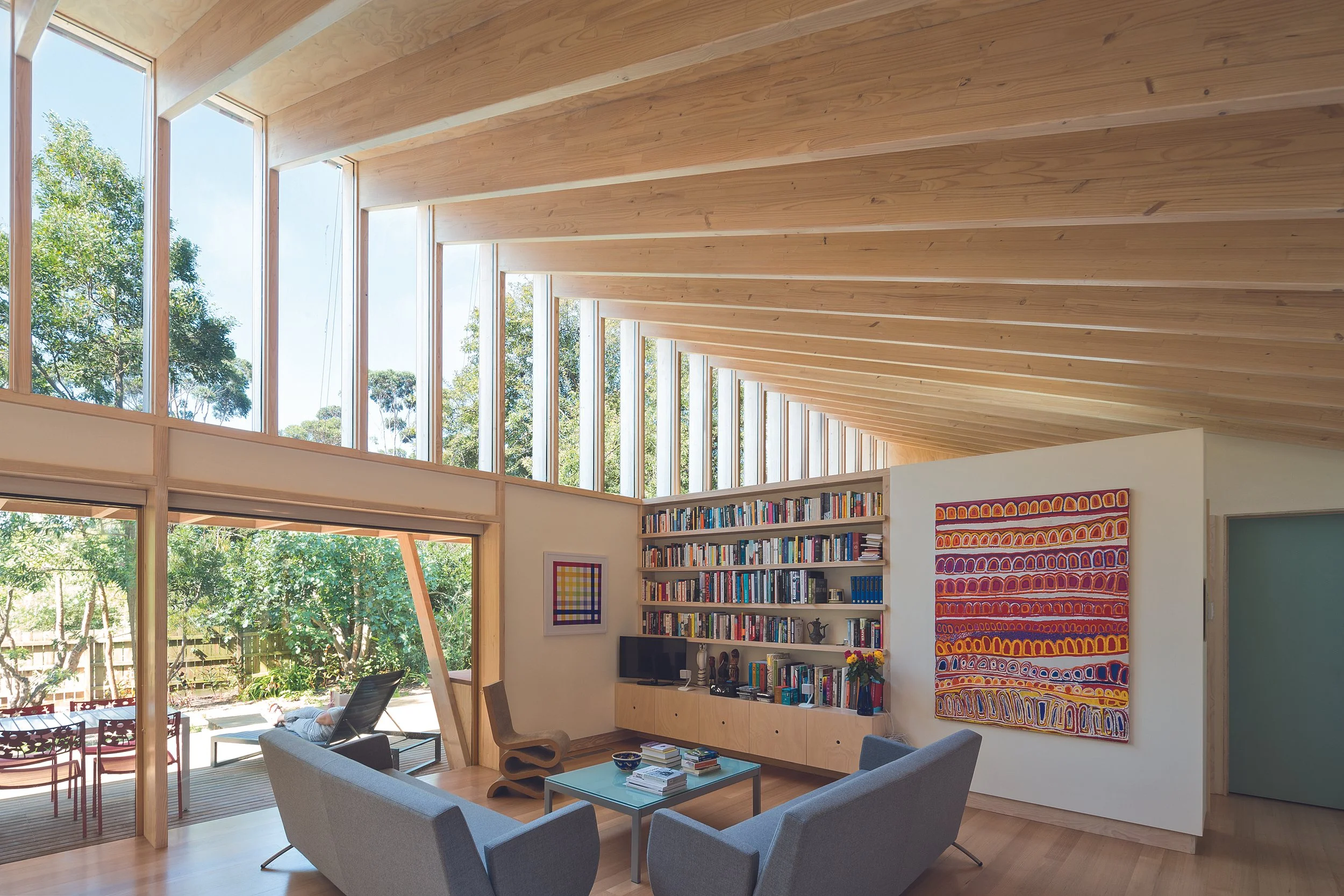
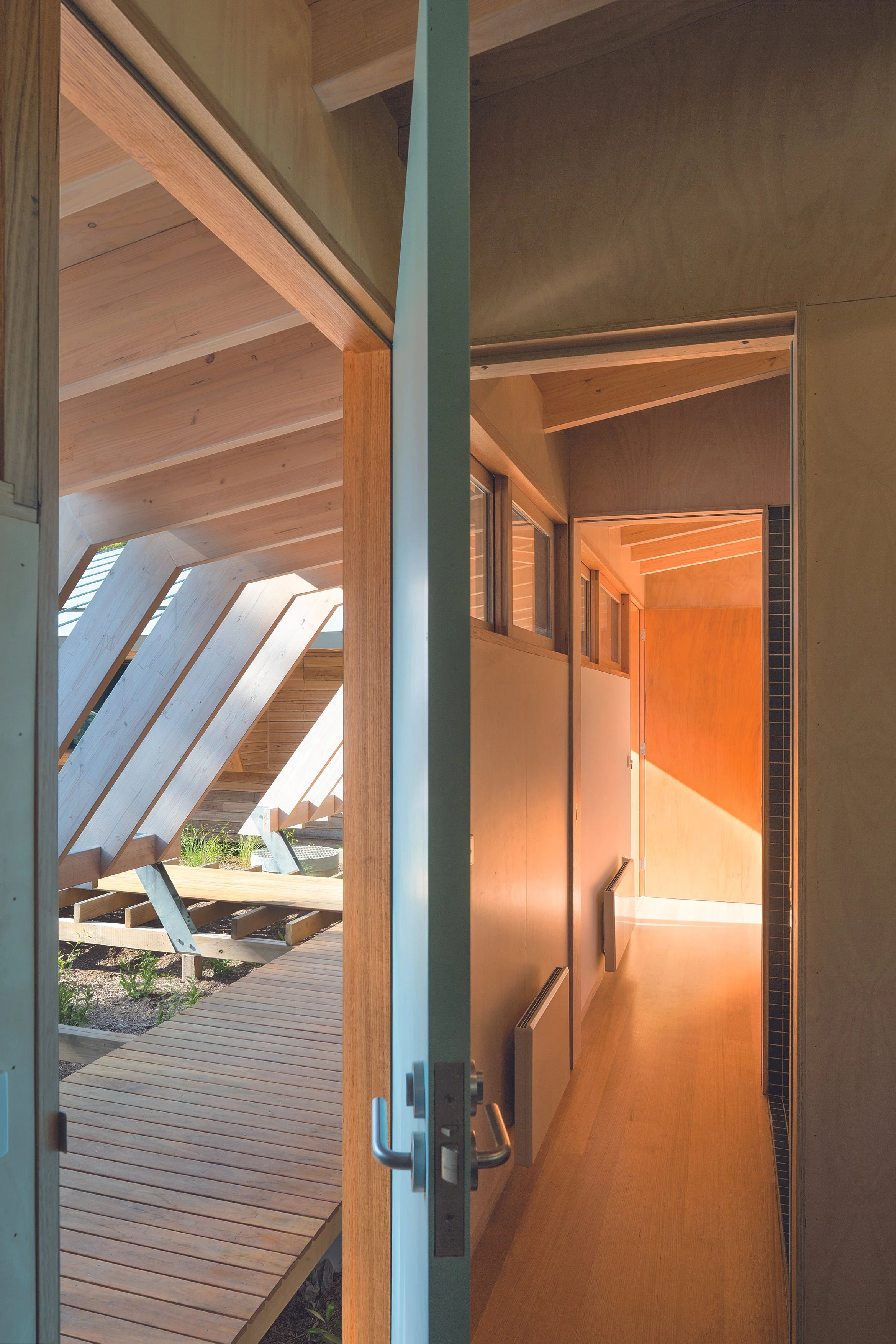
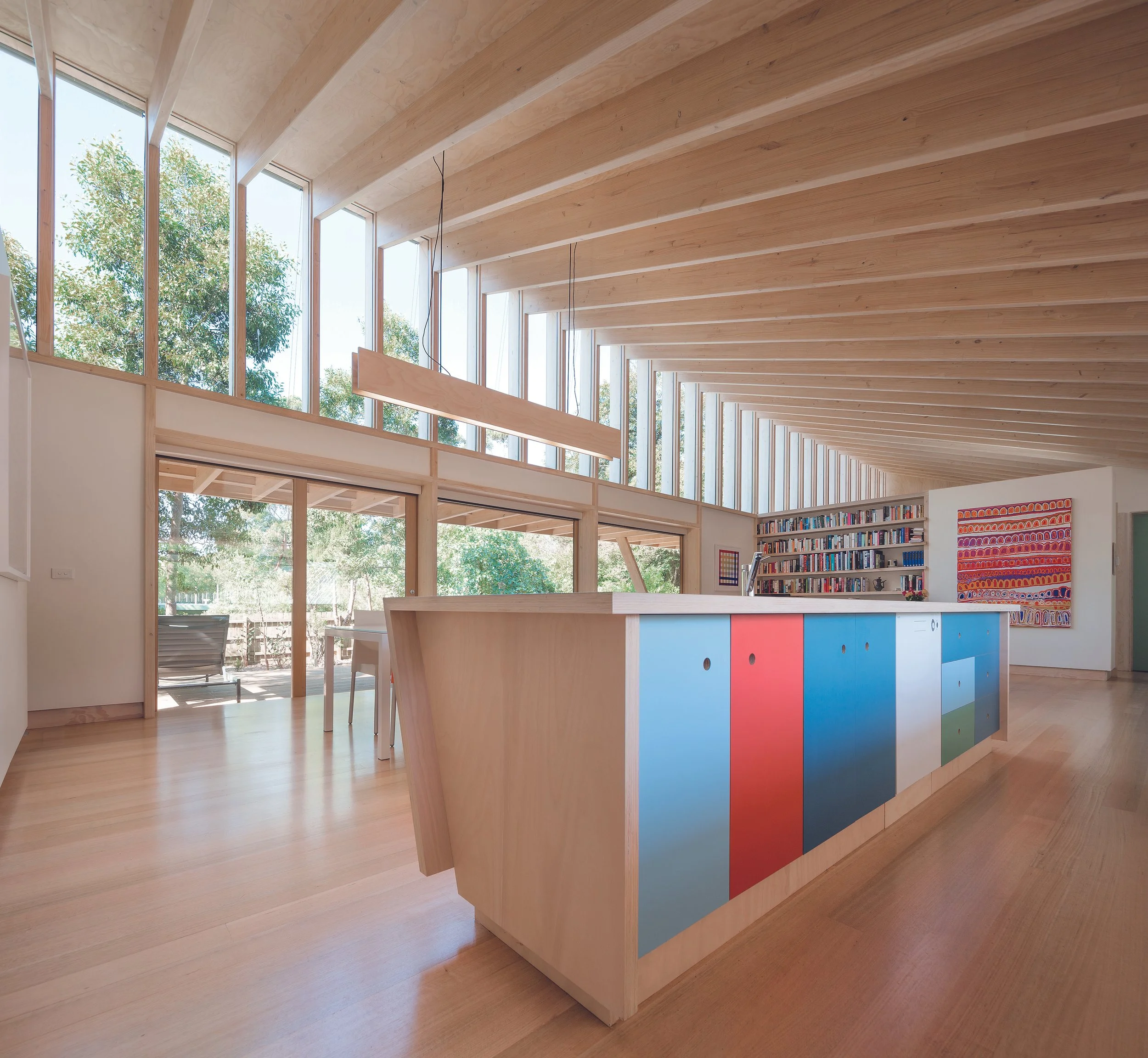
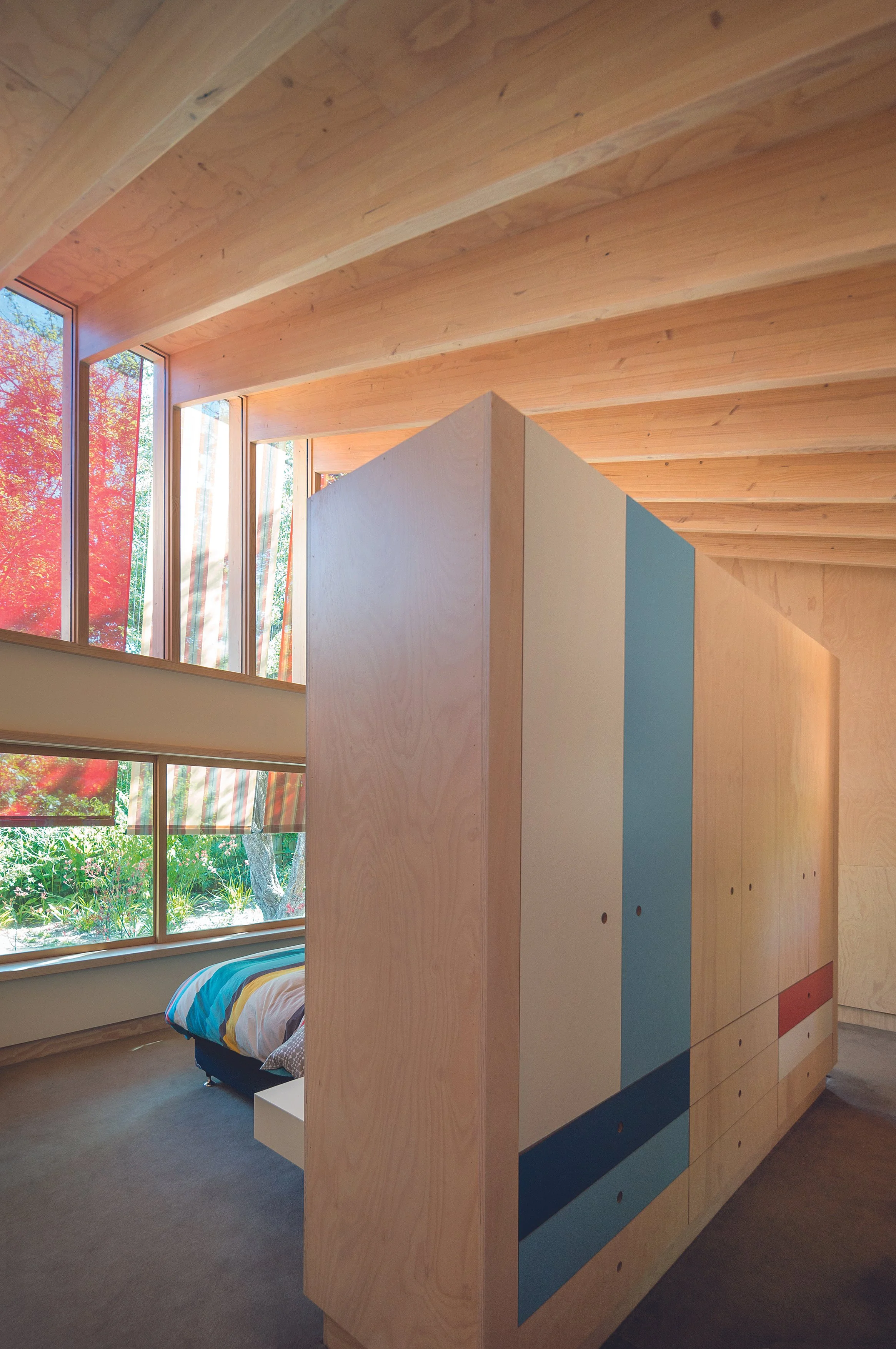
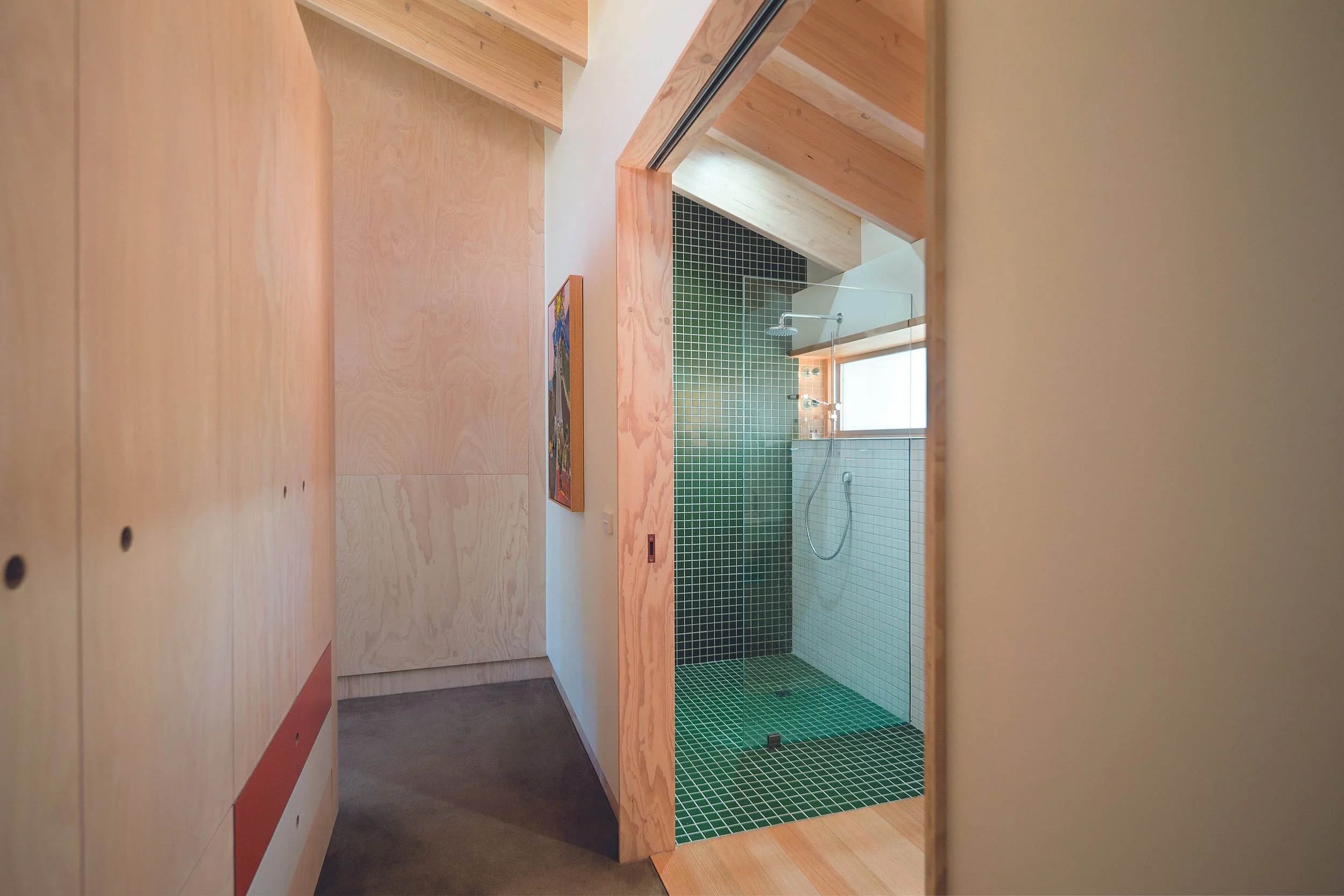
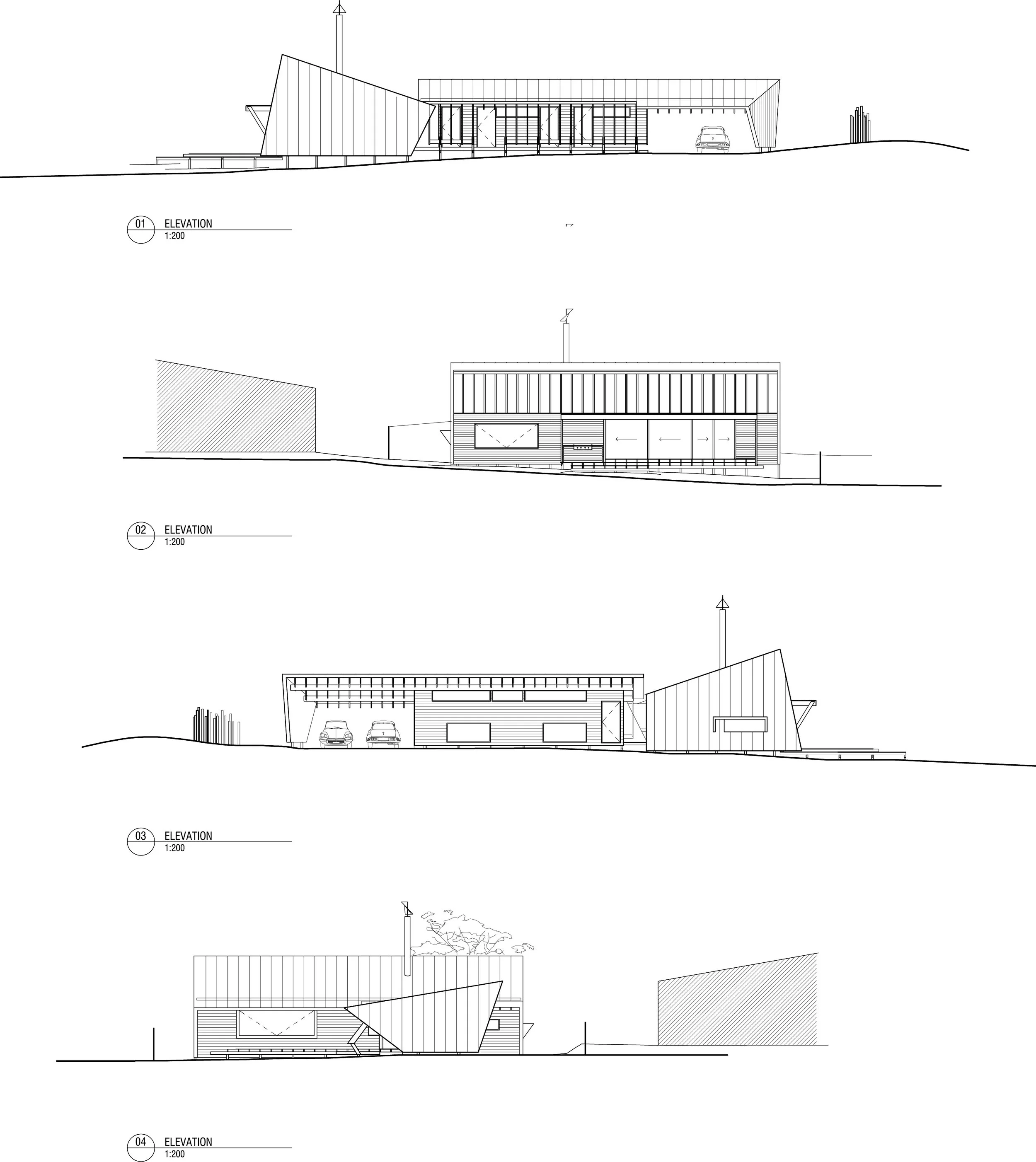
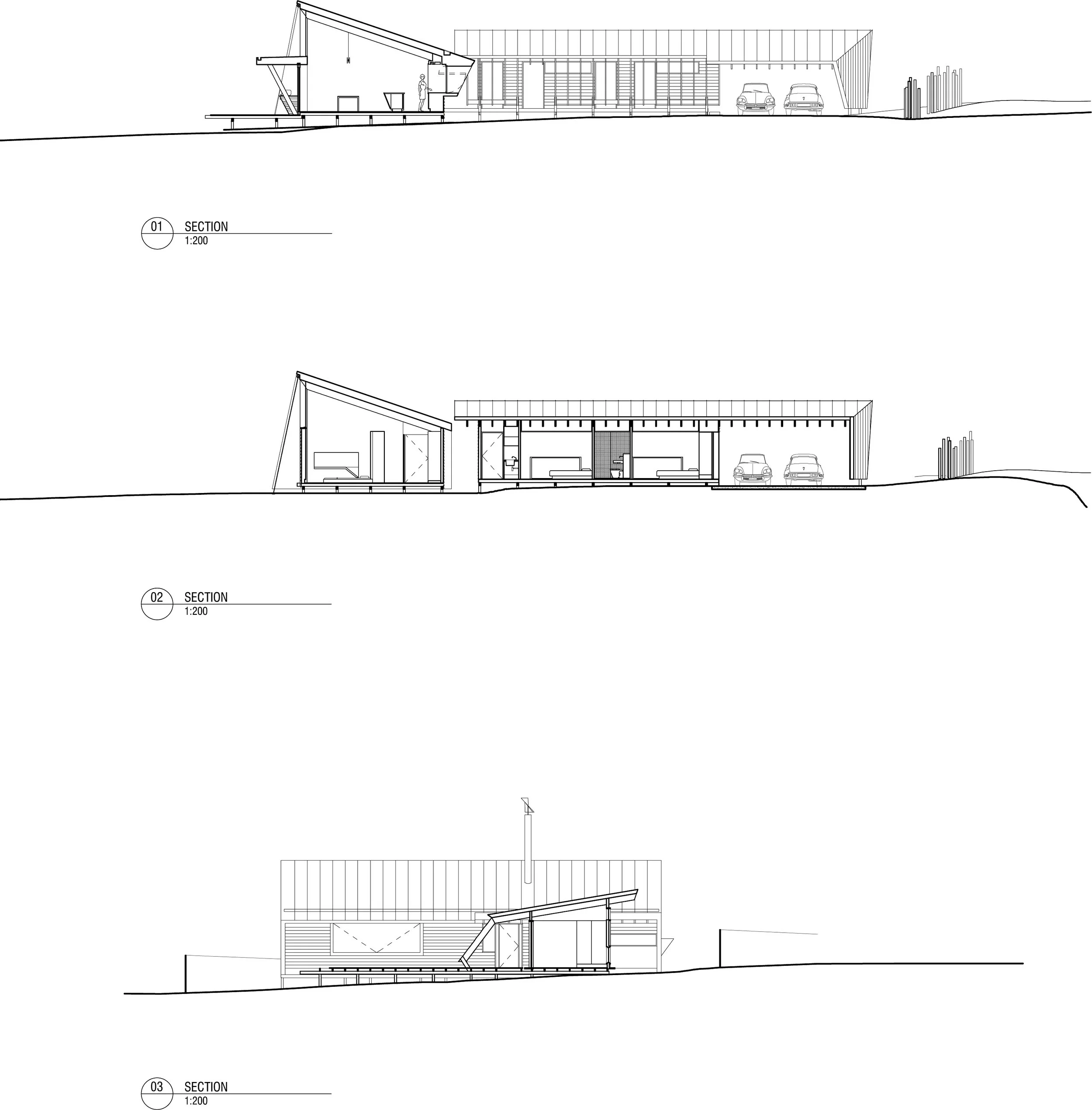
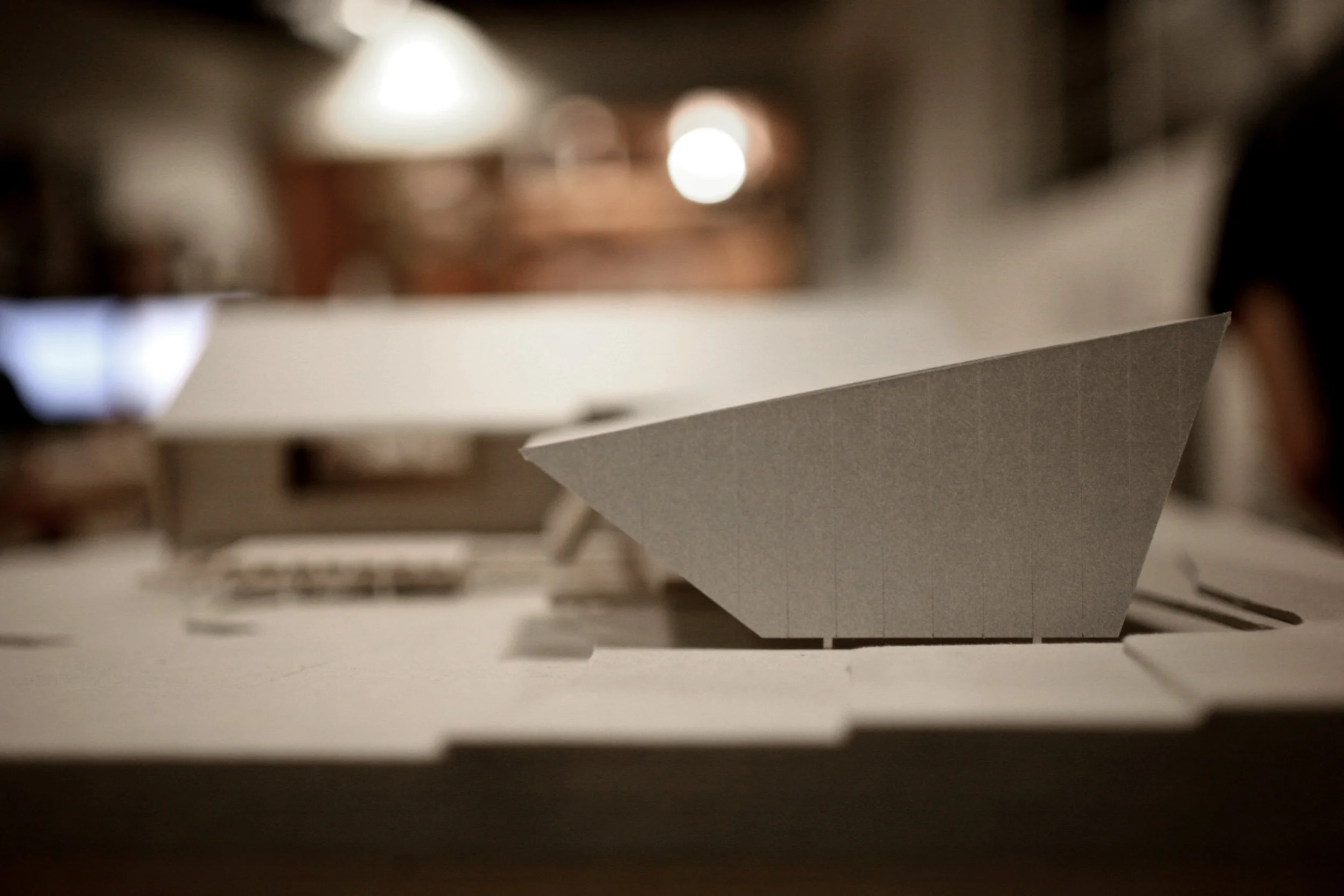
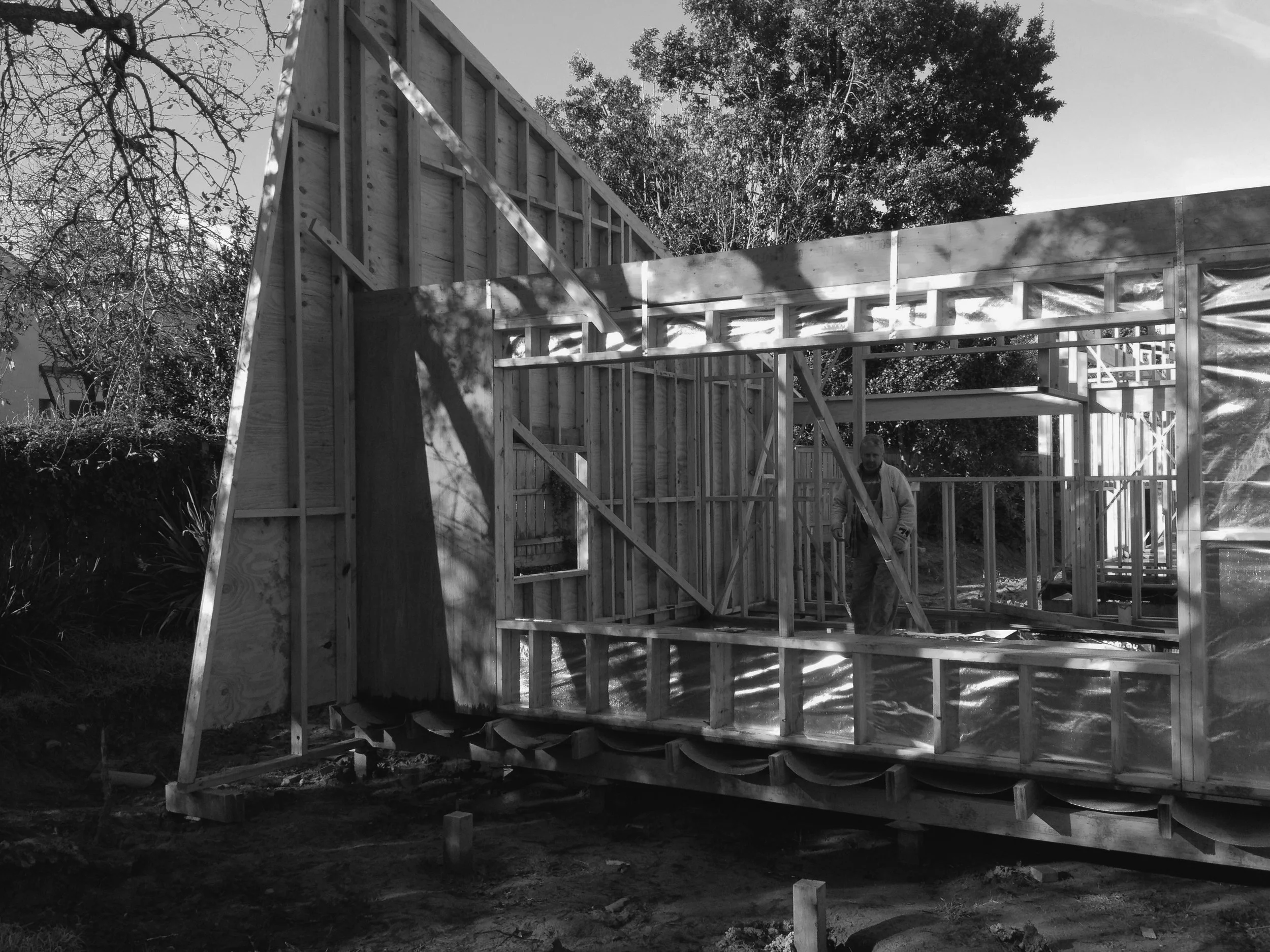
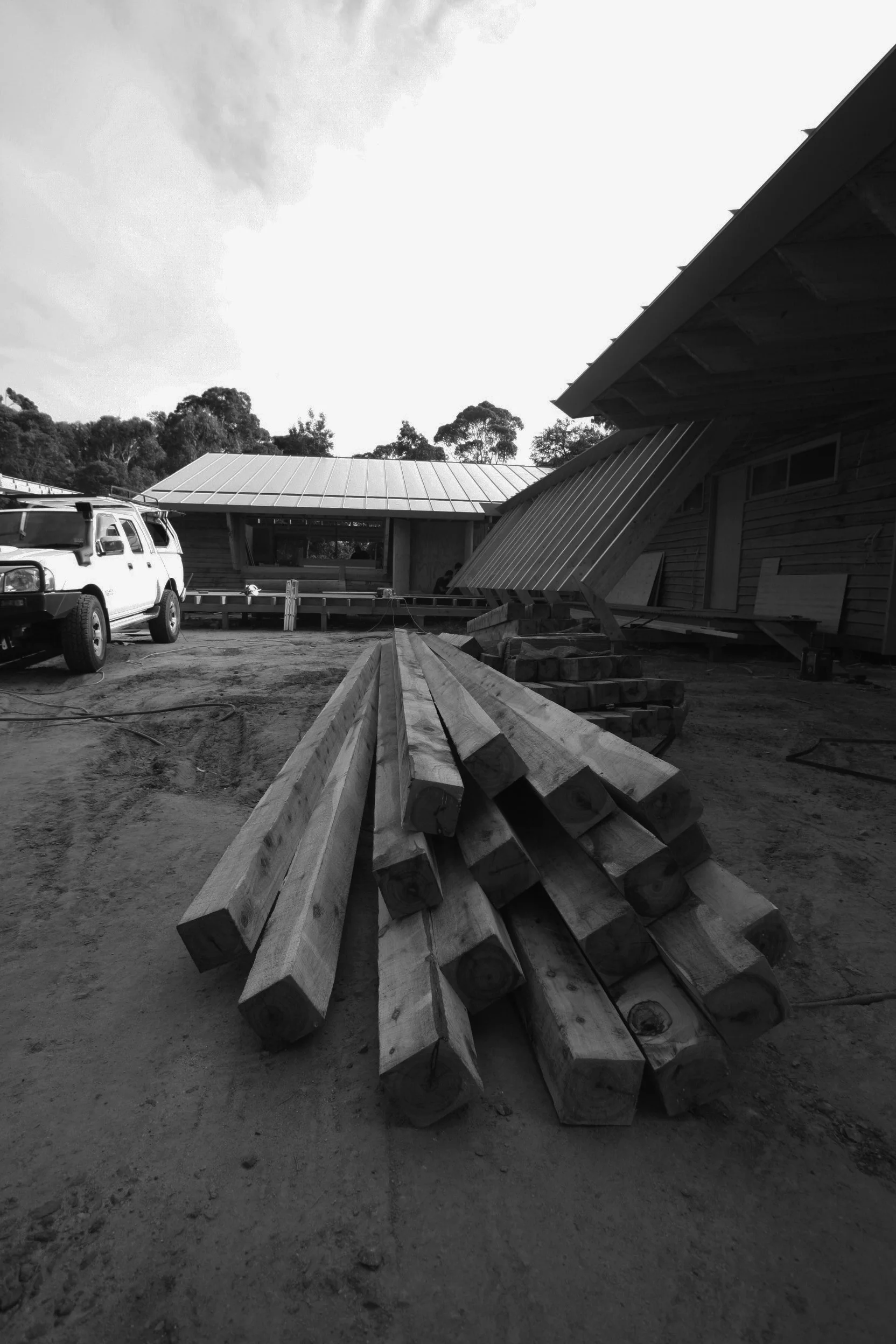
In section, the building emerges from the pairing of two timber forms. The guest wing adopts a simple skillion roof, while the main pavilion draws from an A-frame logic, both constructed from a shared Glulam system. Their rooflines fall toward each other, reducing perceived mass while signalling orientation and solar intent.
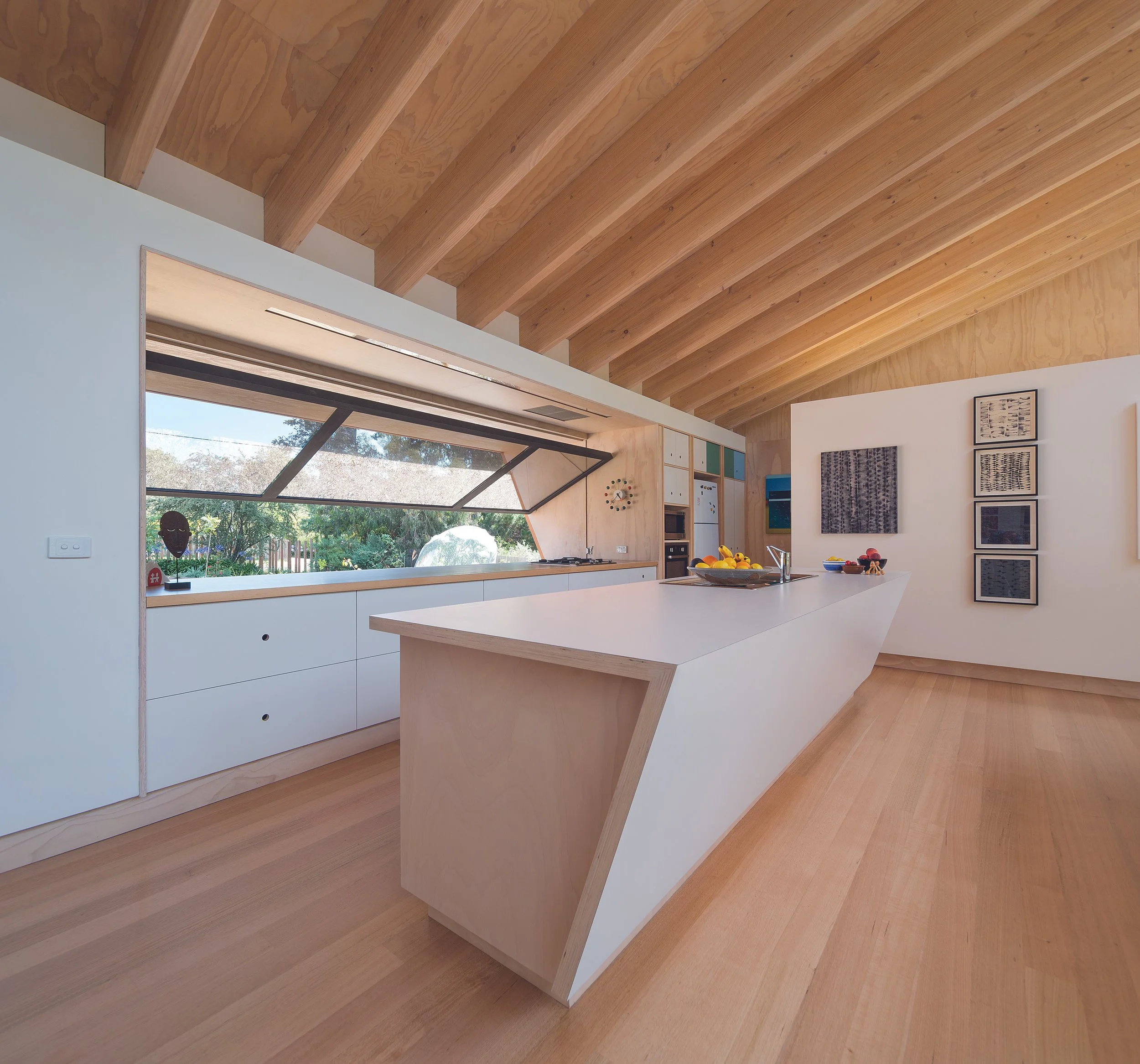
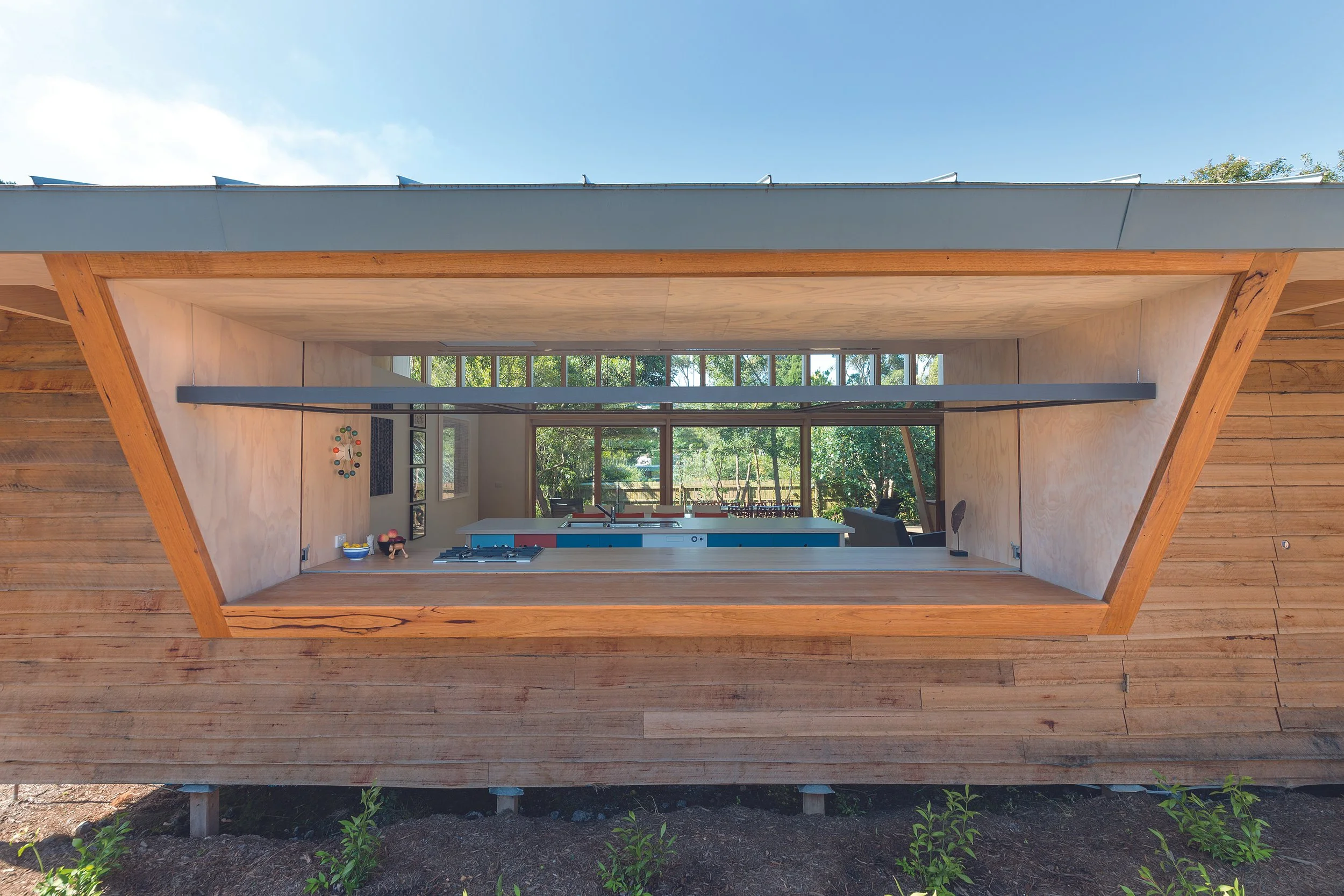
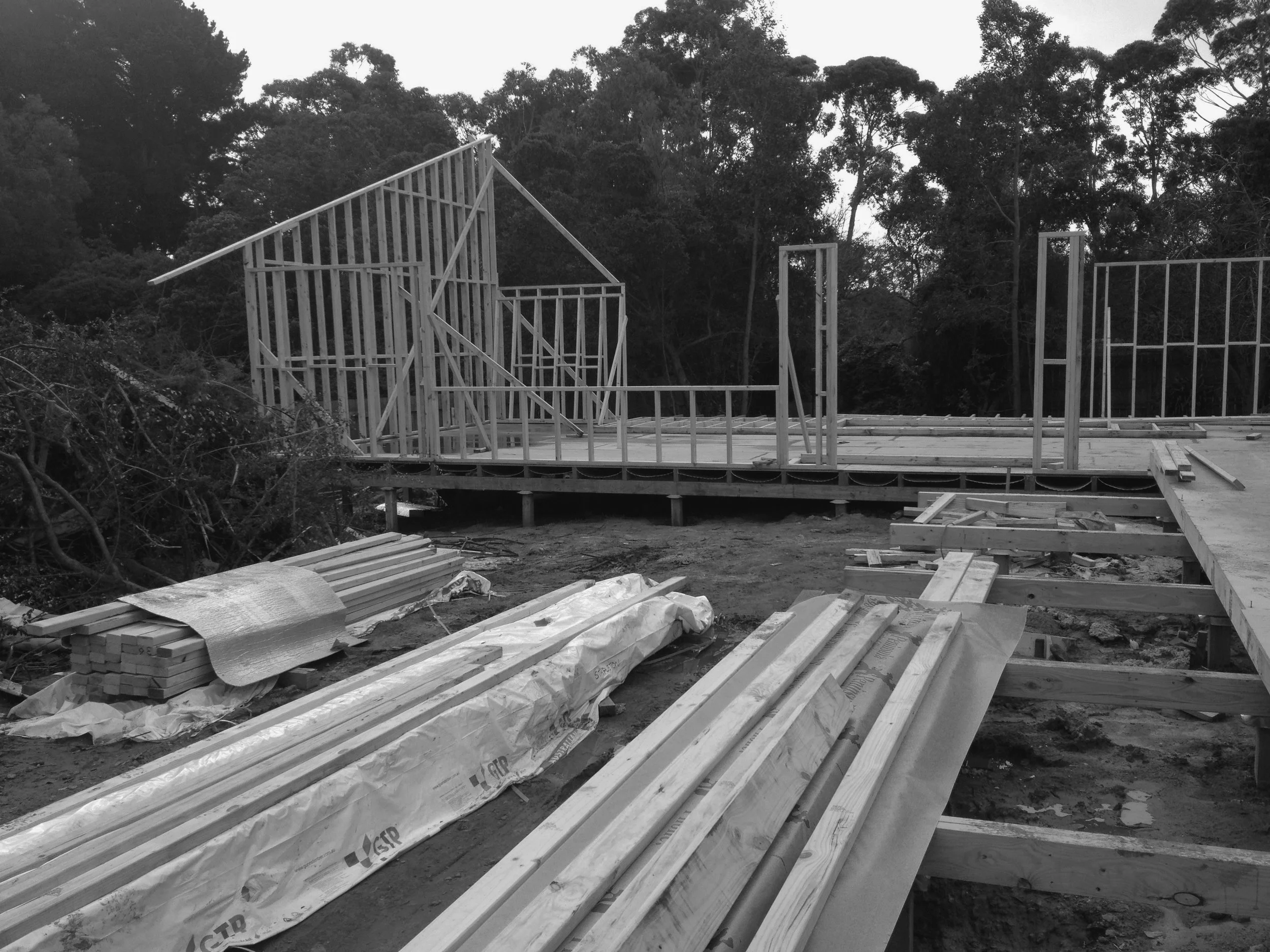
Constructed entirely from timber, the house expresses its structure through a series of repeating portal frames, echoing the direct and economical detailing of mid-century holiday houses. Precedents such as A-frame houses, the Small Homes Service and local examples informed a broader ambition for an accessible and democratic weekender. A 3.5 metre awning window, operated by an off-the-shelf garage door motor, opens the house to the street, allowing the client to greet passers-by and invite them in for a cup of tea.
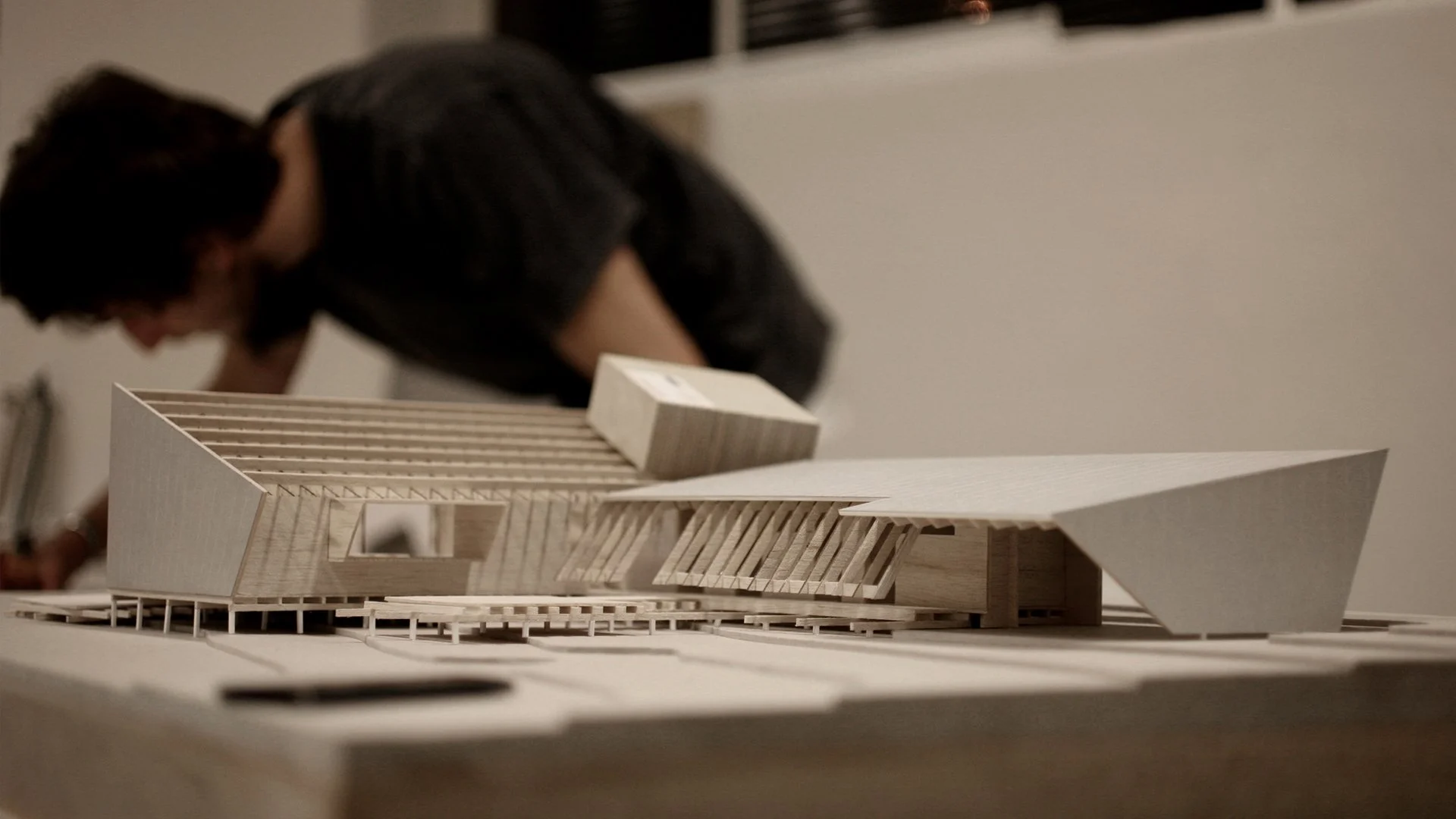
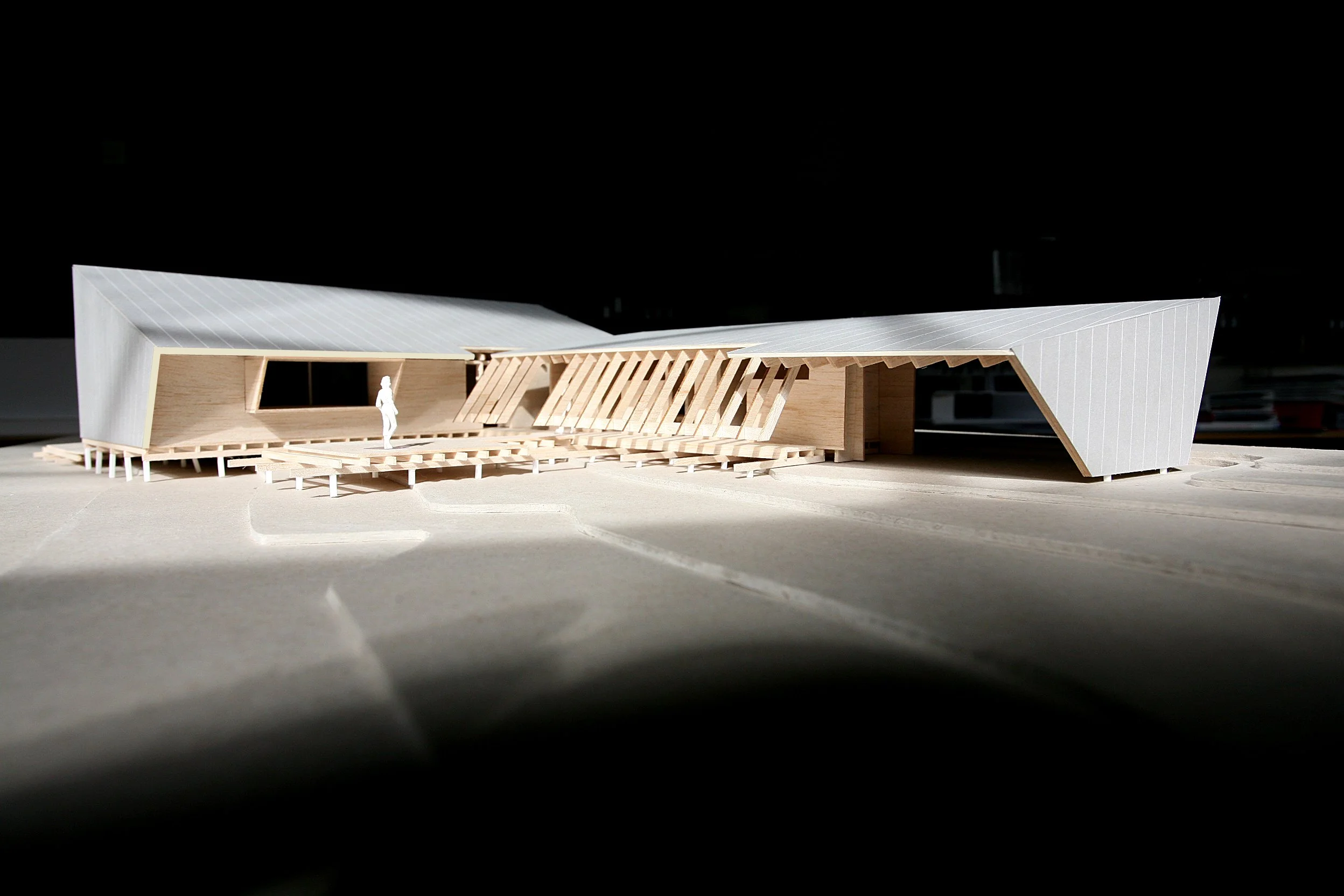
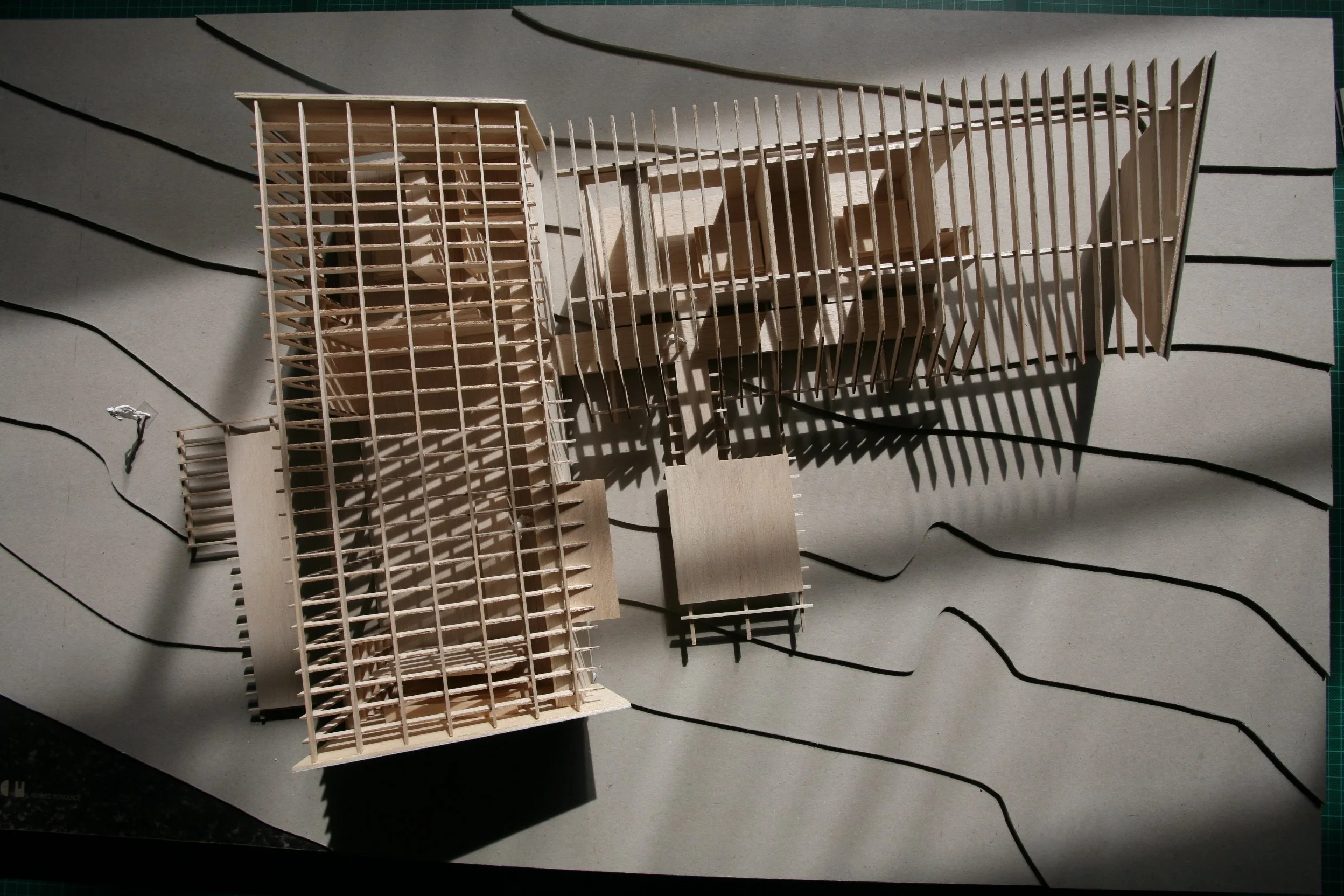
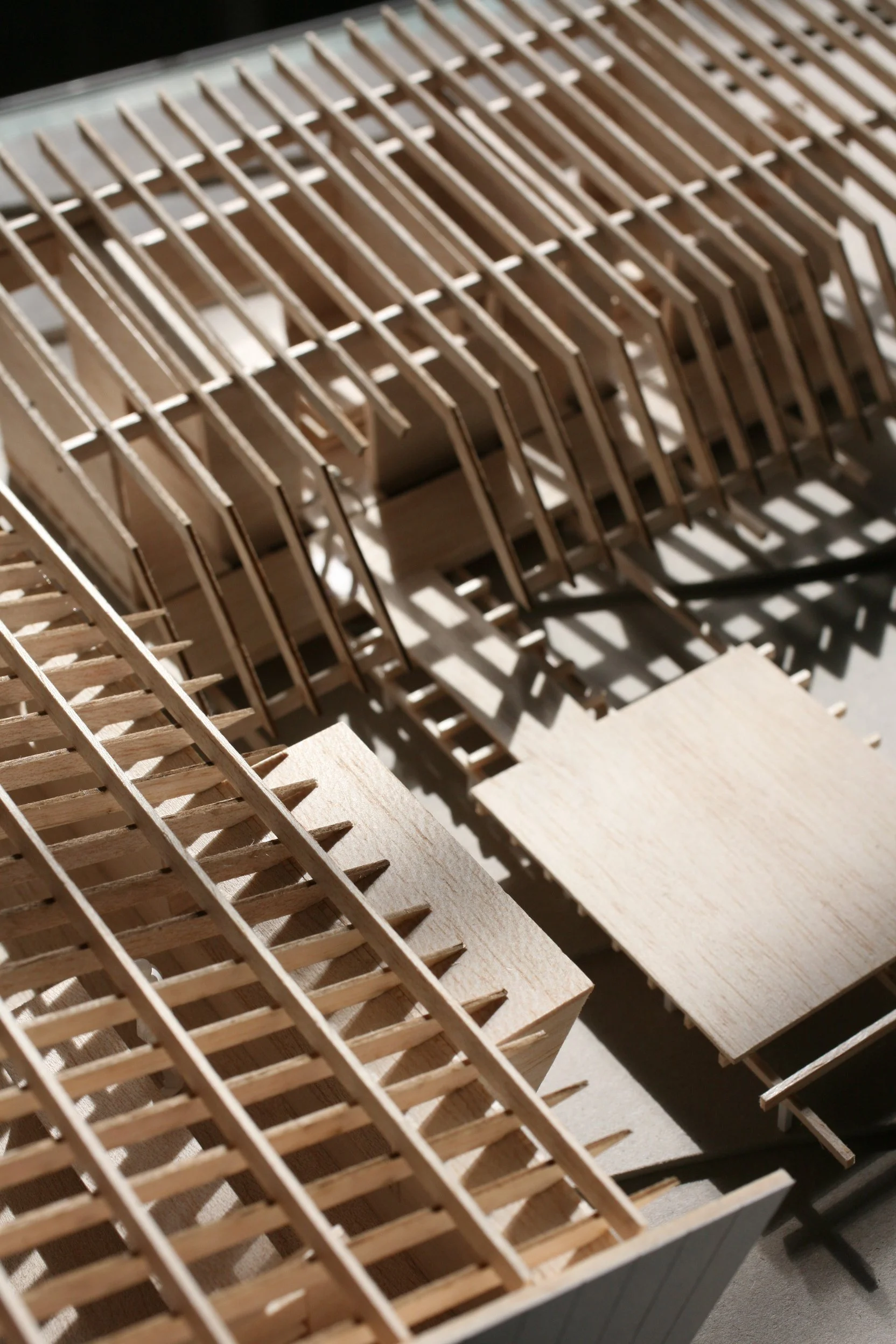
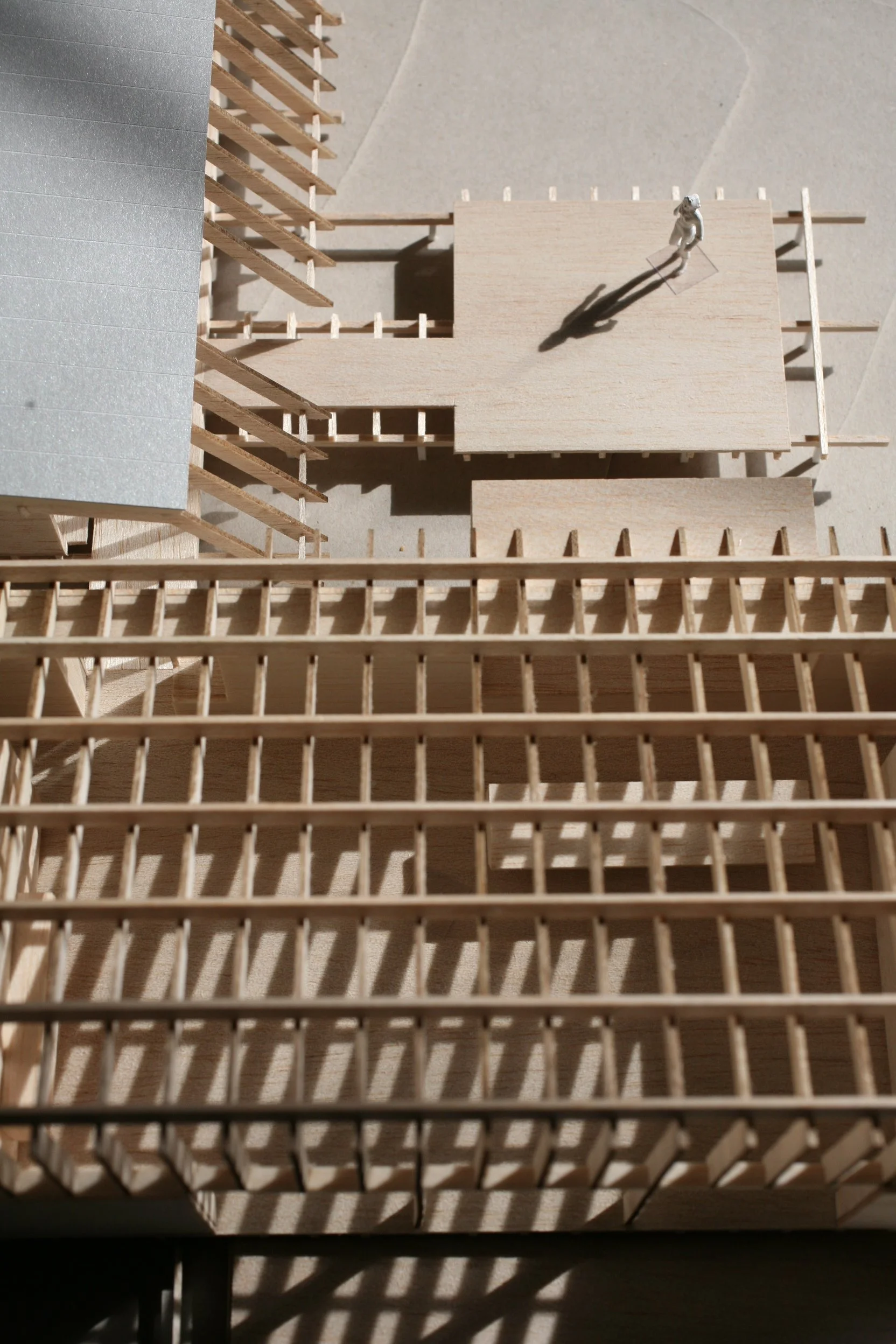
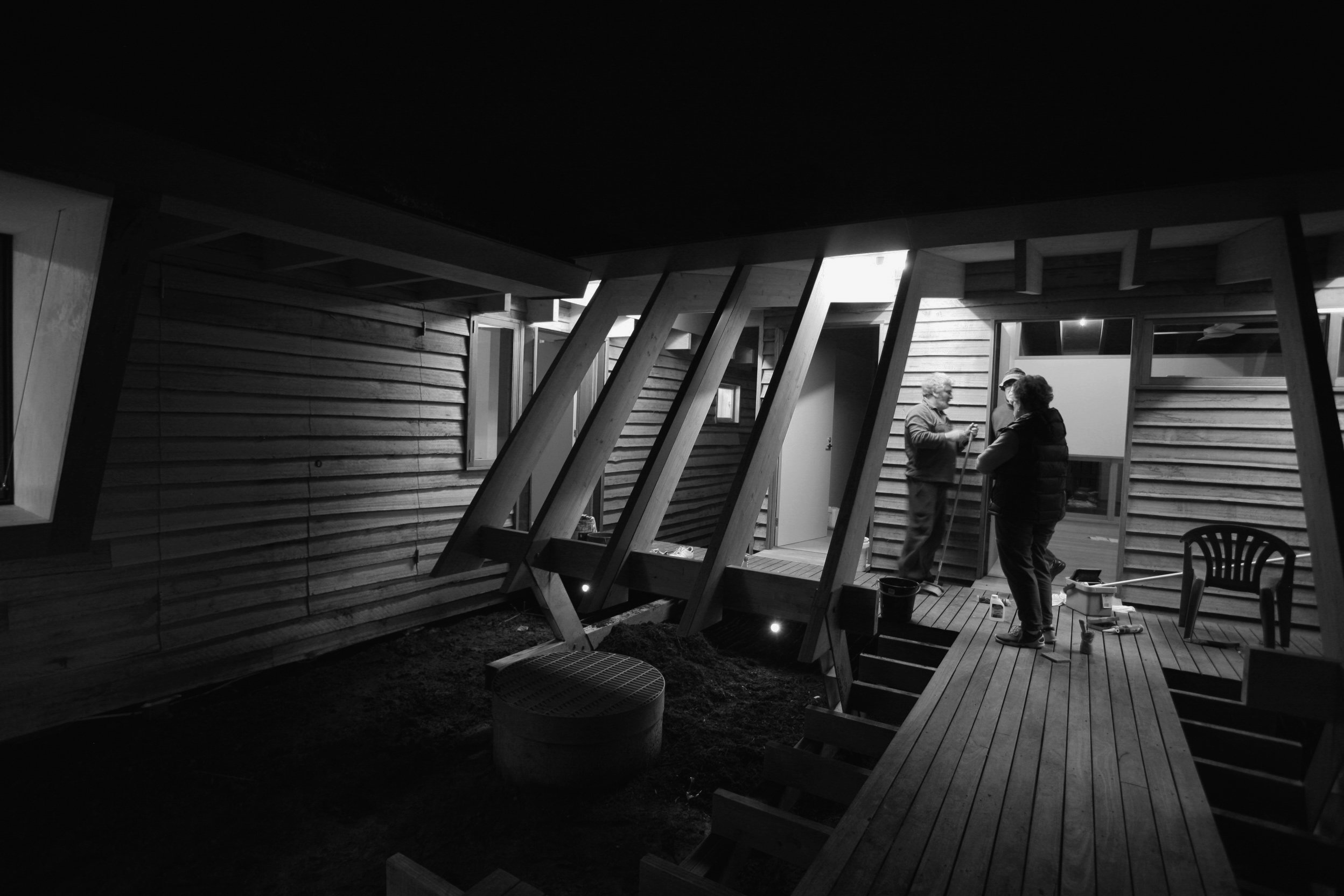
A network of decking and pergolas stitches the two buildings together, encouraging a life lived partially outdoors. The deck structure extends into the landscape, allowing native grasses to grow between its members, while a permeable front boundary suggests enclosure without closing off the street, acknowledging the social rhythms of beachside life.
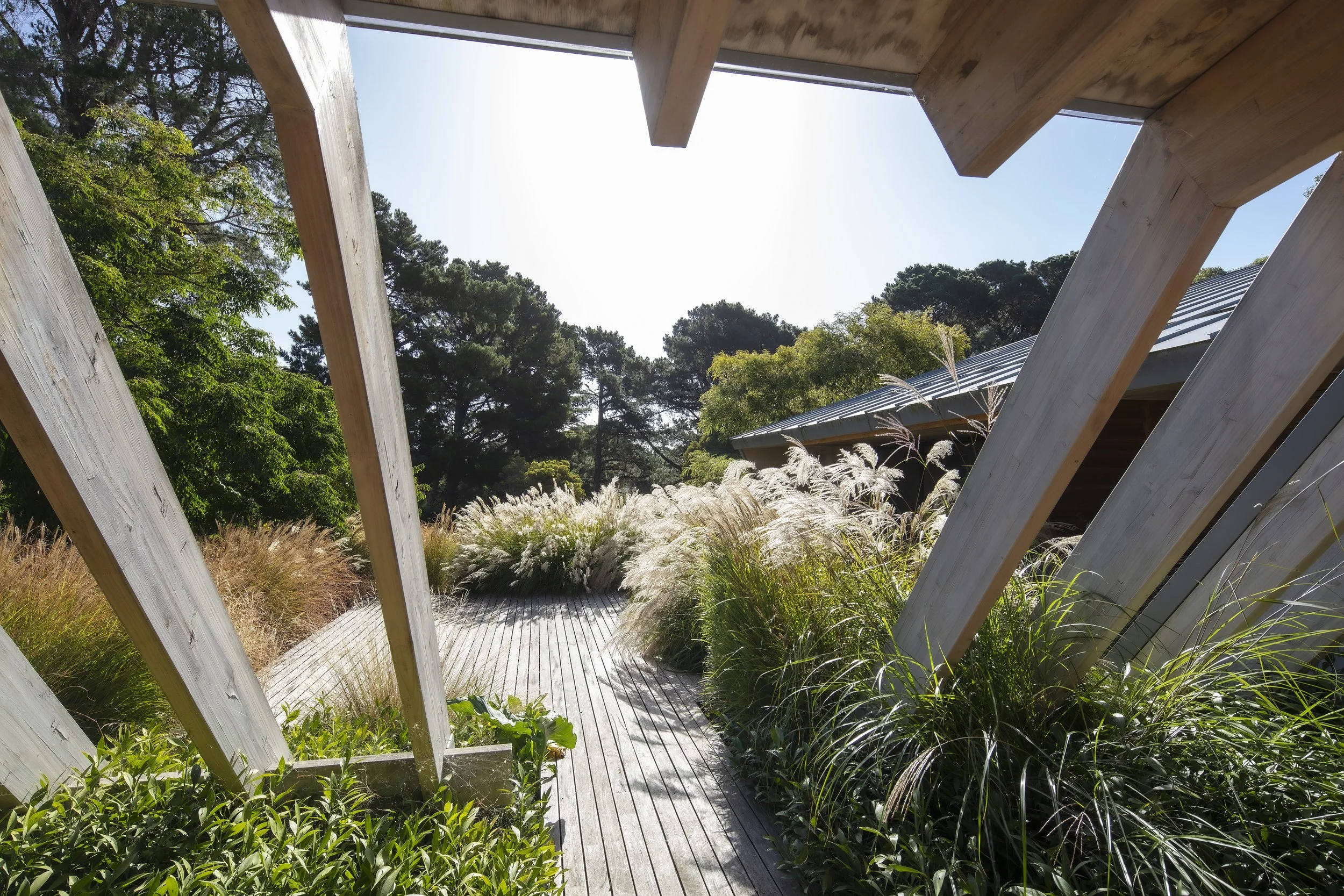
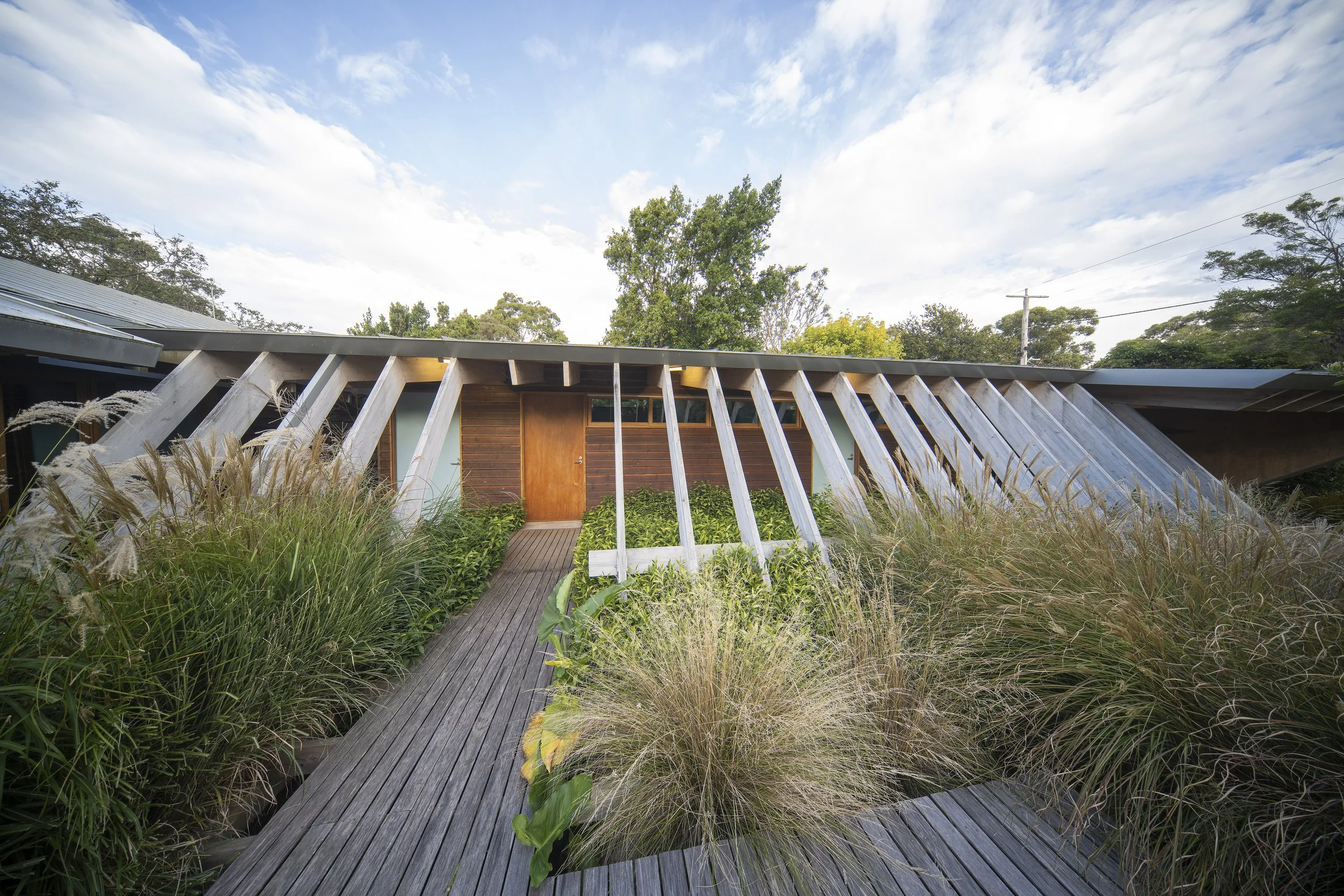
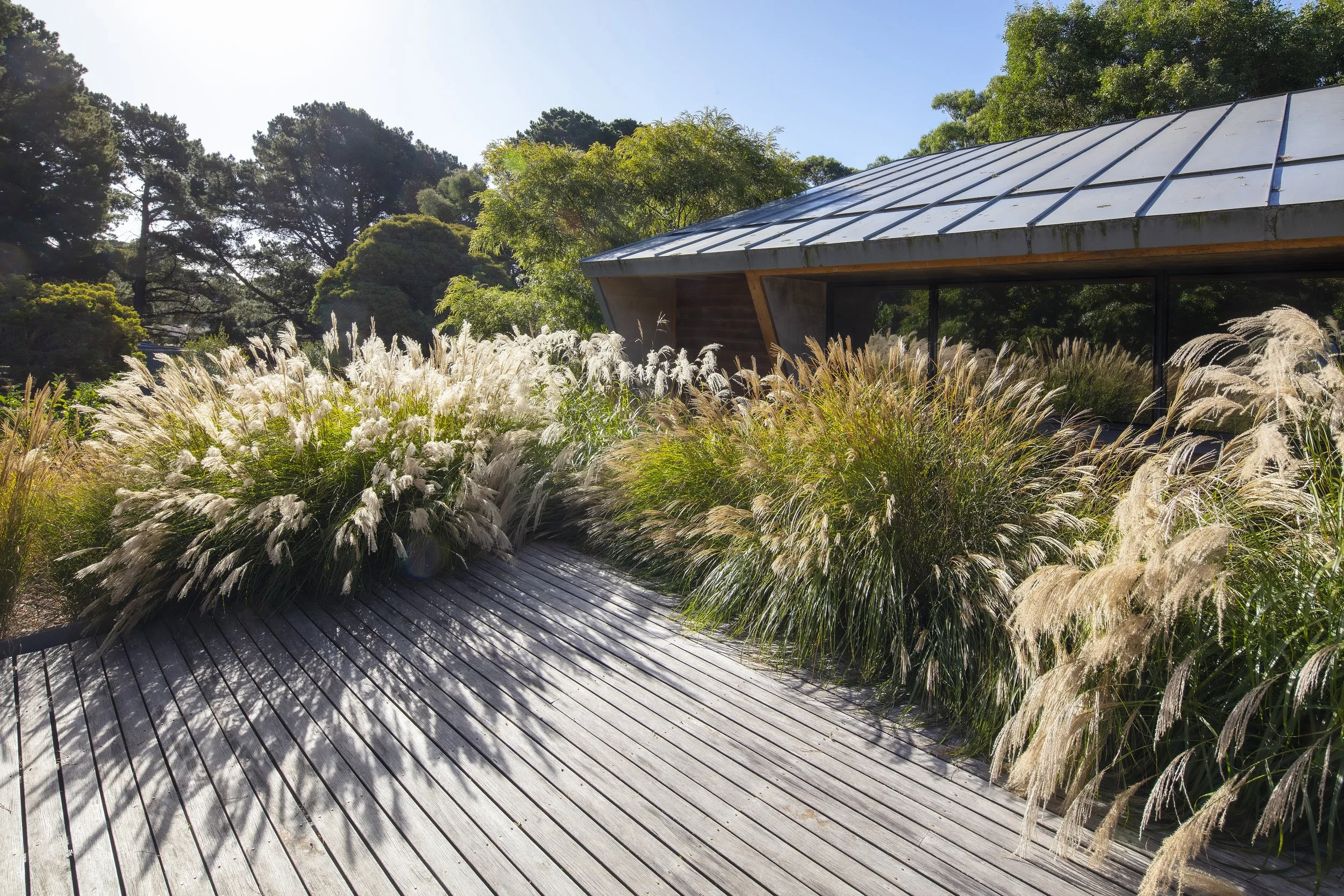
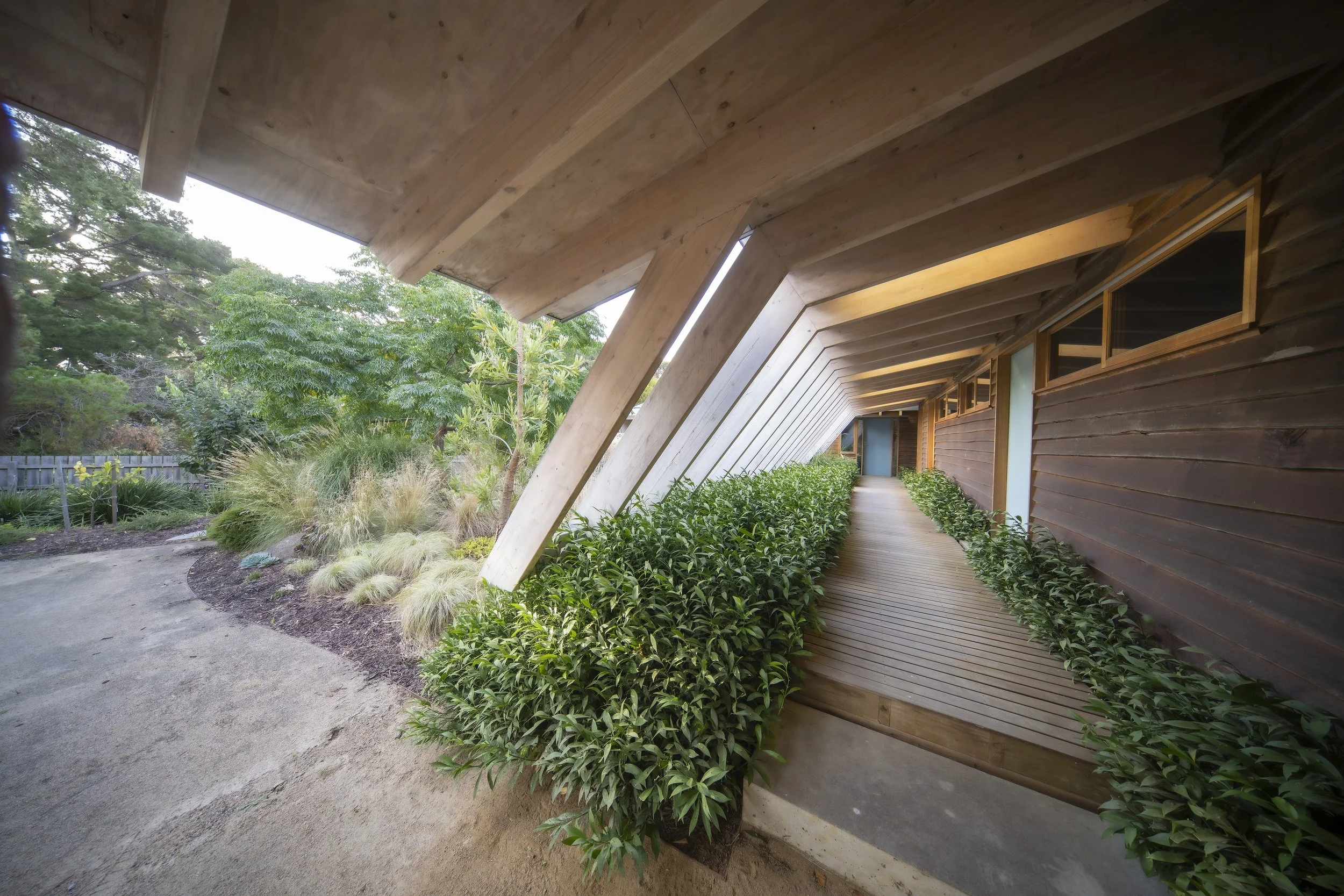
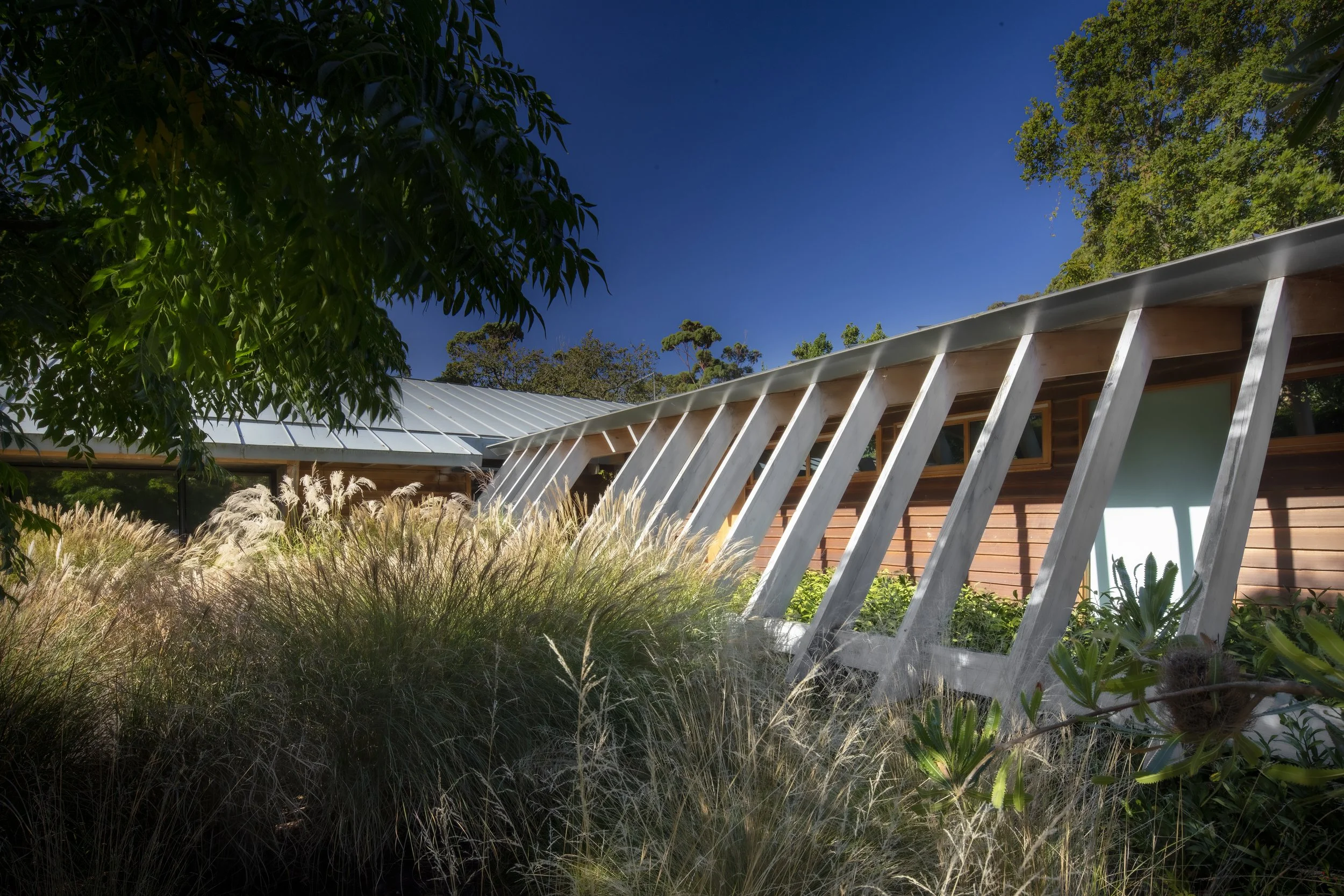
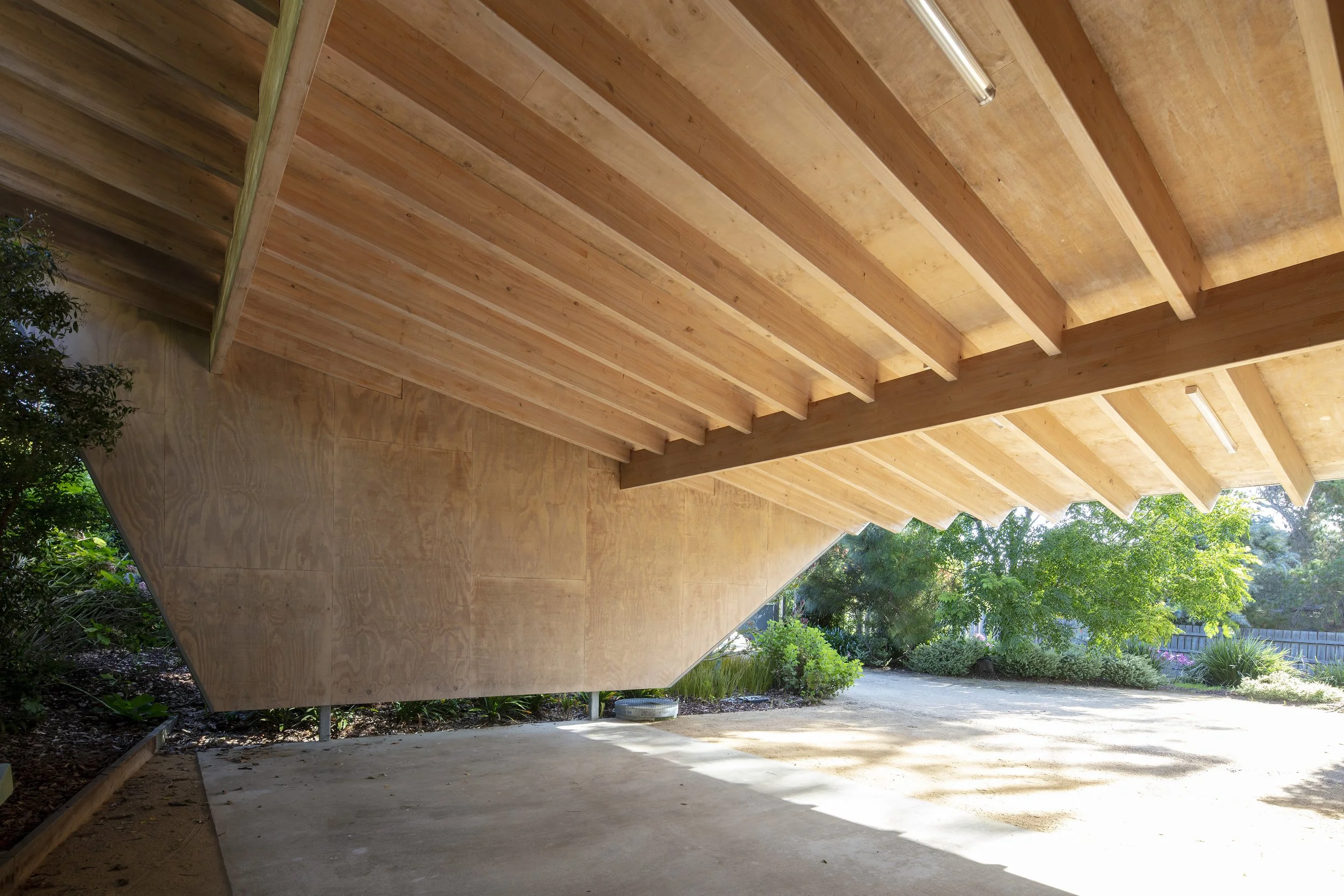
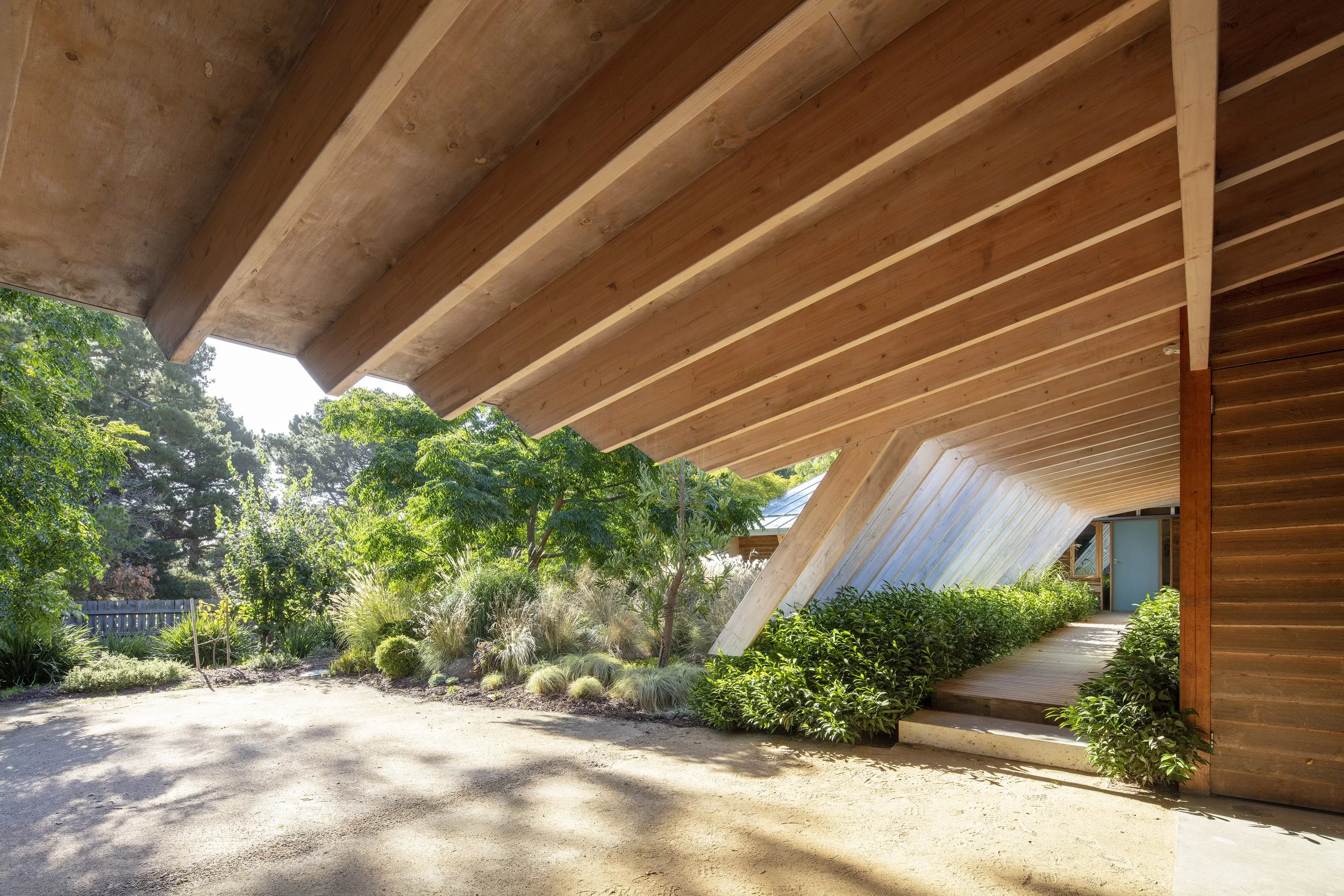
The result is a modest yet resonant piece of architecture, grounded in the culture of Peninsula summers. Lightweight, adaptable and materially direct, the house reimagines a disappearing typology, prioritising openness, flexibility and connection to both landscape and community.
-
HOUSE
-
COMPLETE | 2013
-
BUNURONG COUNTRY (KULIN NATION) SOMERS, VICTORIA
-
BUILDER | ROSS STAPLETON
STRUCTURAL ENGINEER | CO-STRUCT
-
JOHN GOLLINGS
-
-
2014 Winner | Residential Architecture Award | Australian Institute of Architects VIC Awards