
PIER PAVILION
2017
‘We imagine the land that was before and envision the water would have entered the harbour via many streams, rivers, cascades, falls and pools not as it does now through consolidated and redirected rivers and stormwater drains’
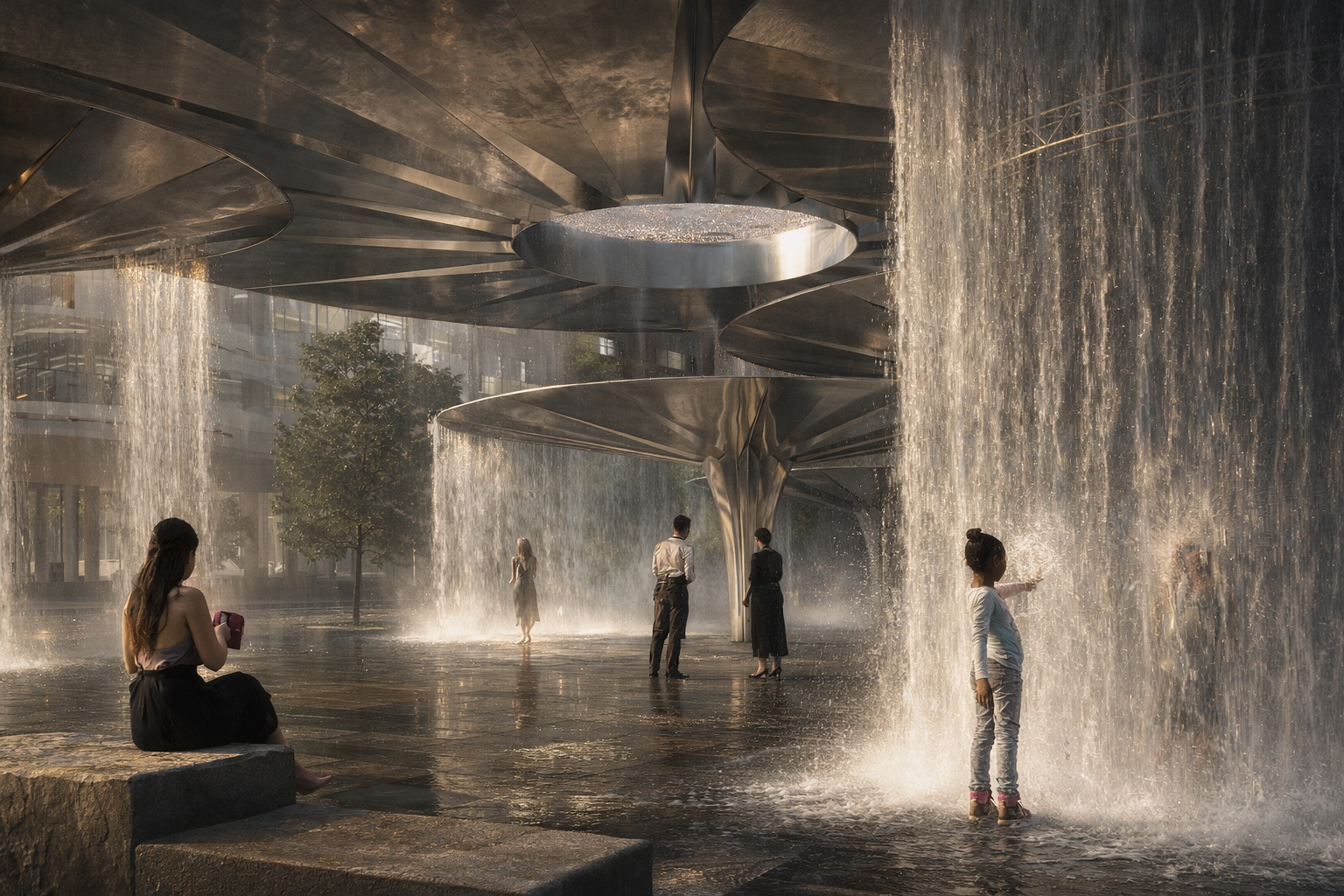
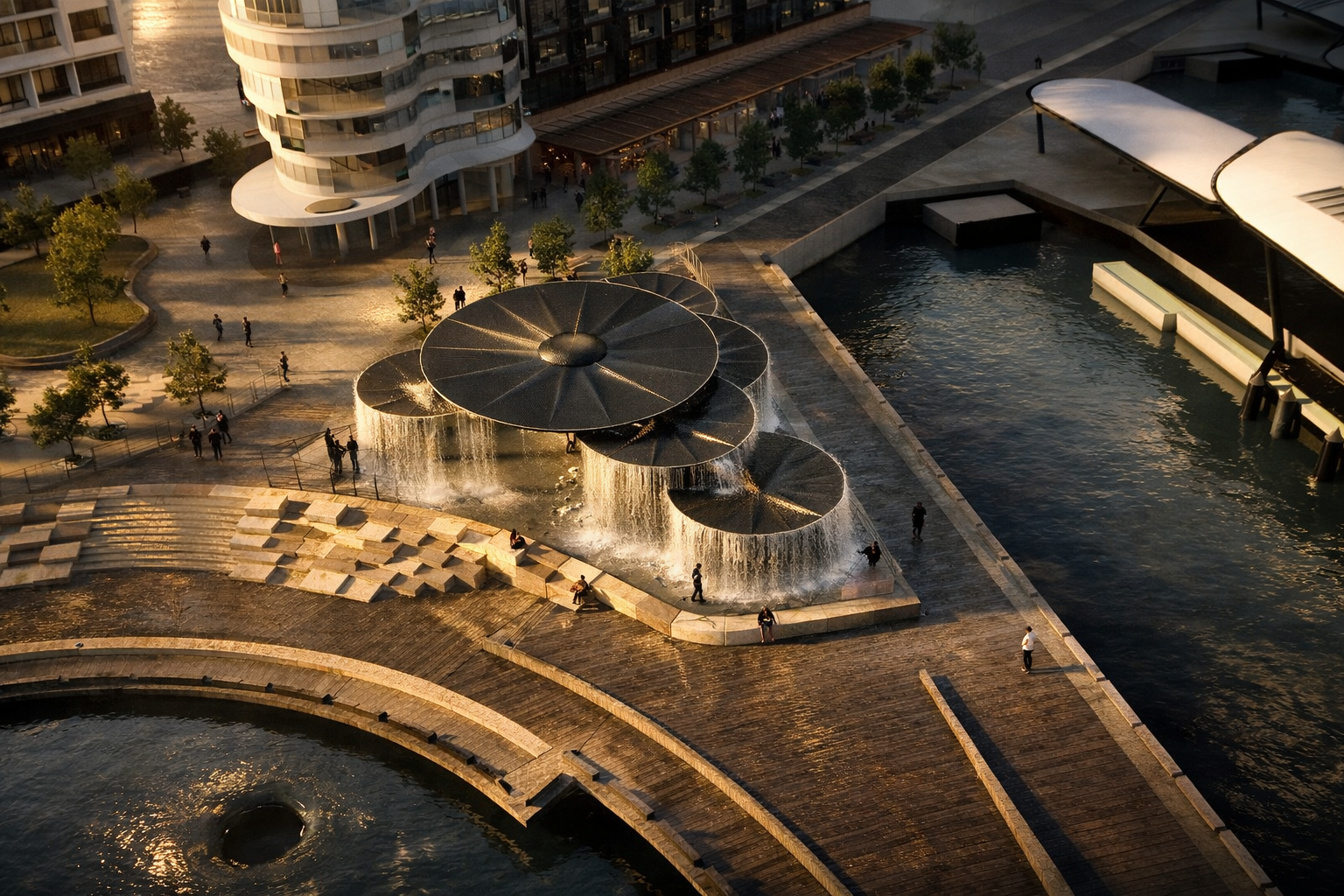
Sydney’s connection to the harbour and its water is undeniable. Artists from Lloyd Rees to Brett Whiteley have represented Sydney through this fascination with living beside the water. The world sees Sydney—and by extension, Australia—through architectural icons inextricably linked to the harbour; the Bridge and the Opera House are set against arguably the world’s most beautiful body of water.
We often imagine the land as it once was, envisioning how water entered the harbour via a network of streams, rivers, cascades, and pools—rather than through today's consolidated stormwater drains and redirected rivers. Indeed, the original rock escarpments, pools, and waterfalls, such as the well-documented Glenmore Falls in Paddington, are sadly long lost. While it is impossible to reinstate these lost natural features, we propose a wholly contemporary interpretation at Barangaroo.
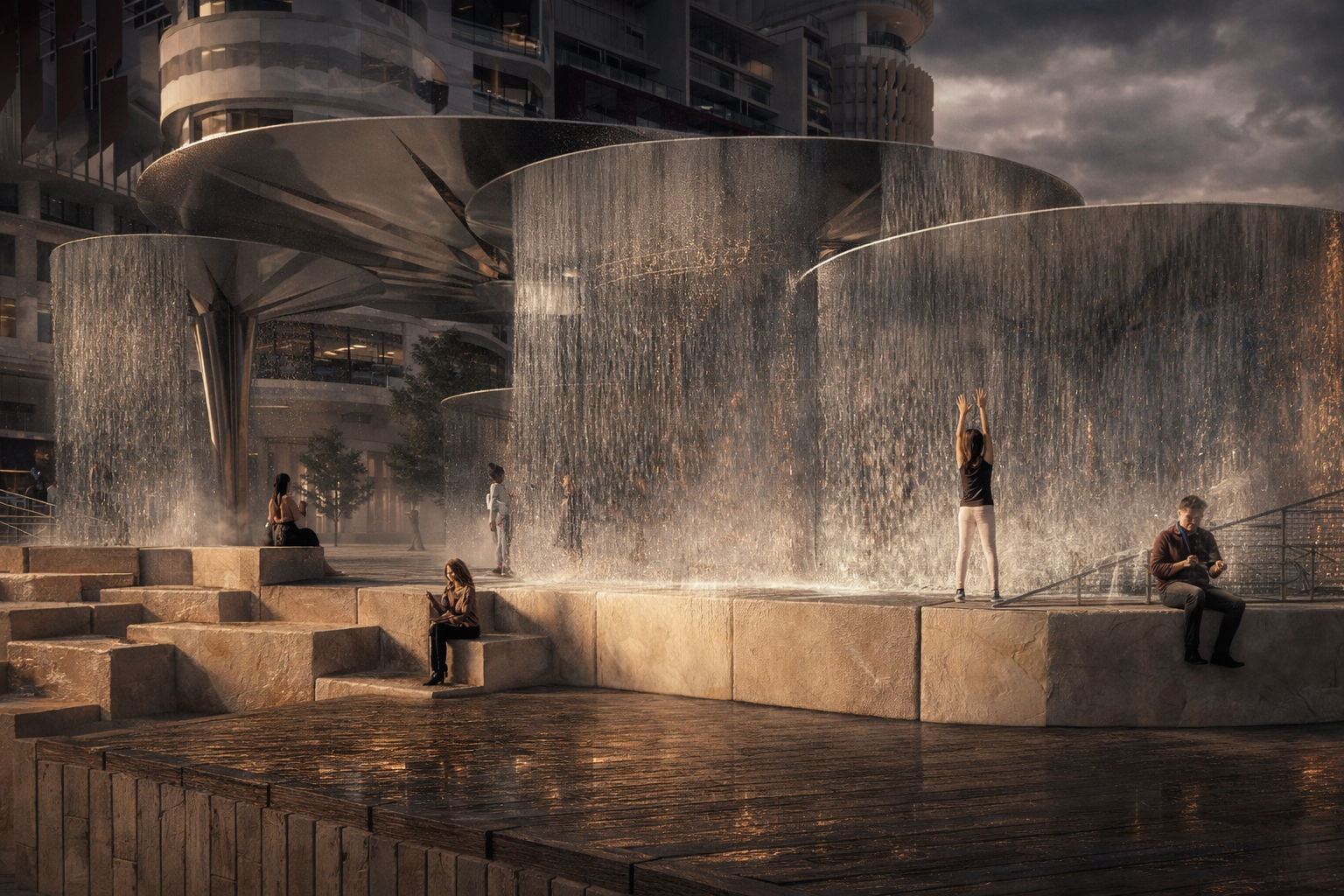
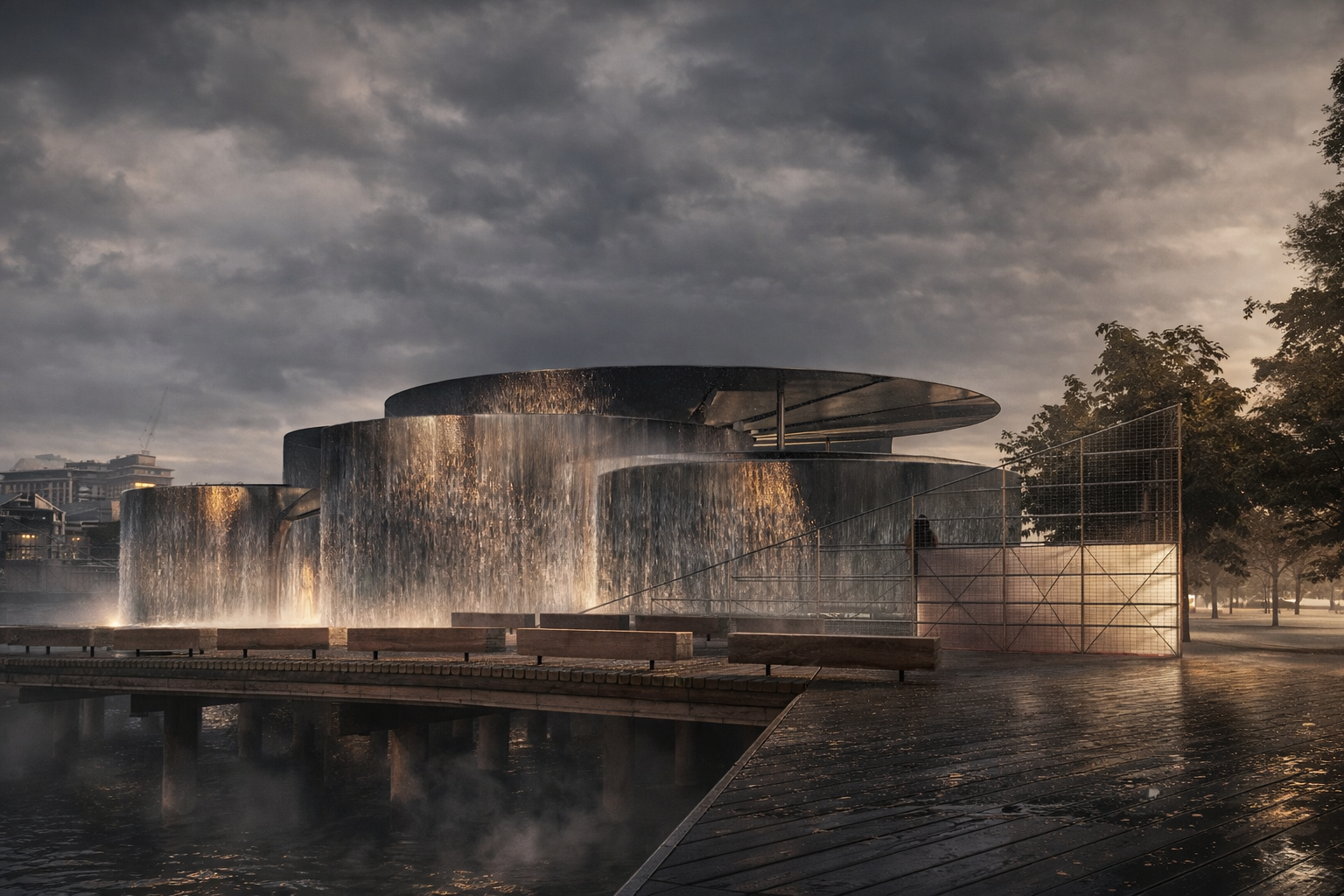
Barangaroo Pools and its falls may never have existed. Yet, like the manufactured ocean rock pools of Sydney—favourite cooling-off spots for generations—this scheme harnesses the cooling, calming qualities of moving water at its core.
We propose that the pavilion draw water from the harbour via a giant vortex; this, in turn, filters and cleans the water like an enormous "sea bin," removing floating debris and plastic. The cleansed water is delivered to a large circular pool which cascades into a series of smaller ponds, empties onto the pier, and ultimately returns to the harbour.
Barangaroo Pools is not a fountain in the traditional sense—something merely to be viewed from the outside. Rather, it is a pavilion with translucent walls of water that can be occupied for events and gatherings, walked through, or played in. The seven interlocking, elevated ponds are also instantly recognisable from above; a new Sydney icon—albeit a modest one in comparison to the Opera House and Bridge—that is nonetheless uniquely identifiable as Sydney.
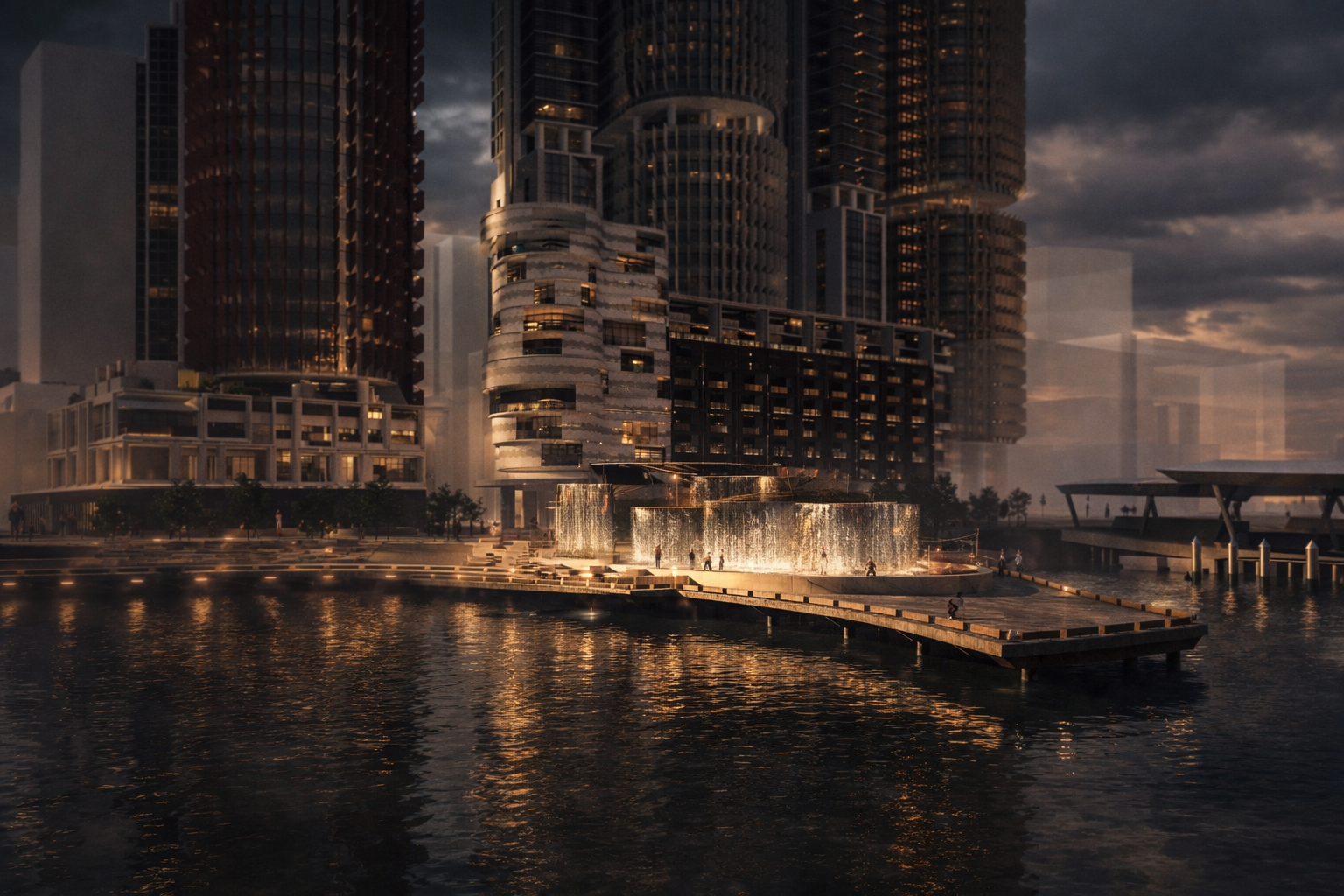
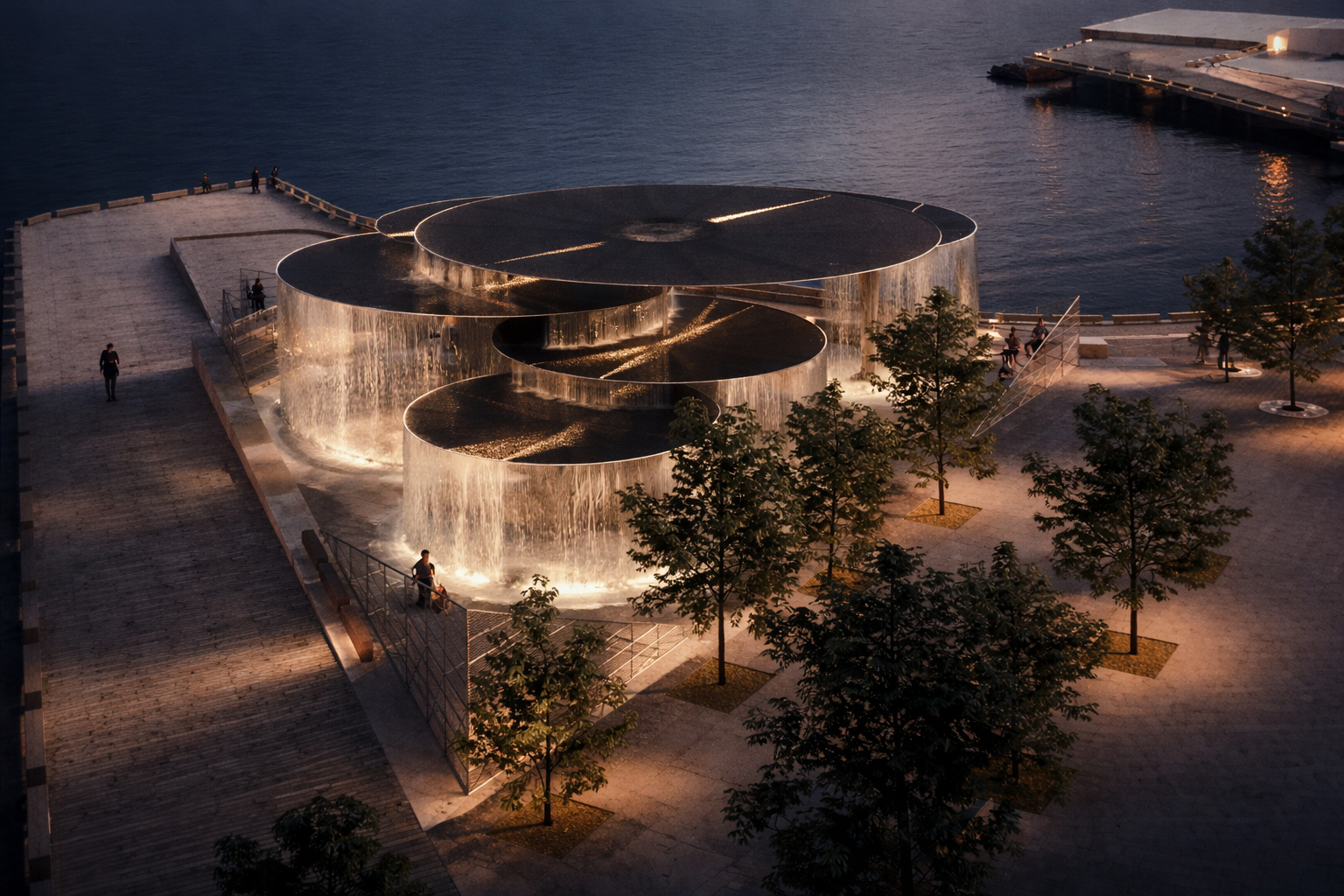
The pavilion does not solely rely on water for effect, so during turbulent weather or for a specific event, the it can of course be switched off. The seven reflective steel discs are designed to be clearly present from above but also to disappear at ground level; their slender vertical structure and shallow horizontal form enable views through and beyond to – well yes, more water…. The location of each of the pond’s central columns is determined by the existing headstock beam below. Three lightweight tiered seating structures anchor the corners of the site, with one providing enough clearance for storage underneath. The heights of these can be adjusted to provide permanent seating during an event or for a close up view of the falls during the day. Drainage for the falling water is via water jet cut granite tiles to match the existing paving. The maintenance practicalities of an open building in a public space are addressed through provision of concealed vandal proof lighting and hardwearing easily cleanable stainless steel.
-
PAVILION
-
COMPETITION
-
GADIGAL | SYDNEY | NEW SOUTH WALES