
CREMORNE REWILDING
2024
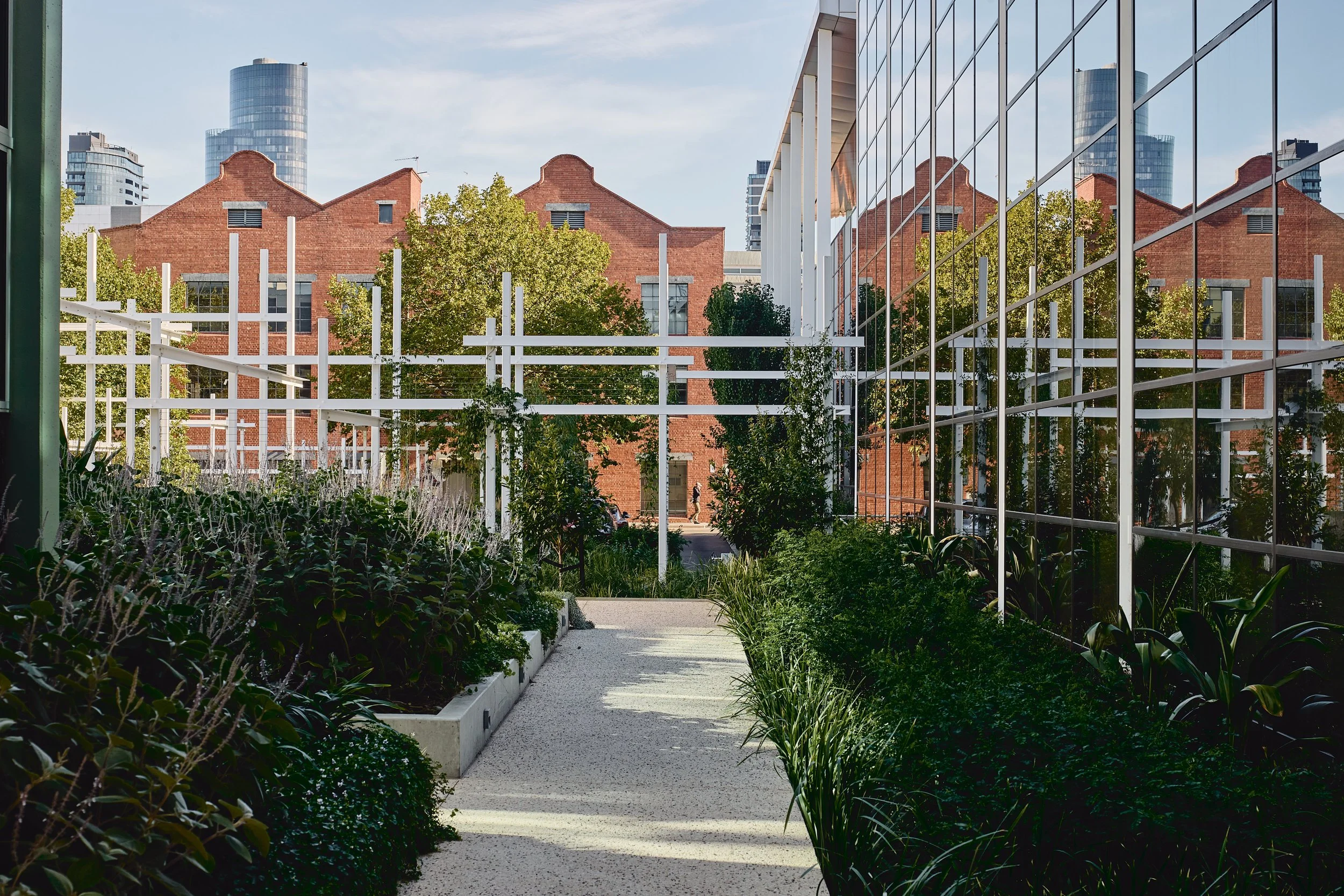
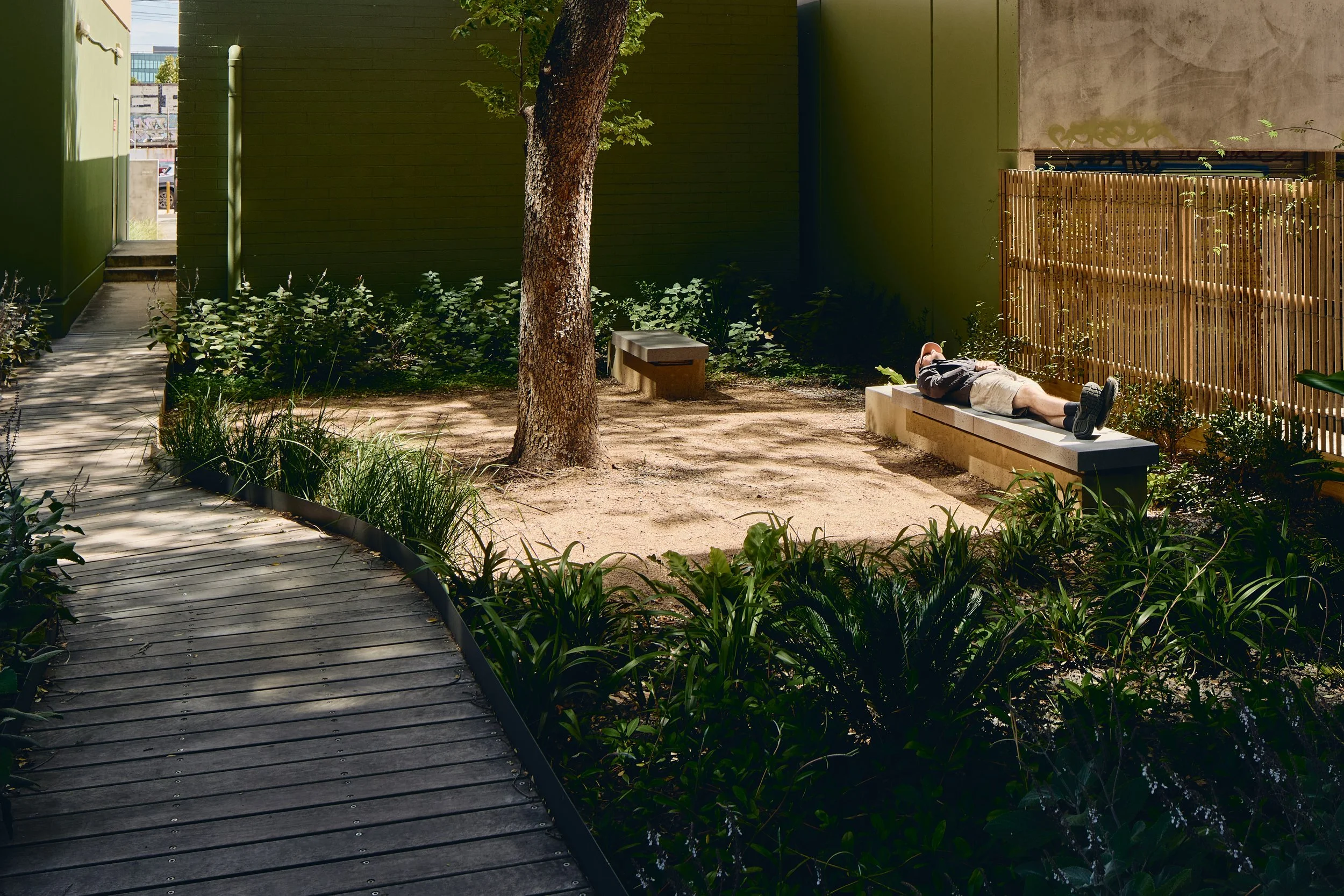
Cremorne Rewilding is an ambitious urban renewal project conceived to rewild and reinvigorate the workplace, welcoming staff back to a revitalised environment following an extended period of remote work. Nestled between existing office buildings and former carparking areas, the project transforms over 2,500 square metres of previously underutilised ground plane and foyer spaces into a diverse sequence of environments for recreation, relaxation, and interaction.
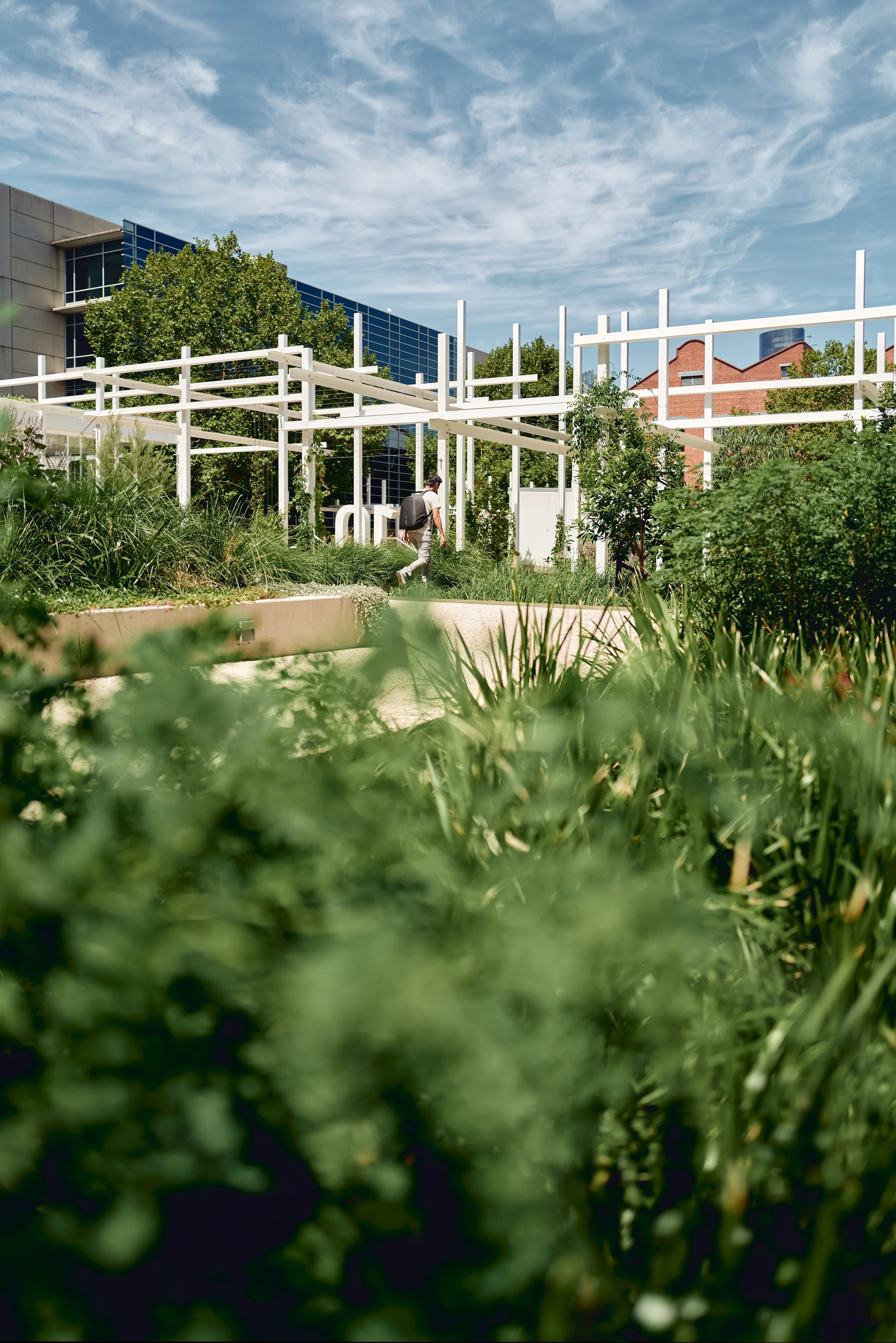
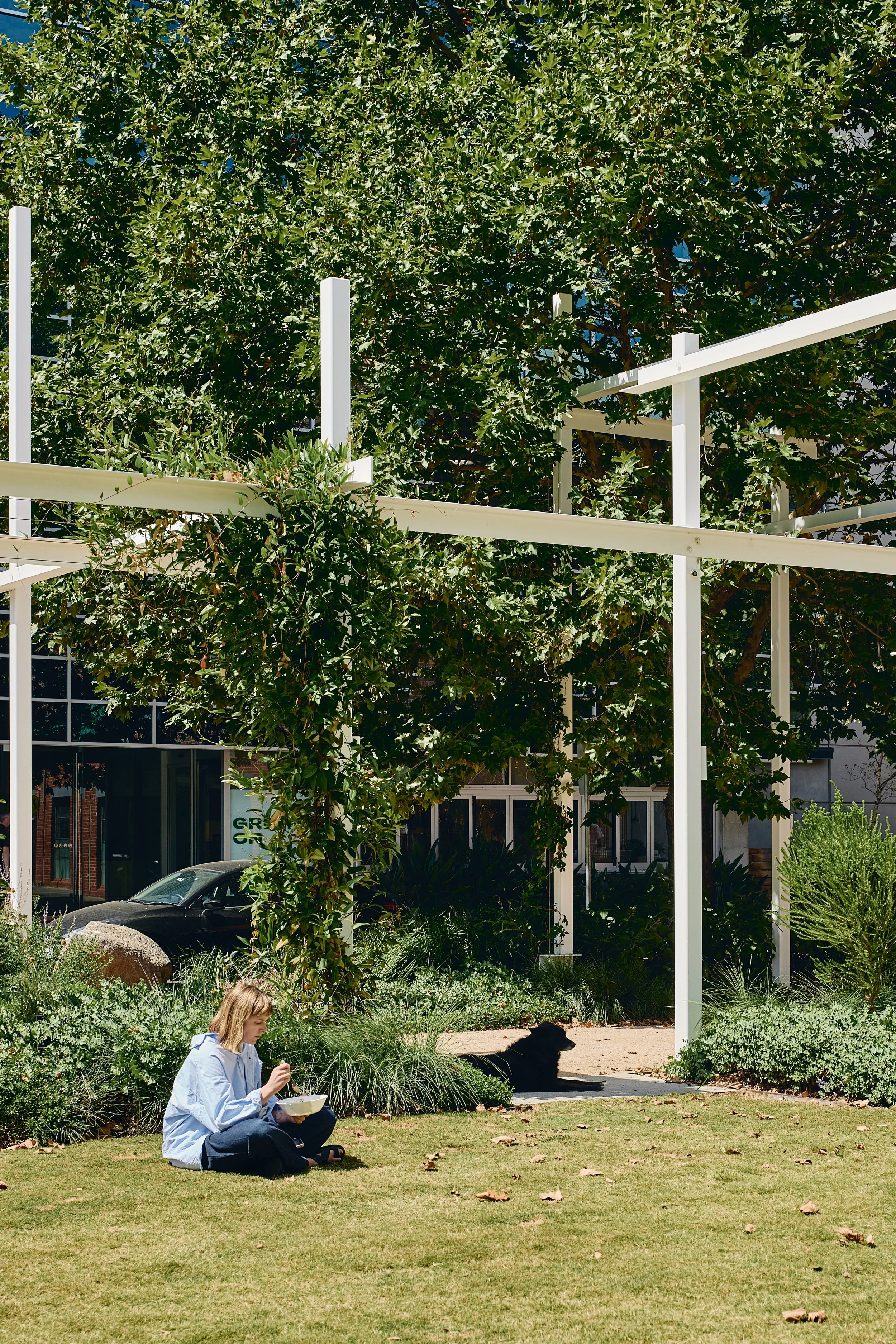
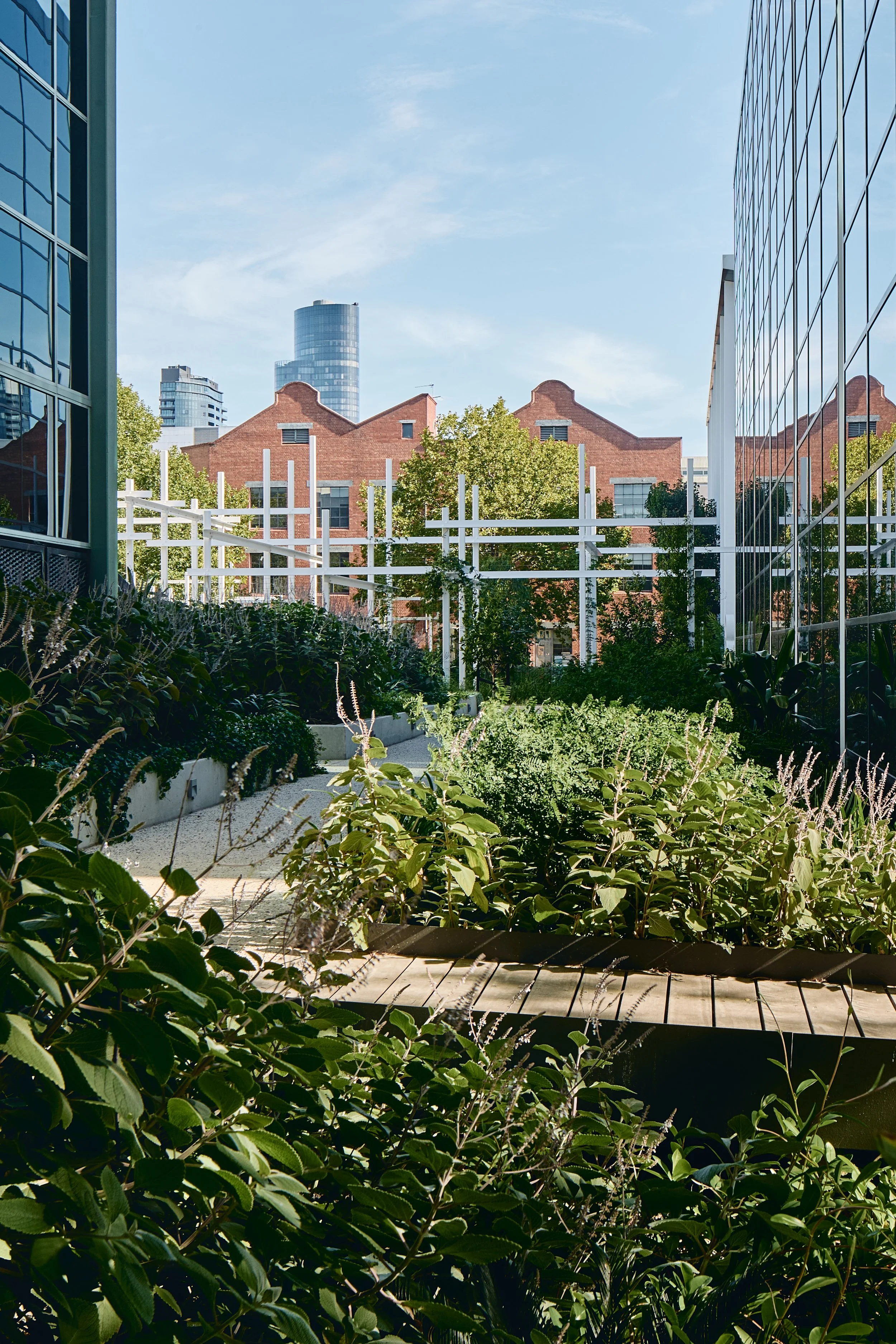
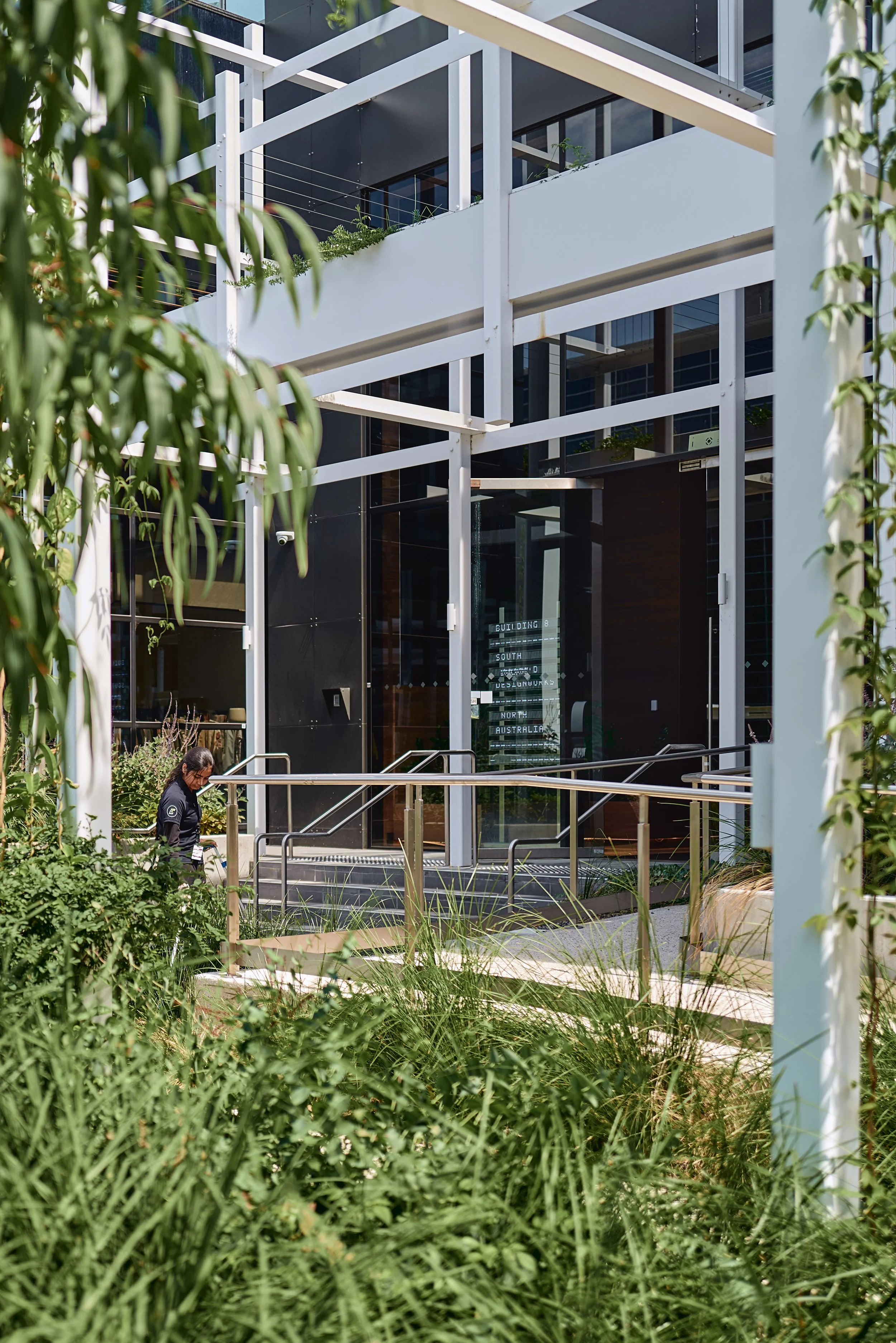
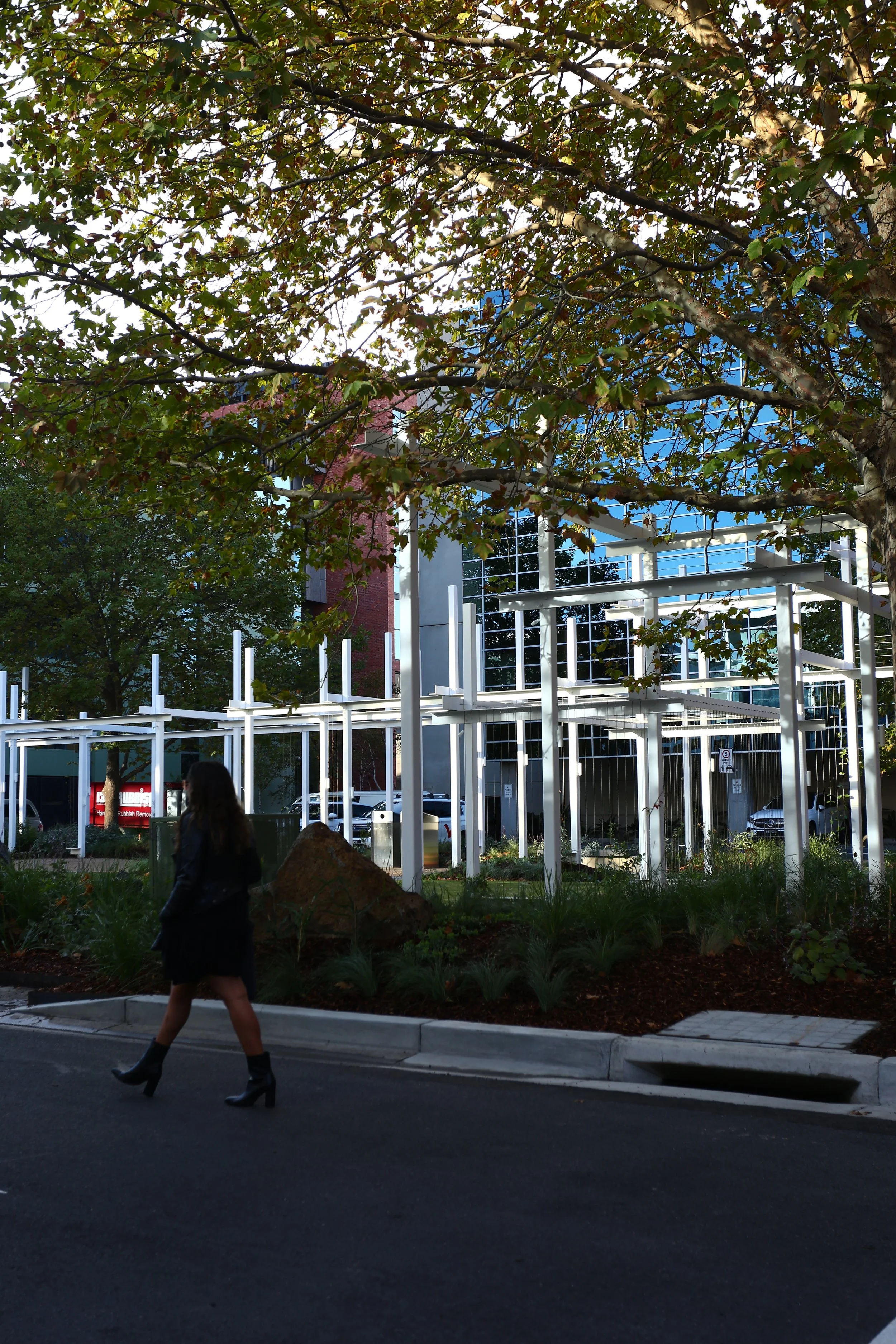
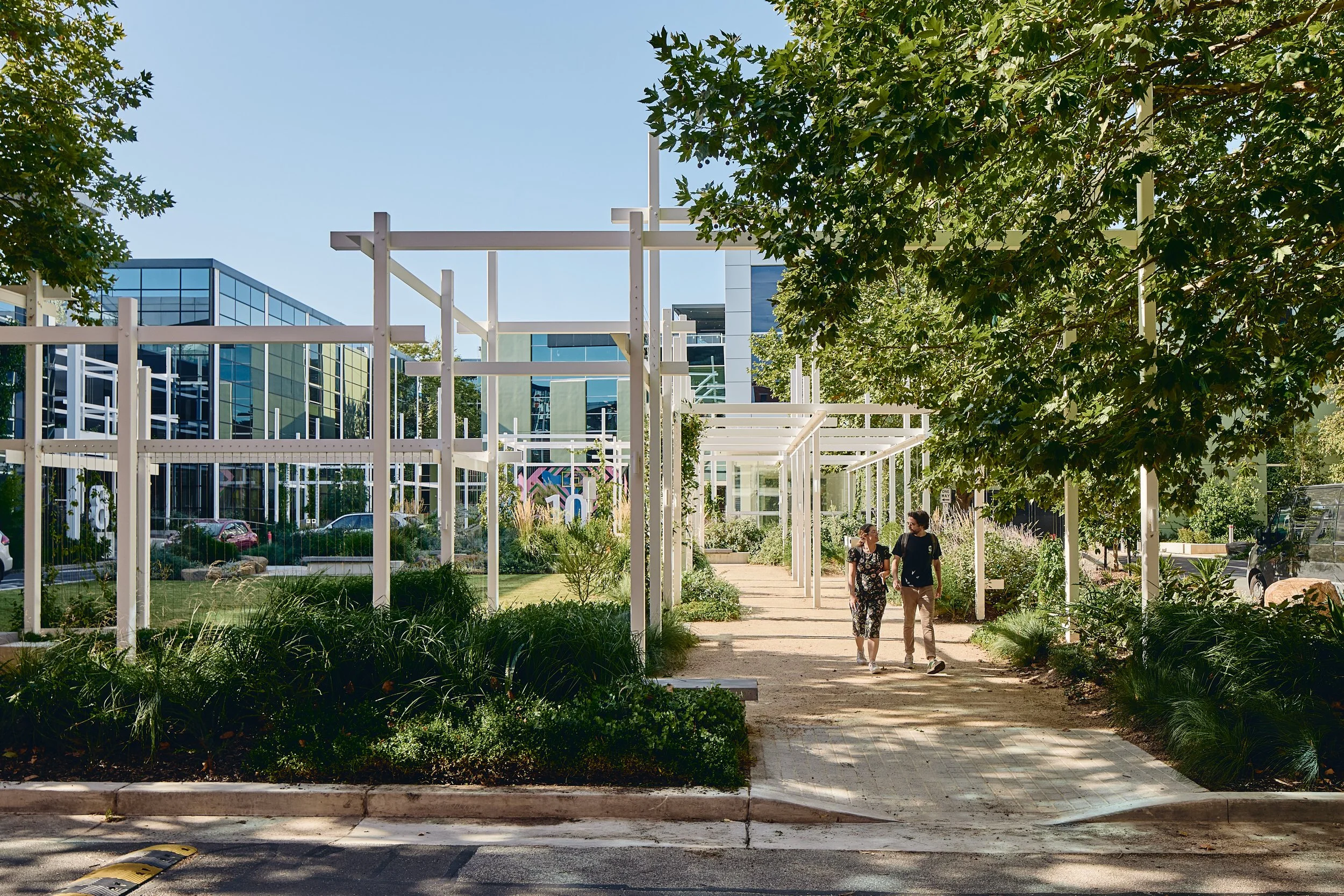
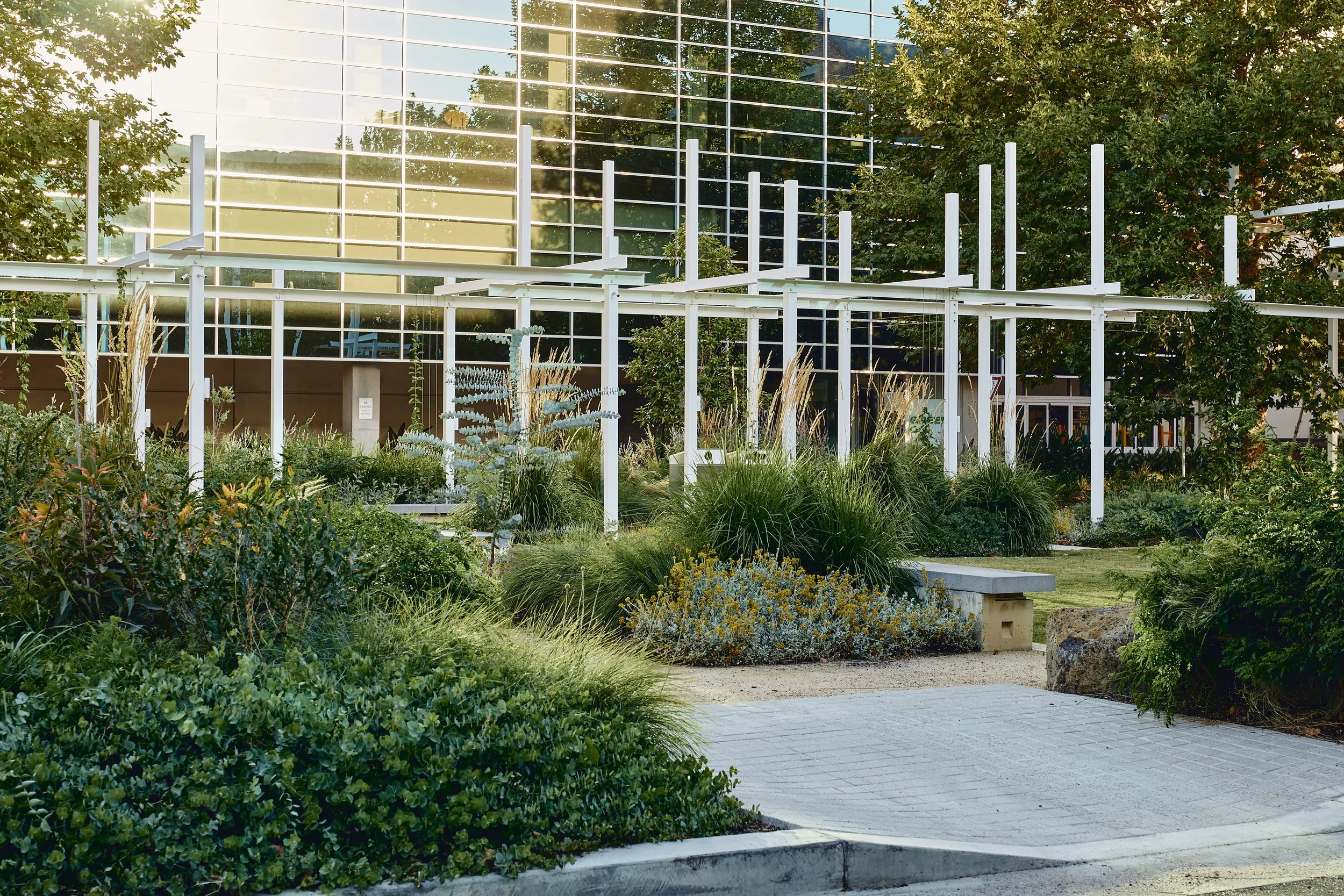
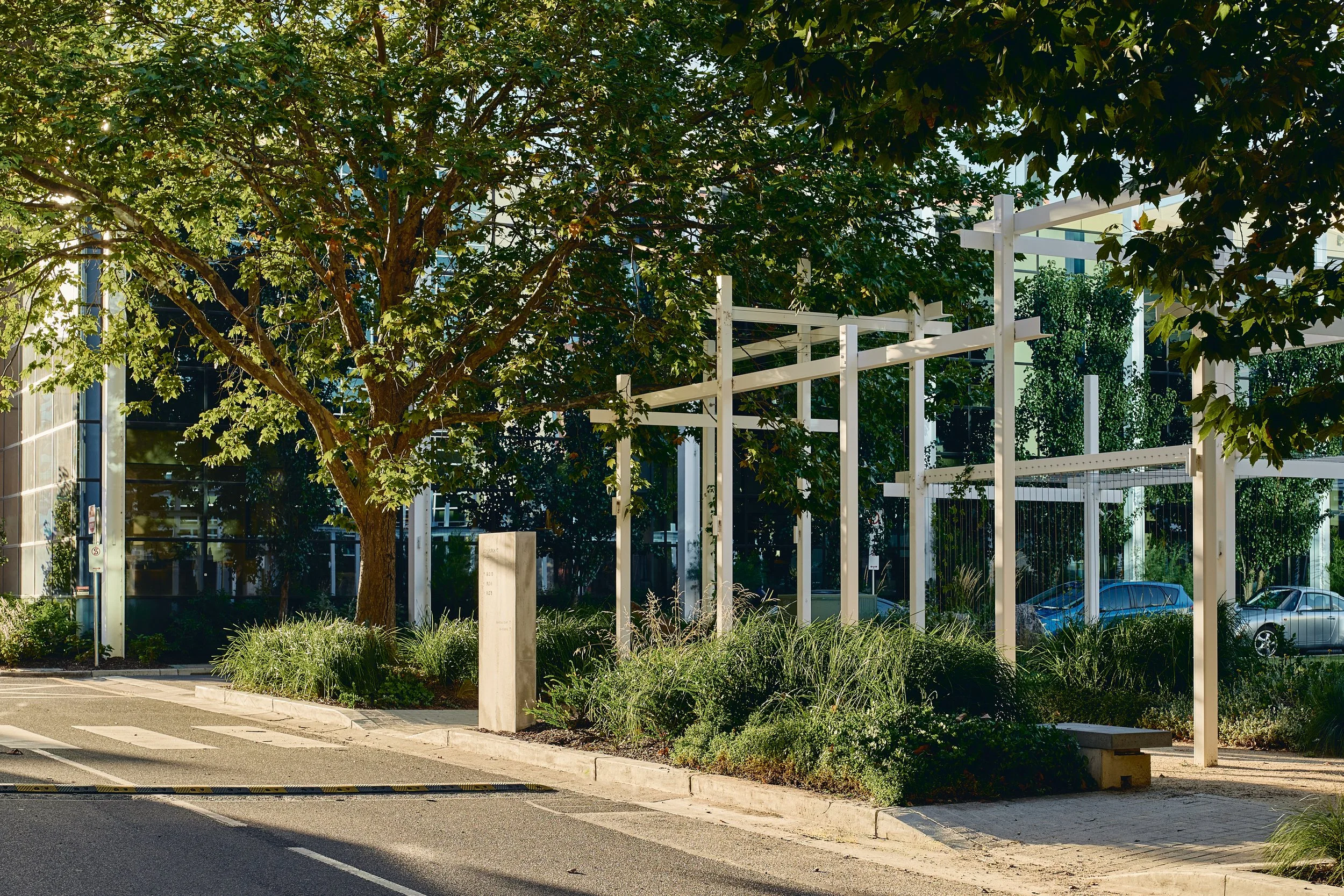
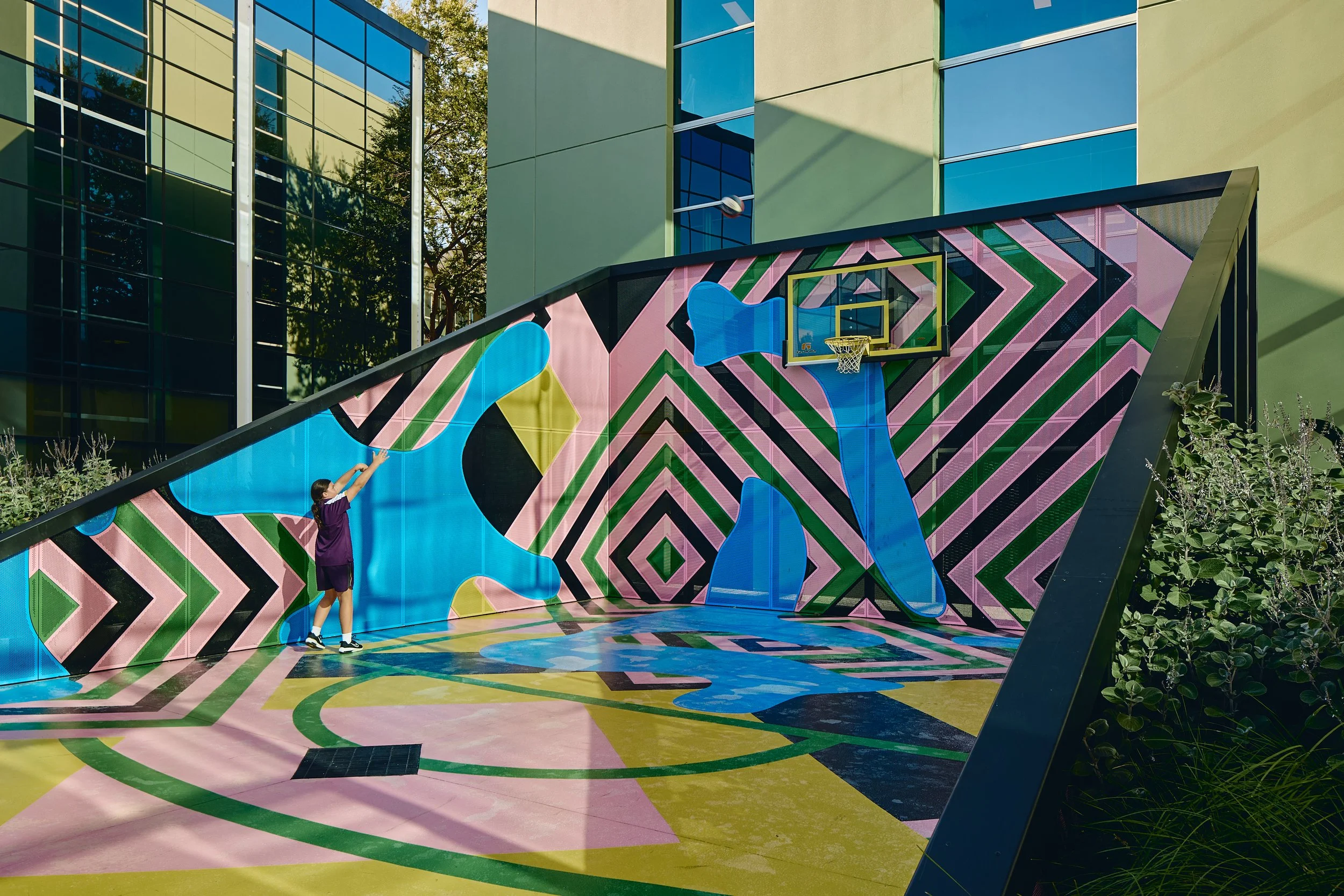
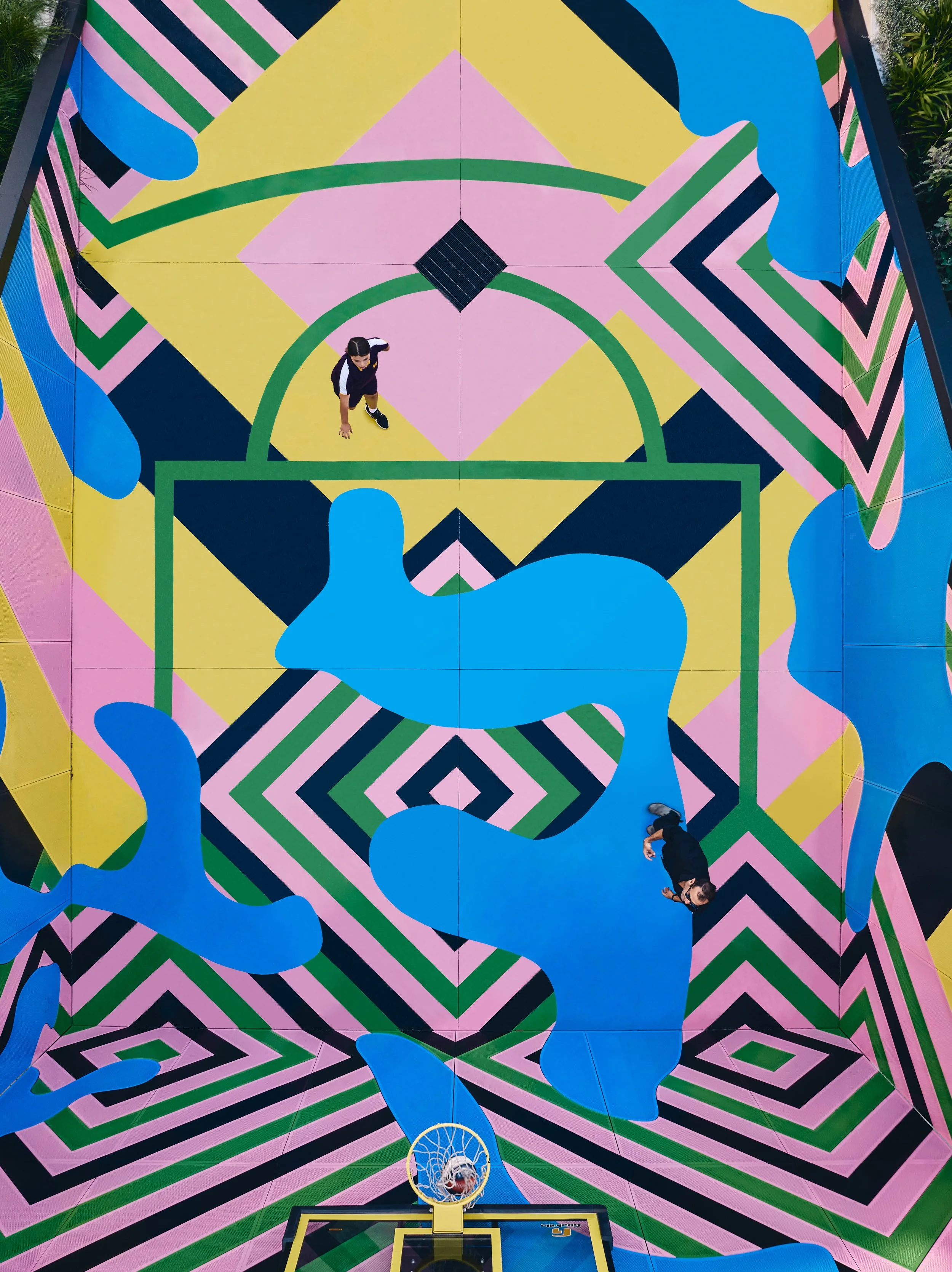
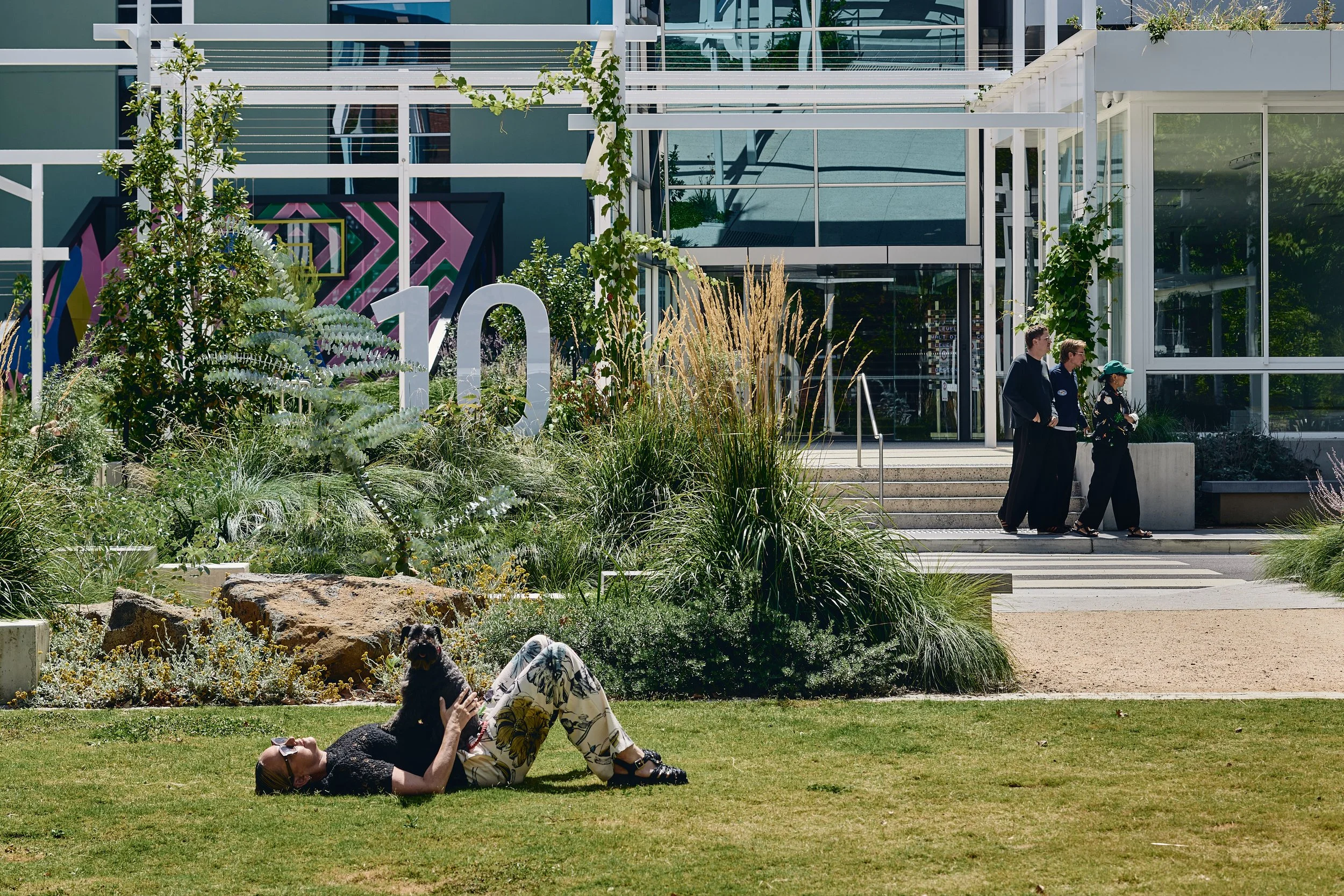
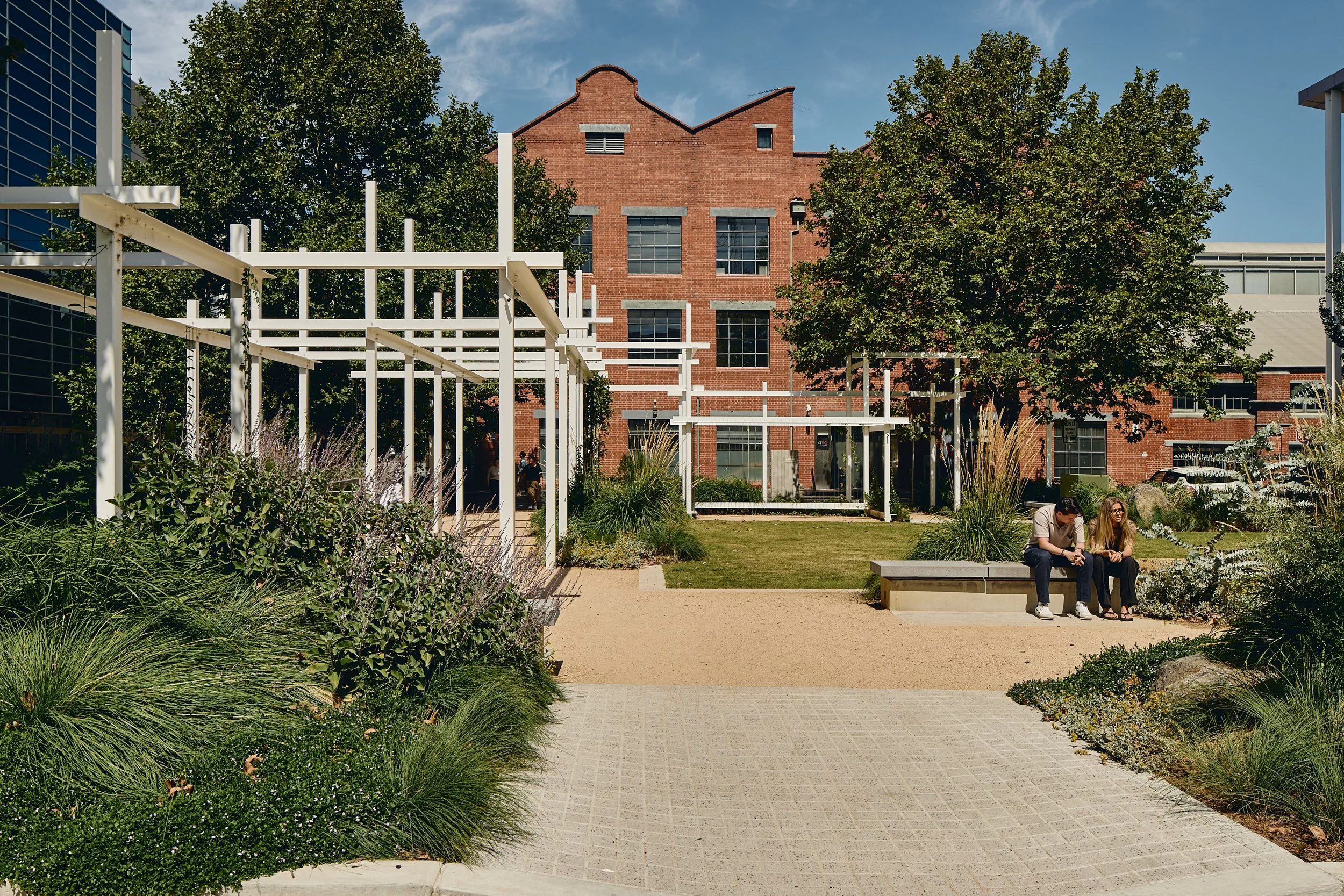
The landscape introduces a multi-purpose lawn and extensive native planting, a new café with alfresco dining, informal seating, a basketball half-court, and a soccer goal. Together, these amenities enhance the workplace experience while inviting broader public engagement in a suburb notably lacking accessible green space. The site is carefully stitched back into its urban context, establishing clear pedestrian connections between Church Street to the east and Green Street to the west.
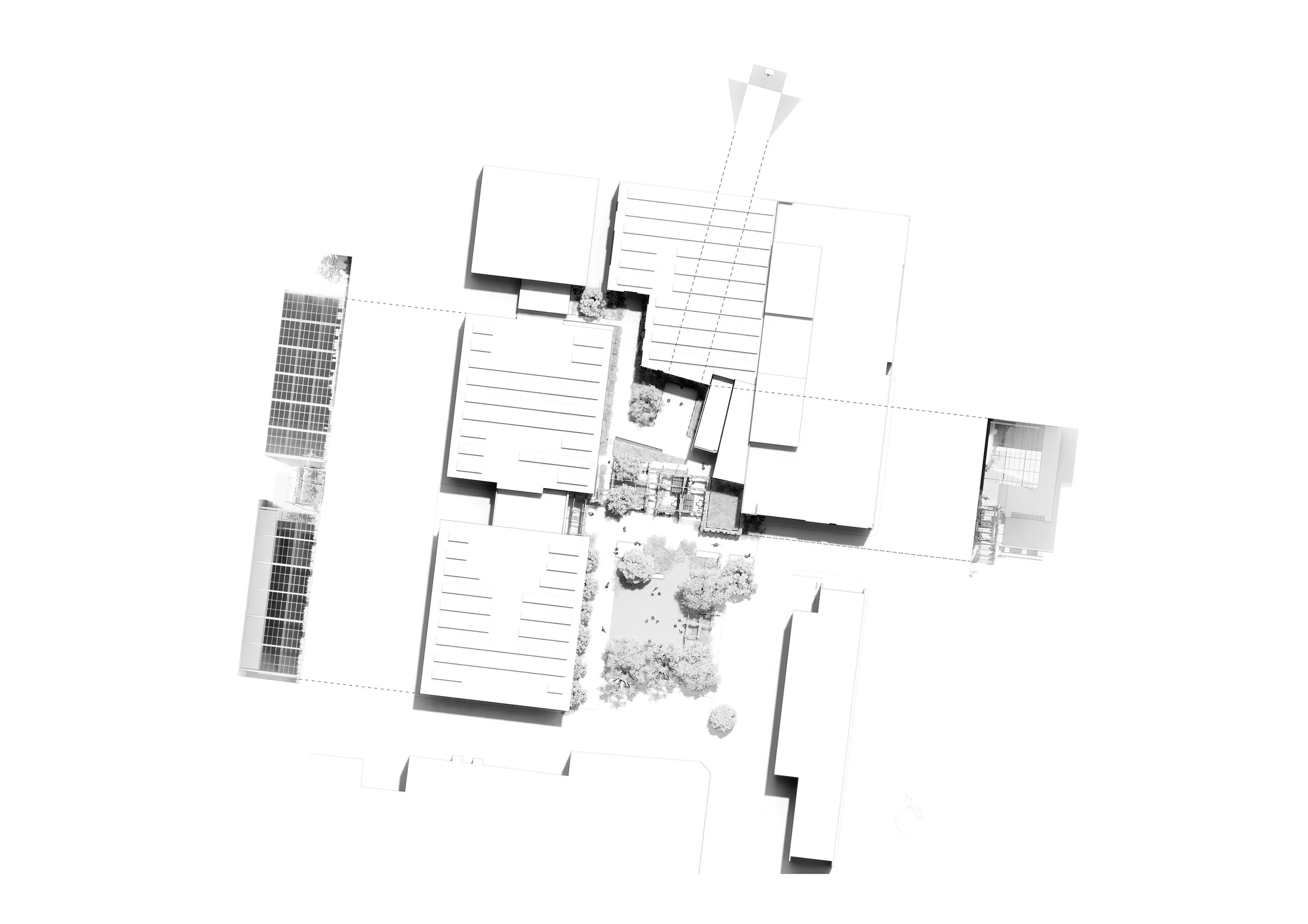
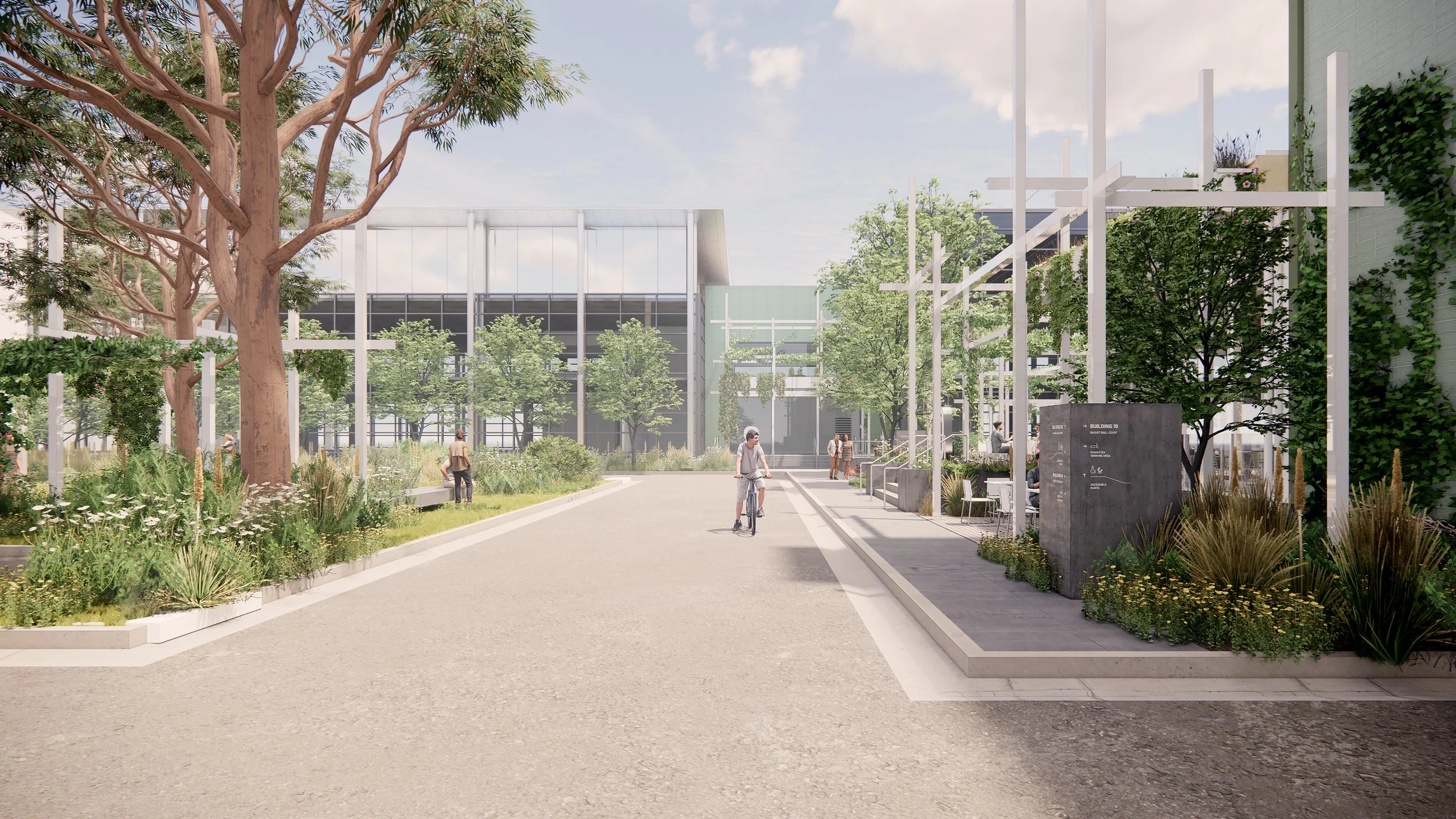
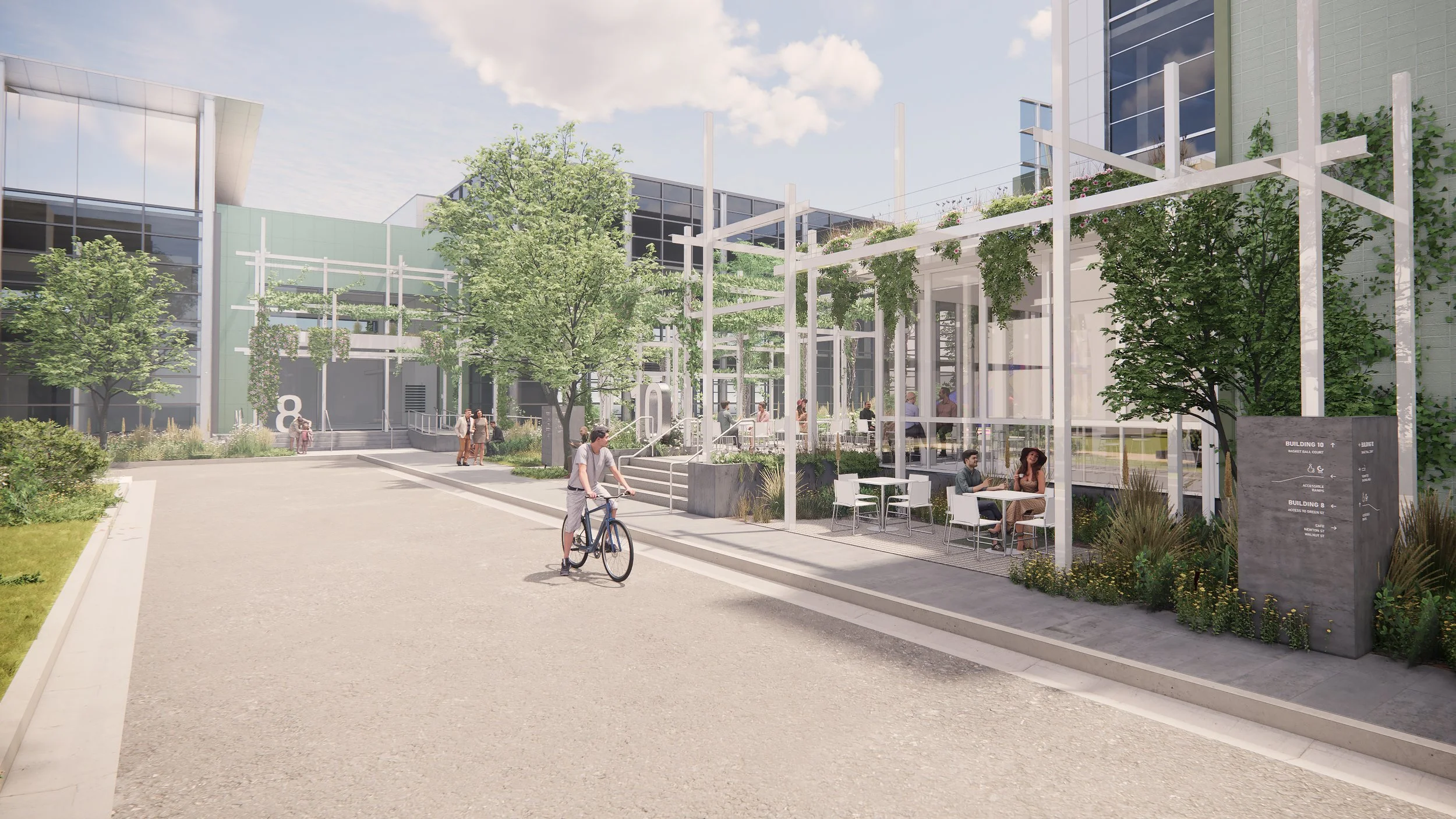
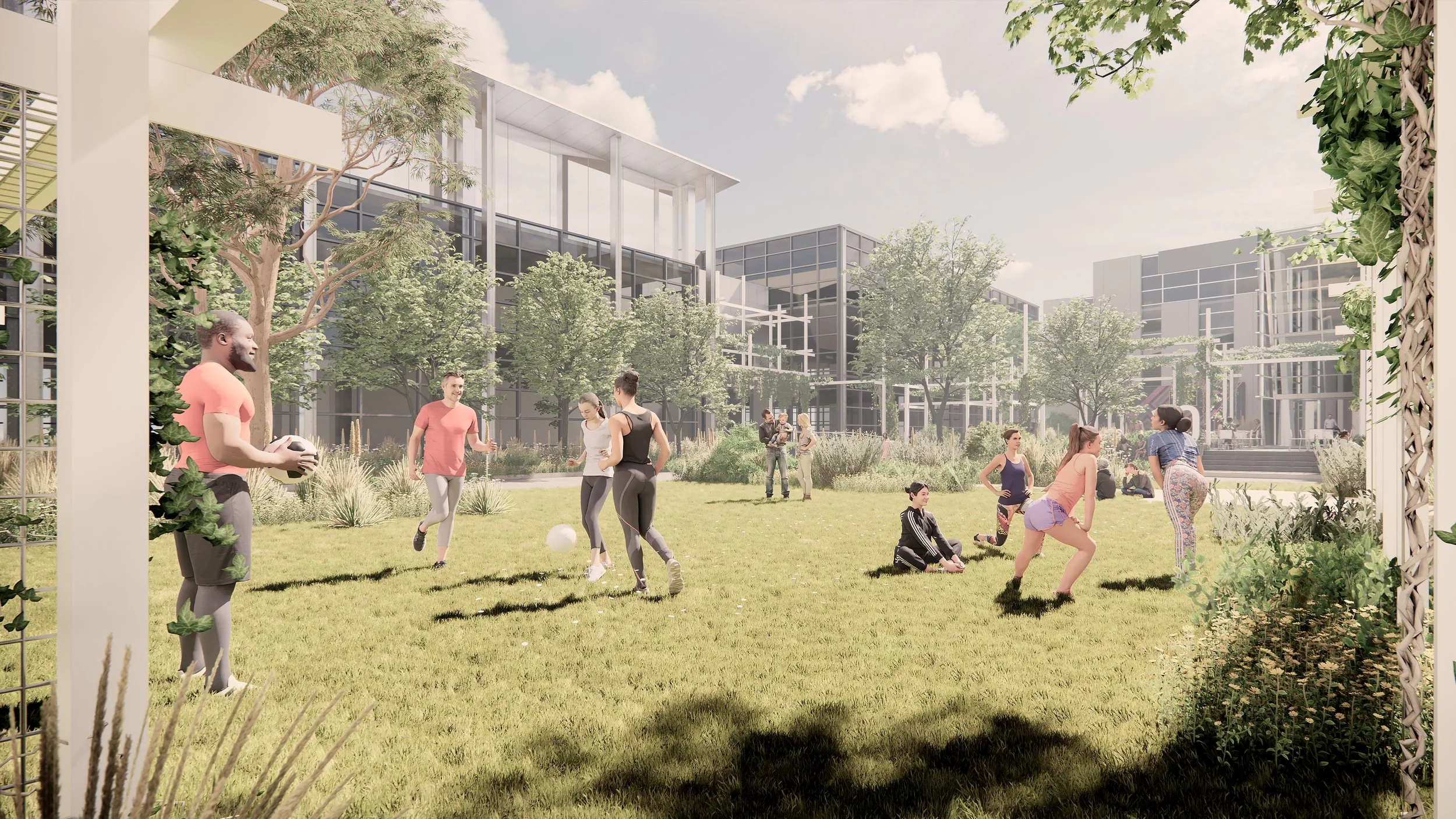
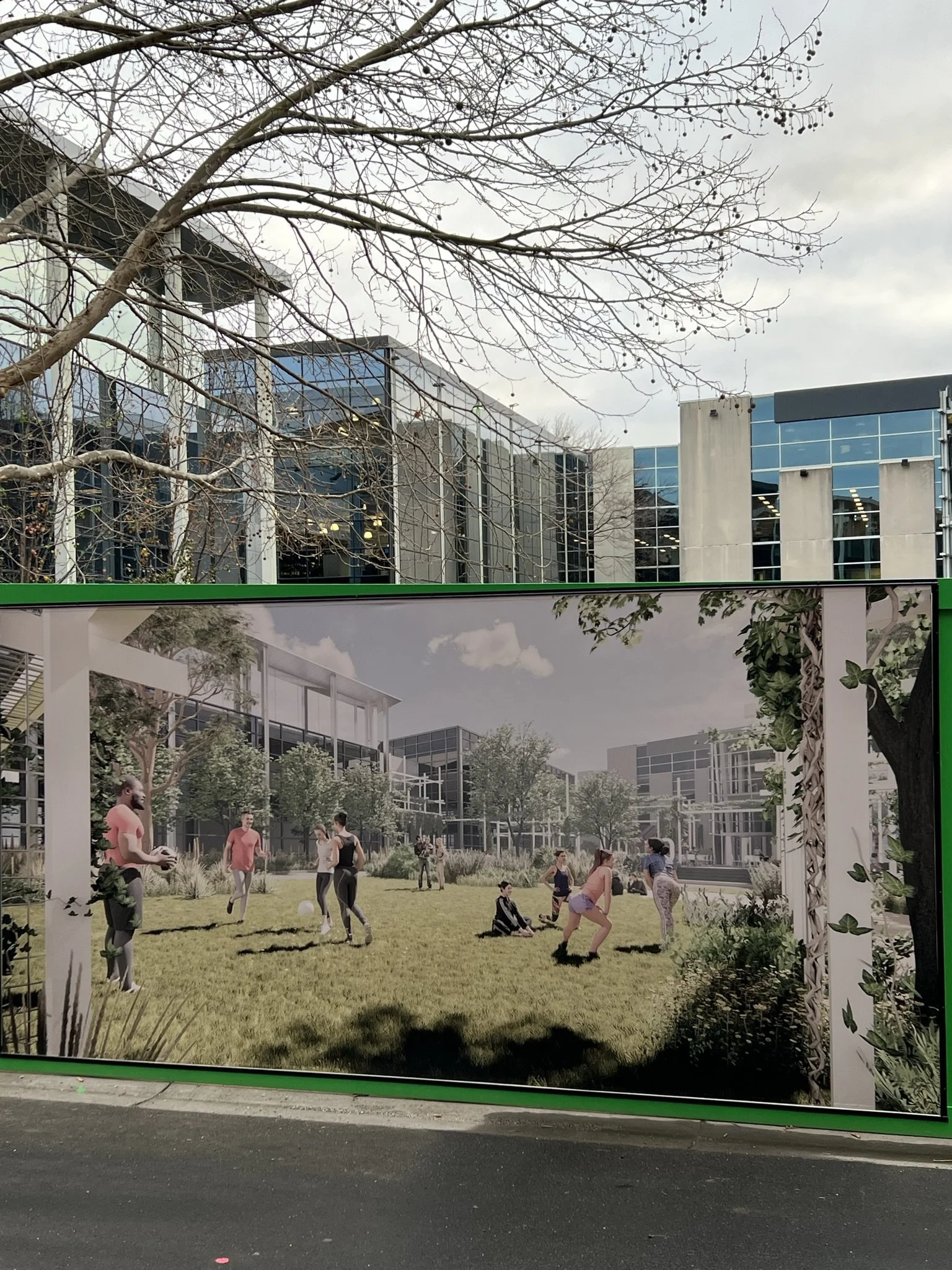
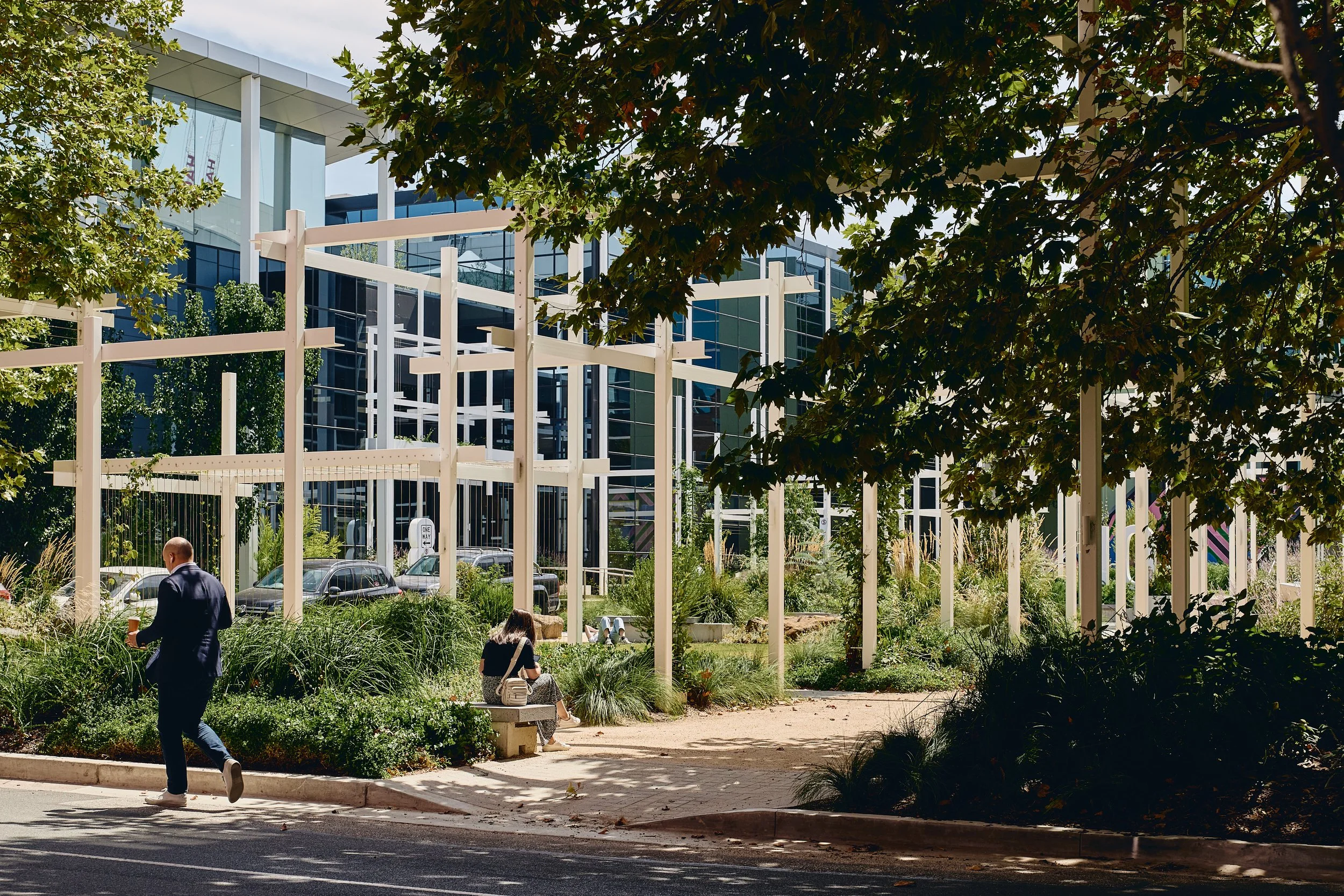
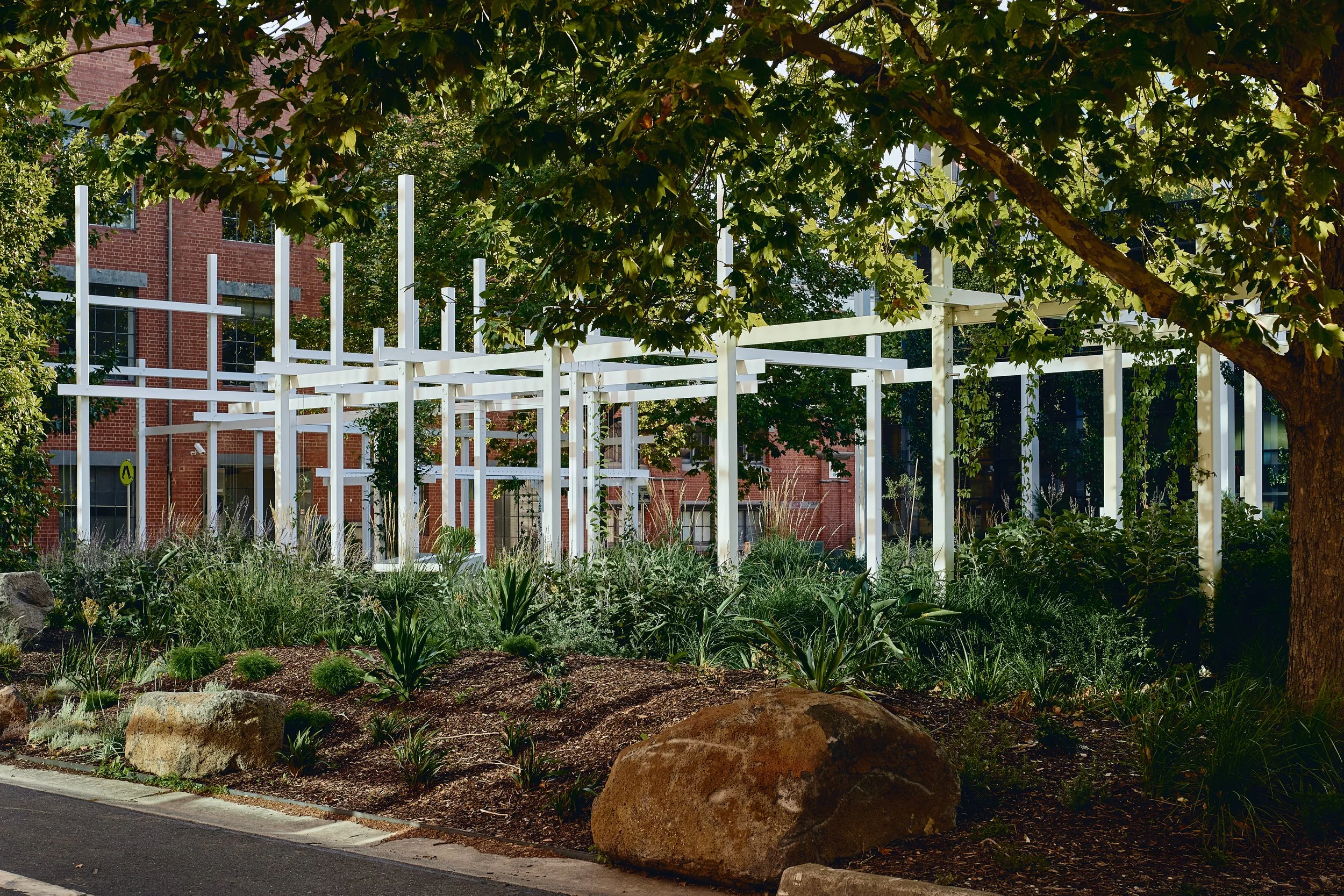
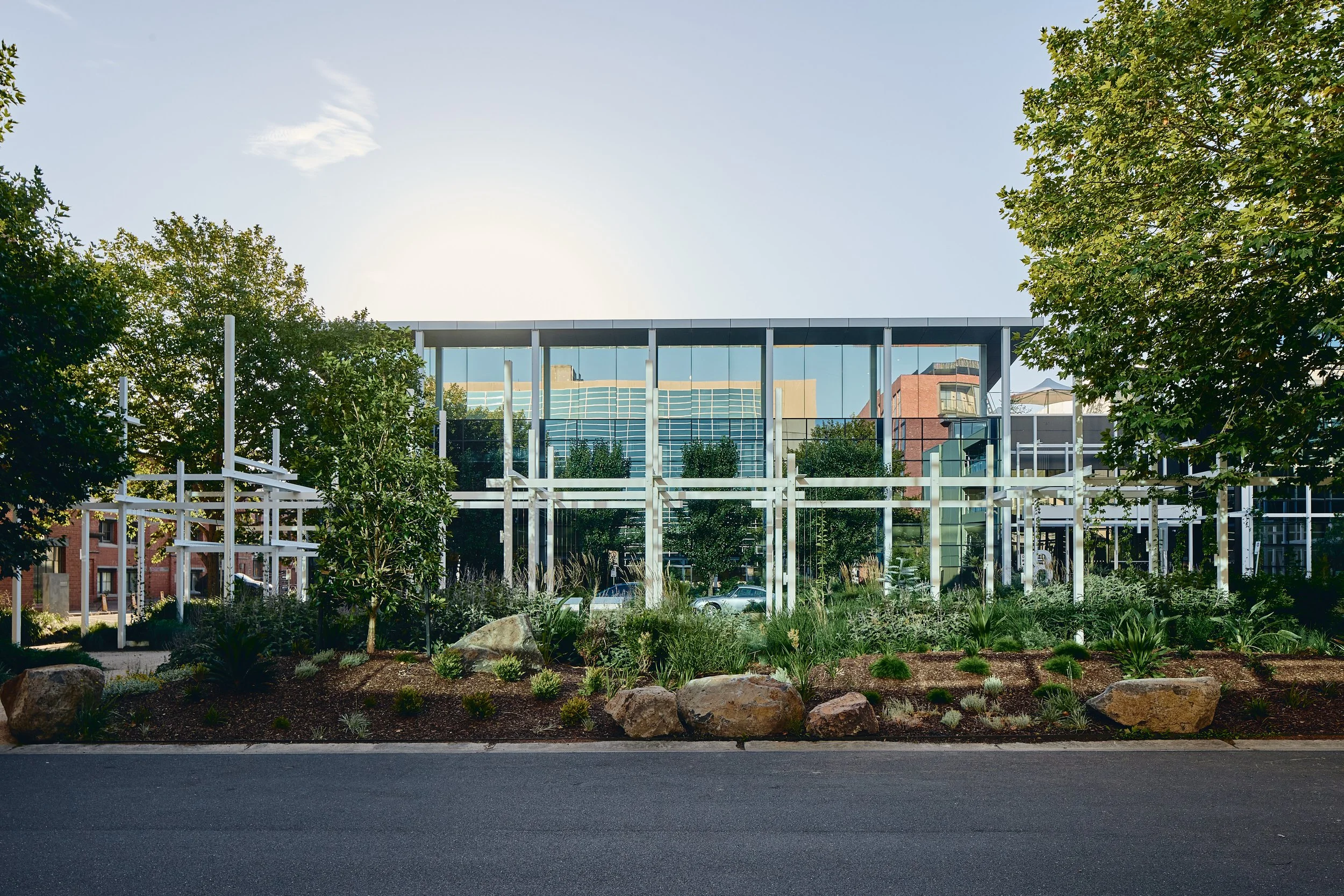
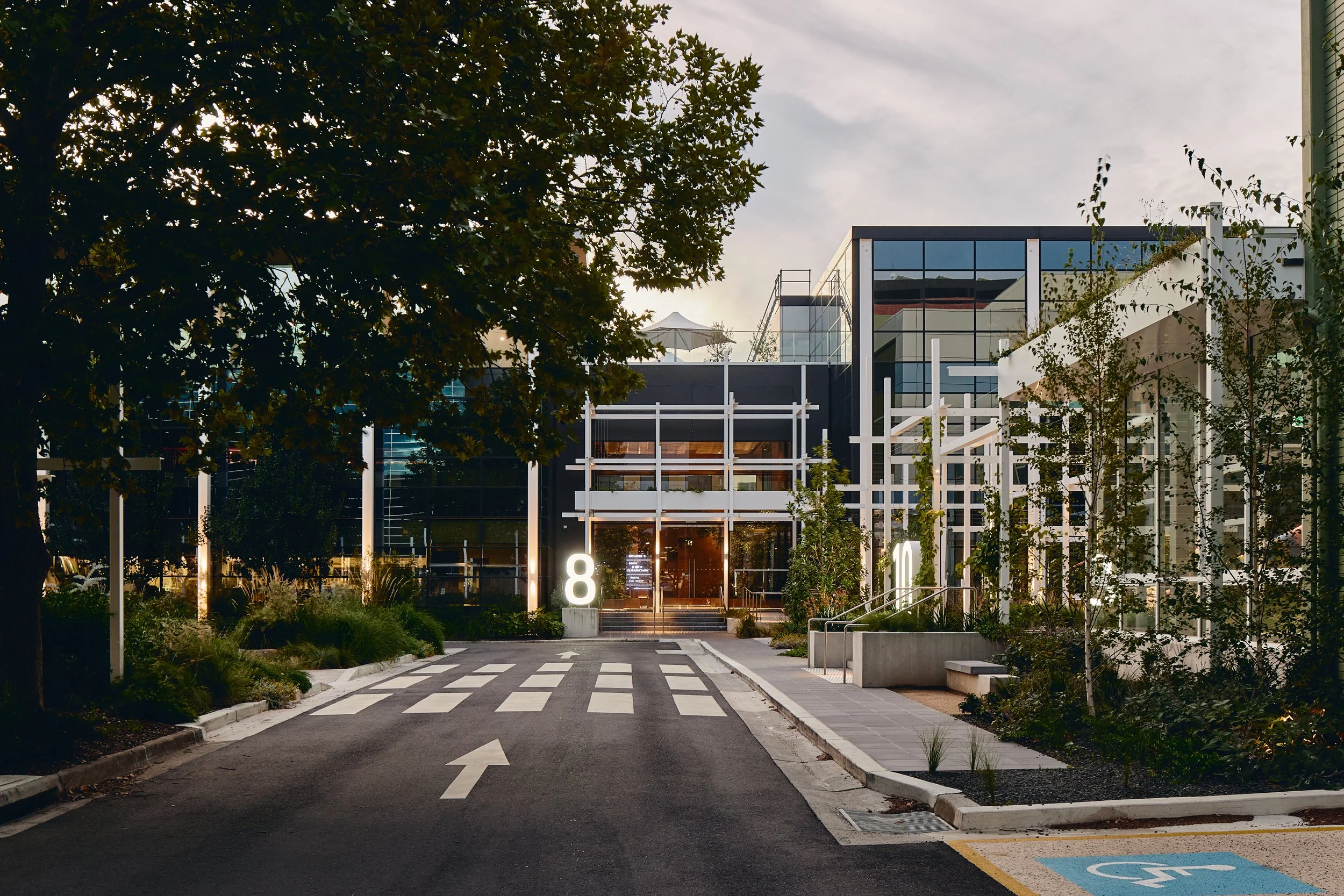
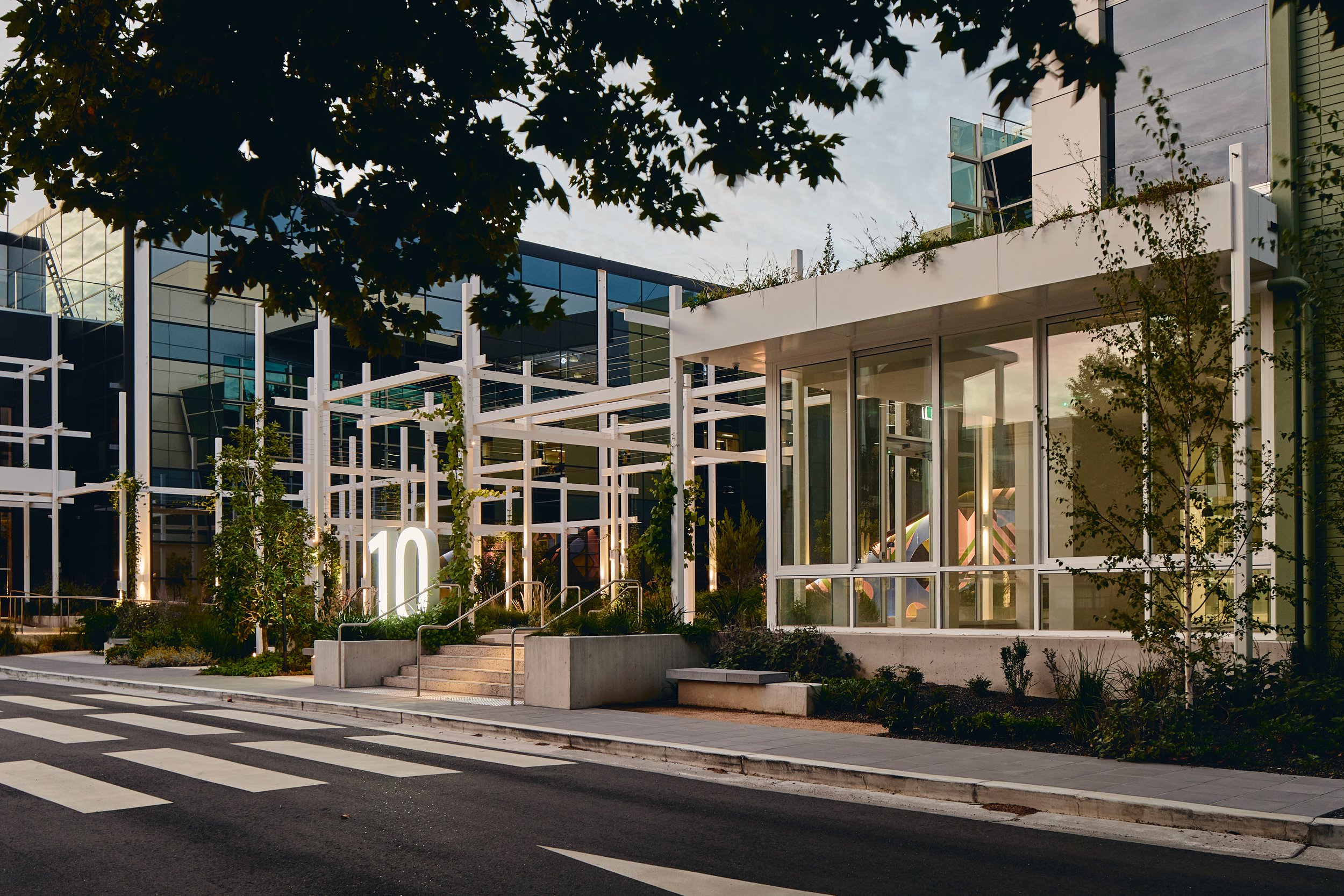
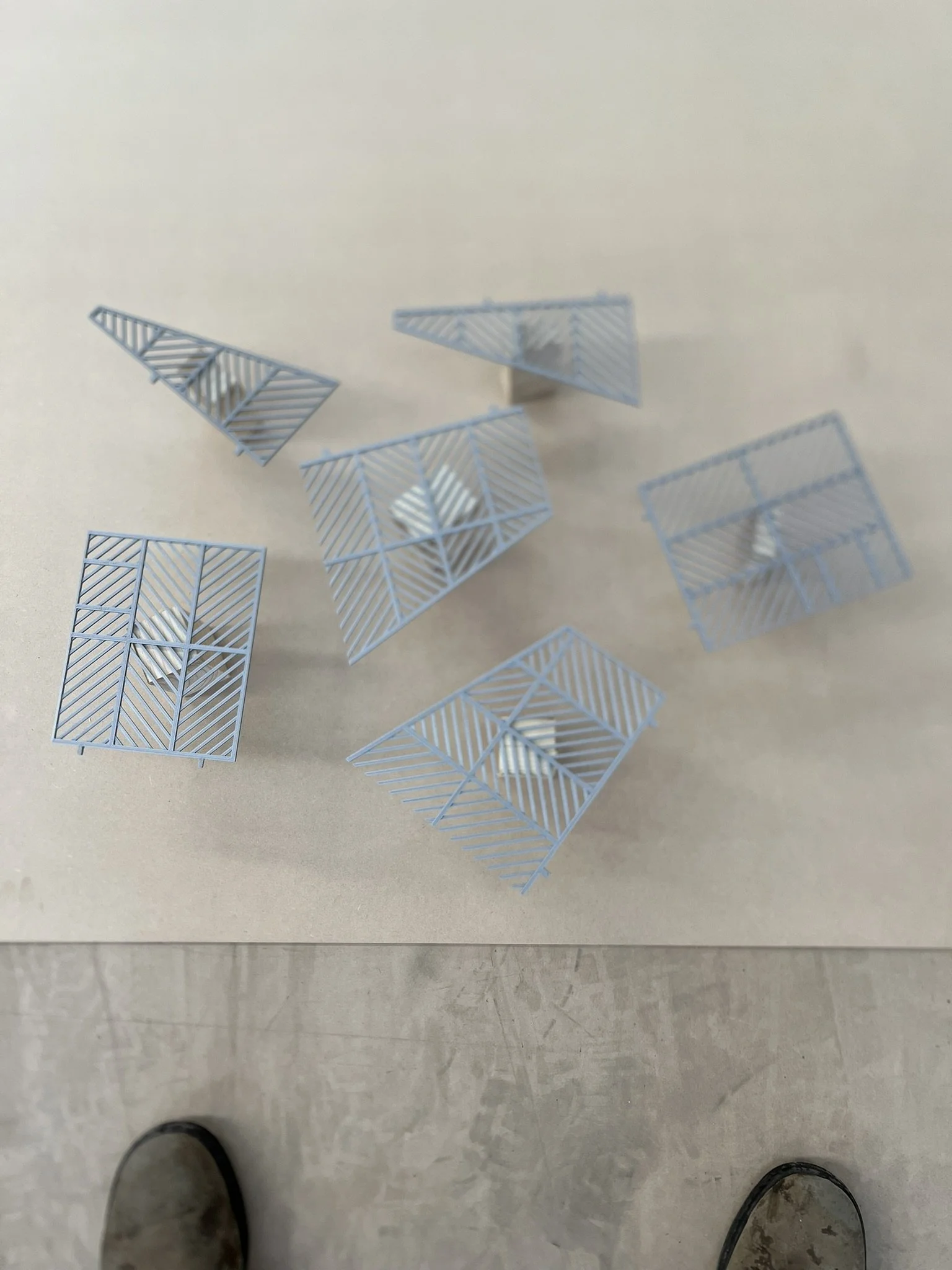
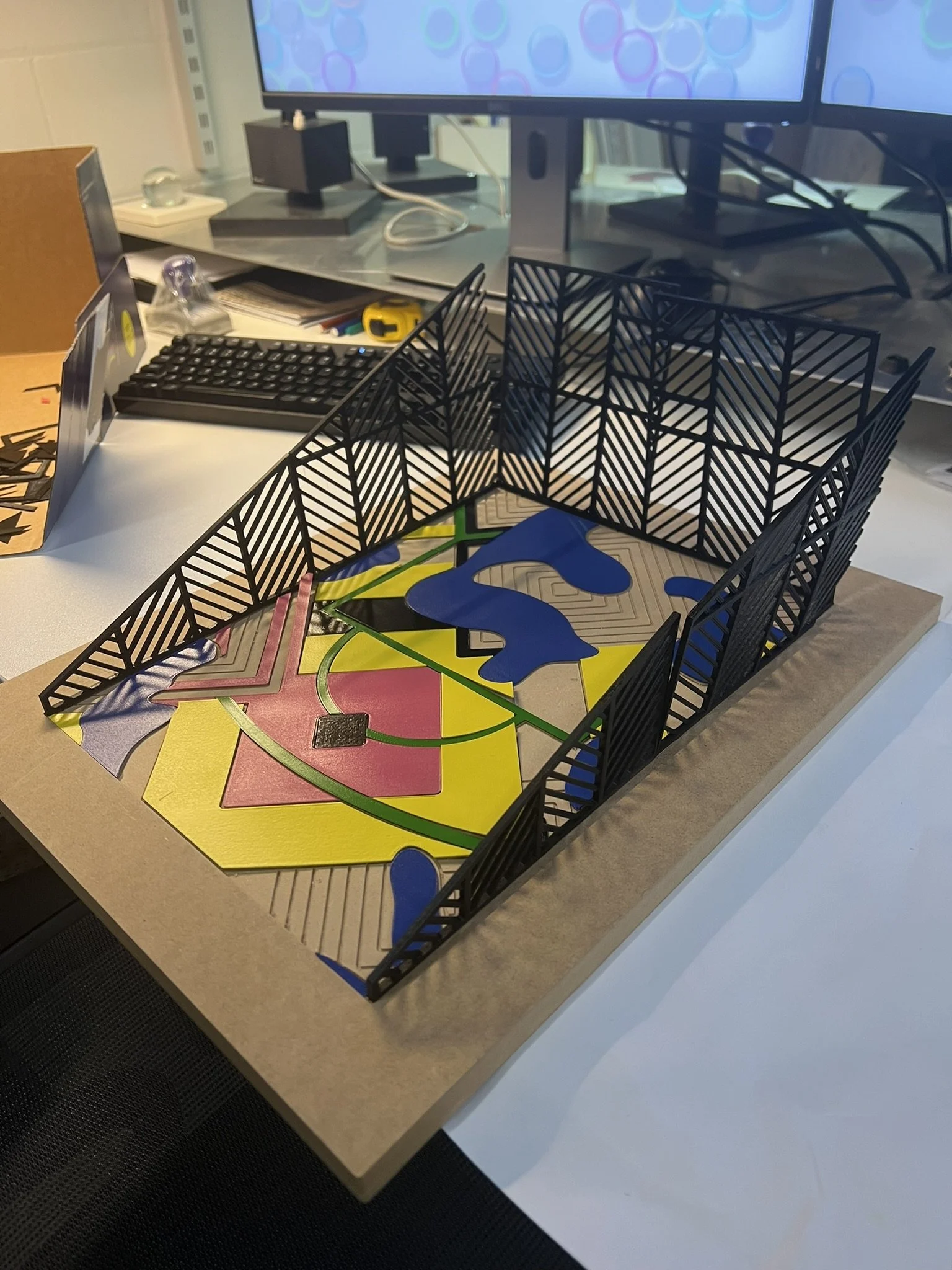
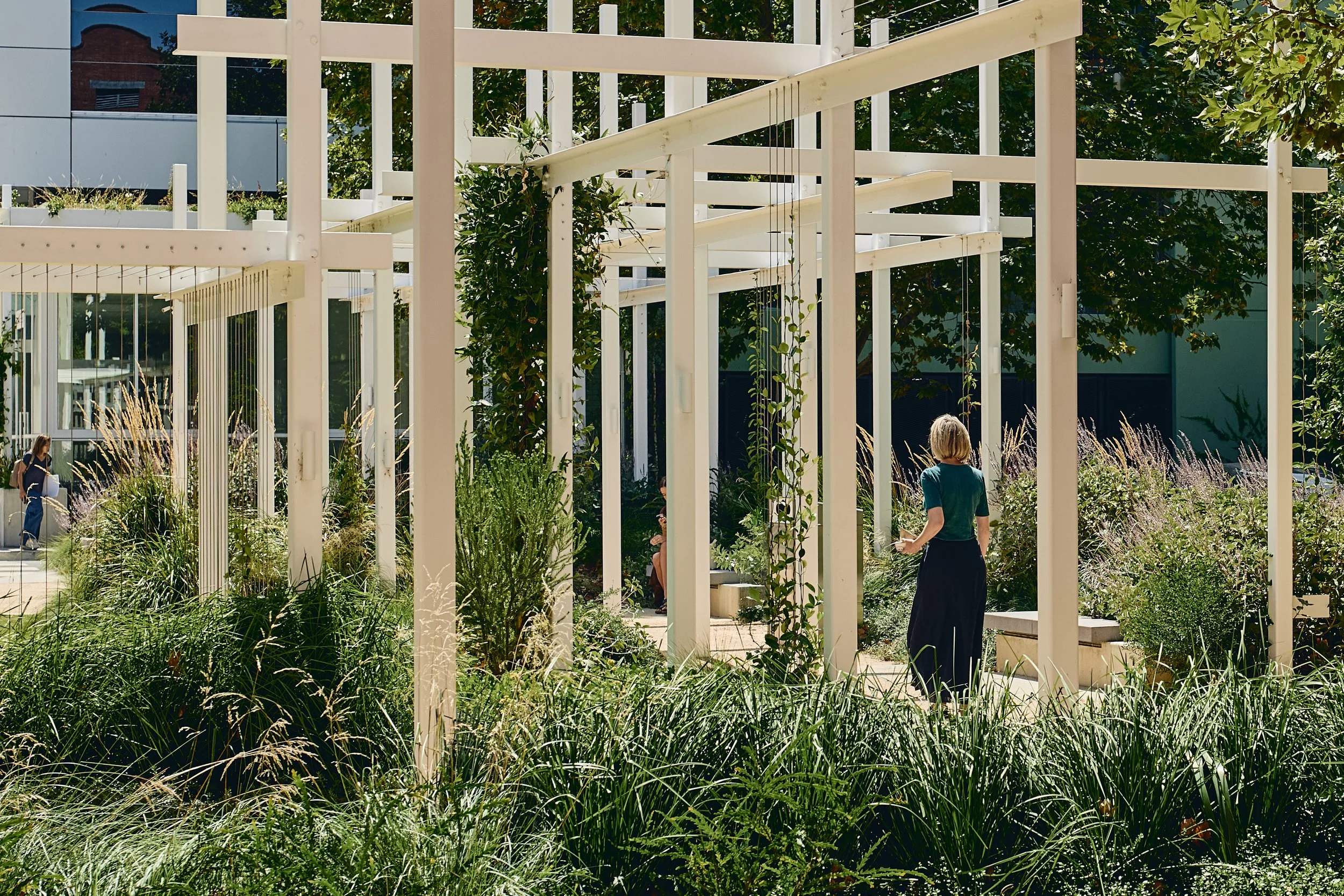
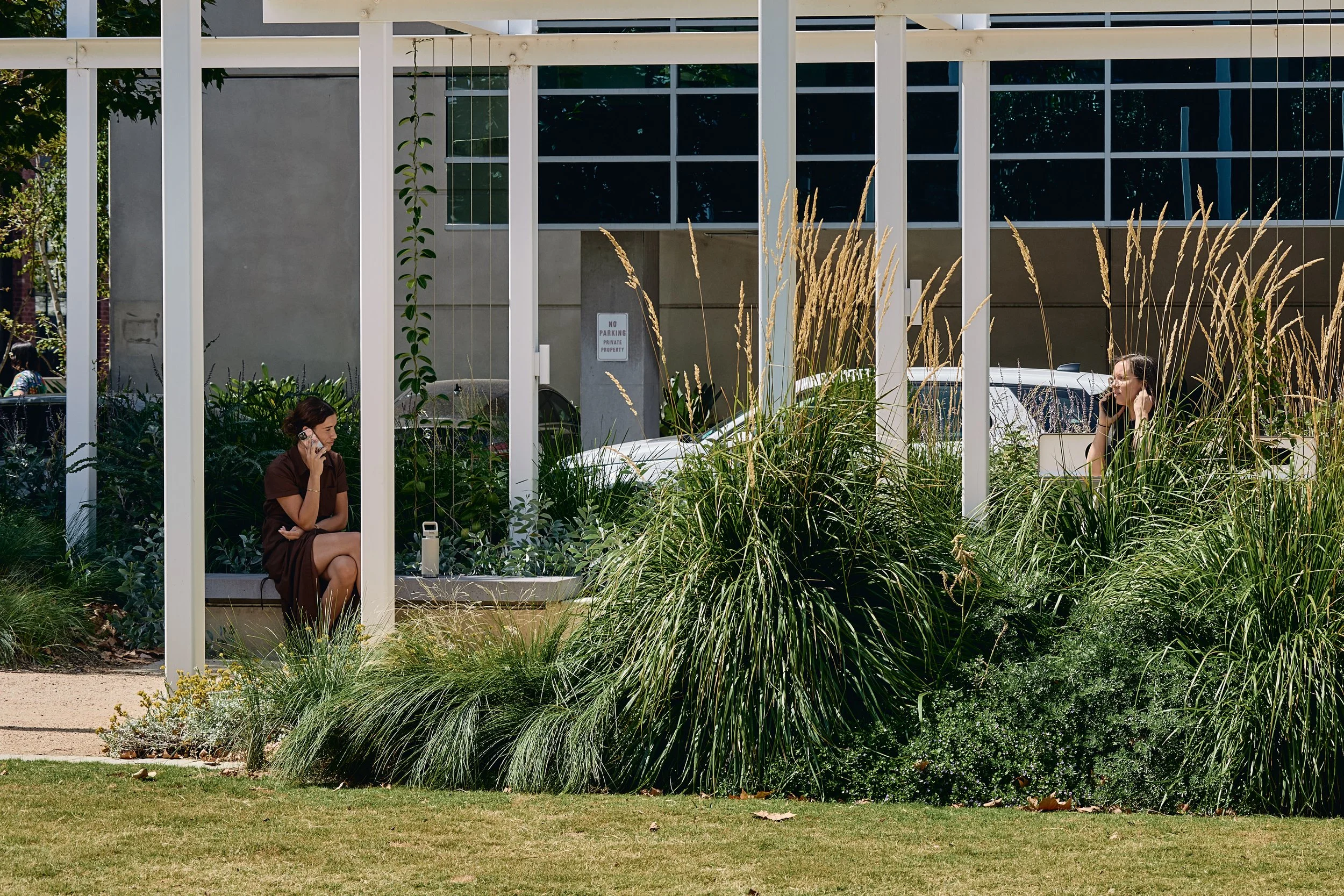
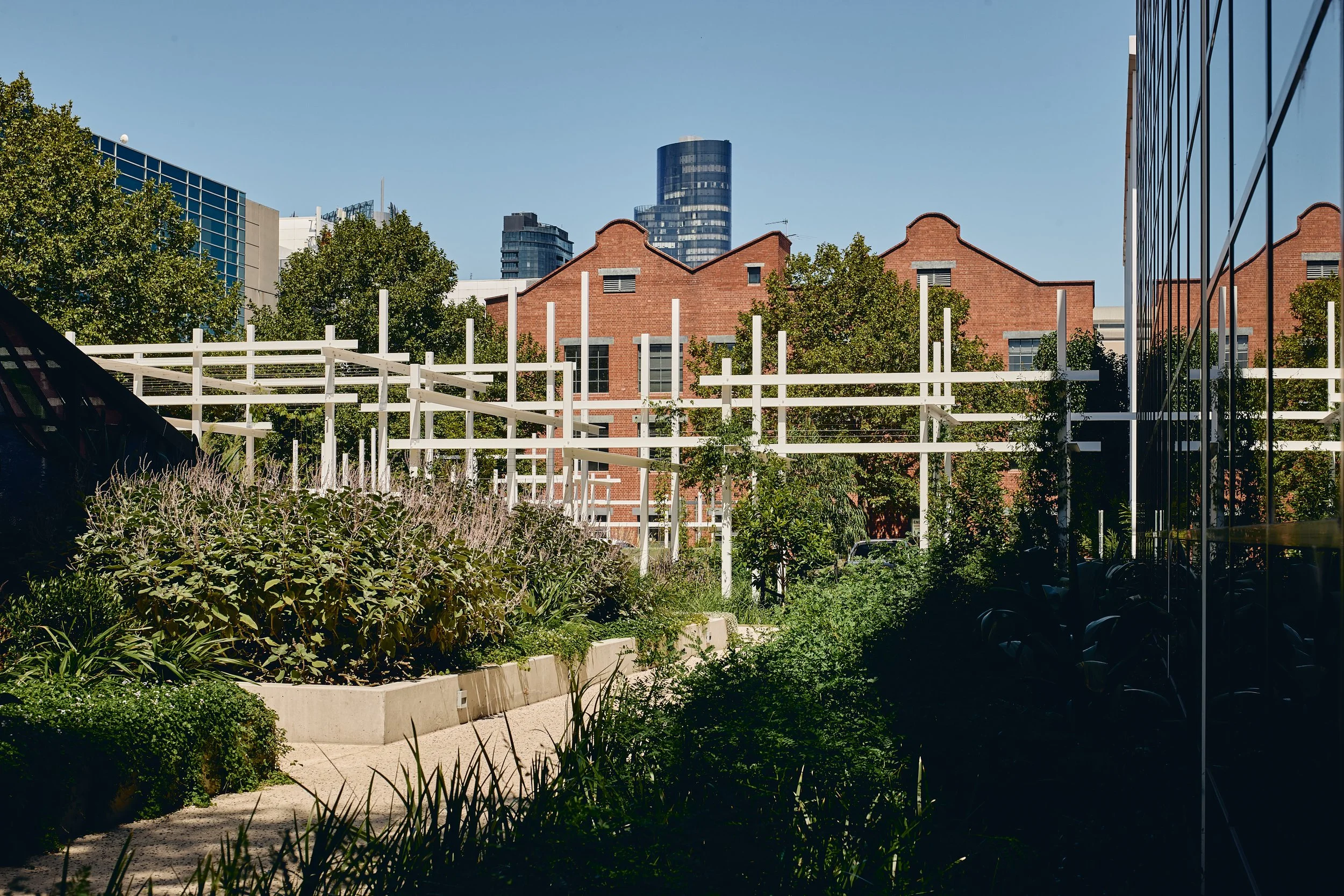
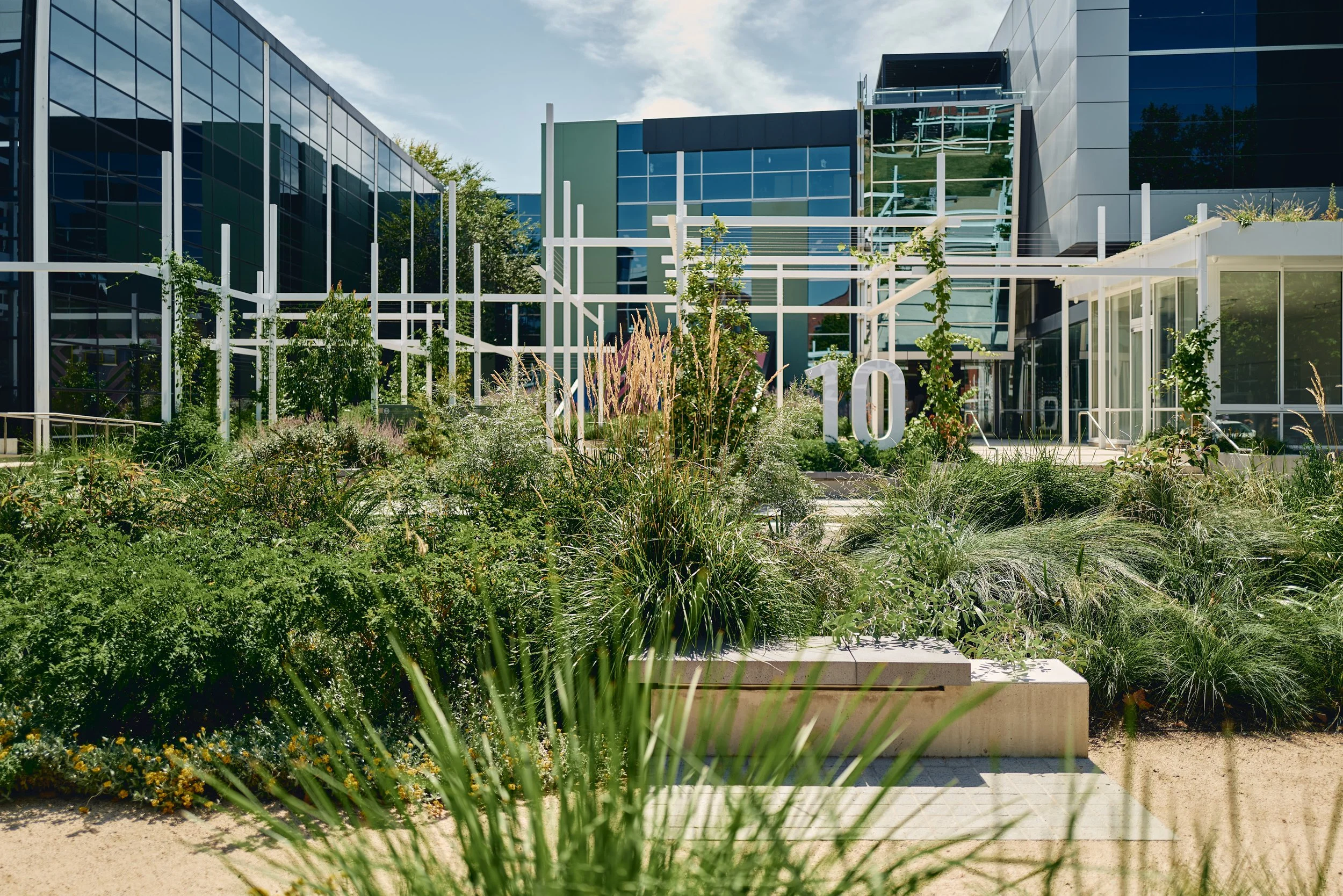
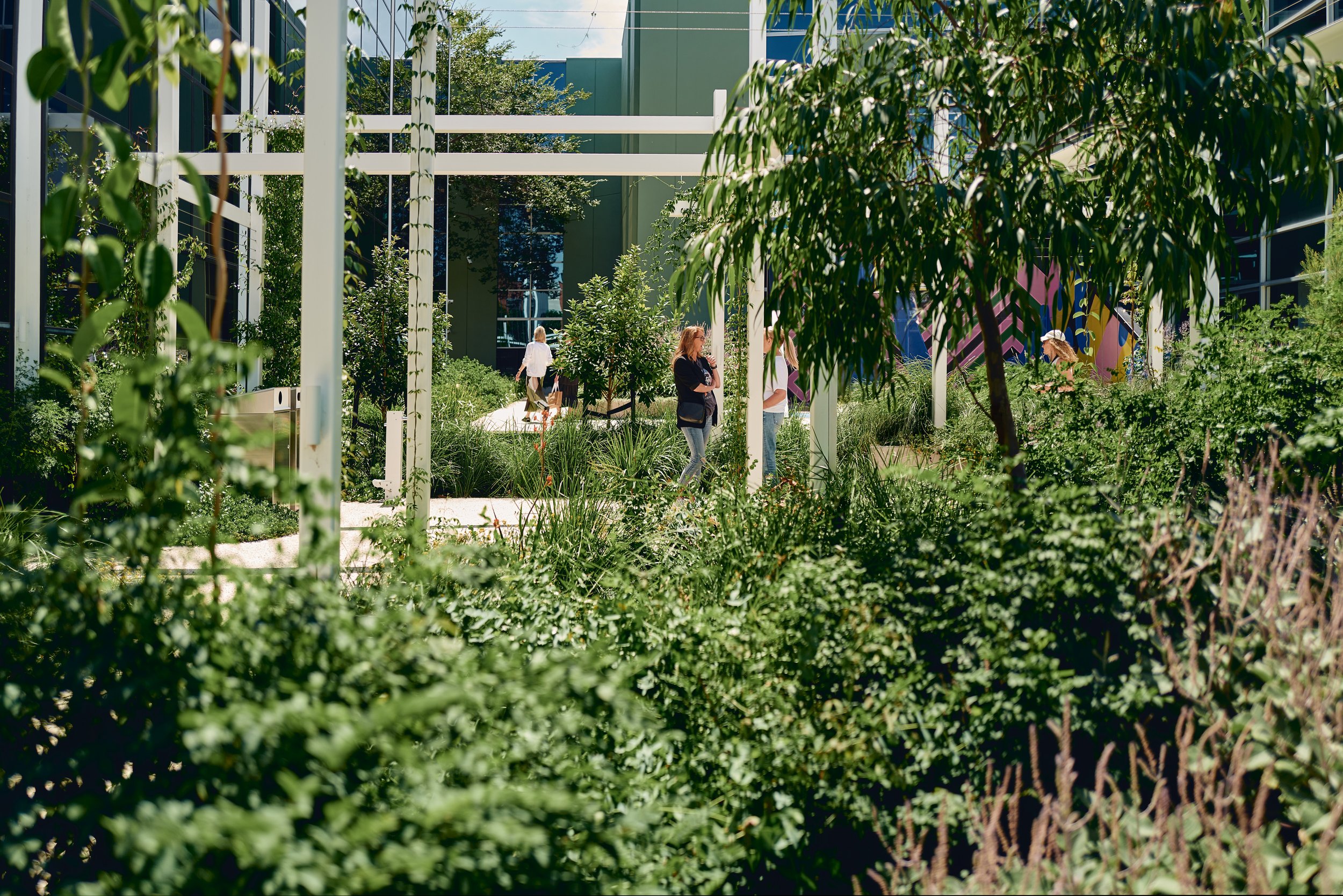
A striking white steel arbour forms the primary architectural gesture within the garden. Informed by the column grid of the surrounding 1990s corporate office buildings, the arbour is intentionally fragmented—appearing half-built or half-dismantled—to contrast the rigidity of its context. It defines a series of outdoor rooms, integrates lighting, supports climbing vegetation, and provides shade and refuge during warmer months, evoking the presence of an eroded architectural remnant within the landscape.
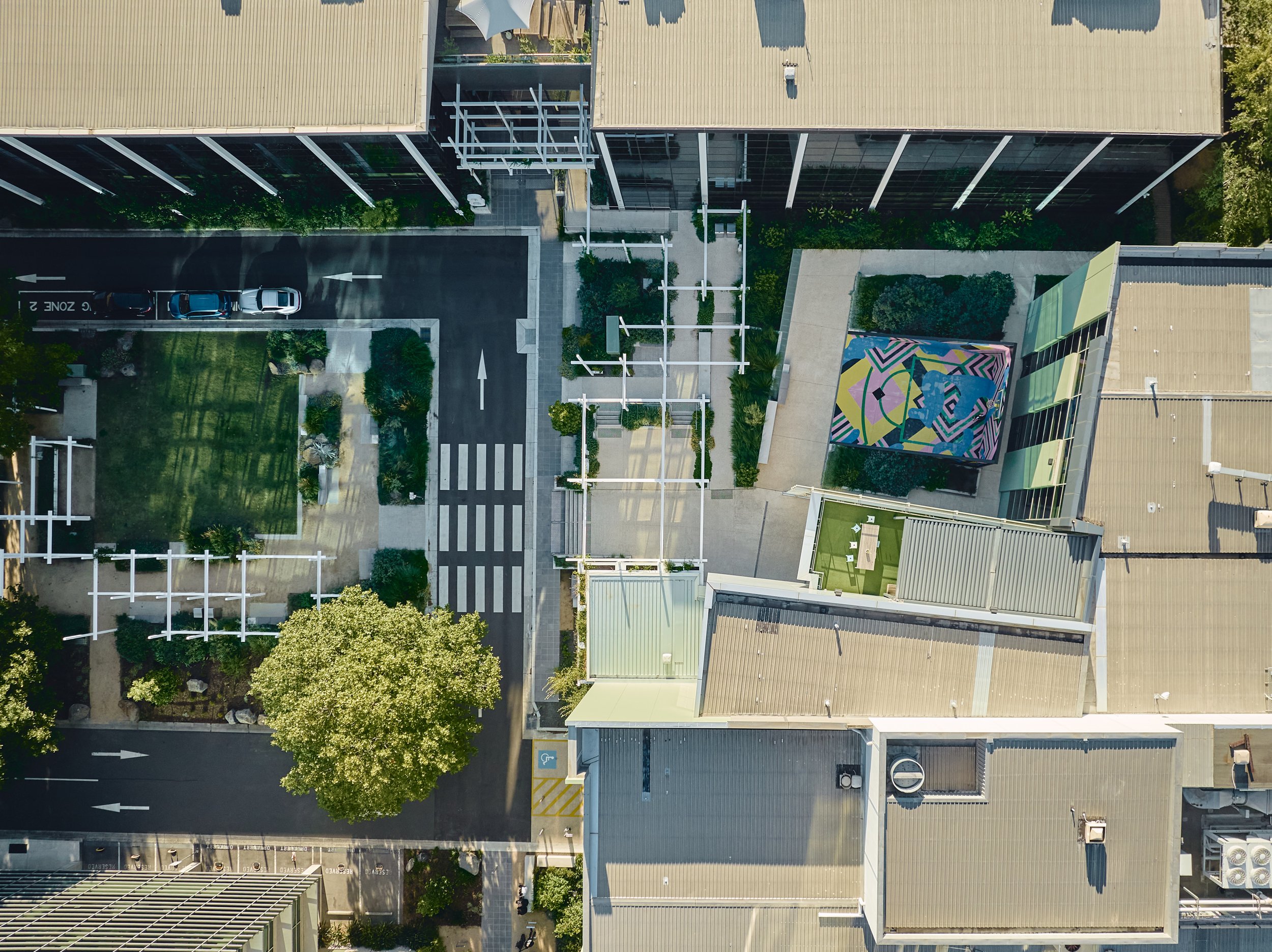
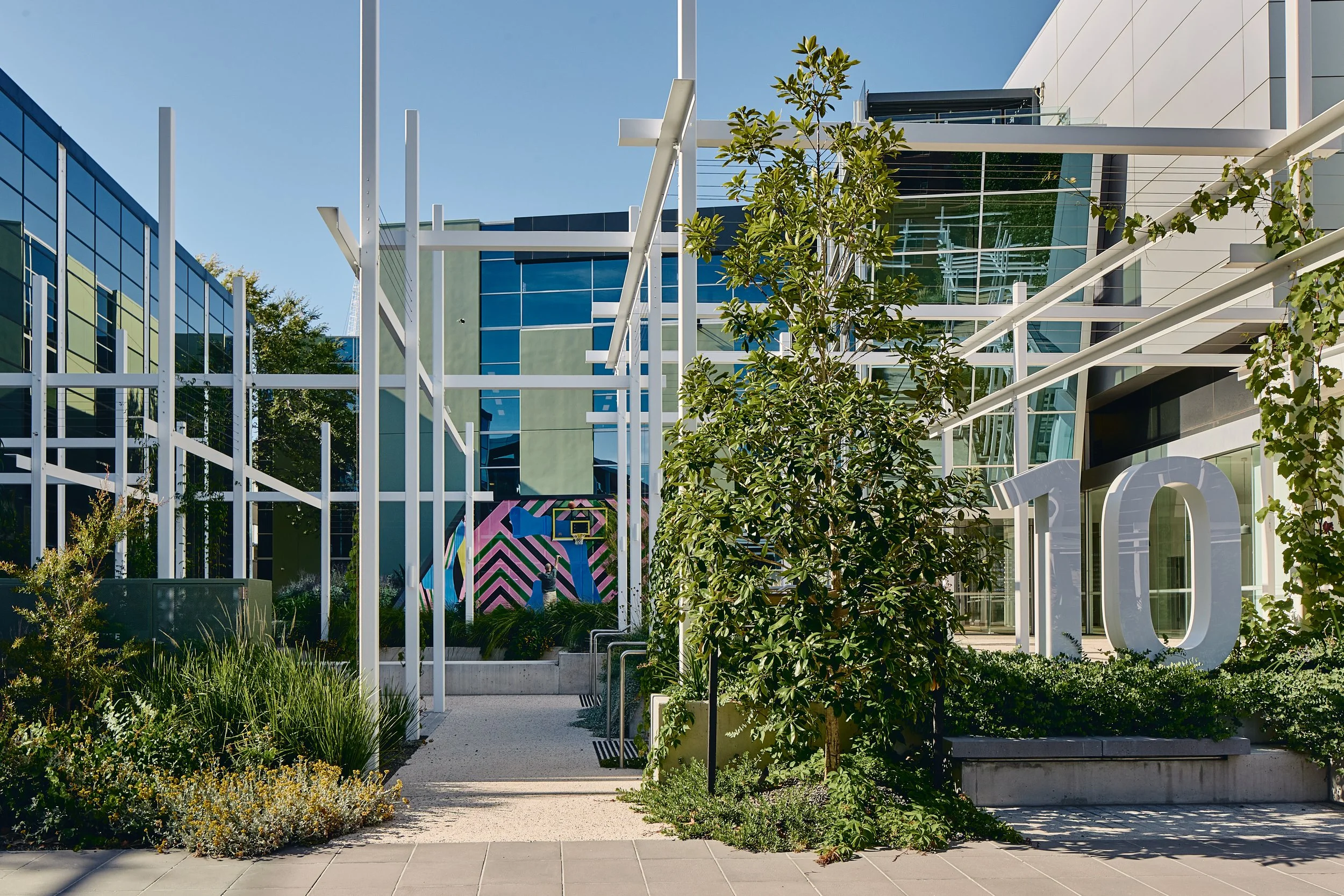
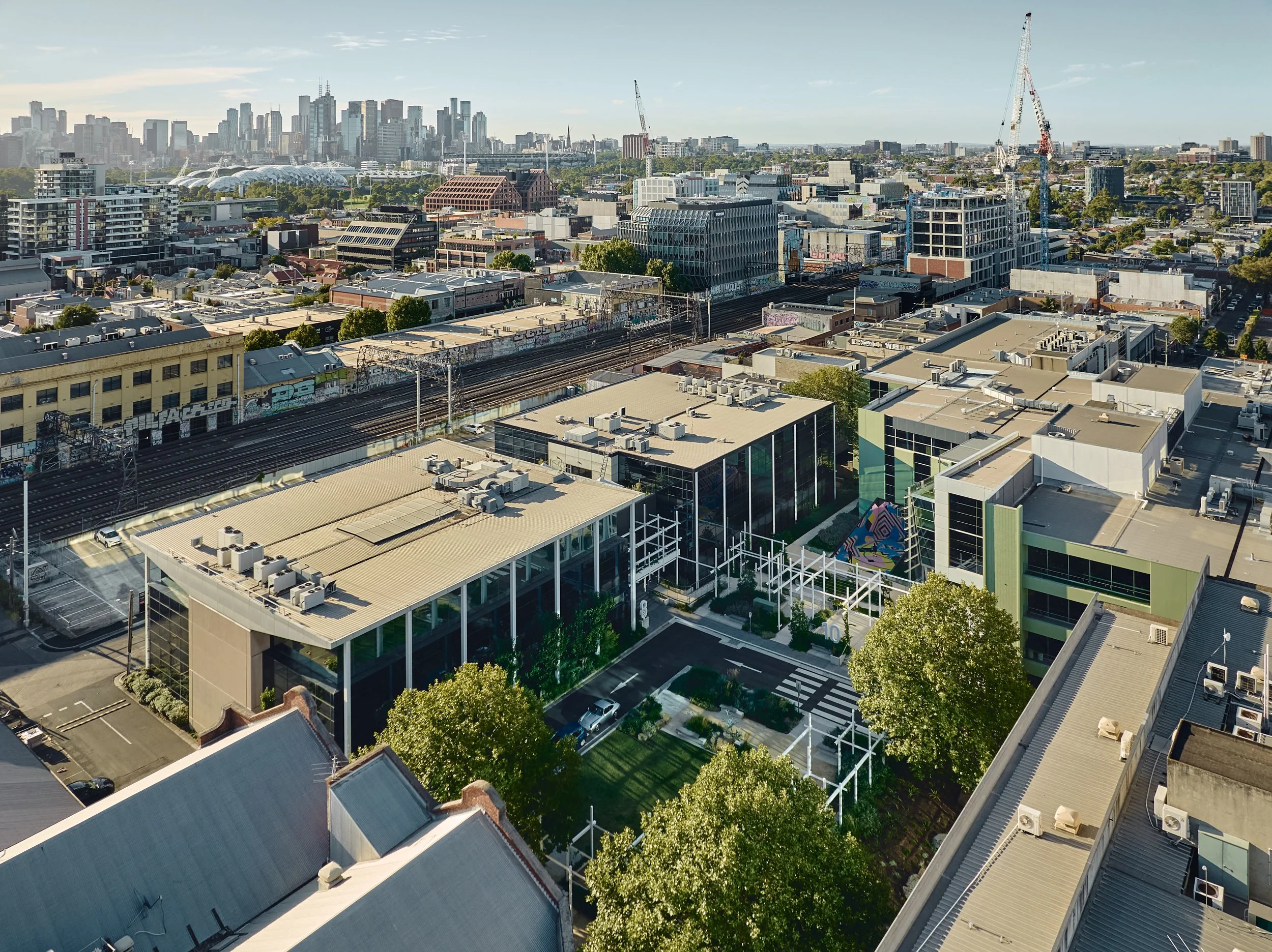
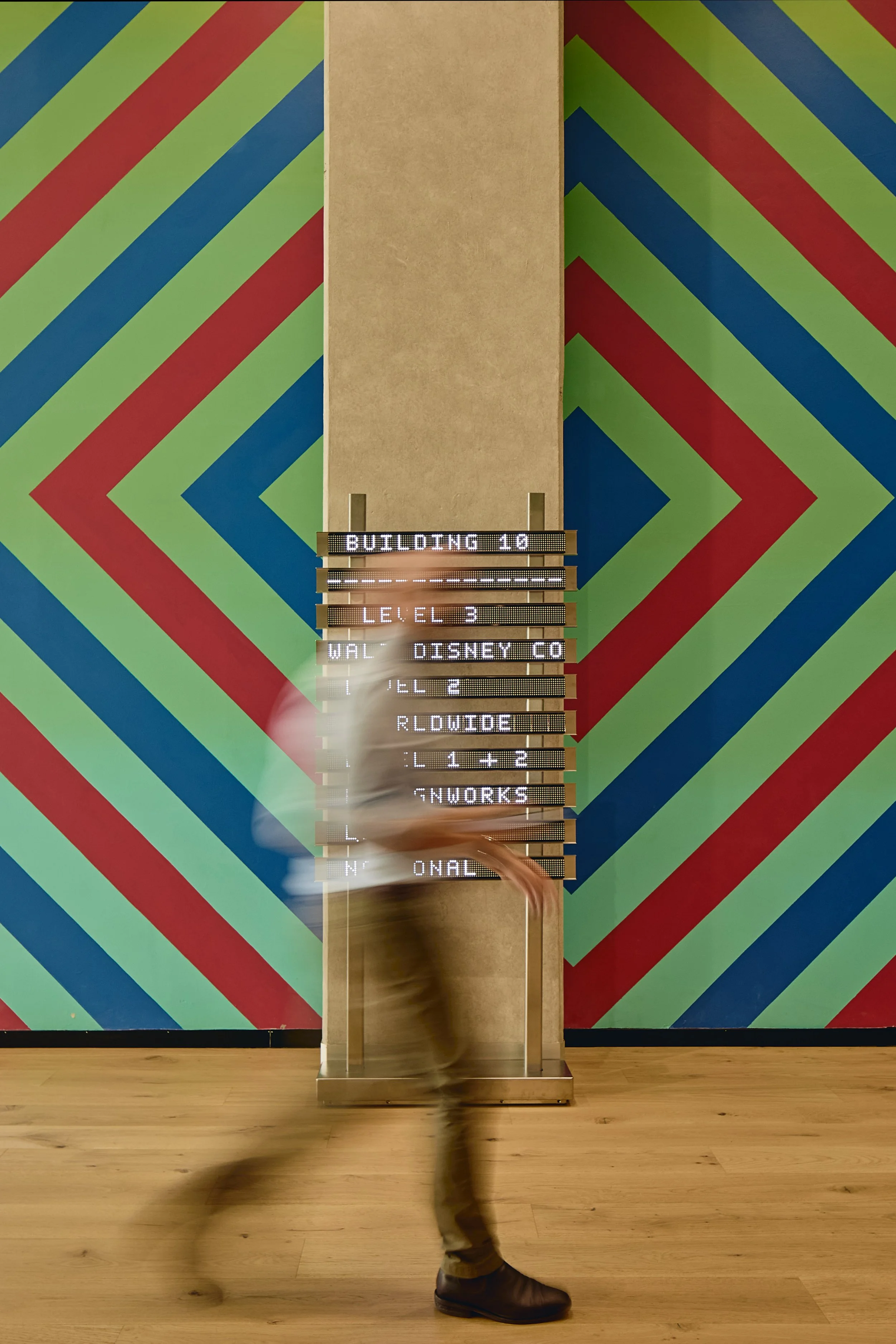
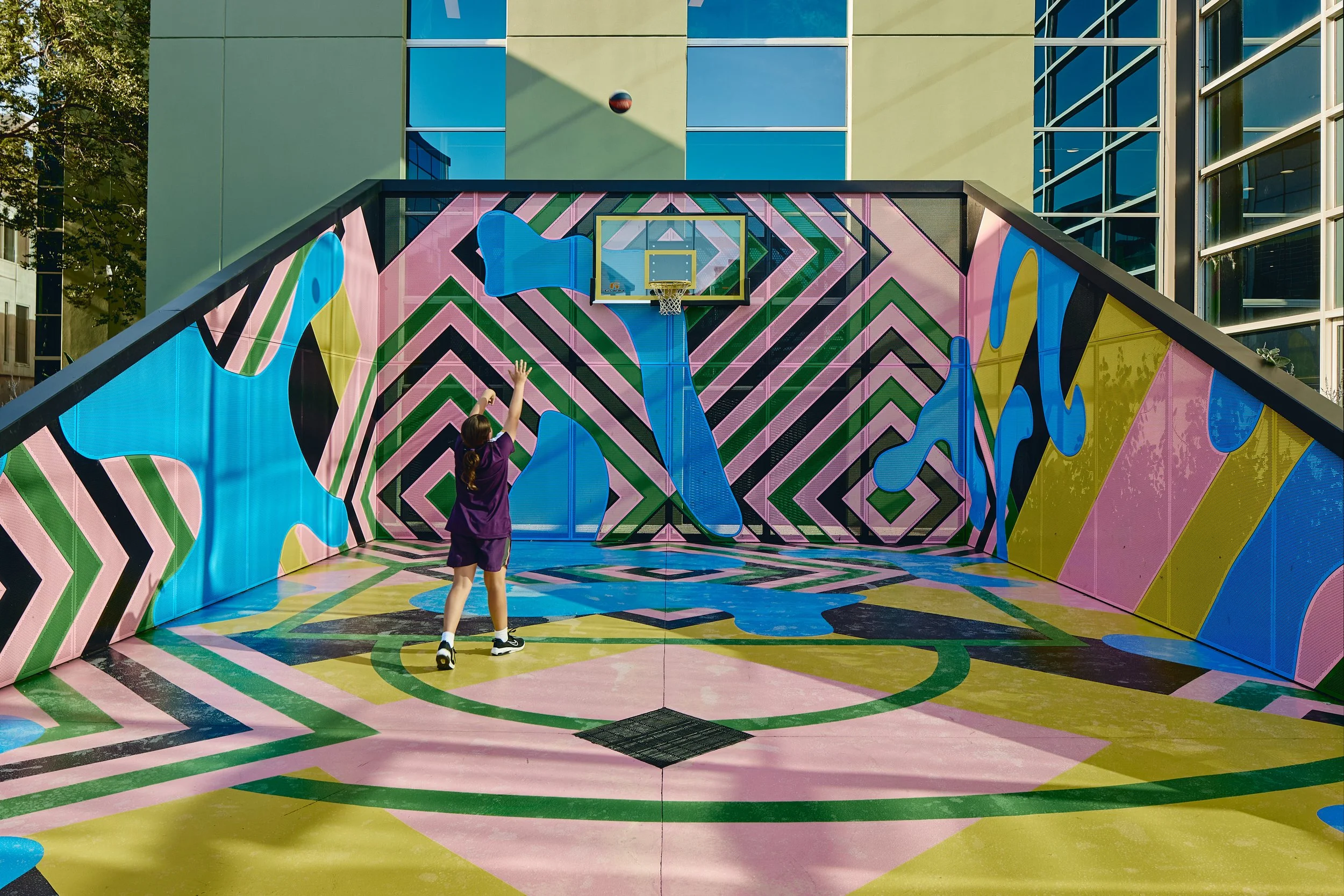
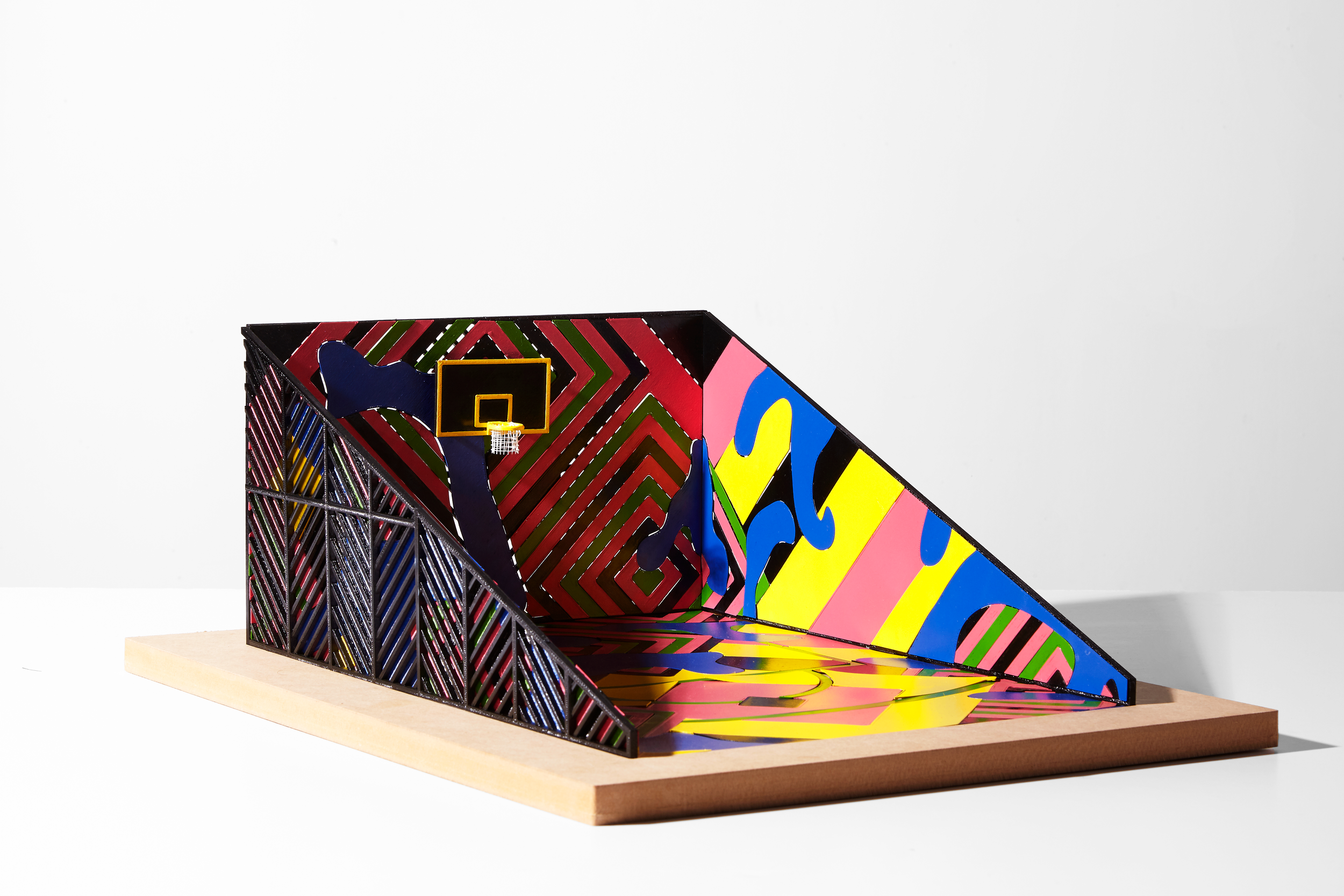
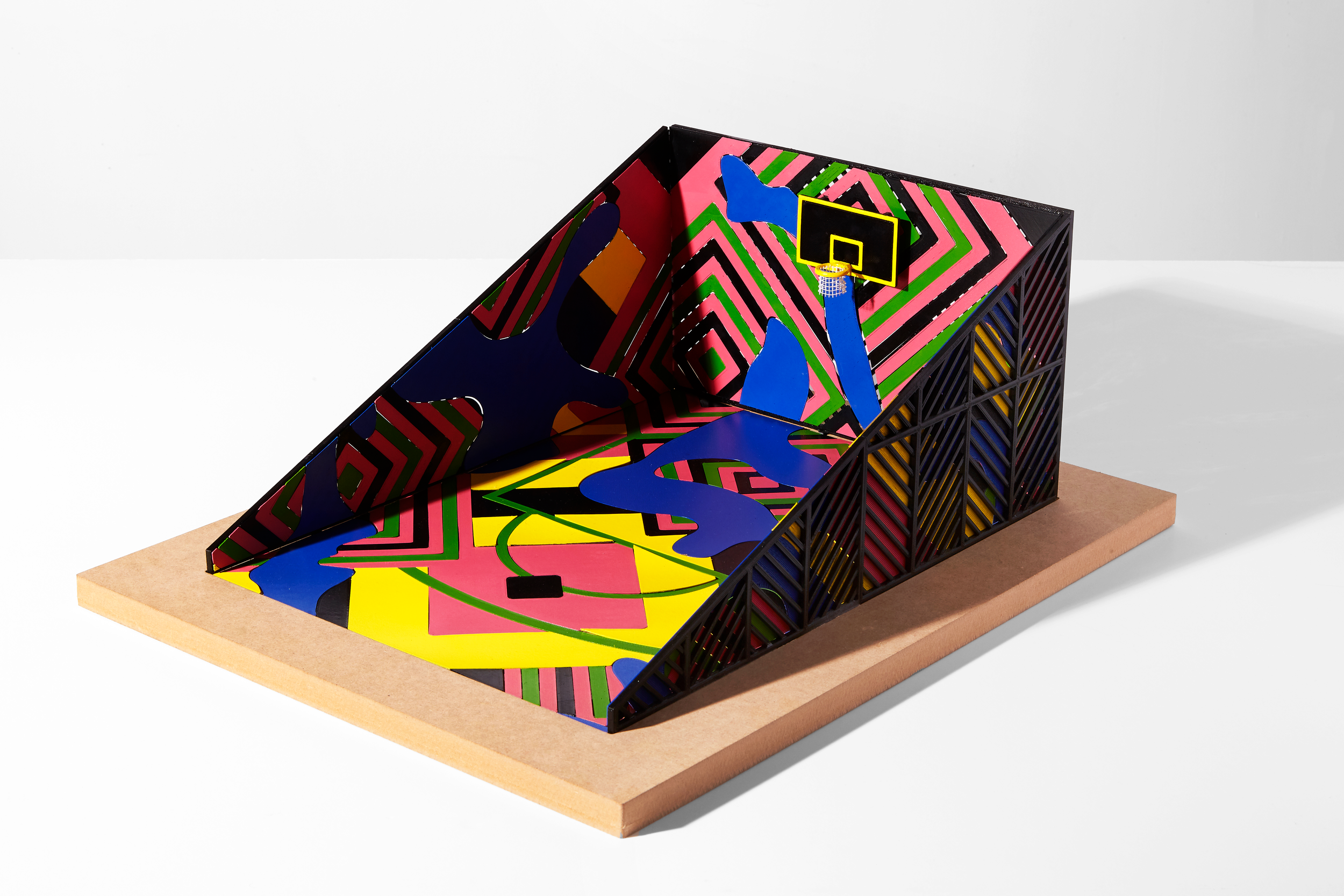
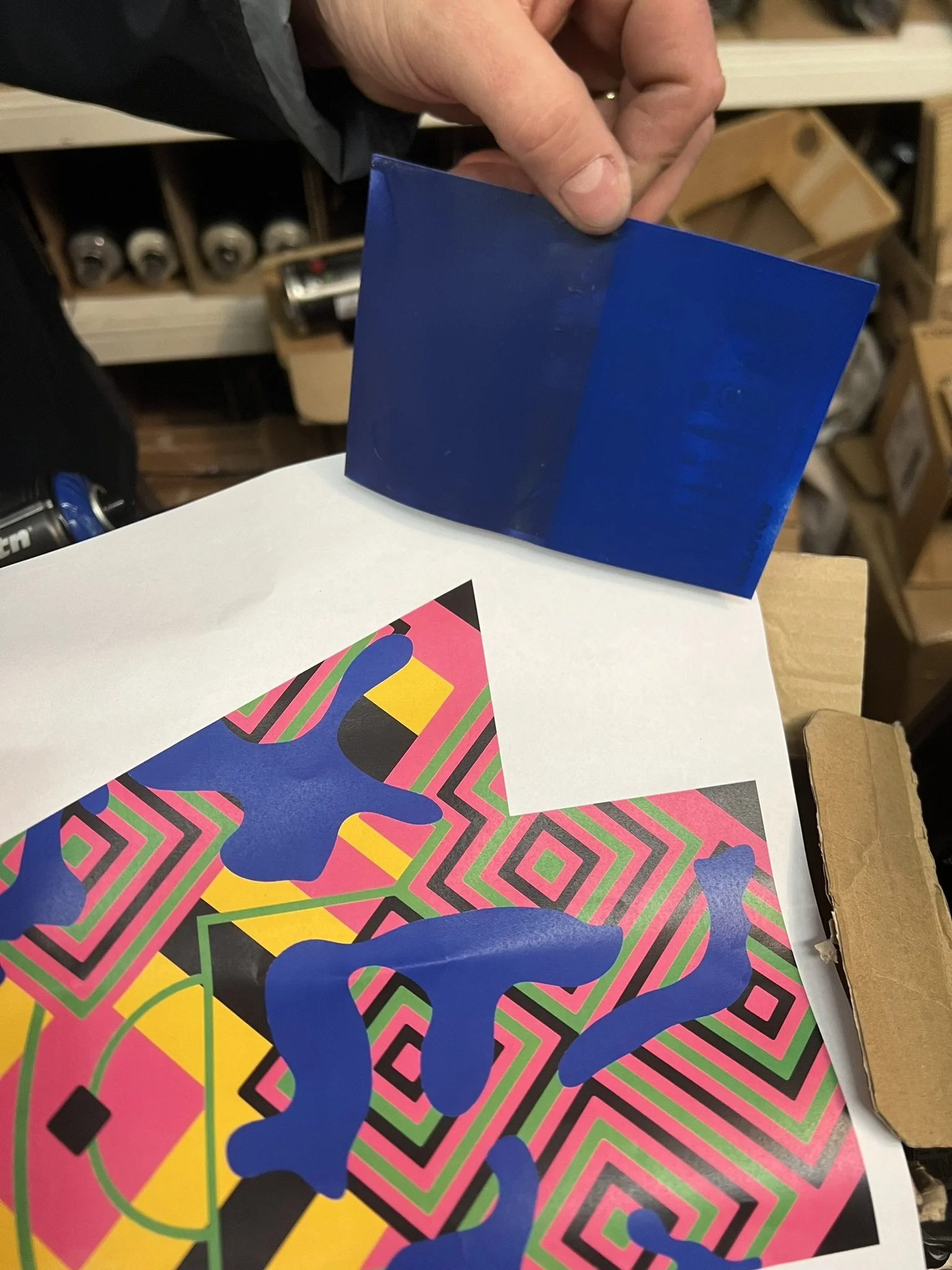
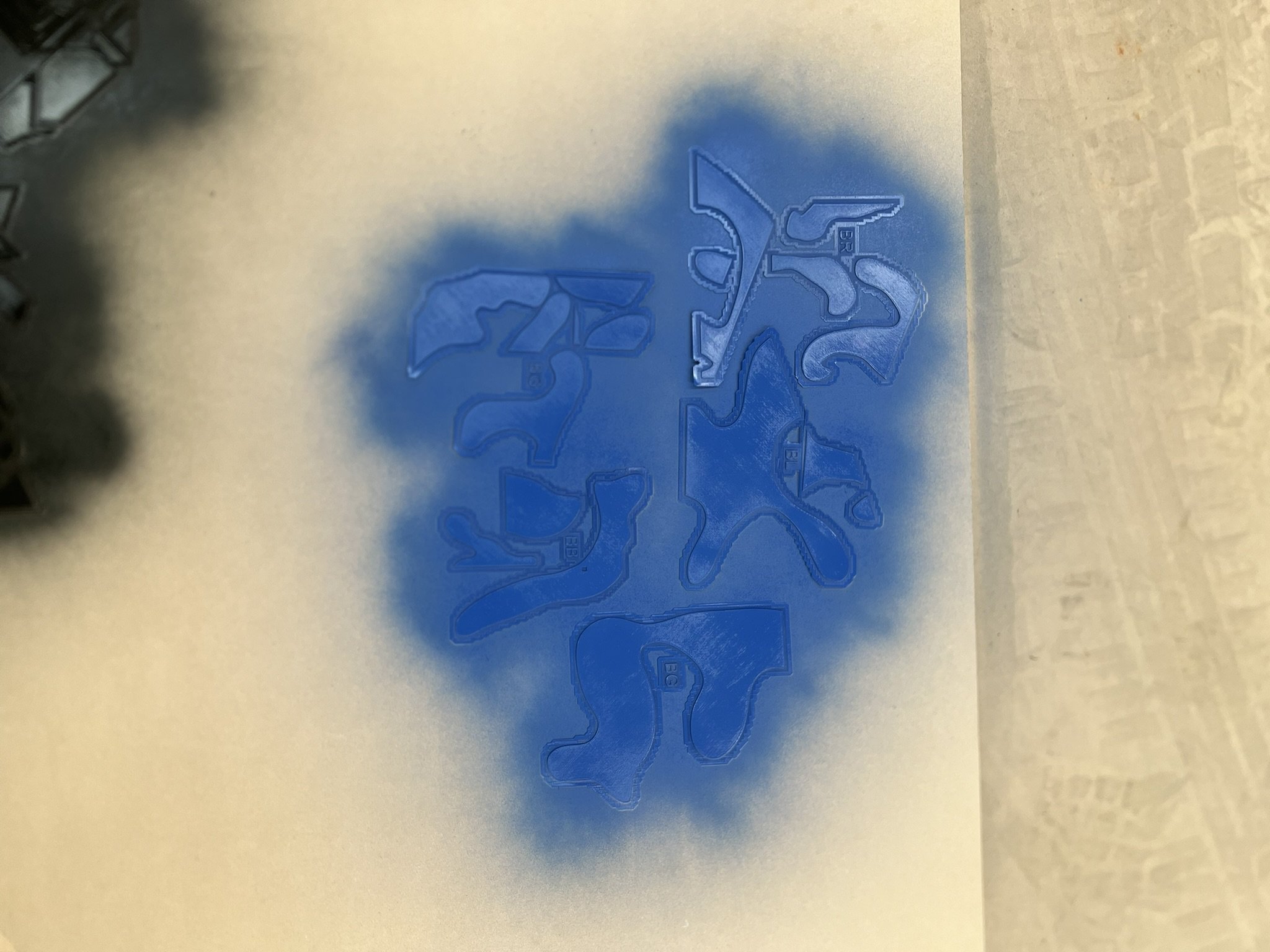
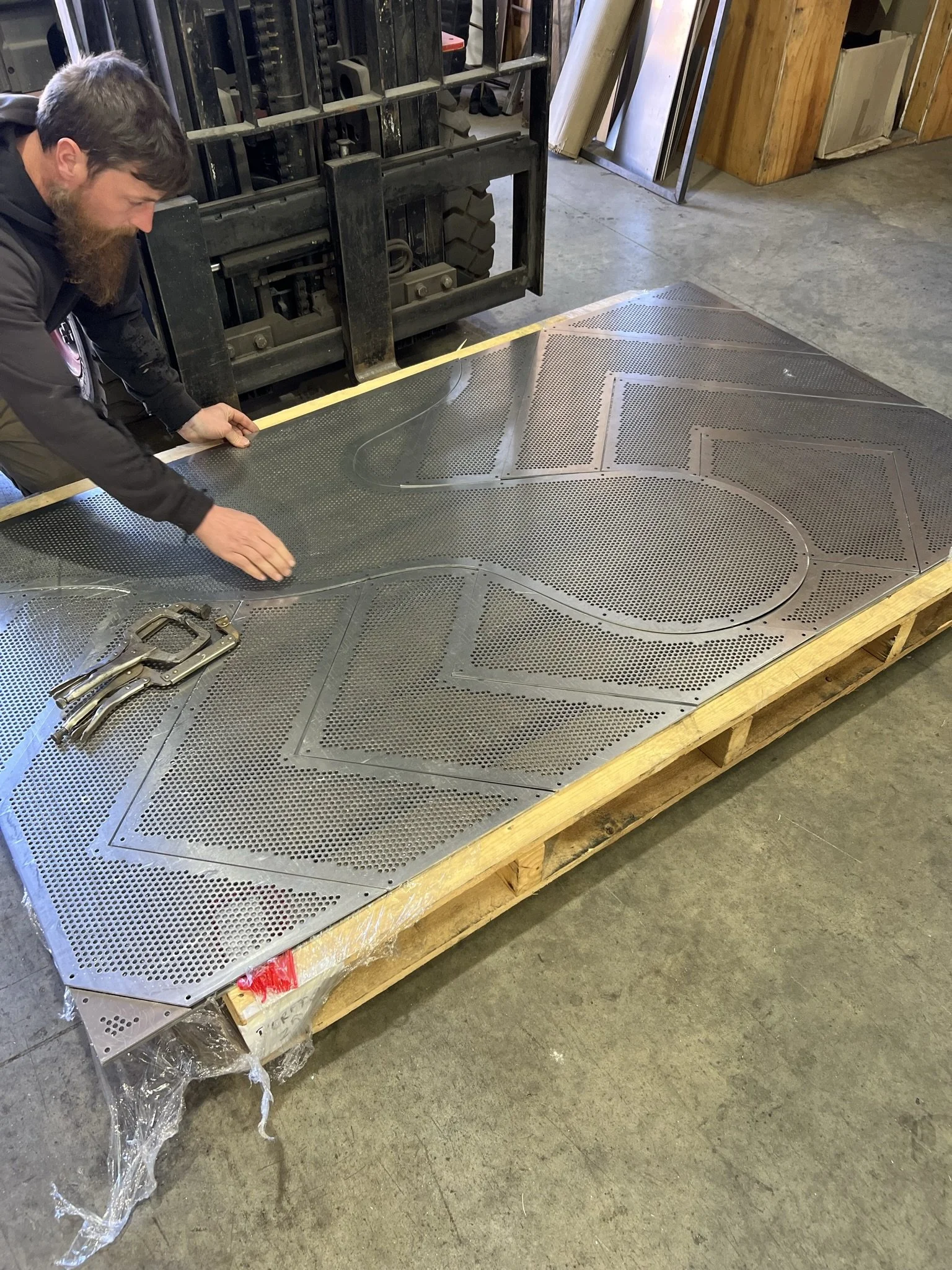
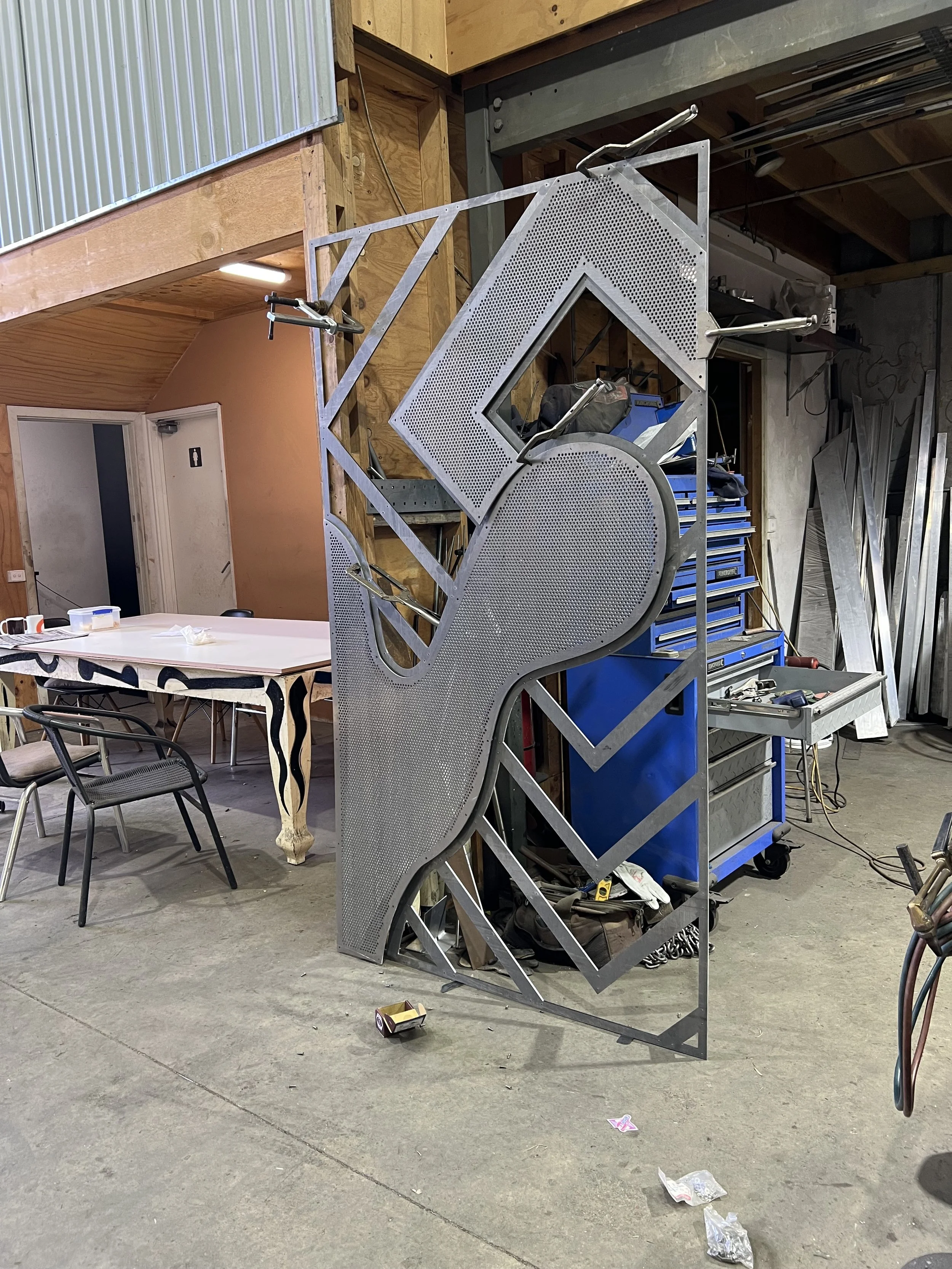
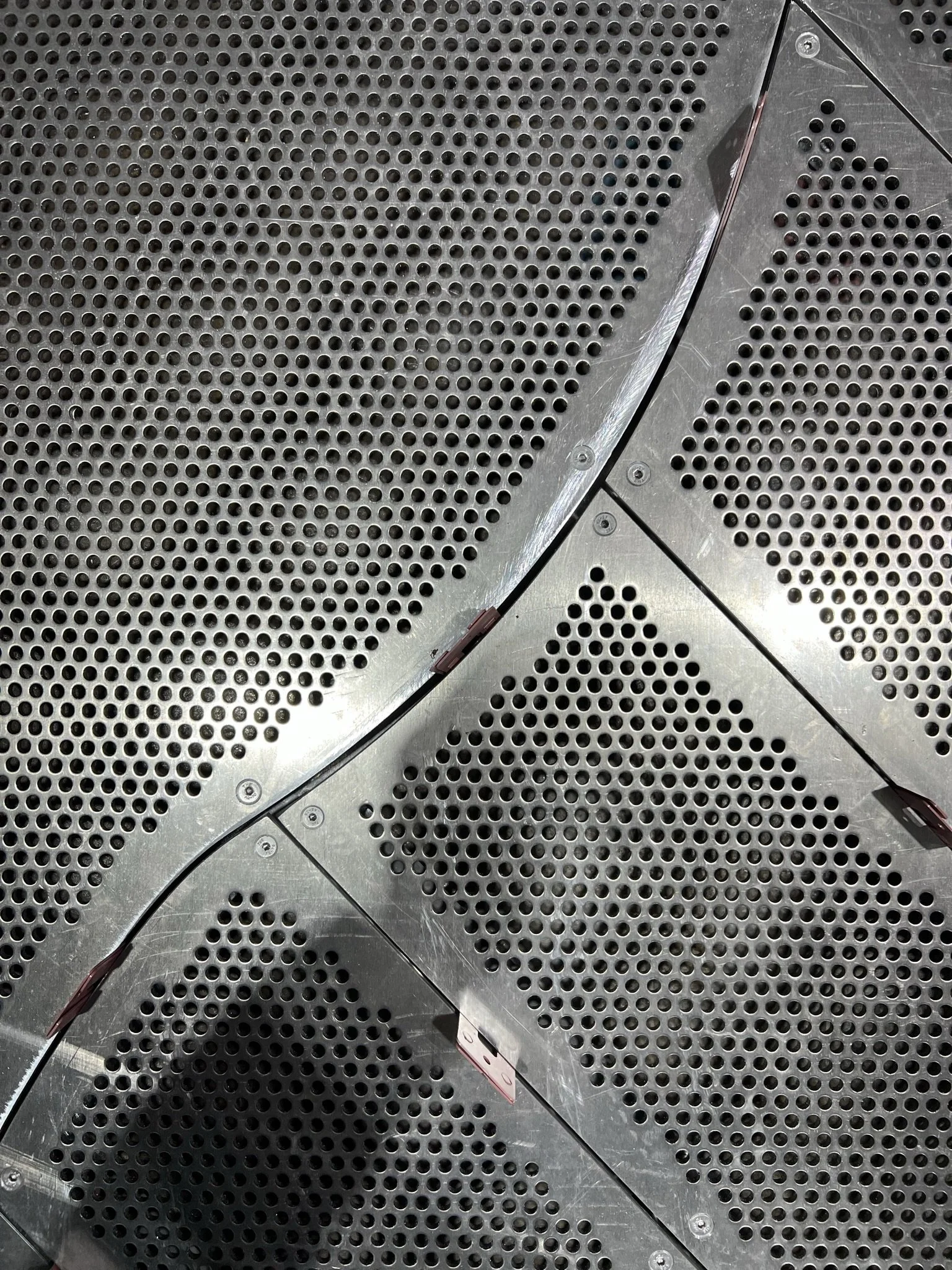
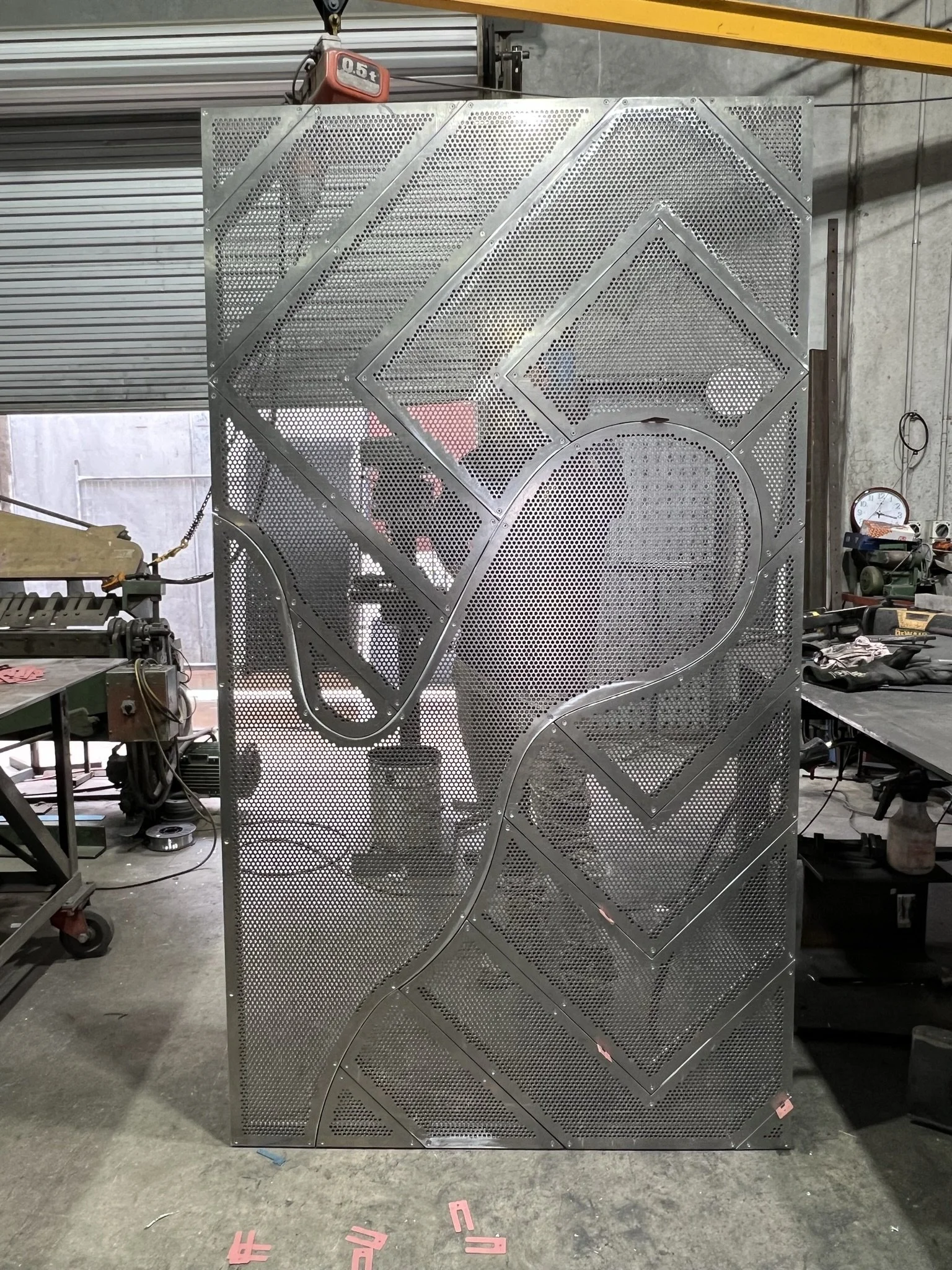
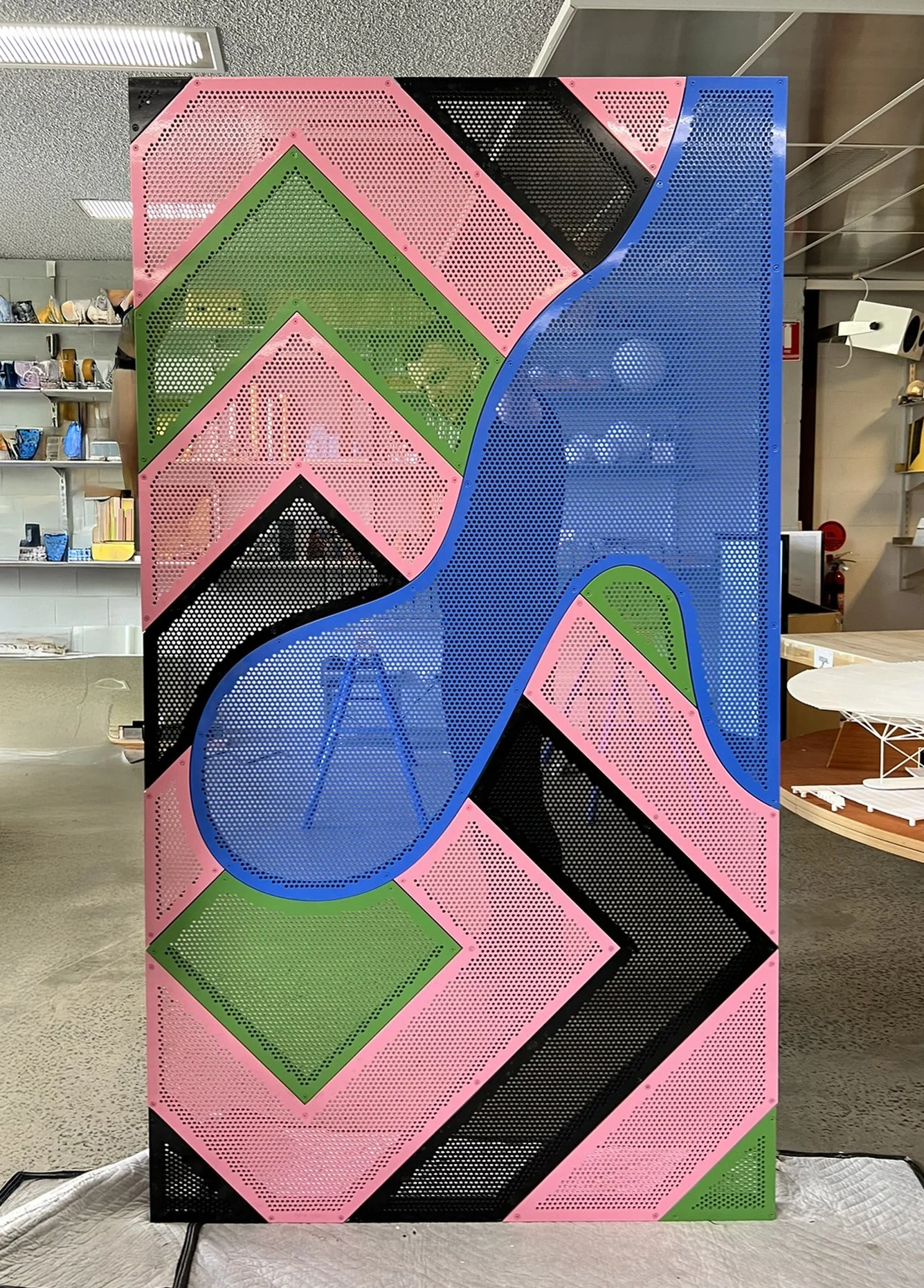
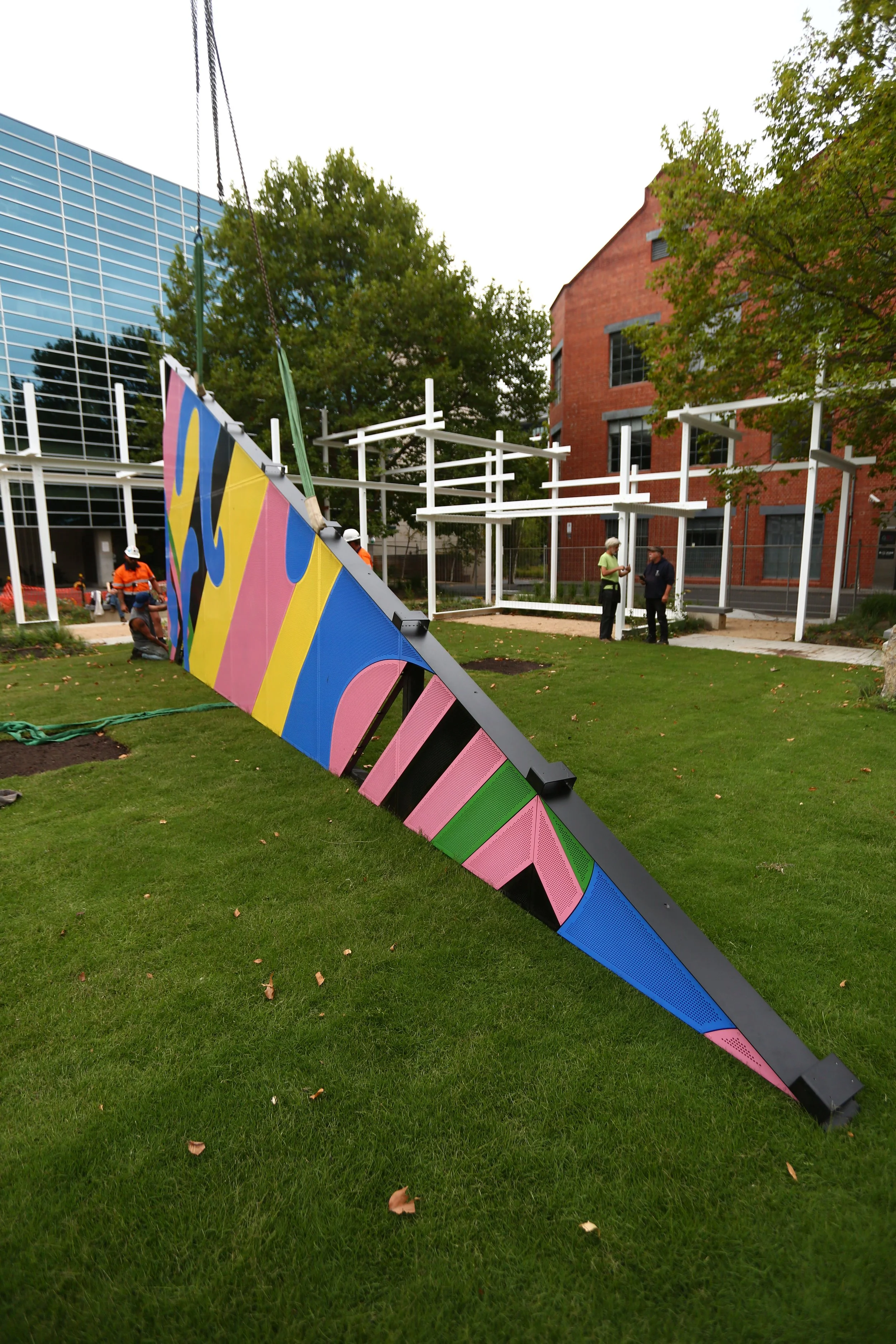
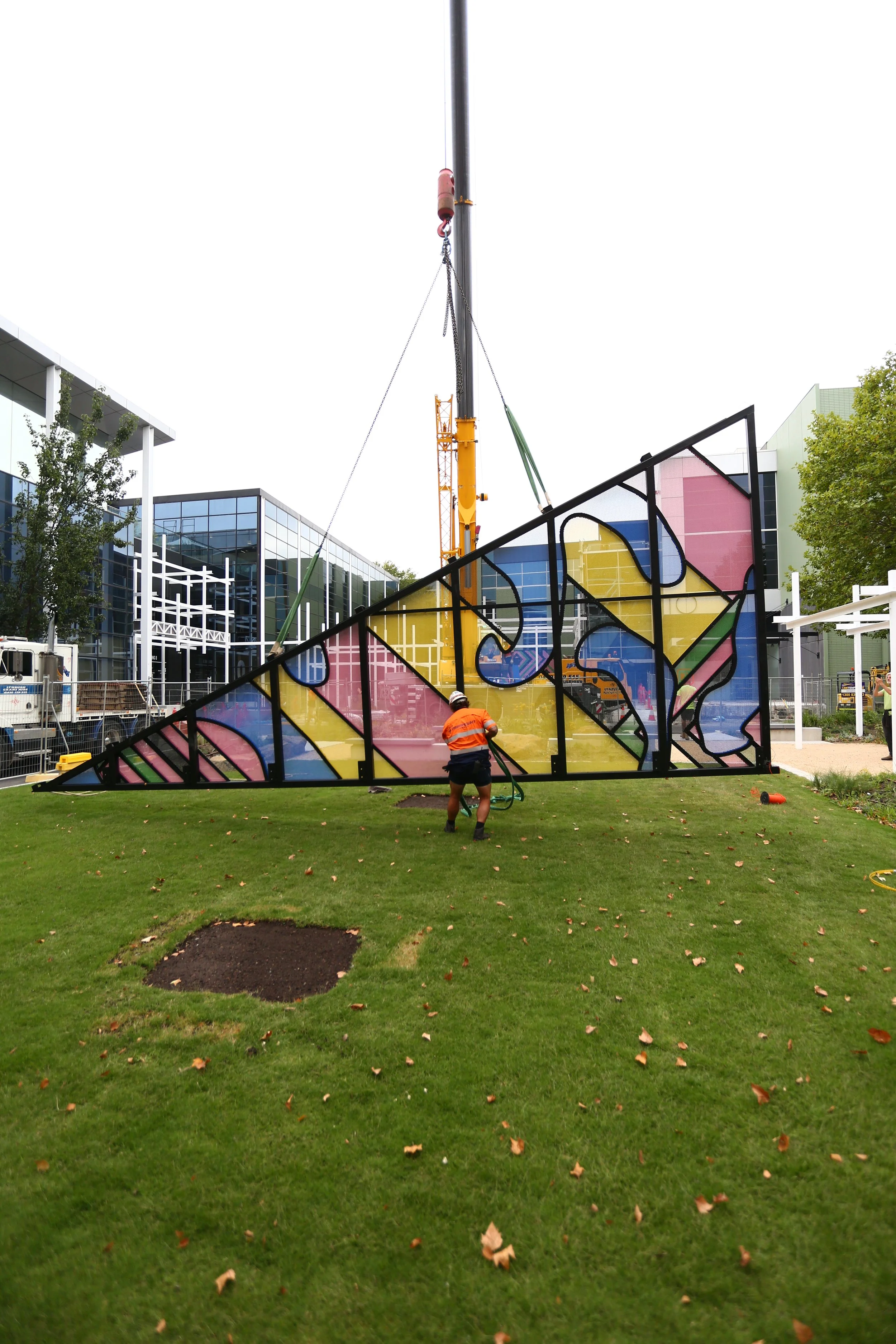
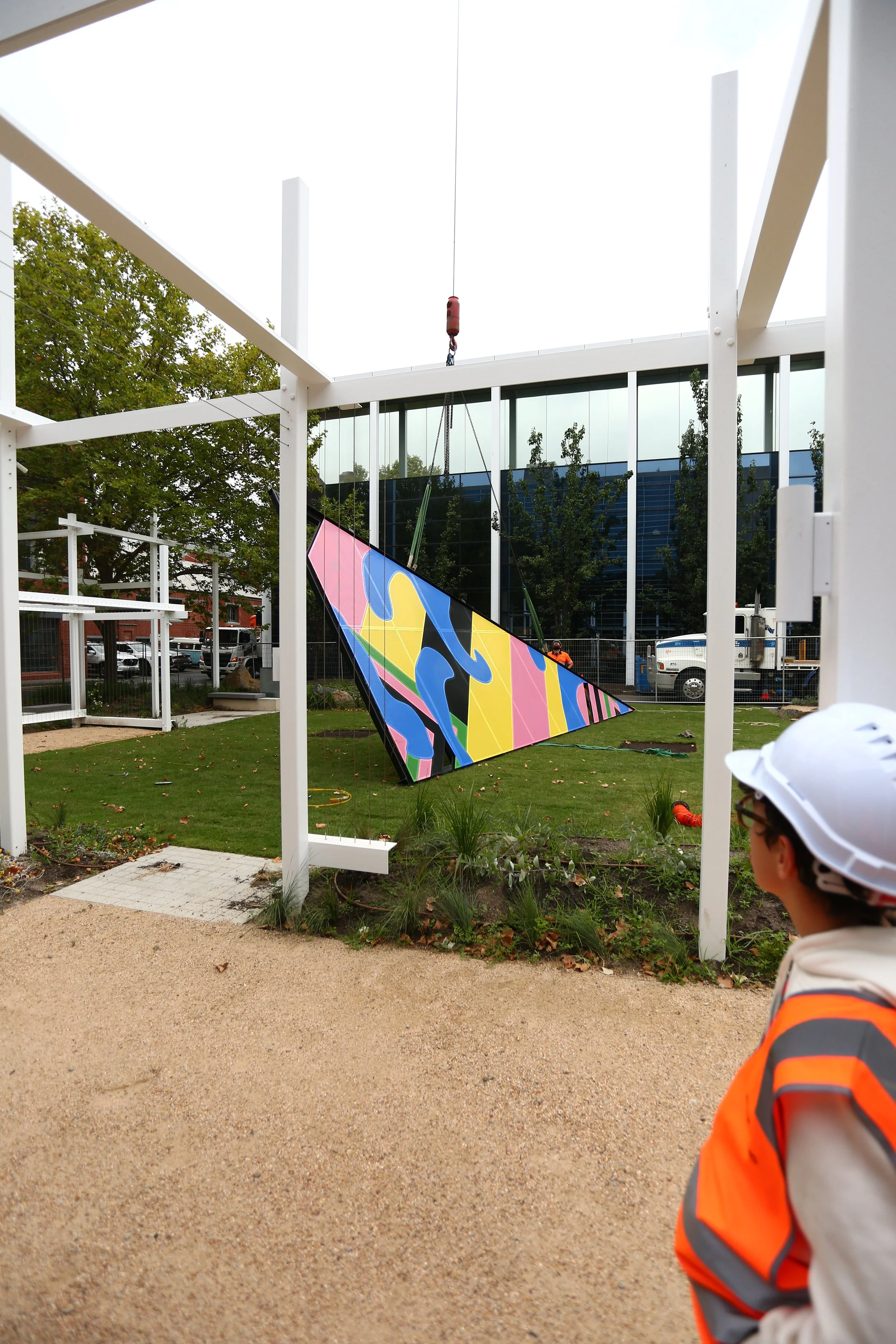
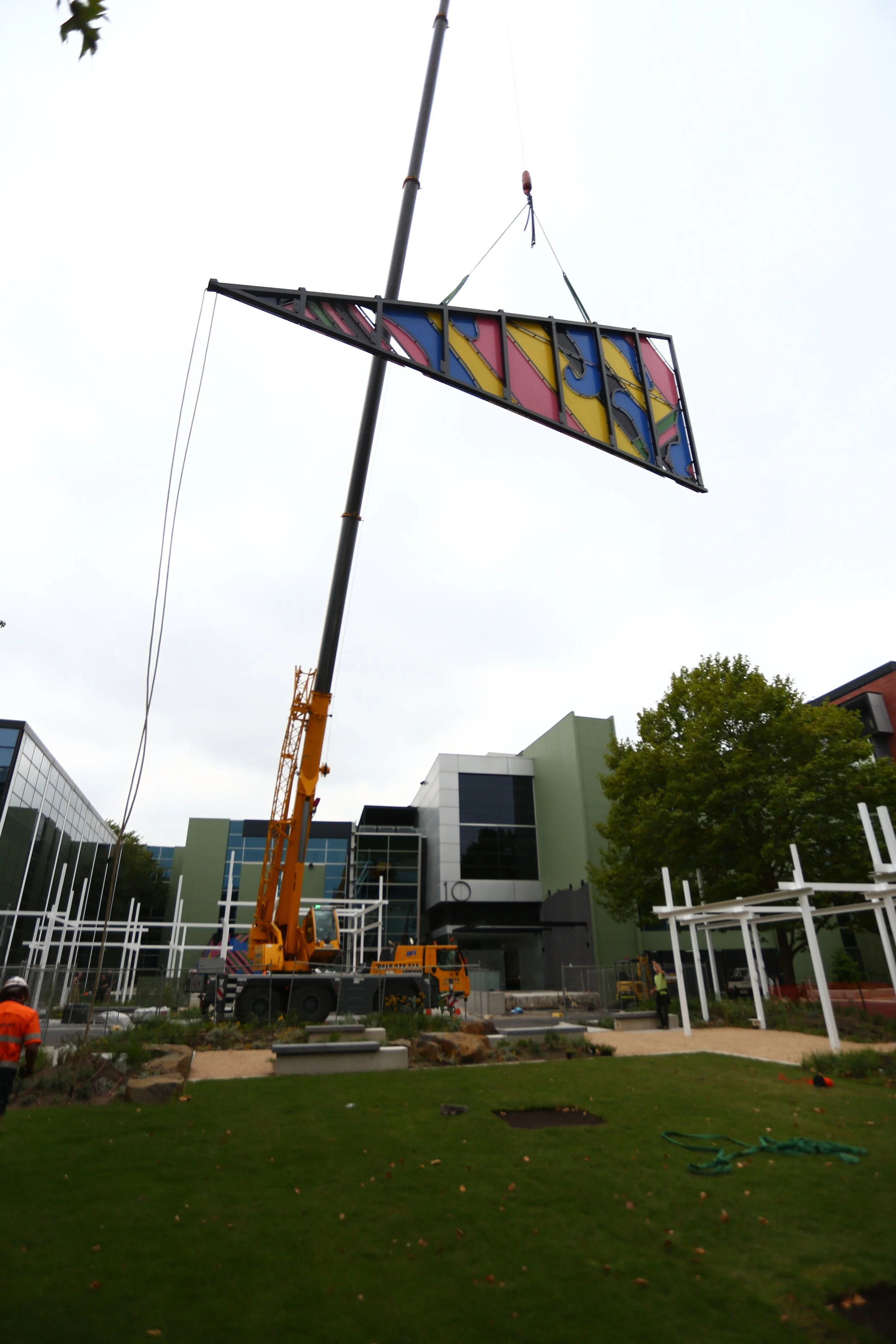
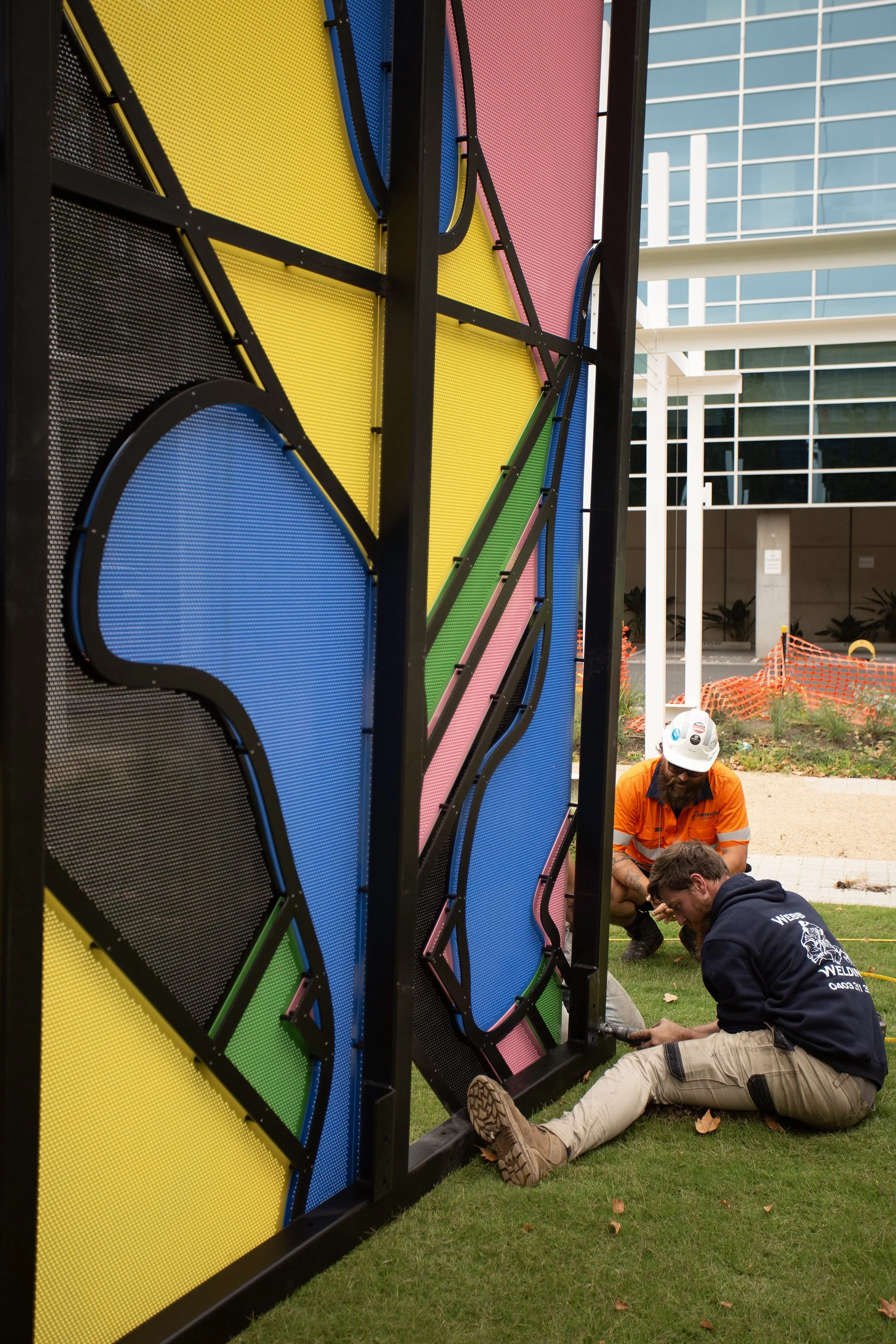
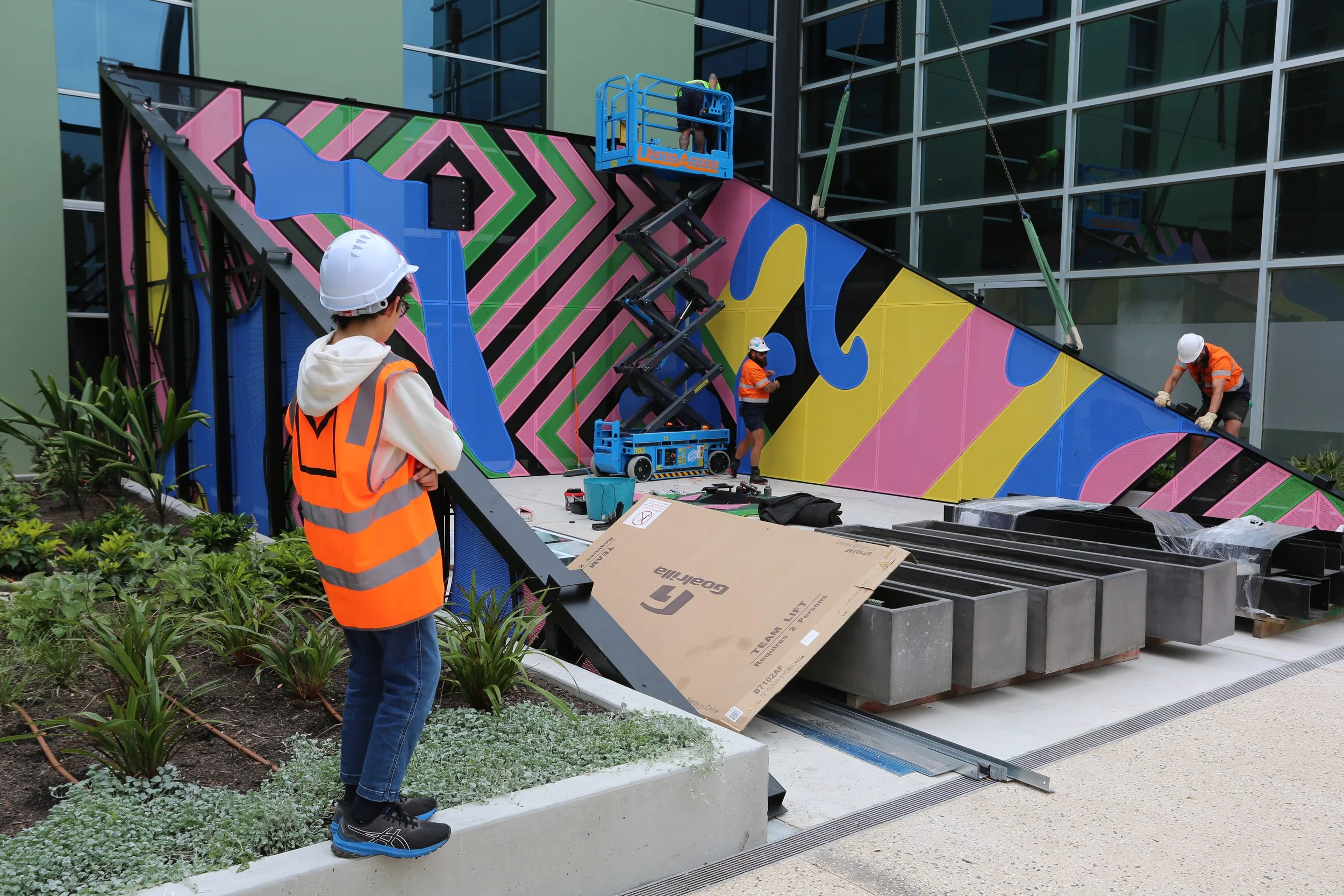
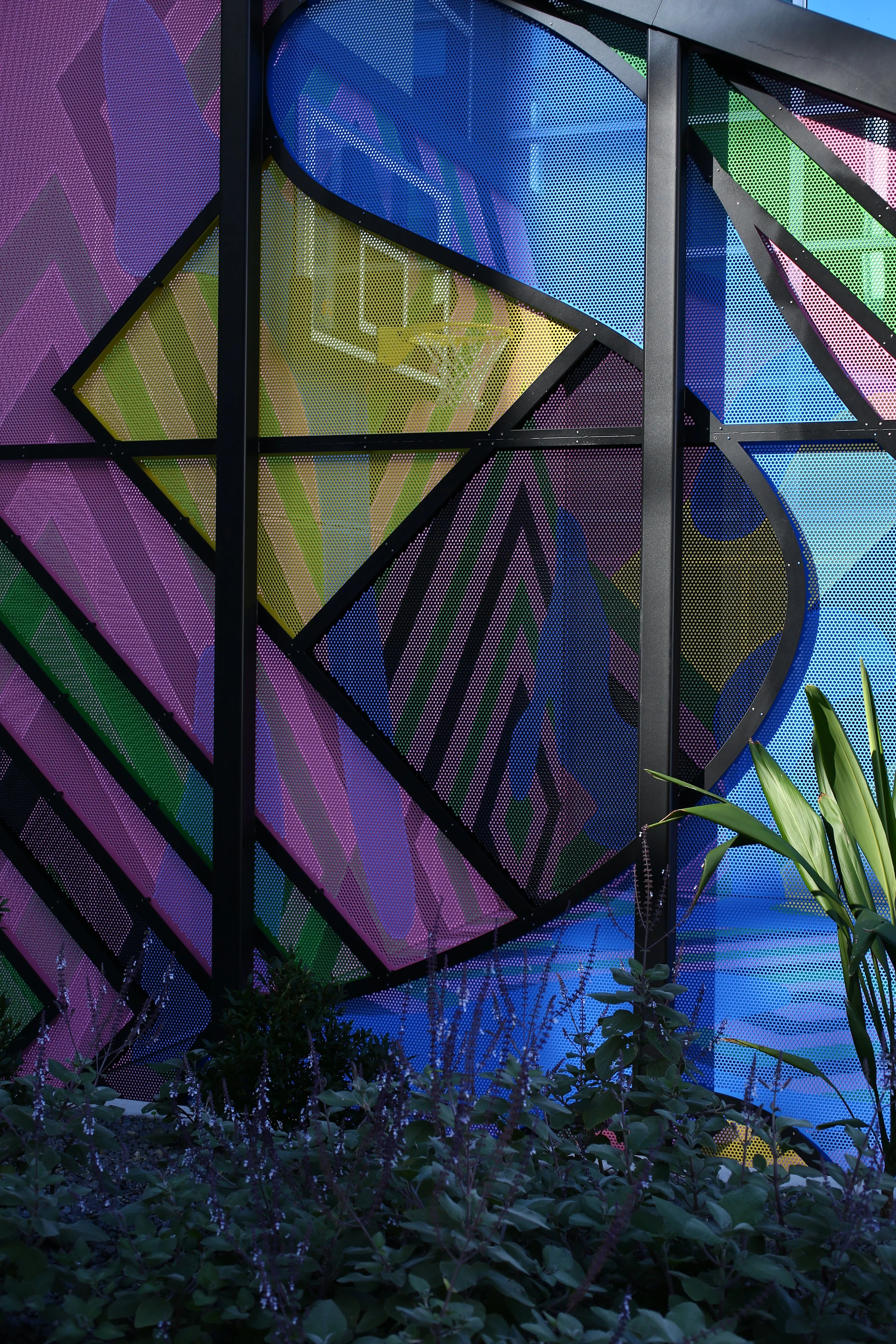
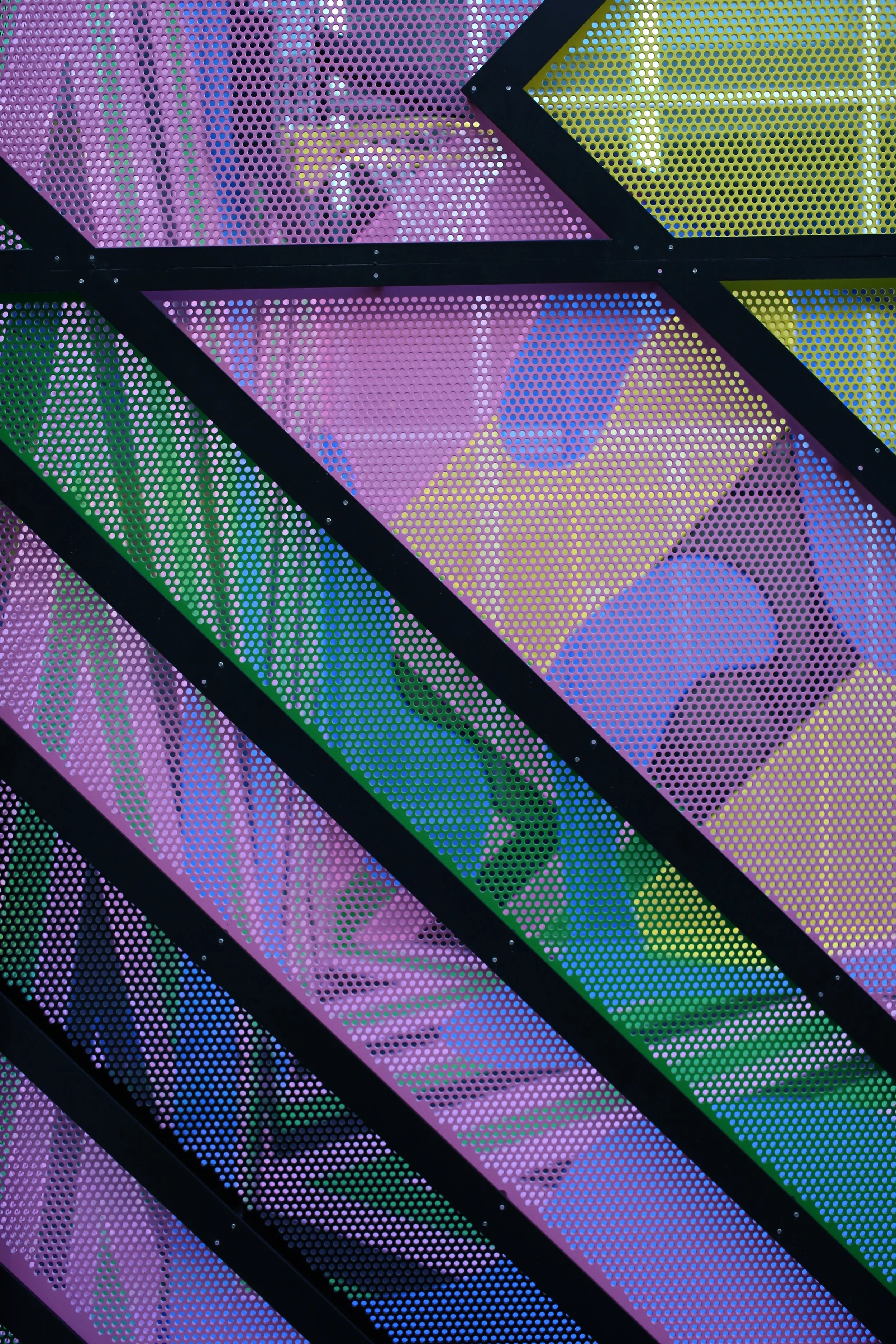
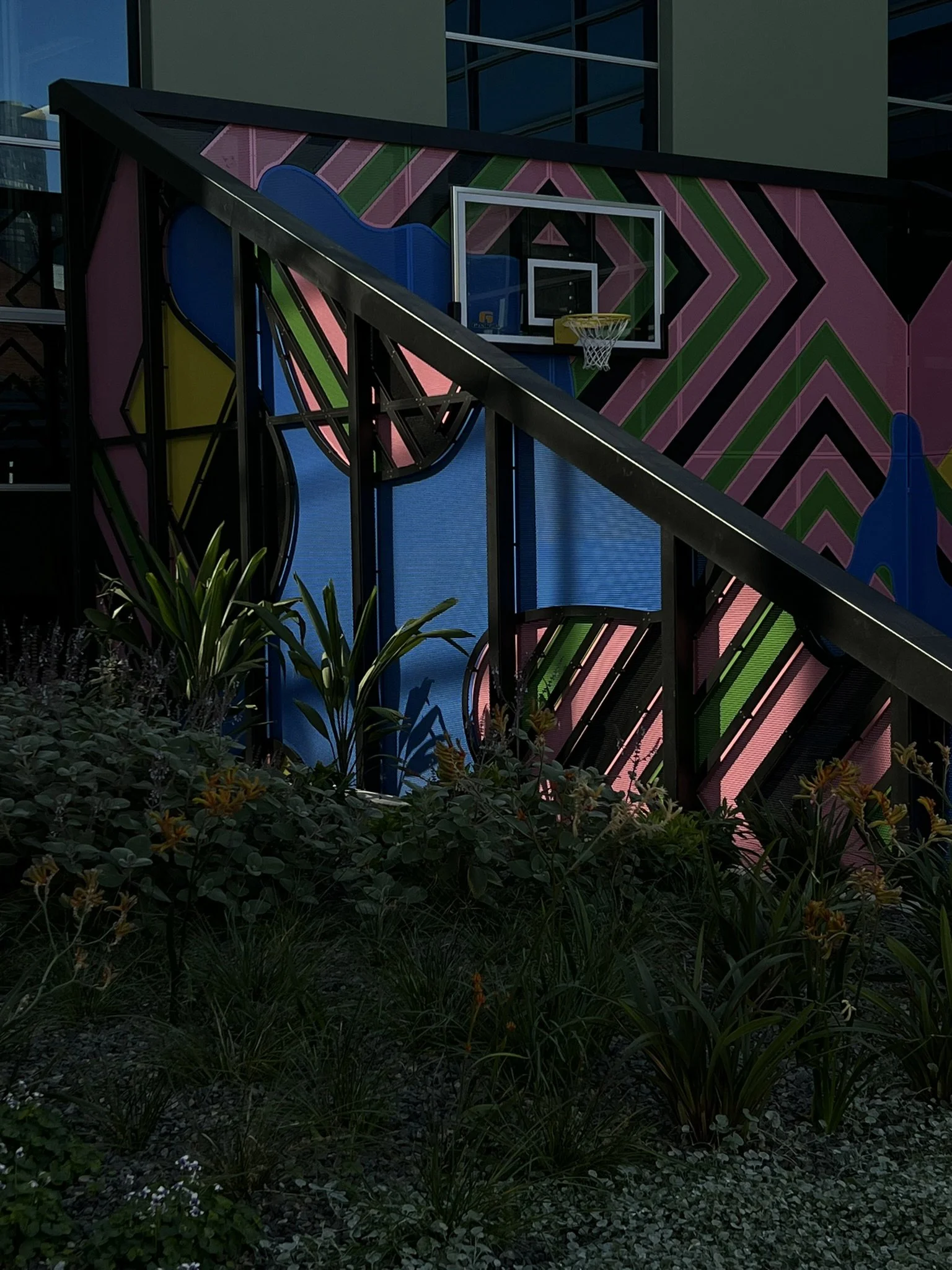
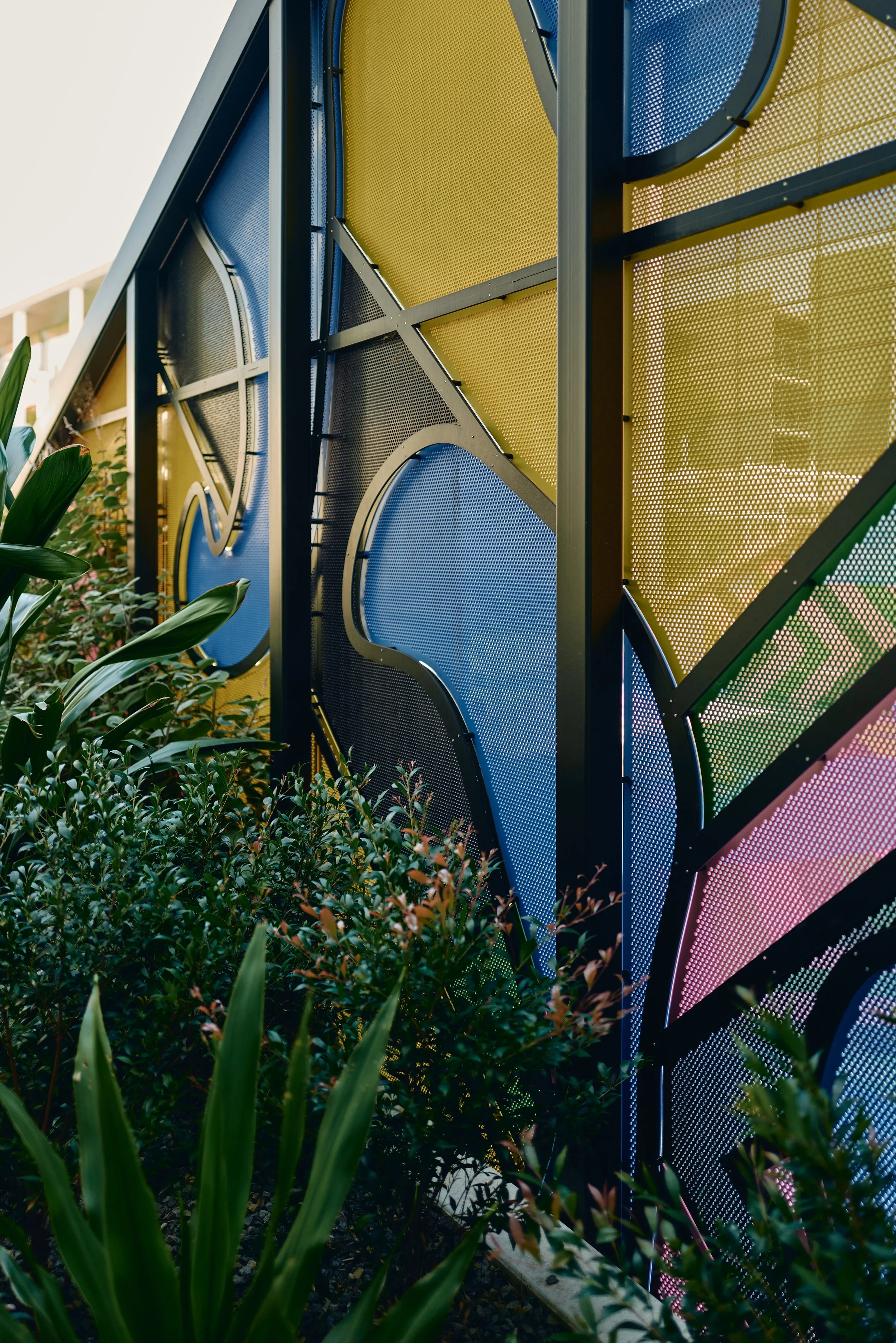
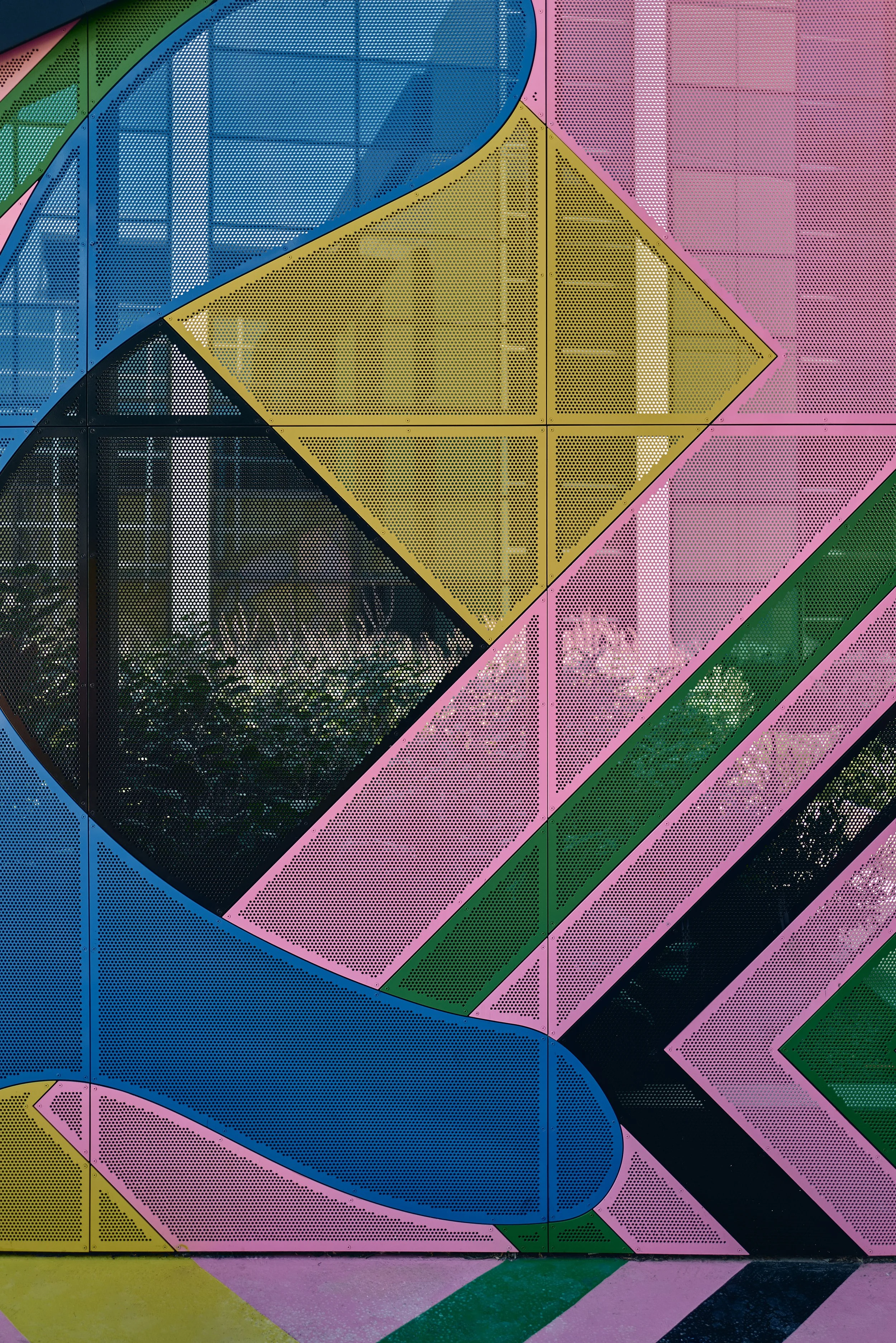
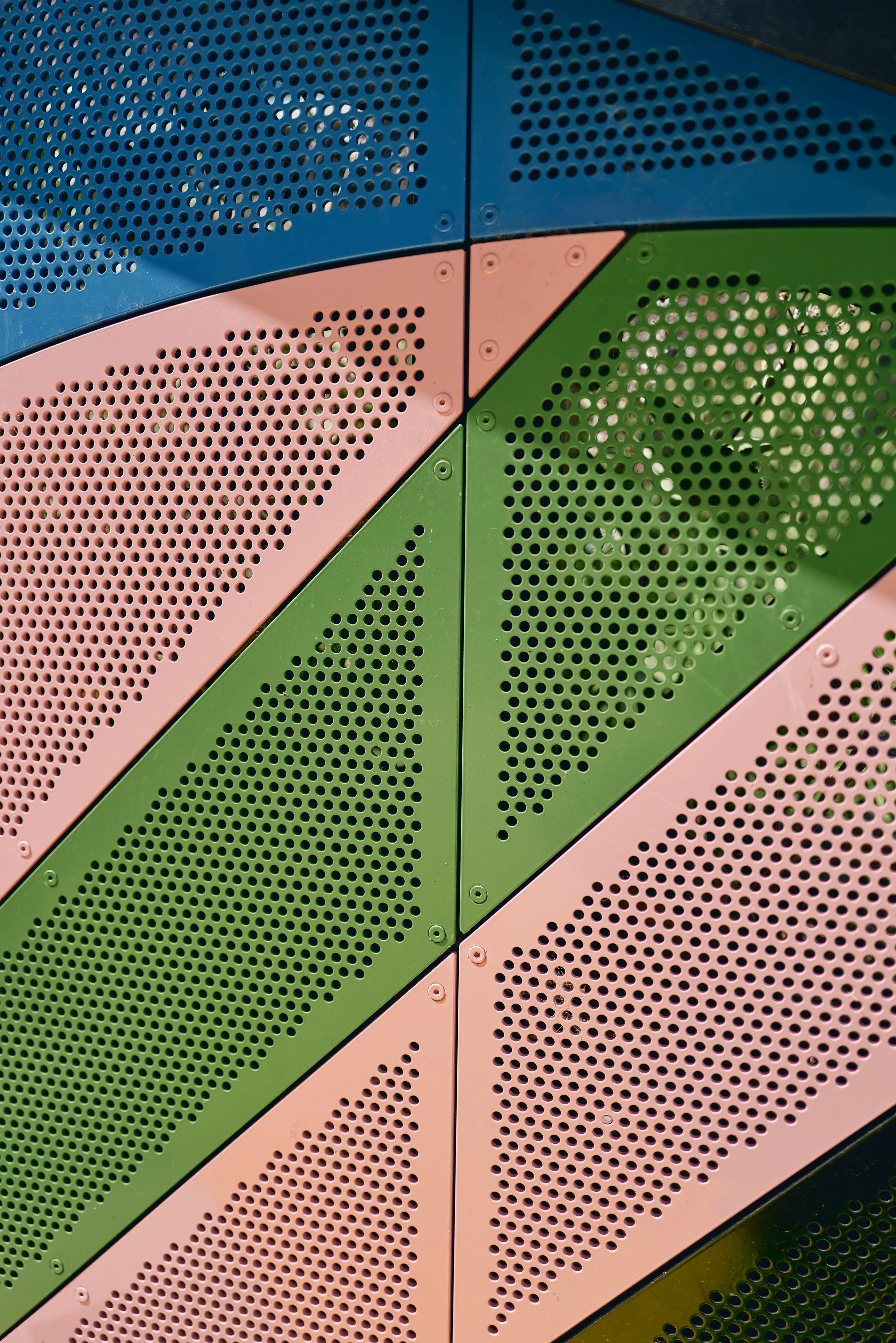
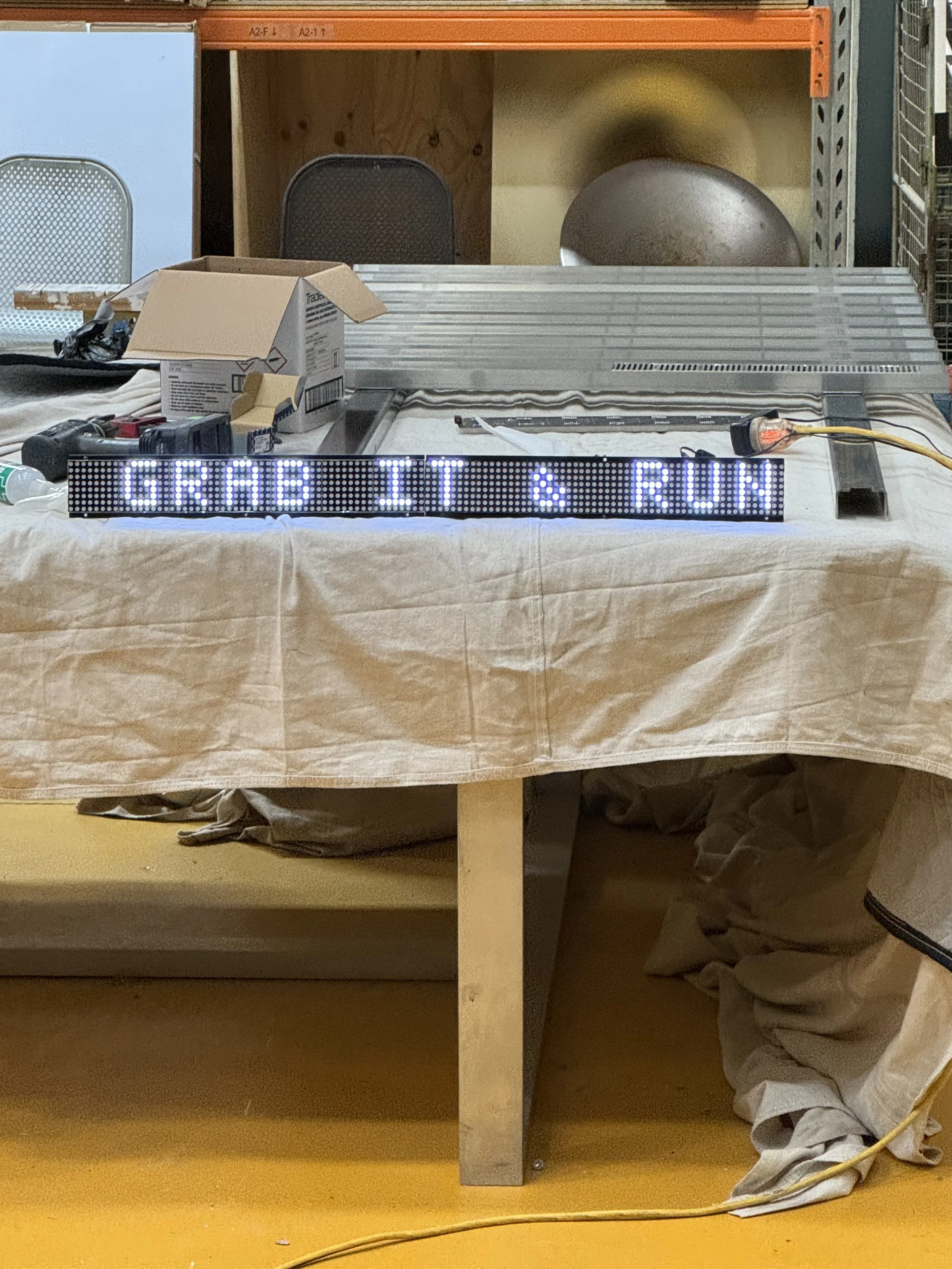
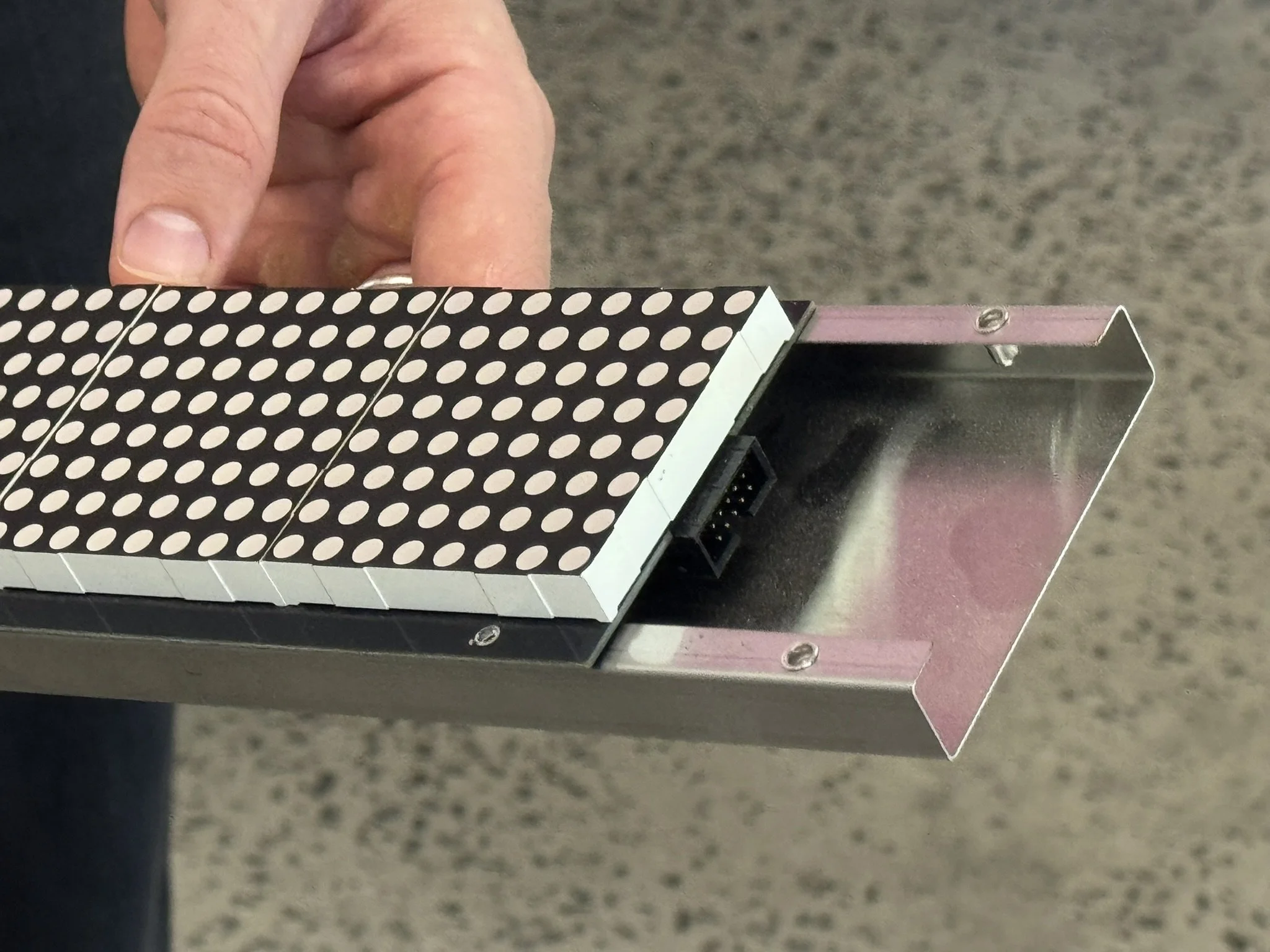
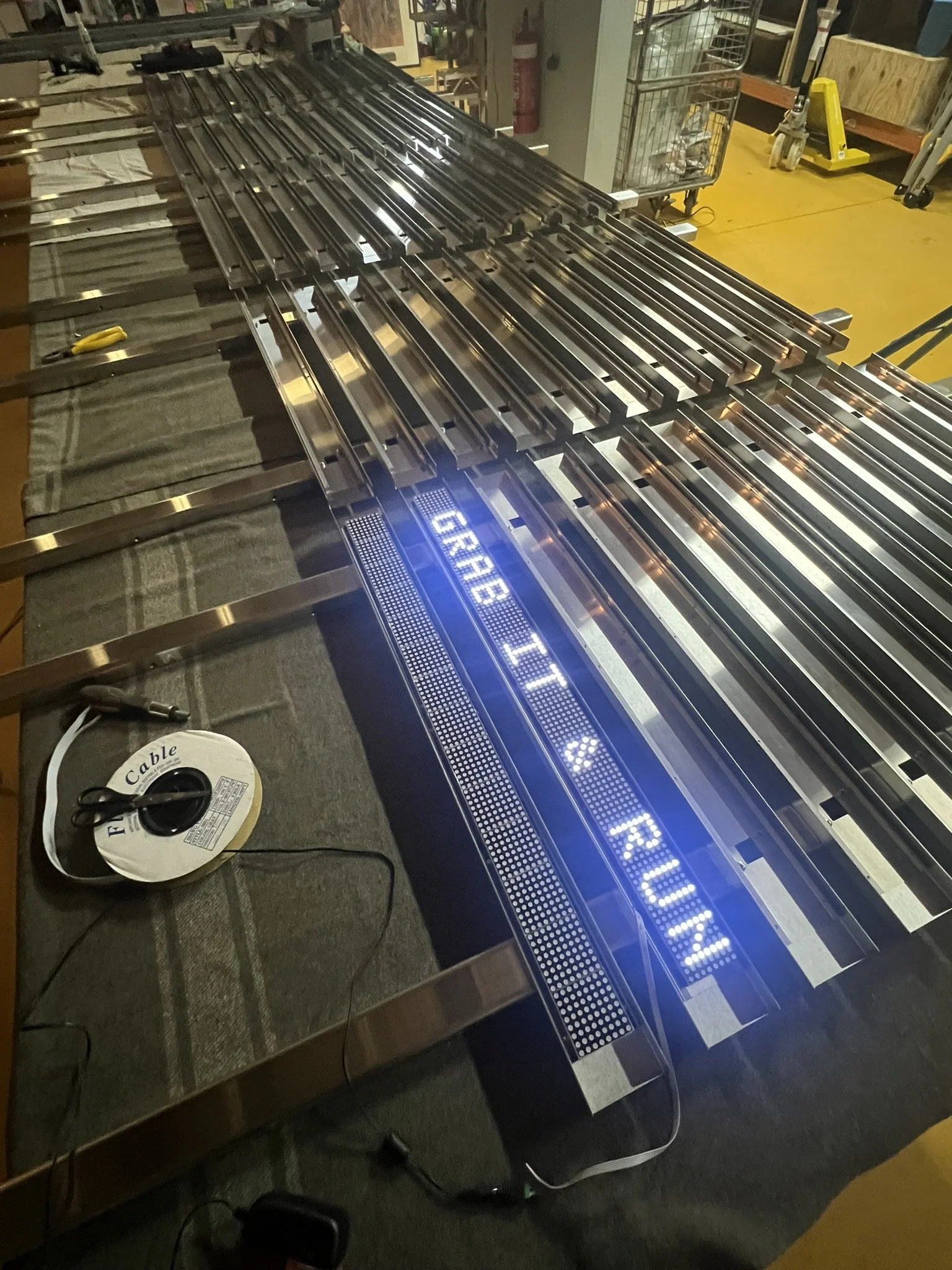
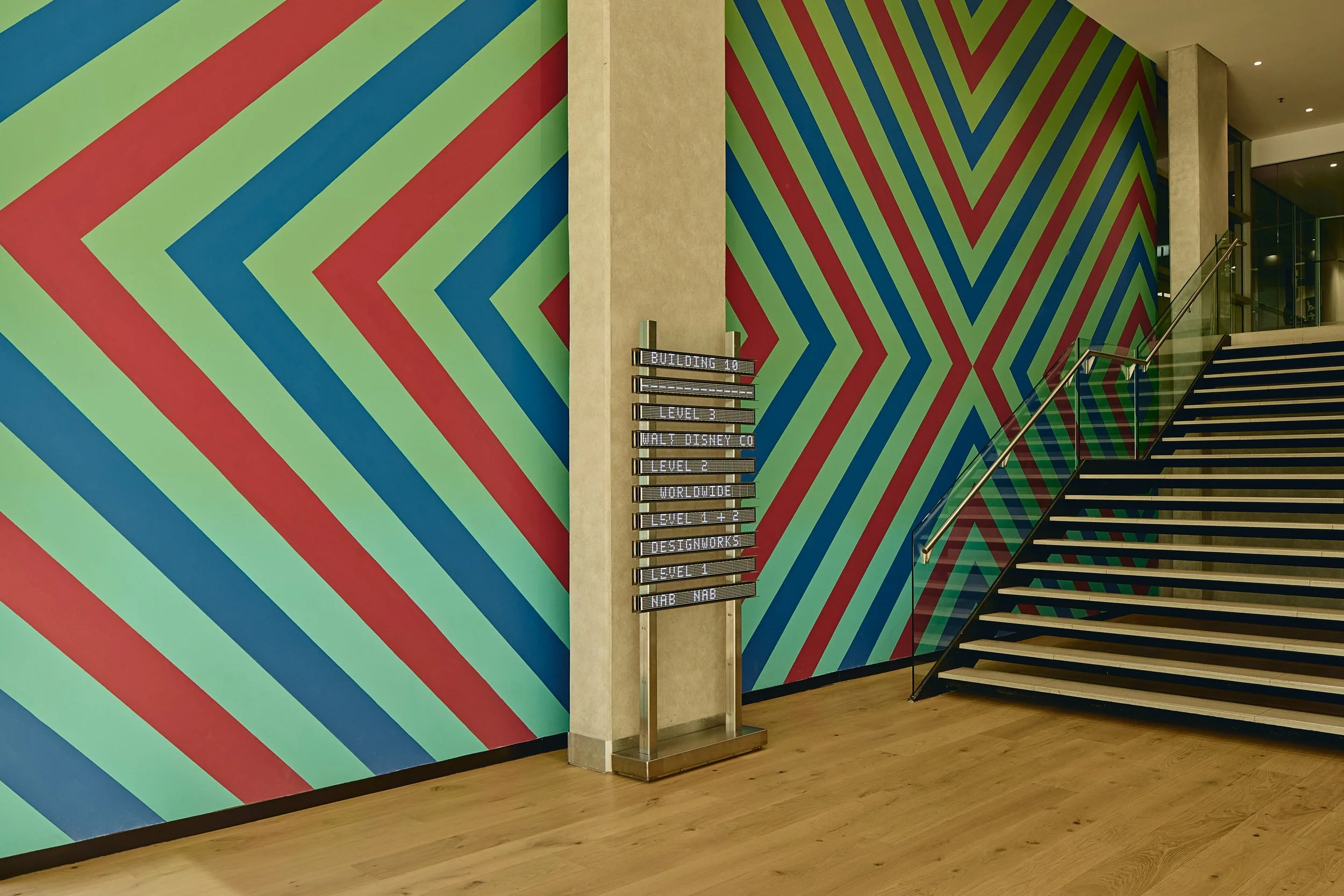
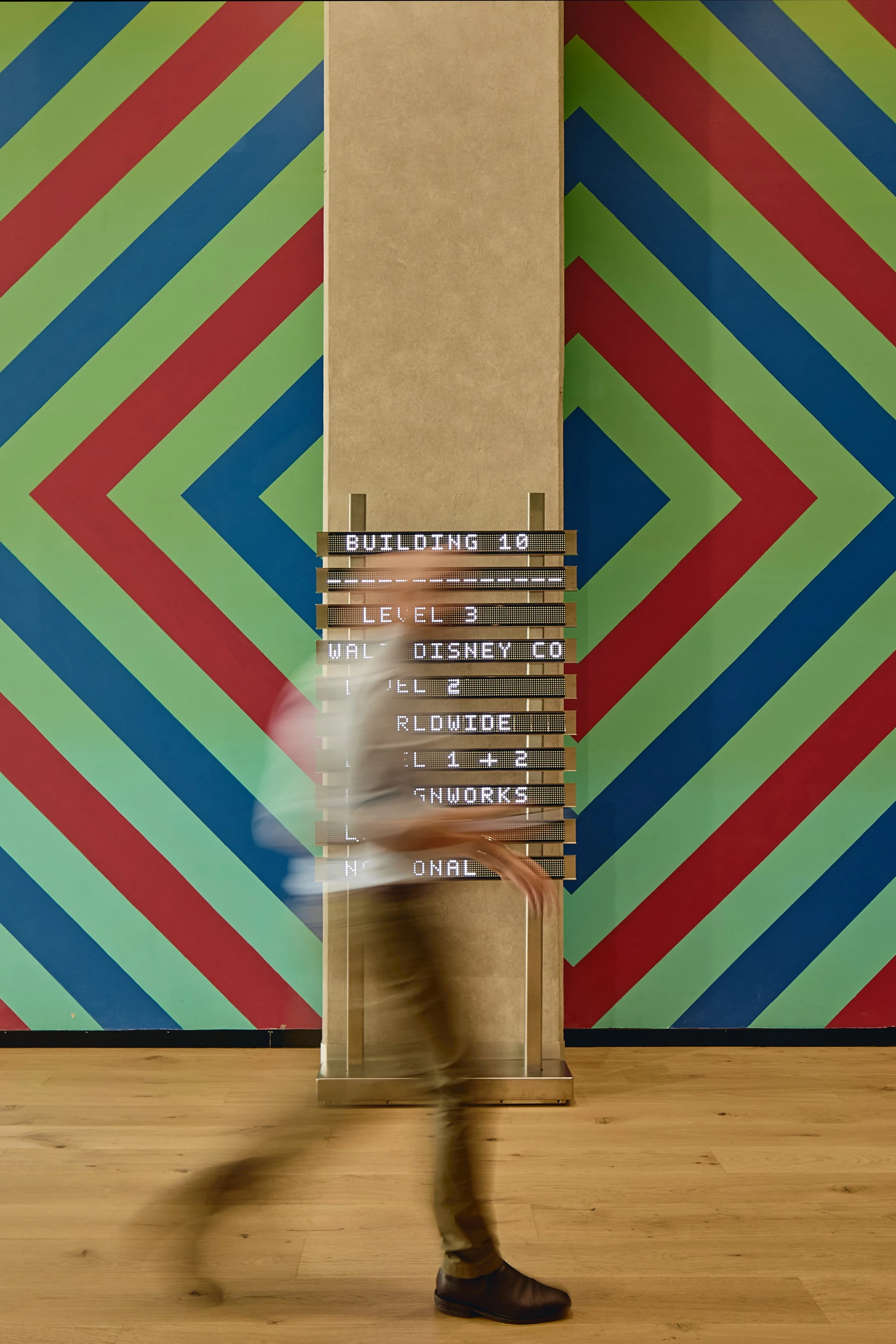
At the heart of the project are two commissioned artworks by Melbourne-based Kamilaroi artist Reko Rennie. A large-scale interior artwork animates the wall of Building 10, while a custom basketball court—laser cut and perforated with Rennie’s signature Original Aboriginal Camouflage pattern—anchors the outdoor space with colour, energy, and cultural presence. The surrounding landscape, designed by OCULUS, reinforces the court as a focal point and is complemented by an in-house graphic and wayfinding strategy that enhances legibility across the precinct. A restrained and refined material palette ensures a functional, uncluttered backdrop that allows landscape, art, and occupation to take precedence.
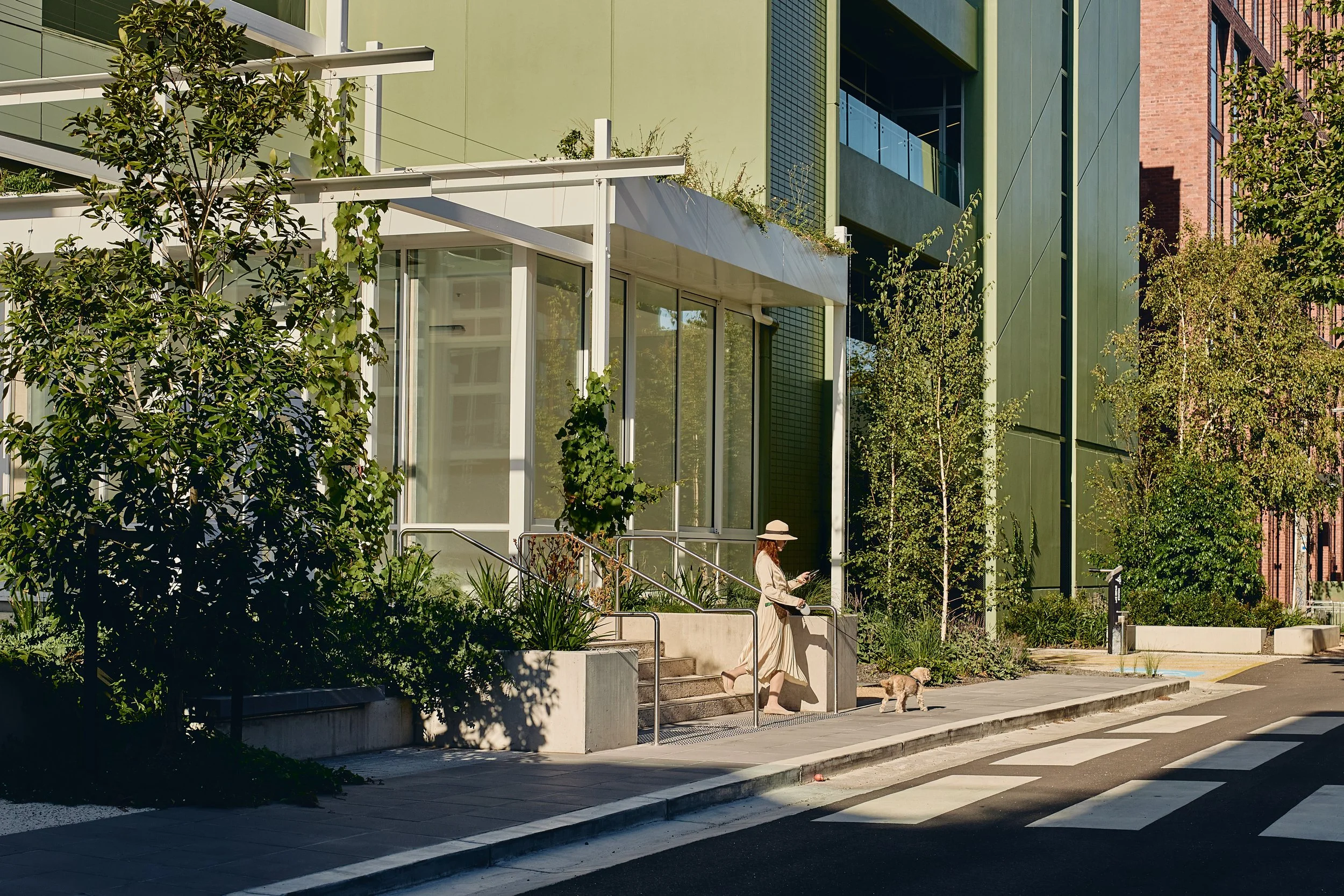
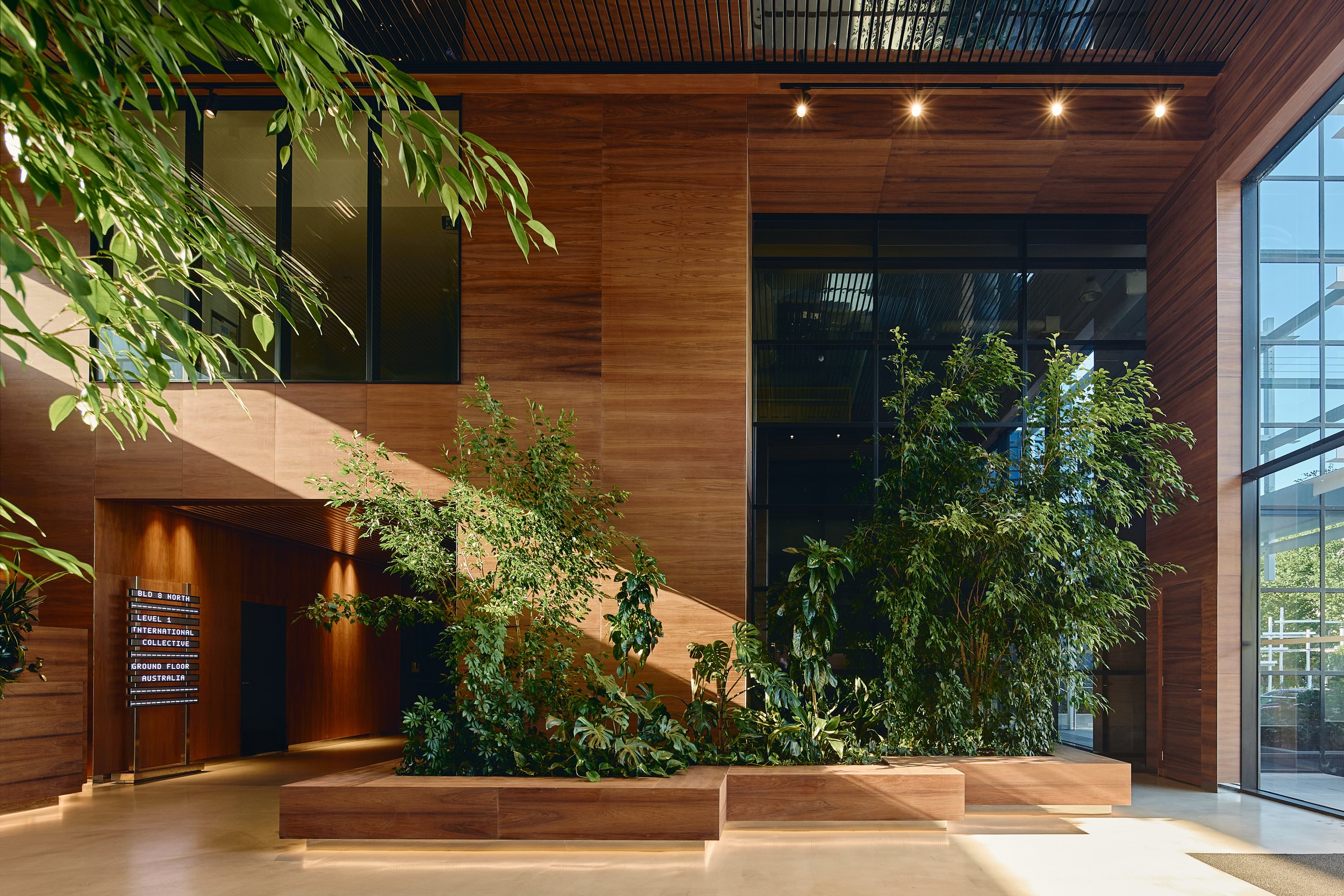
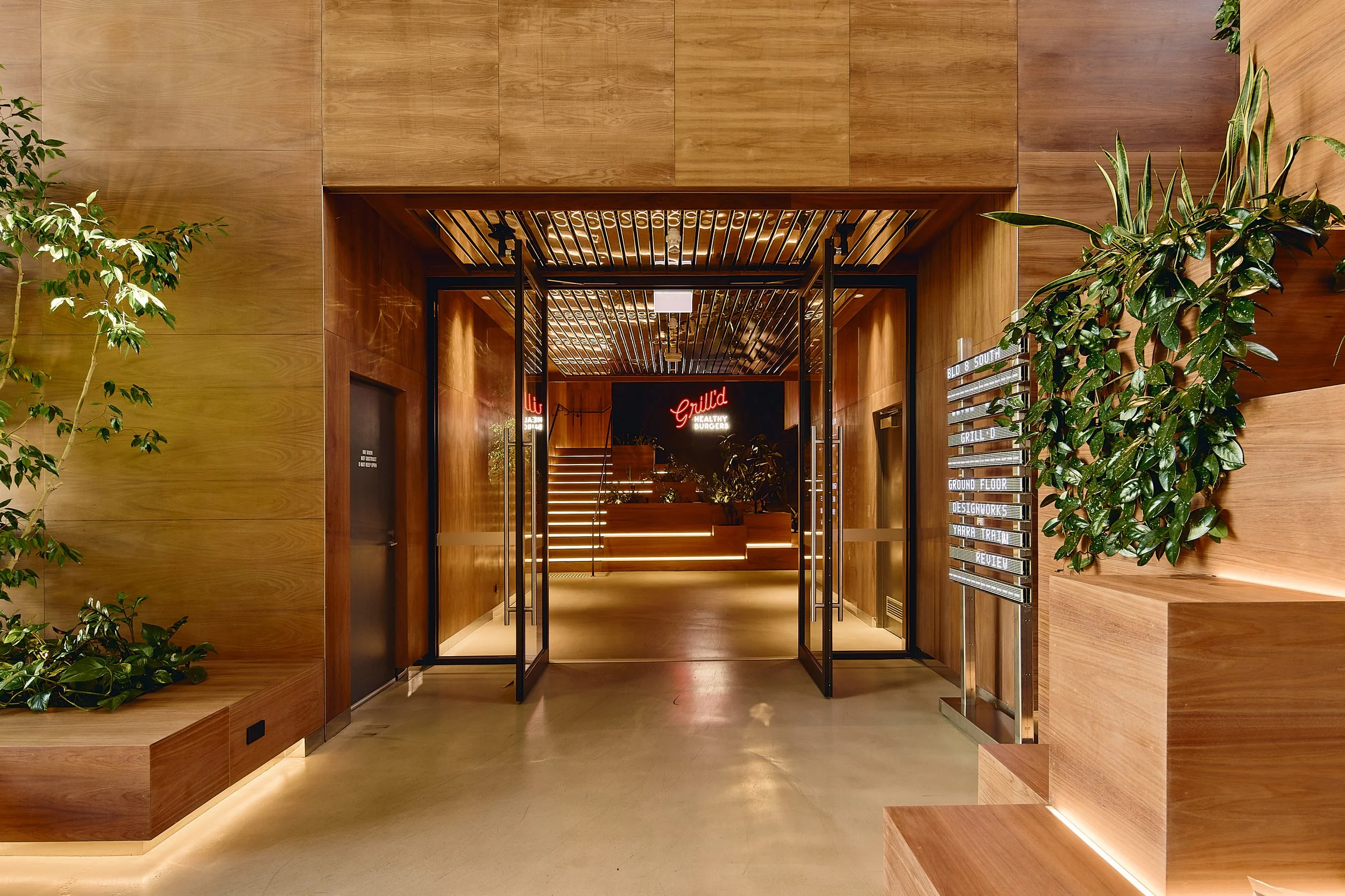
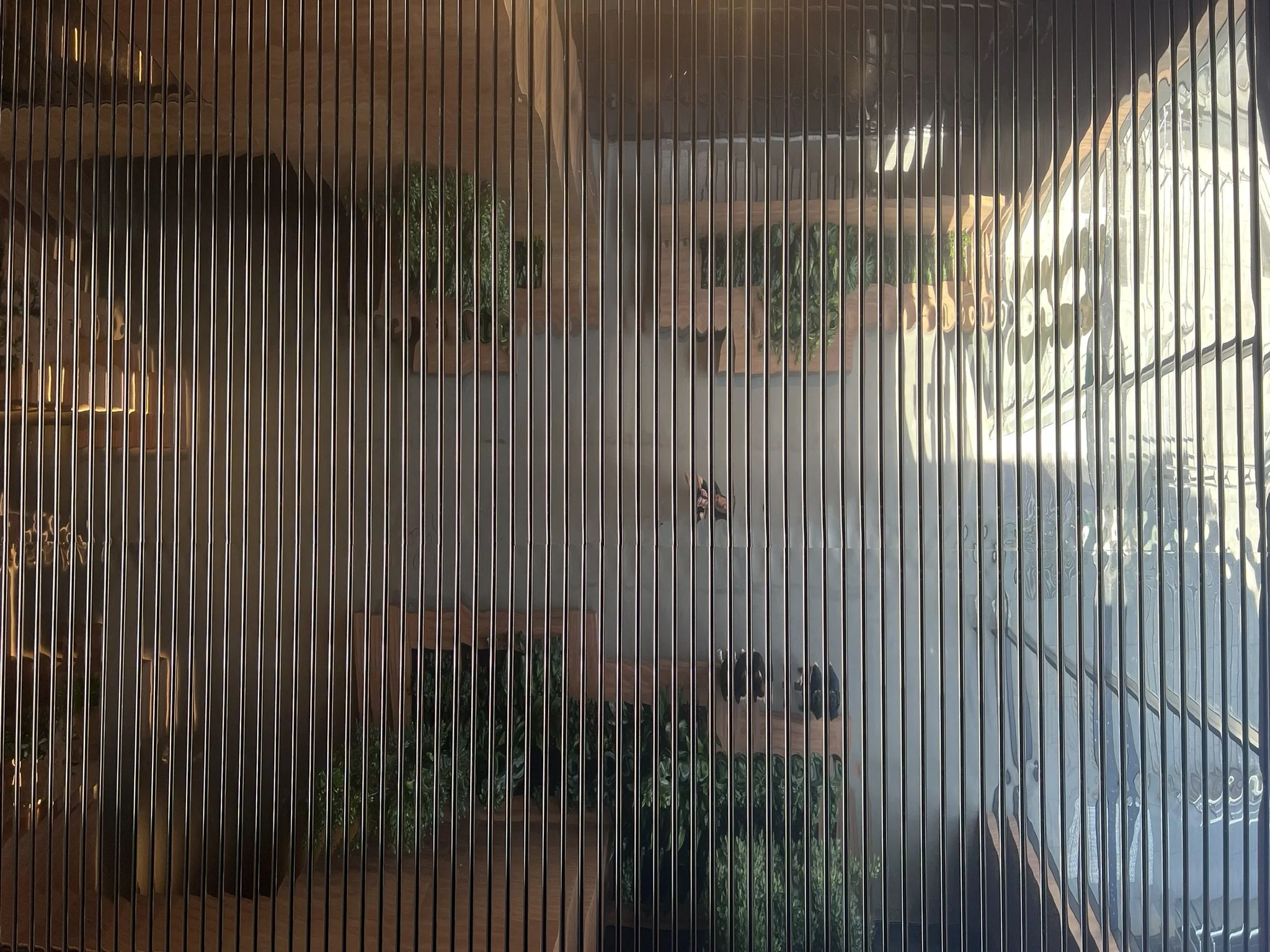
The rejuvenation extends beyond the external spaces into two ground-floor foyers, conceived as transitional thresholds between garden and workplace. Using natural materials and vegetation, these foyers are softened and upgraded to create welcoming, light-filled points of arrival that strengthen connectivity between interior and exterior environments.
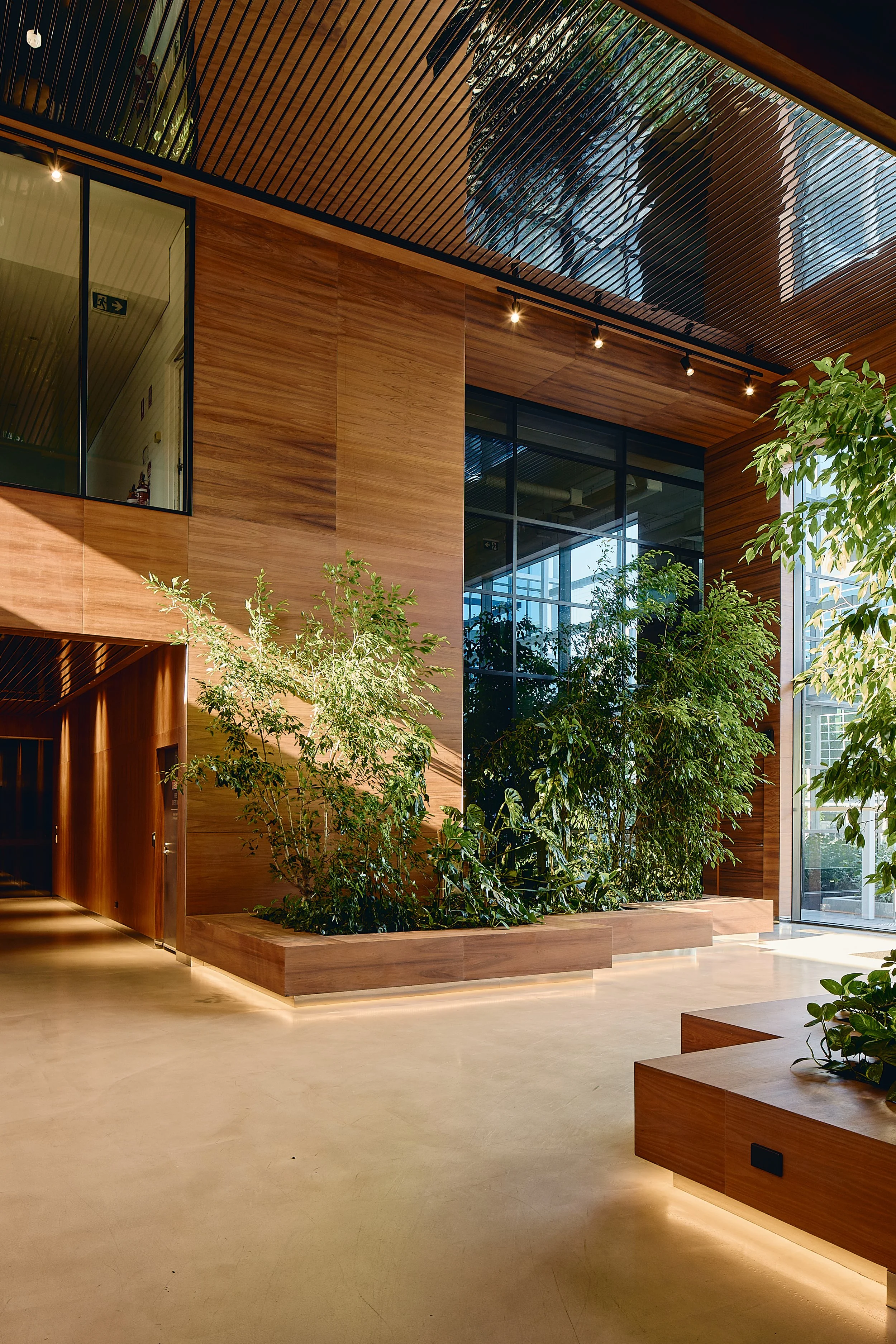
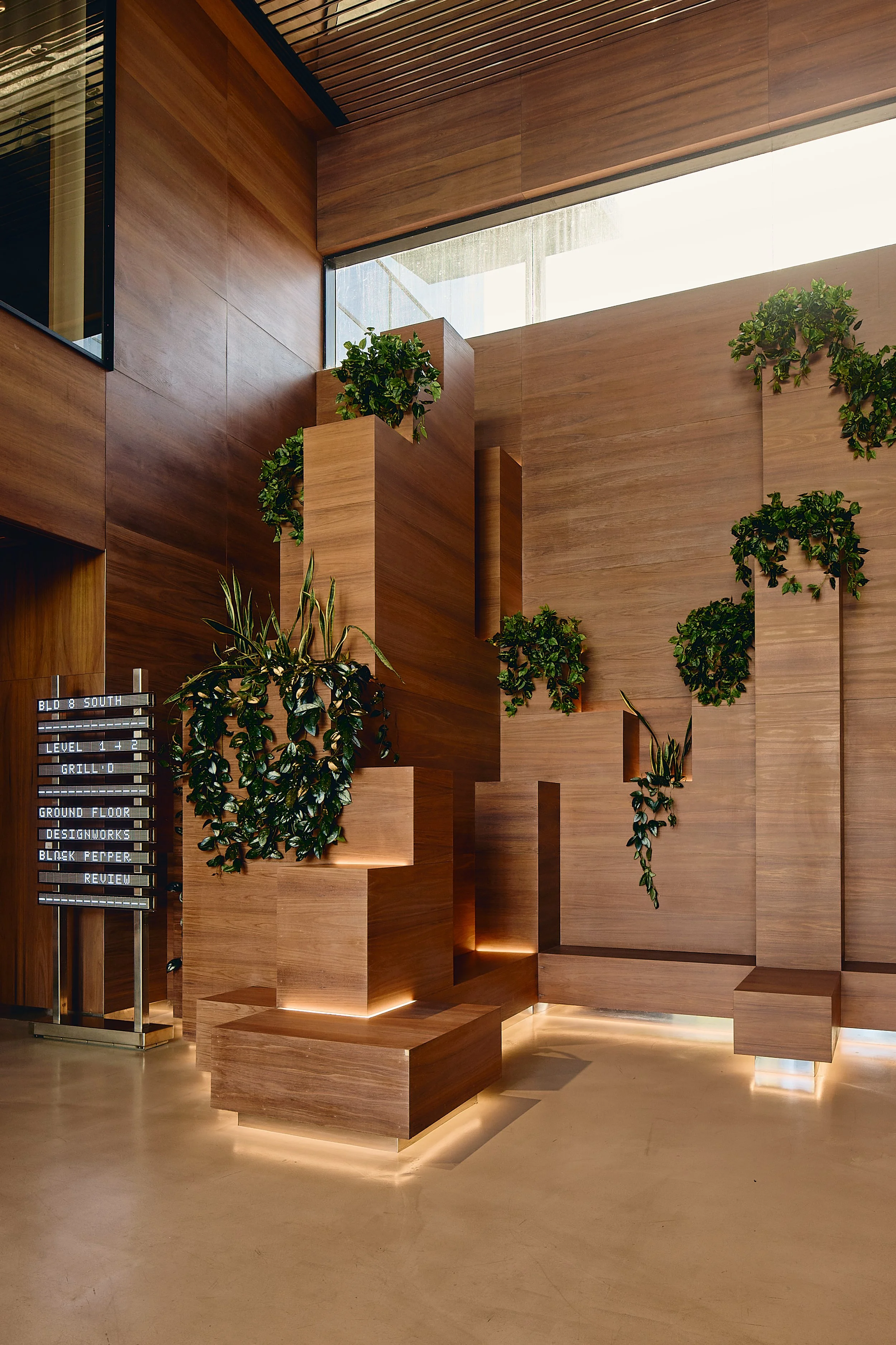
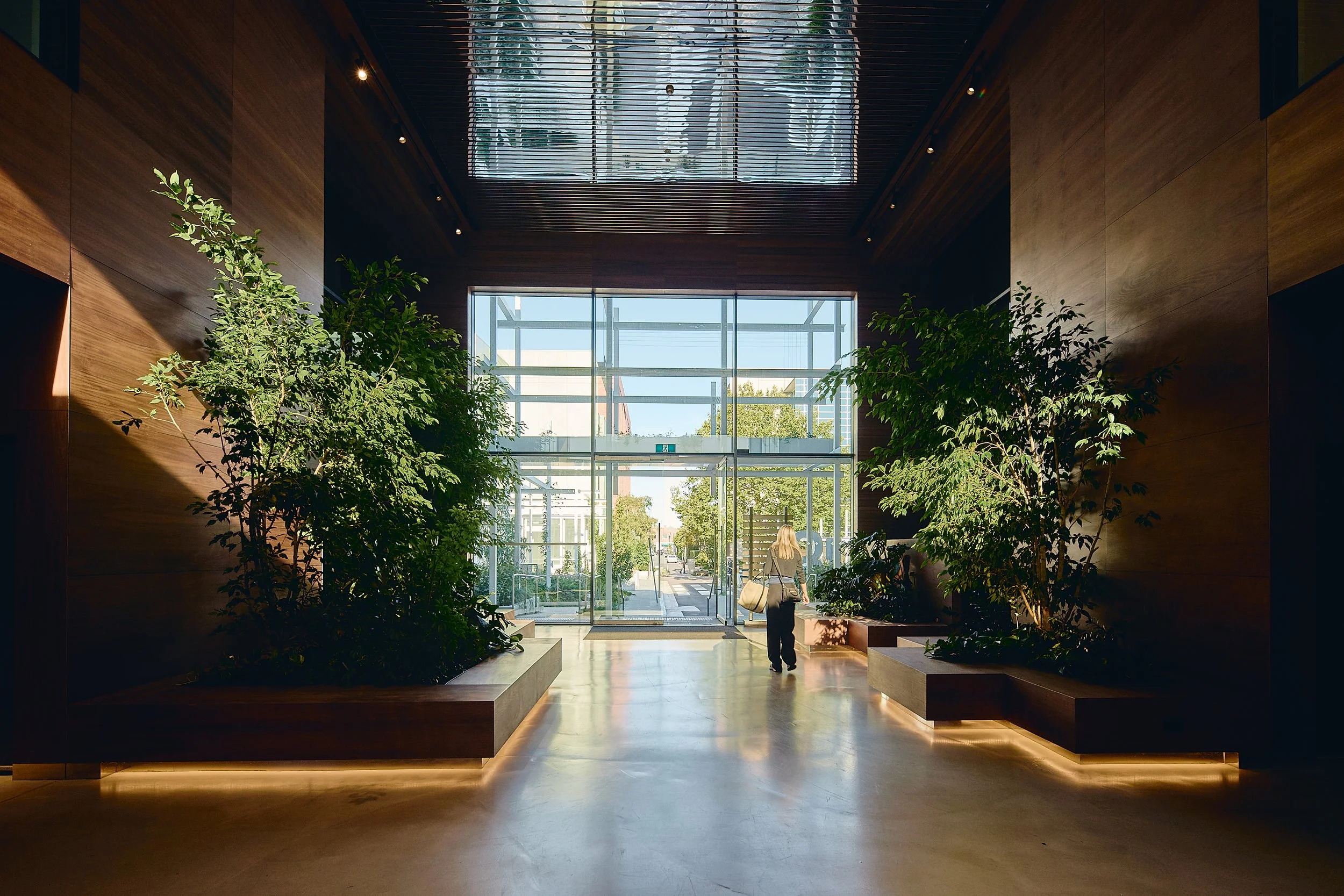

Environmental sustainability was integral to the design of Cremorne Garden and Foyers. All rainwater runoff is harvested and stored in two 50,000-litre tanks buried beneath the central lawn, supplying irrigation for the garden and significantly reducing reliance on mains water. The planting strategy prioritises native species, complemented by productive edible planting throughout, and is designed as a low-maintenance landscape suited to long-term stewardship. Extensive rooftop solar arrays power common areas into the evening, supporting daily occupation while reducing operational energy demand.
March Studio assembled a multidisciplinary team of landscape architects, builders, artists, and wayfinding specialists to activate a site that was previously dominated by carparking, poor winter light, and underperforming planting. Cremorne Garden and Foyers reconnects and revitalises an otherwise overlooked corner of Cremorne, transforming it into a resilient, productive, and socially engaged piece of urban infrastructure that fosters community, wellbeing, and long-term use.
-
COMMUNITY | URBAN | INTERIOR
-
COMPLETED 2024
-
WURUNDJERI | CREMORNE, VICTORIA
-
LANDSCAPE - OCULUS
BUILDER - MABEN
STRUCTURAL - CO STRUCT
ARTIST - REKO RENNIE
-
PETER BENNETTS
-
CAVIGNEAUX