
BLIGH ST
2018
‘A tower shaped by water, sandstone, and the idea of the pool.’
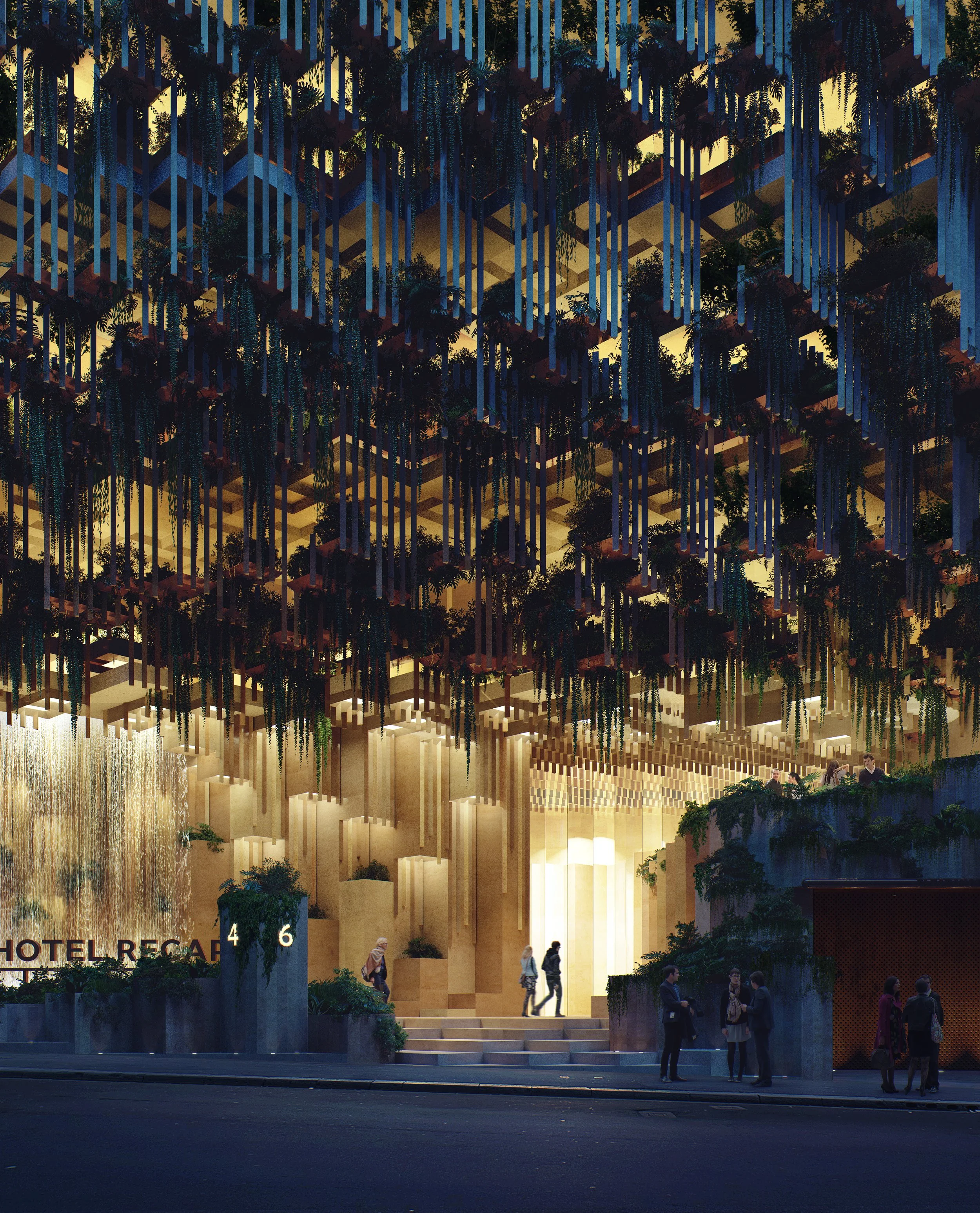
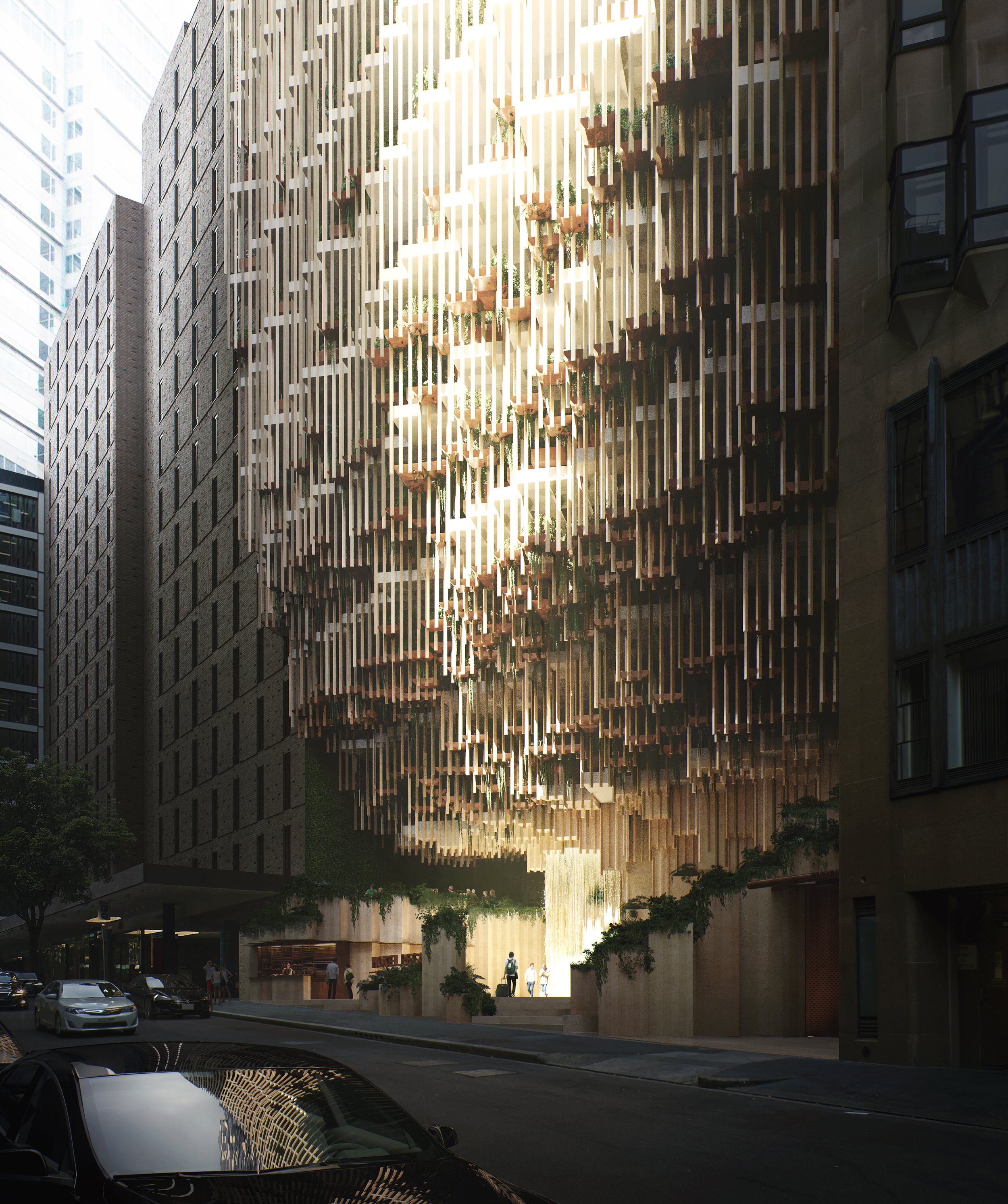
Bligh Street is a 44-storey hotel tower proposal developed as part of an invited competition led by PTW Architects and with Collins and Turner. The brief operates within Sydney’s competitive design review framework, where height, yield, and performance are tested through architectural proposition.
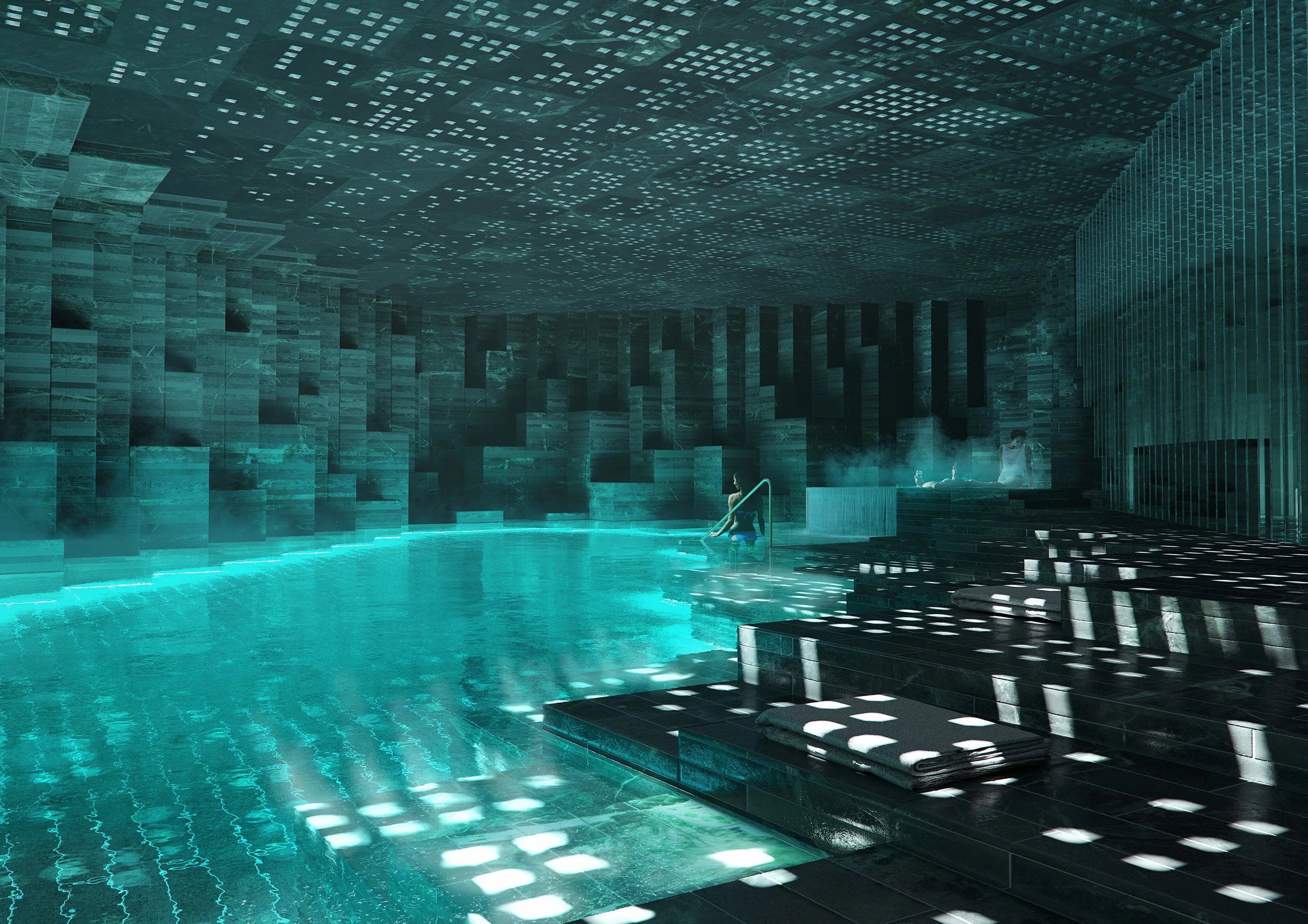
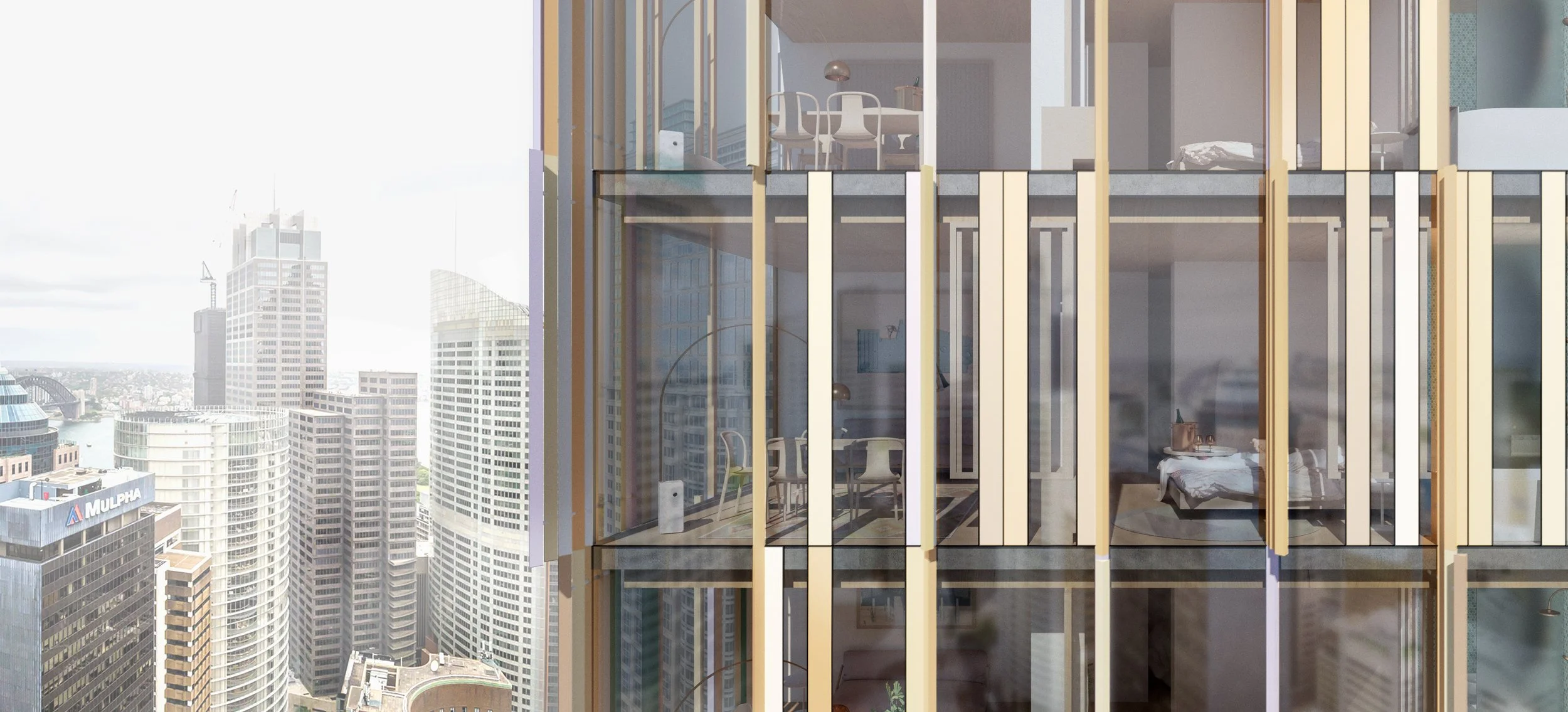
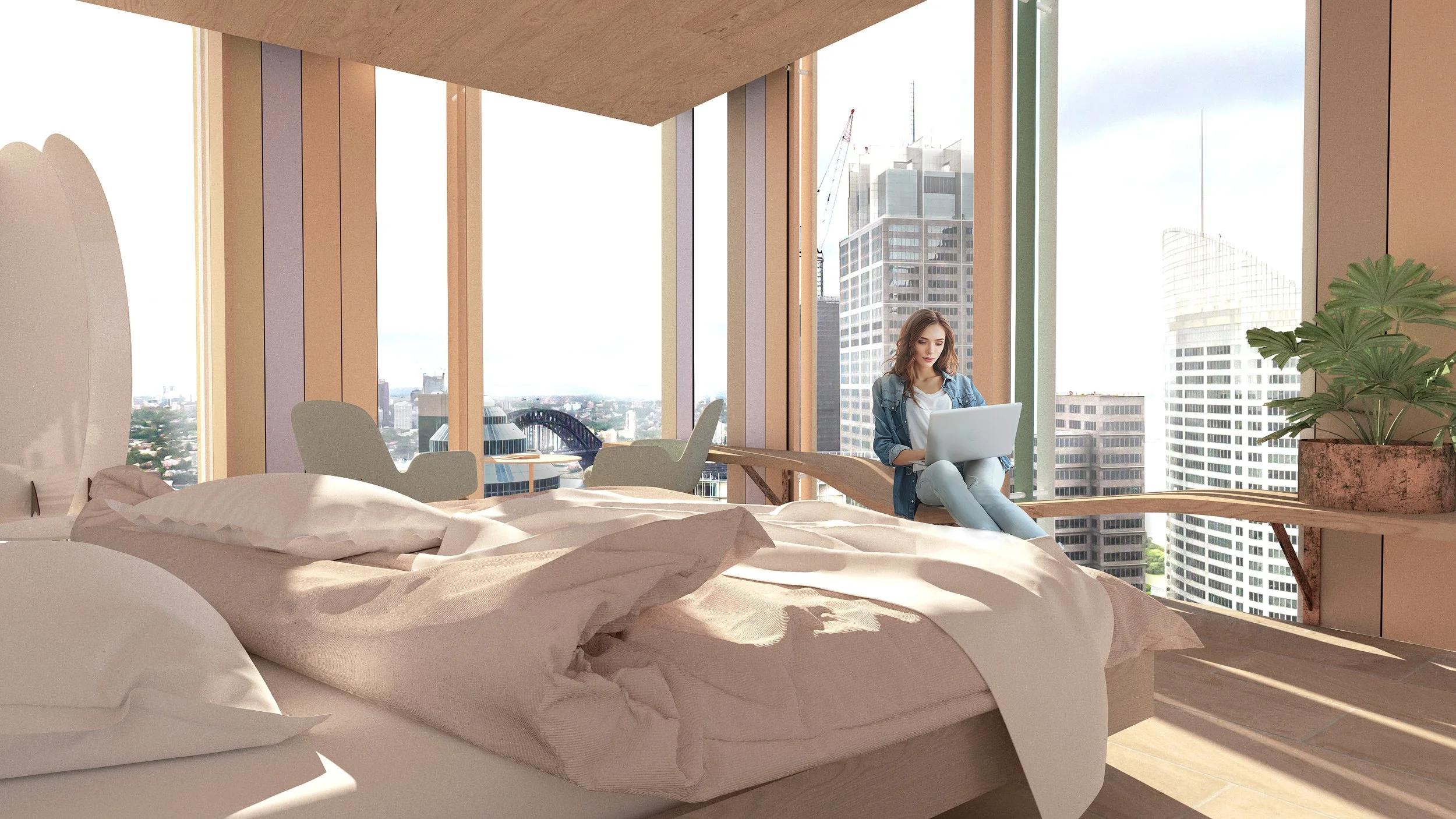
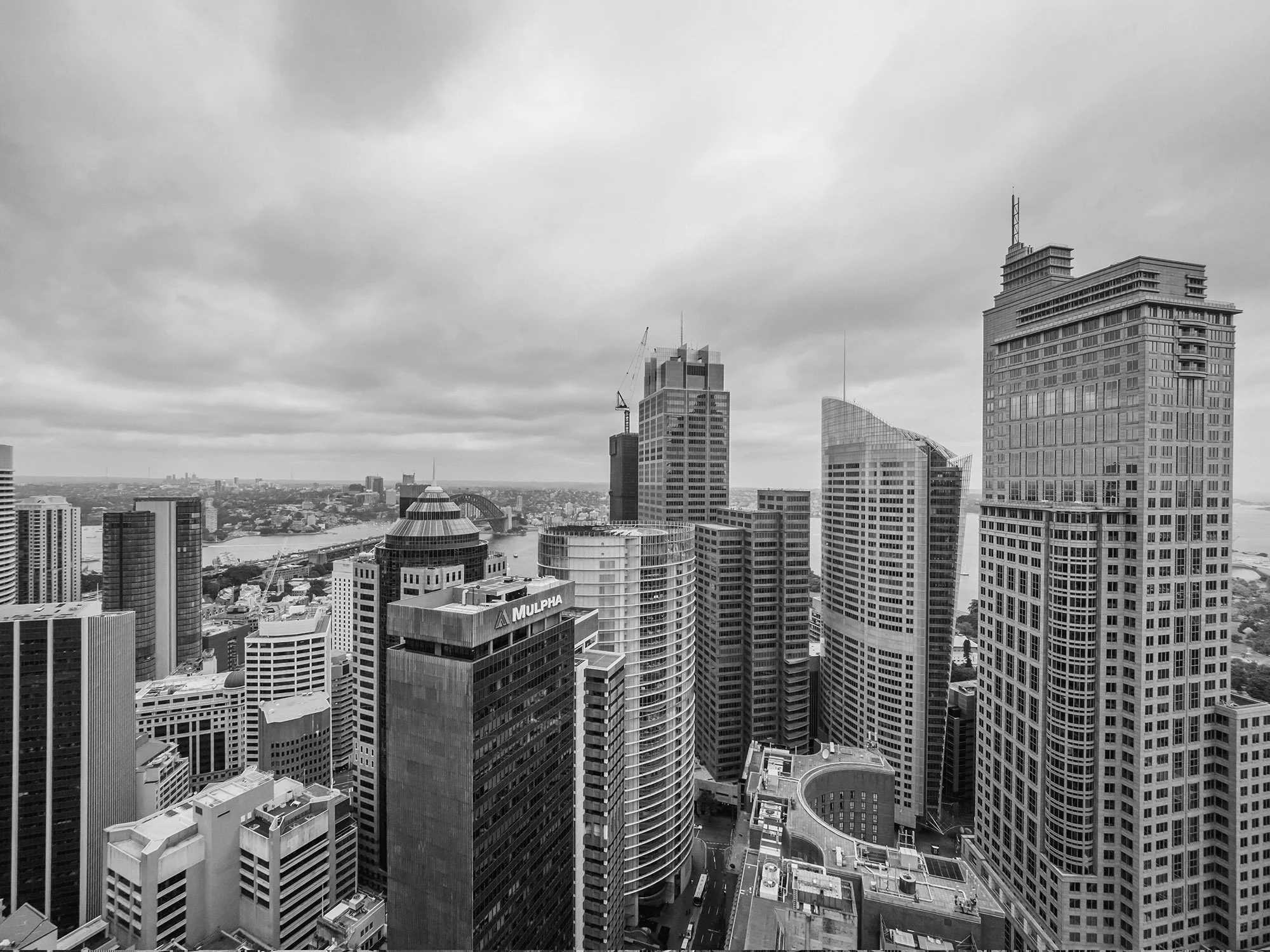
Sydney is a city defined by swimming pools, backyard pools, public pools, and the ocean pools that trace its coastline. Yet on Bligh Street, there are none. The proposal begins with this absence, and the idea of introducing a vertical field of pools into the tower. At the same time, the neighbouring Soderston Building is expressed in sandstone, a material that speaks to the deeper geology of the city. Sydney itself is built on sandstone, and at its edges, where land meets ocean, it is carved into heavily eroded formations. The project brings these conditions together, using water and erosion as linked systems, establishing the podium as a landscape of pools, and extending this logic upward through the tower as a continuous condition of weathering, exposure, and depth.
The tower is conceived as a vertical erosion of mass.
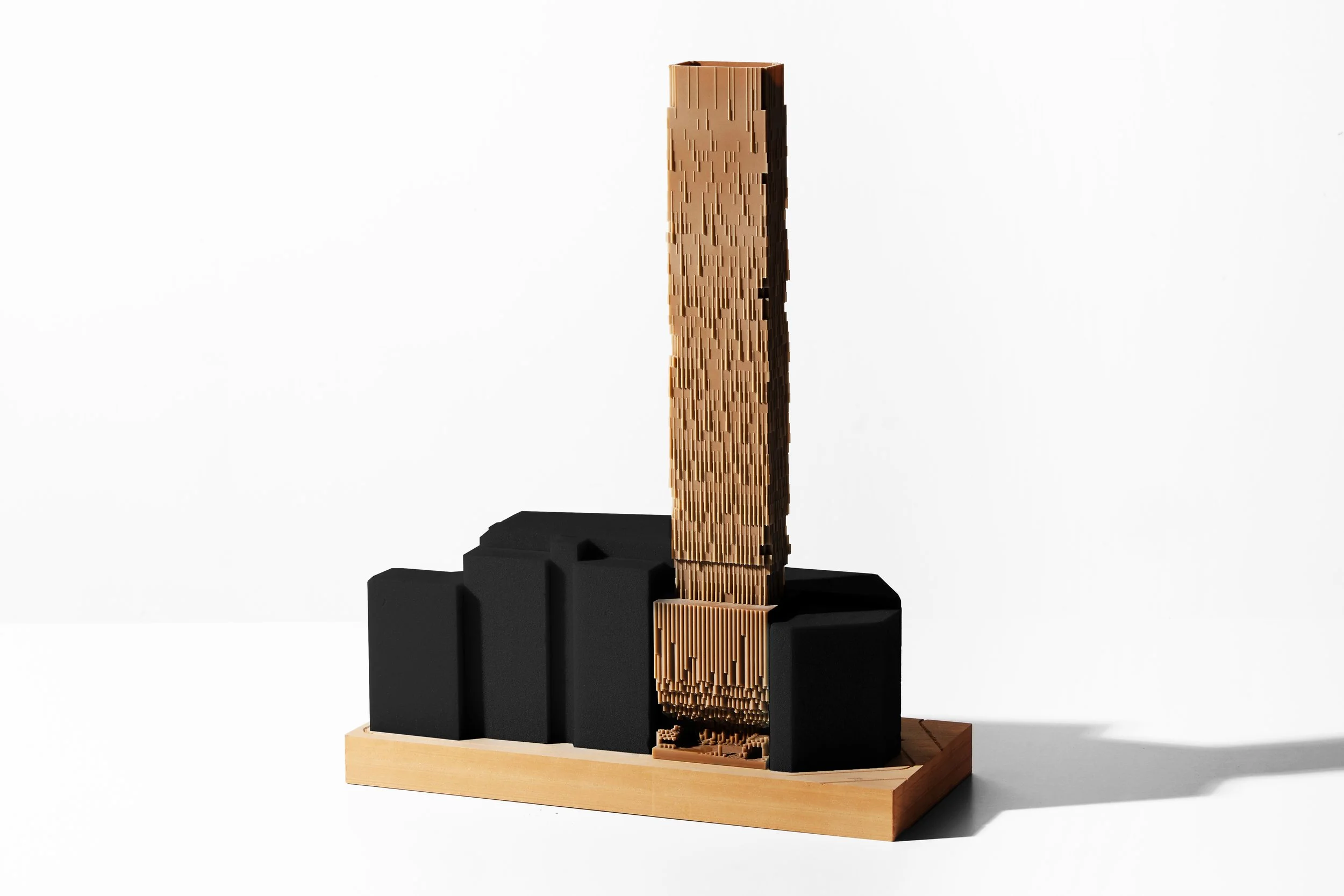
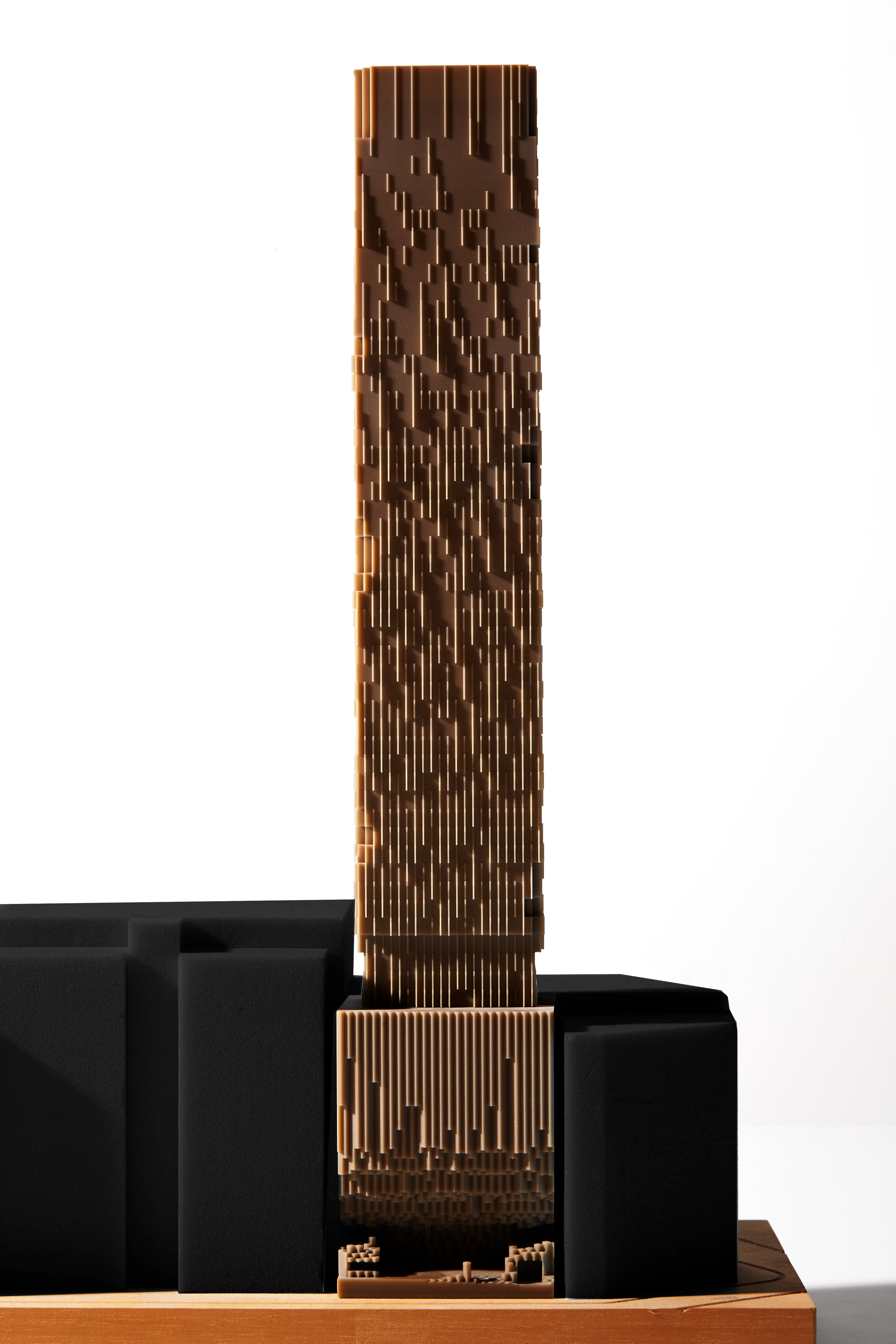
At ground, the building is pulled back from the street edge to form a forecourt and layered public threshold. This creates depth within the base, allowing hospitality and arrival spaces to extend into the site. Below, a wellness level is embedded in the ground plane, a submerged grotto lined in stacked stone, an interior landscape of compression and calm.
Above, a hotel guest pool sits at podium level, positioned as a transitional surface between city and tower. At the top of the building, a rooftop pool opens fully to sky and horizon, recalling the ocean pools along the New South Wales coastline, where built form meets rock and water at the edge of the sea.
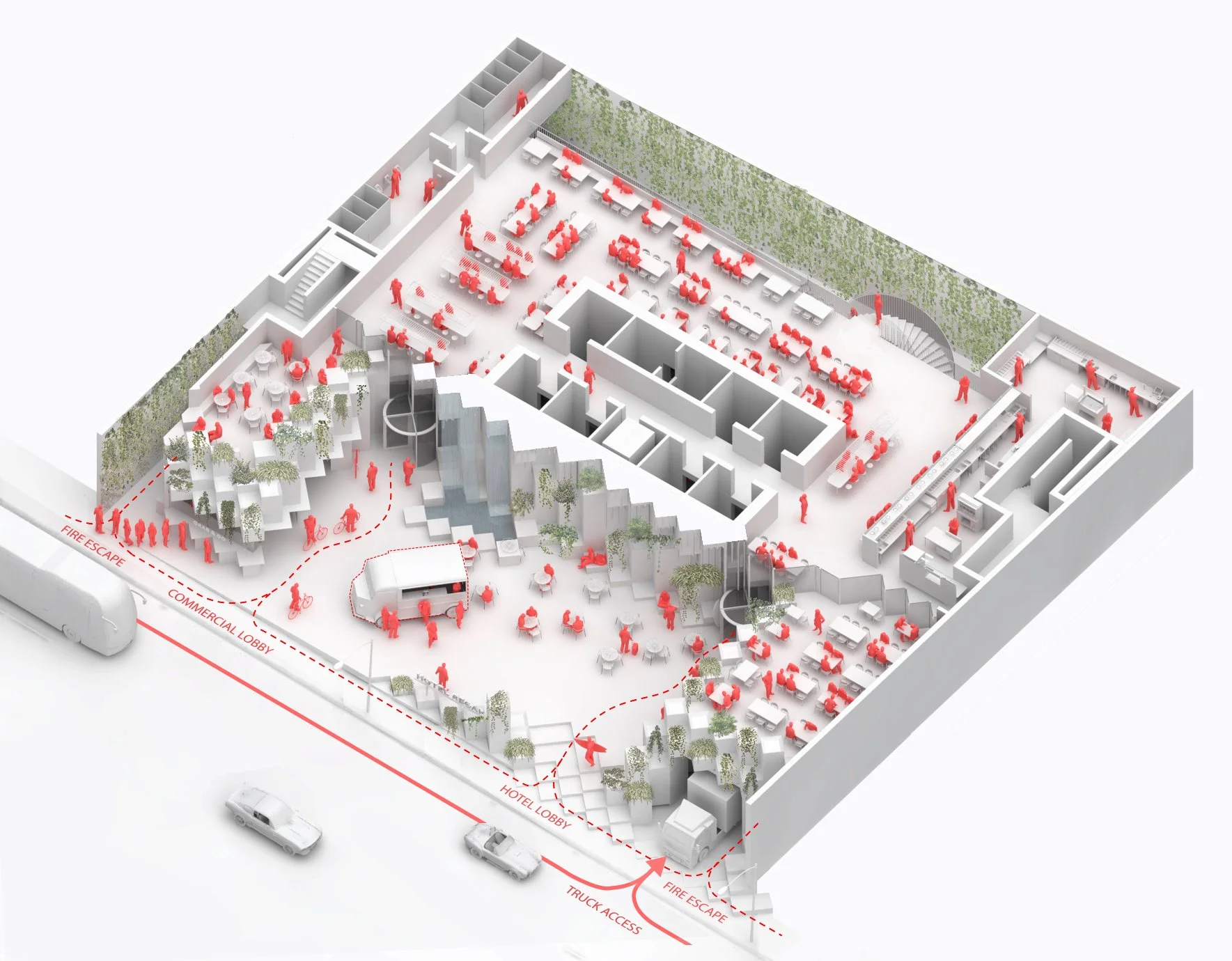
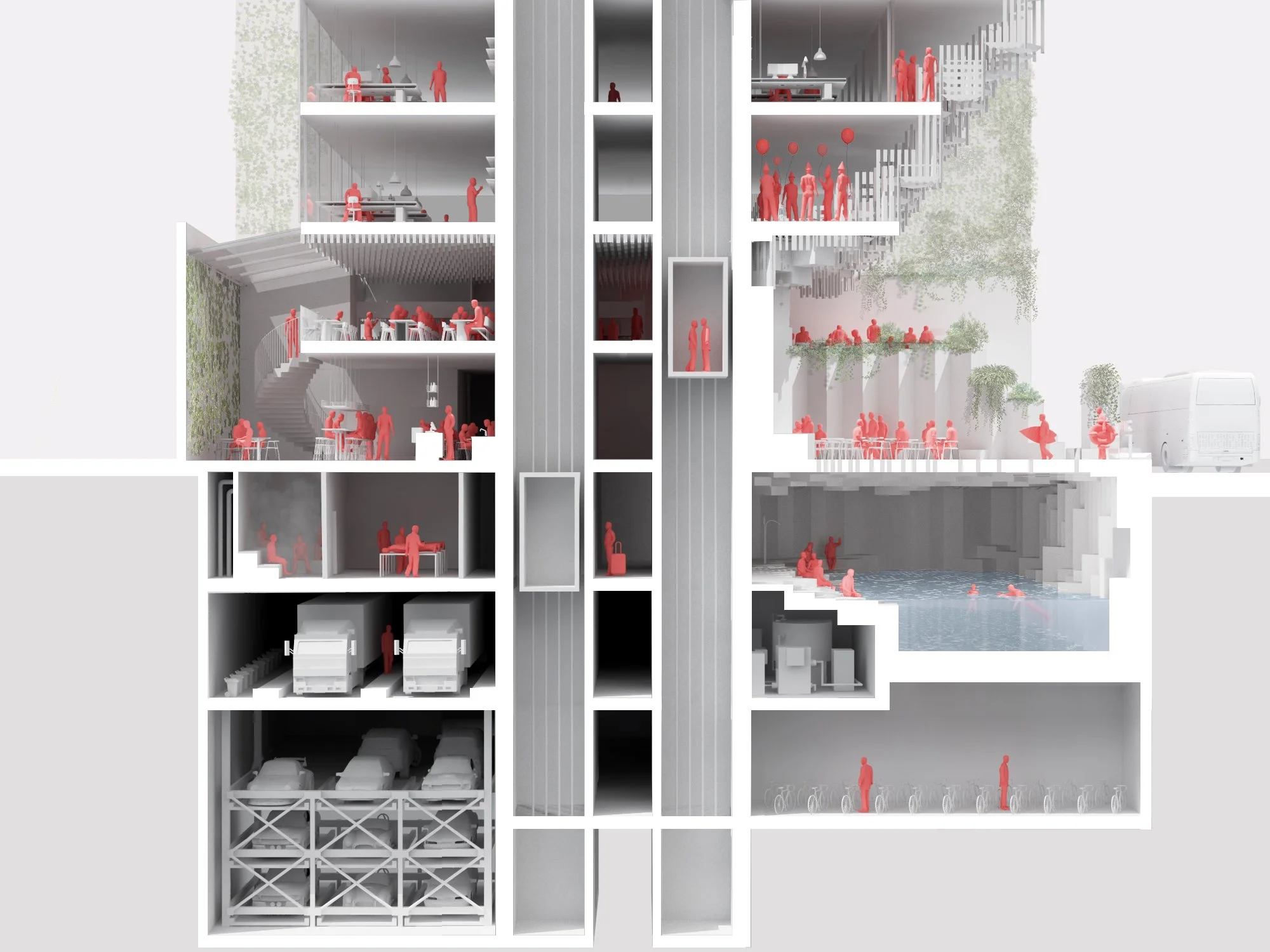
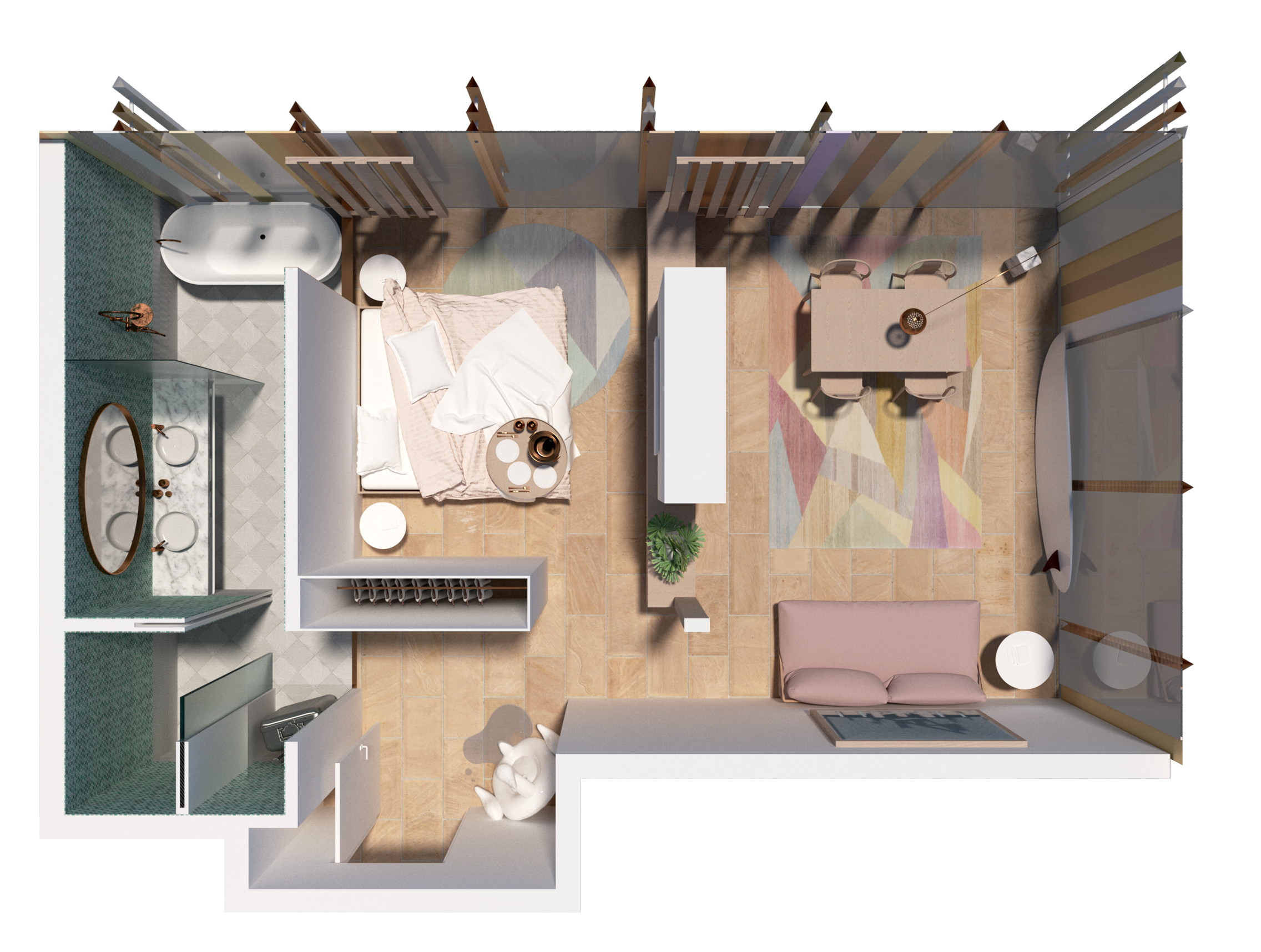
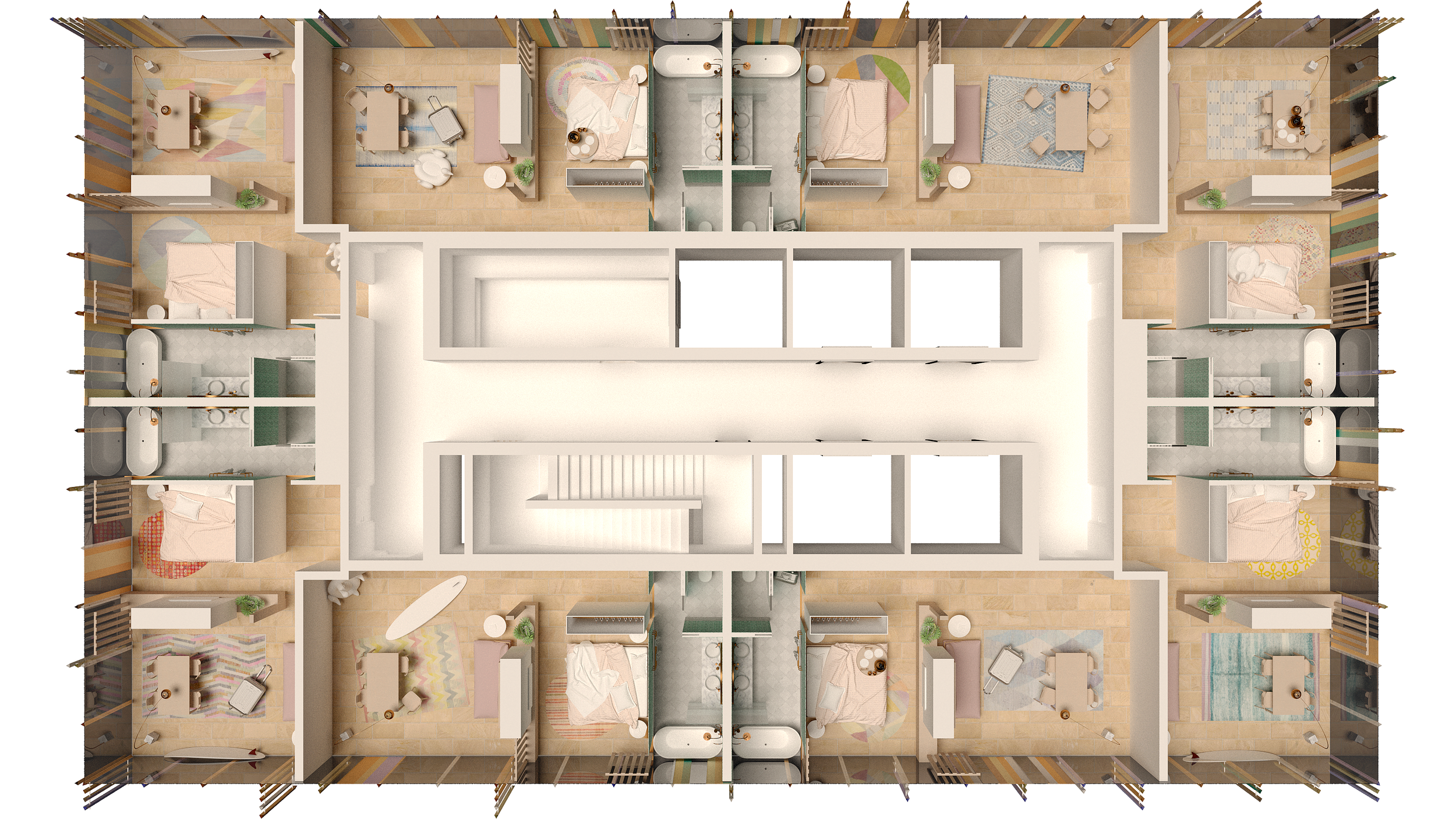
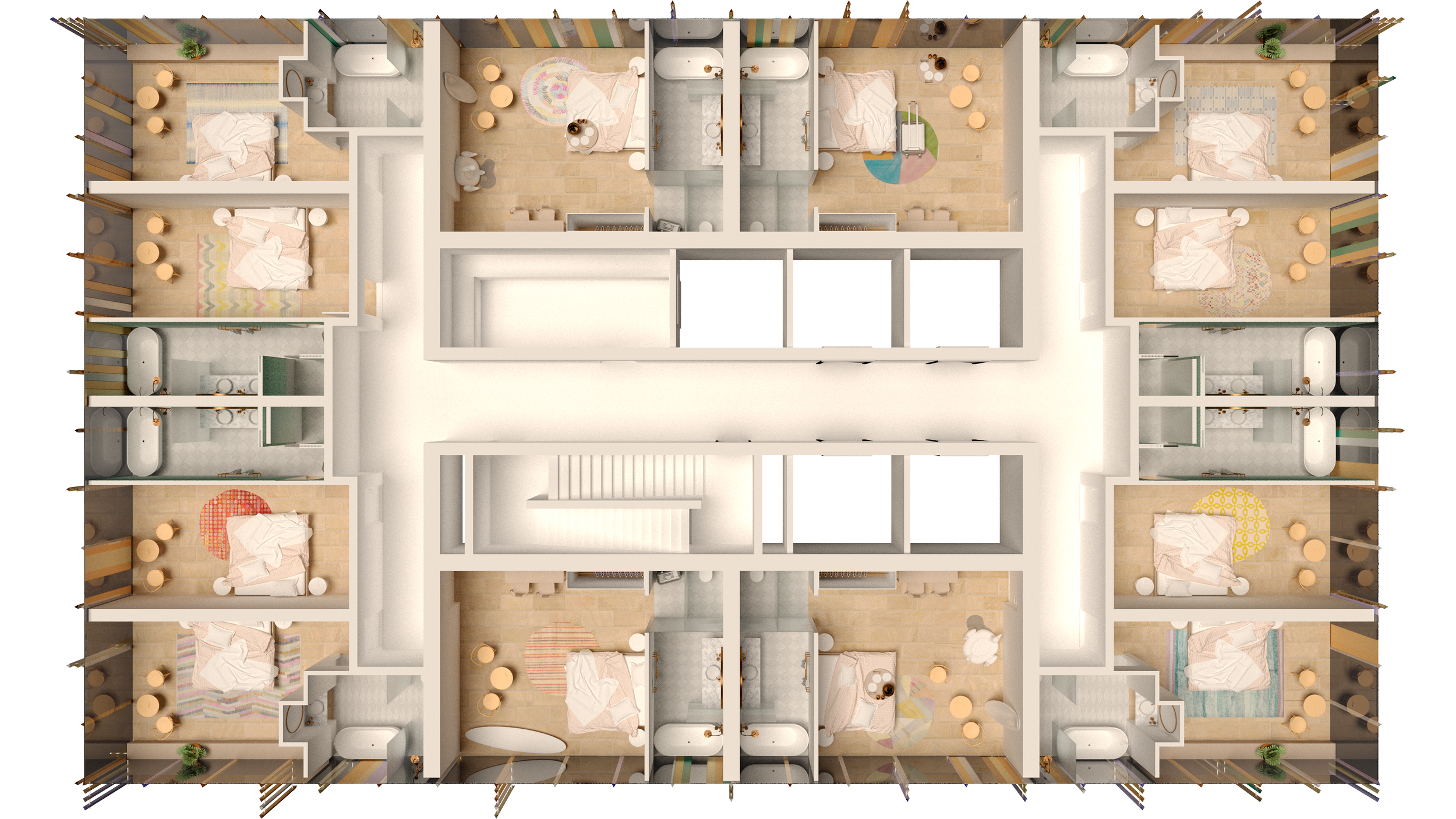
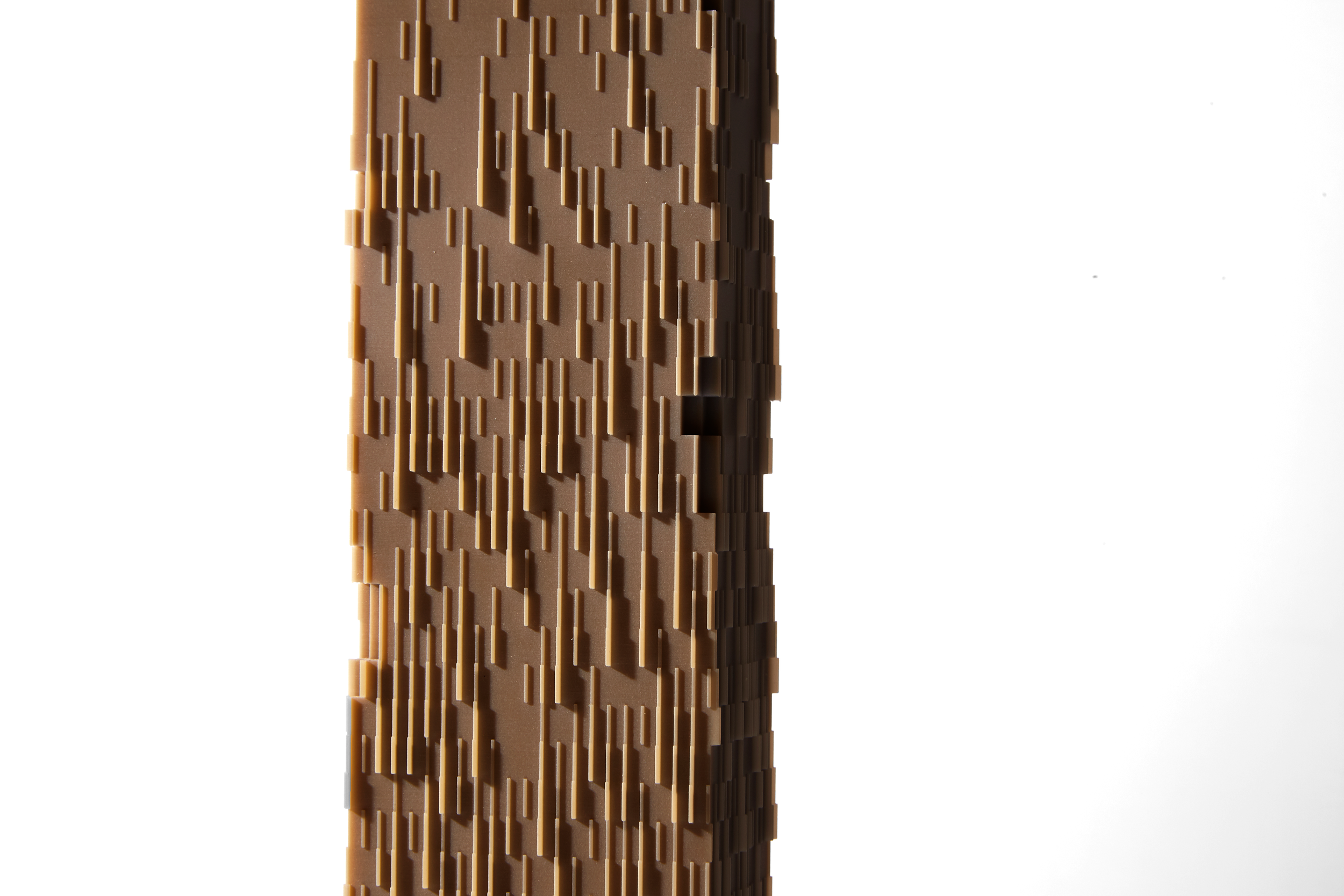
Across the 44-storey elevation, a bespoke screening system mediates between interior life and surrounding density. The screen operates as a calibrated veil, filtering views, light, and proximity. It reads as a snapshot of the city’s surrounding grain, dense at lower levels, gradually thinning as the building rises.
As height increases, screening reduces. The tower becomes progressively lighter, more open, more exposed. Privacy dissolves with elevation.
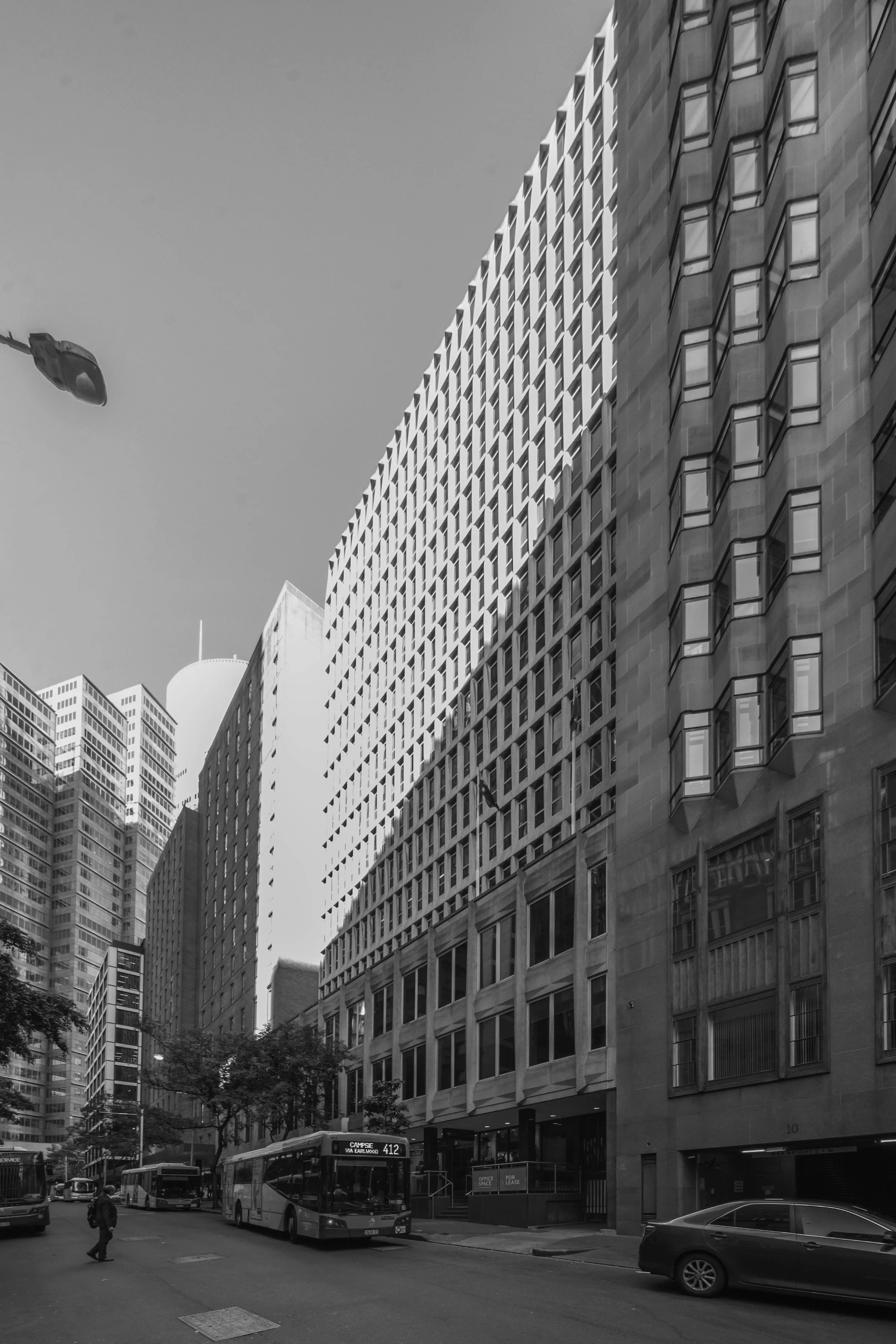
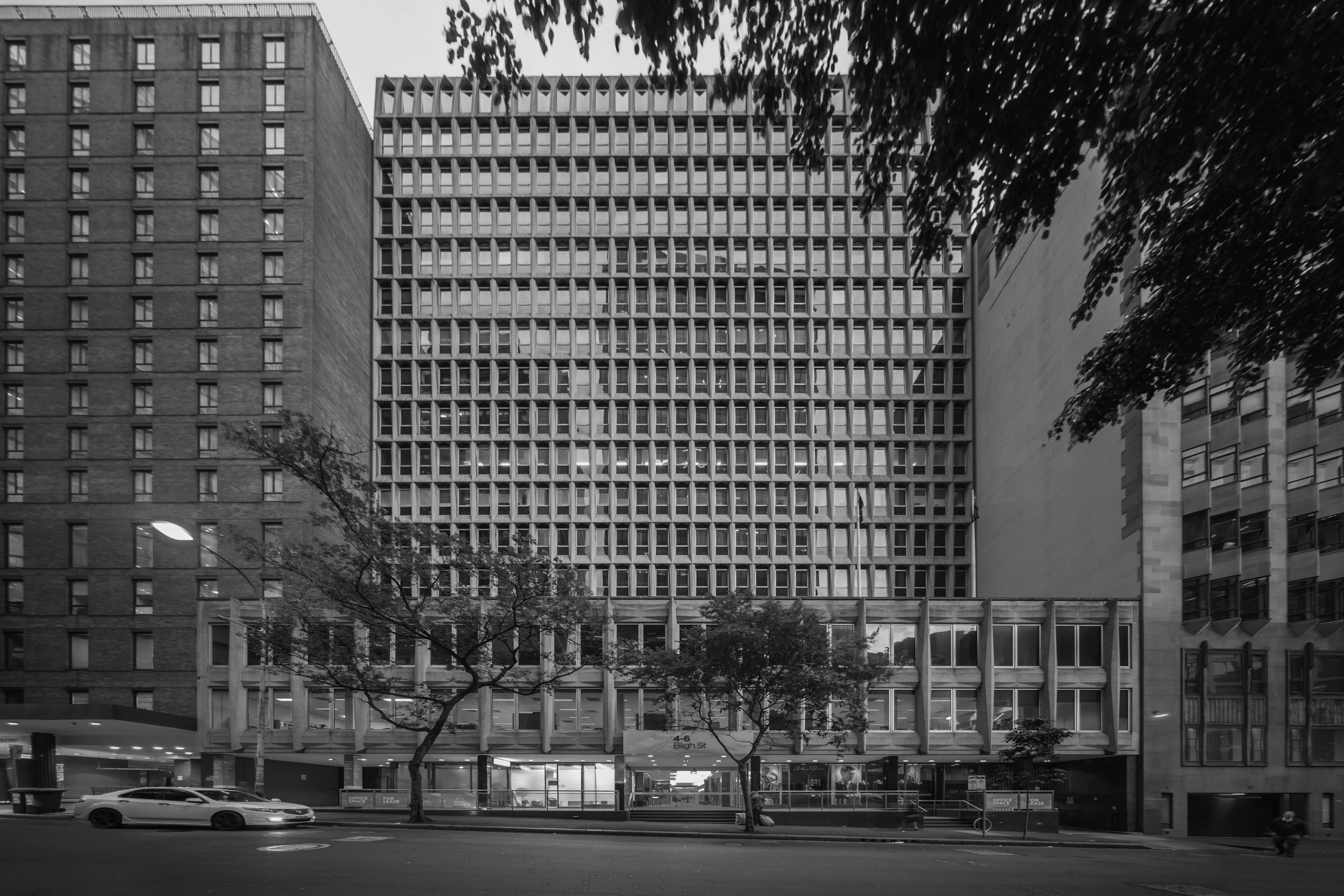
The façade is organised through a vertical ordering system grounded in Sydney’s existing geometries. A datum extends between the Wentworth Hotel and Soderston, establishing proportion across the elevation. In response to nearby serrated sandstone and built edges, the tower is articulated through angled extrusions that break down mass and reinforce vertical rhythm.
At the base, this erosion is most pronounced, forming a porous undercroft that blurs public and private ground conditions.
The result is a building shaped through the logic of landscape rather than object, where erosion, exposure, and water define spatial experience.
A tower that behaves like sandstone, shaped over time by contact, pressure, and release.
-
MIXED USE TOWER
HOTEL -
COMPETITION
-
GADIGAL | SYDNEY | NEW SOUTH WALES
-
ARCHITECTS | PTW
ARCHITECTS | COLLINS AND TURNER
-
RENDER | MIR