
99 SPRING ST FOYER
2016
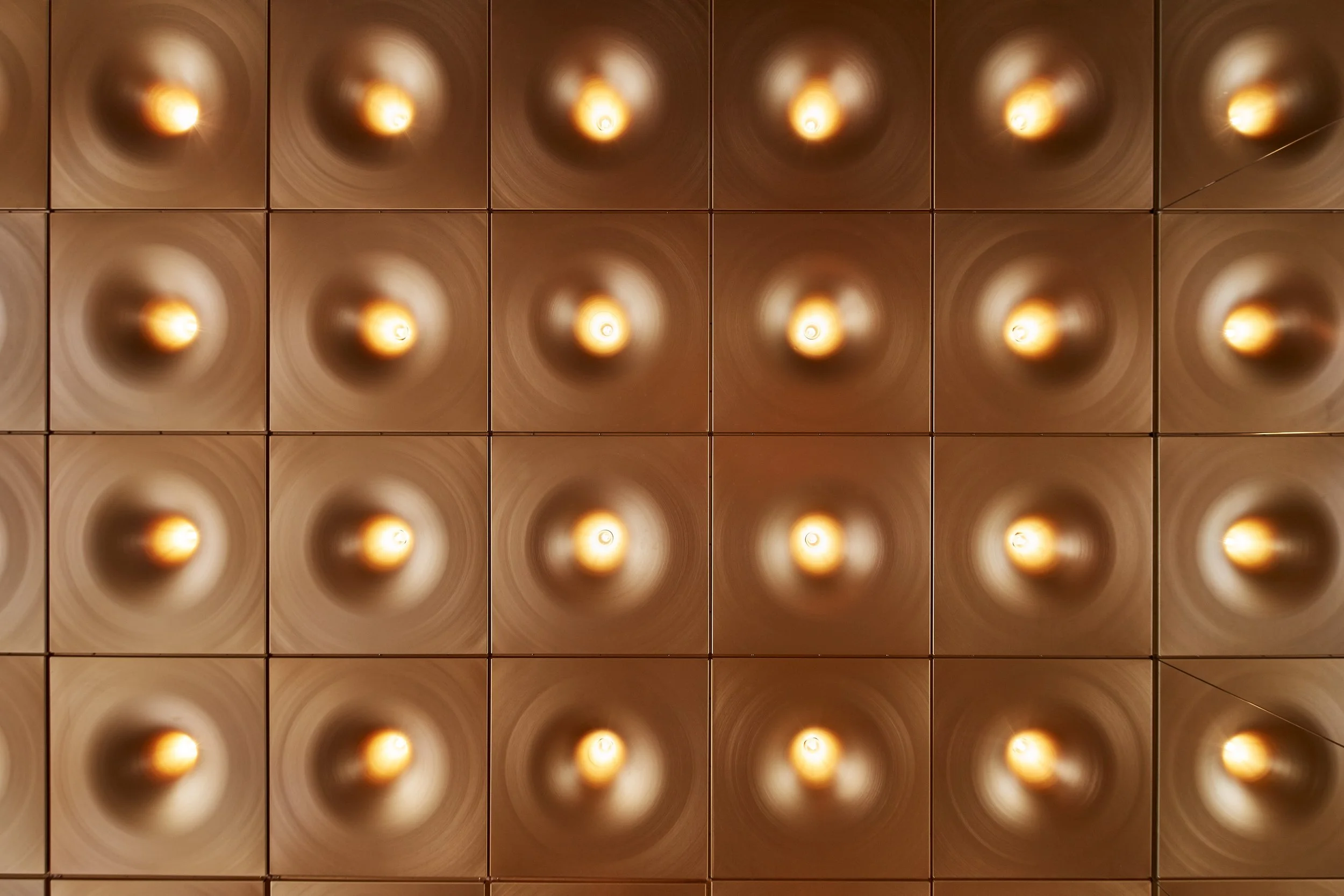
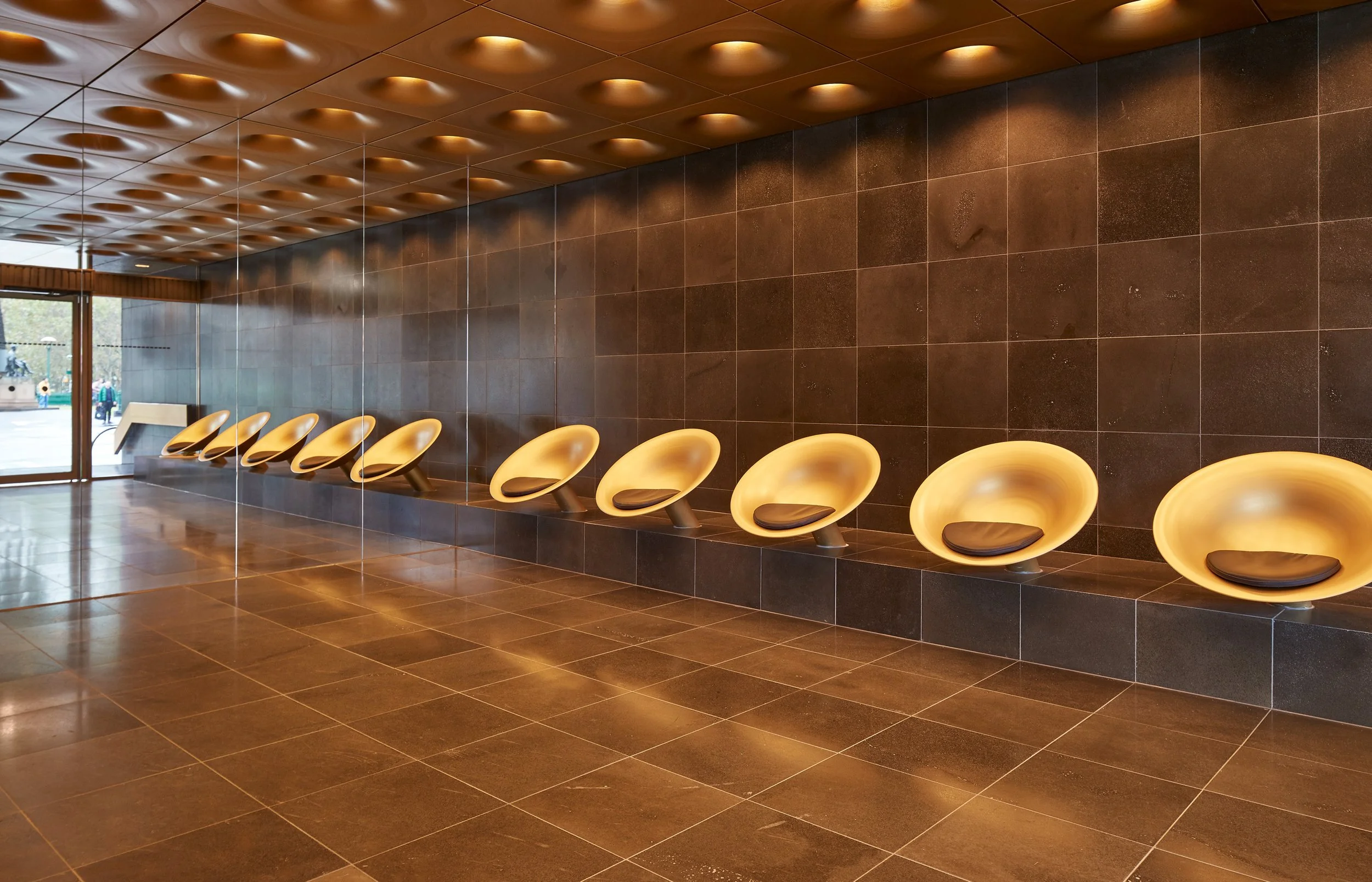
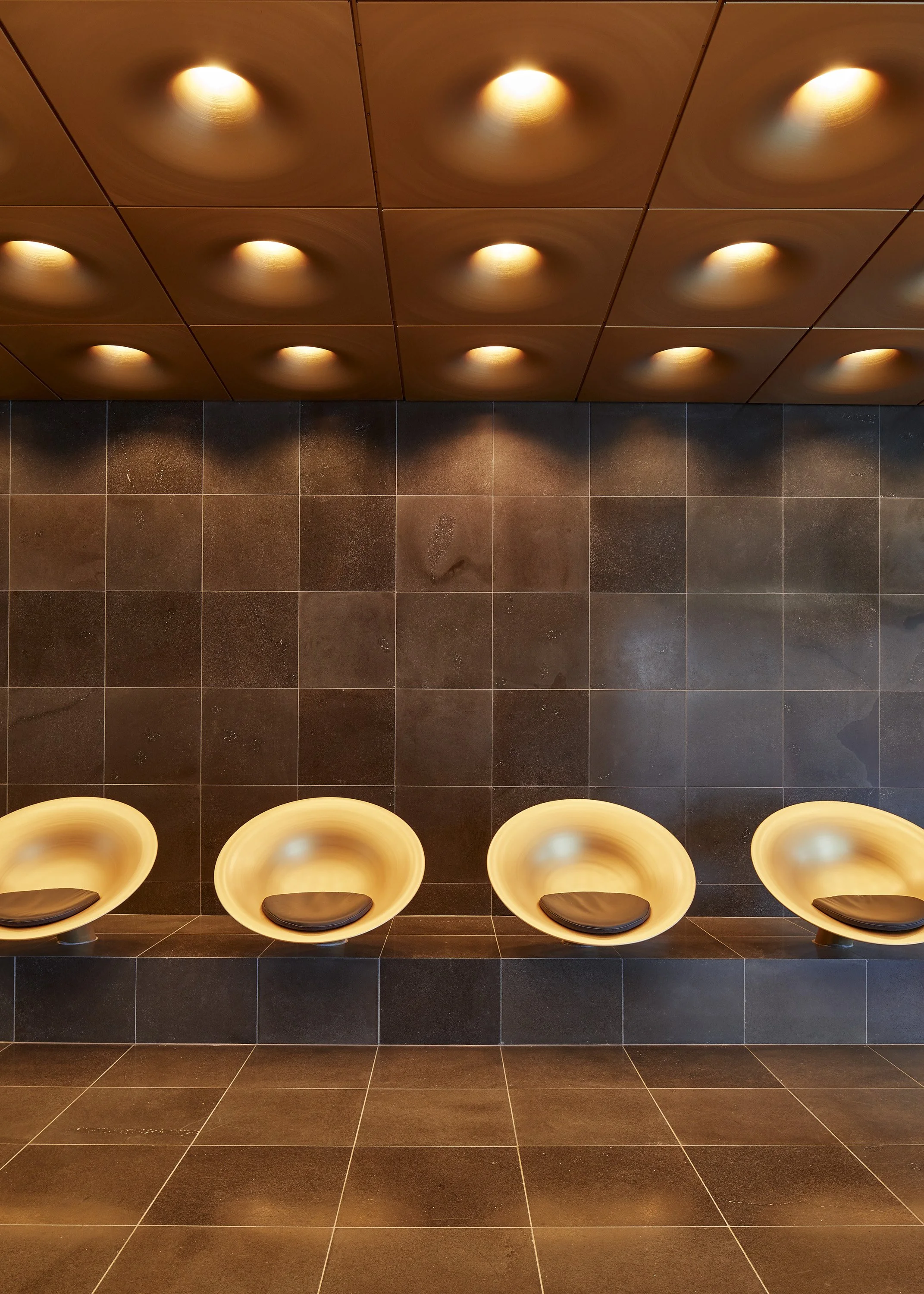
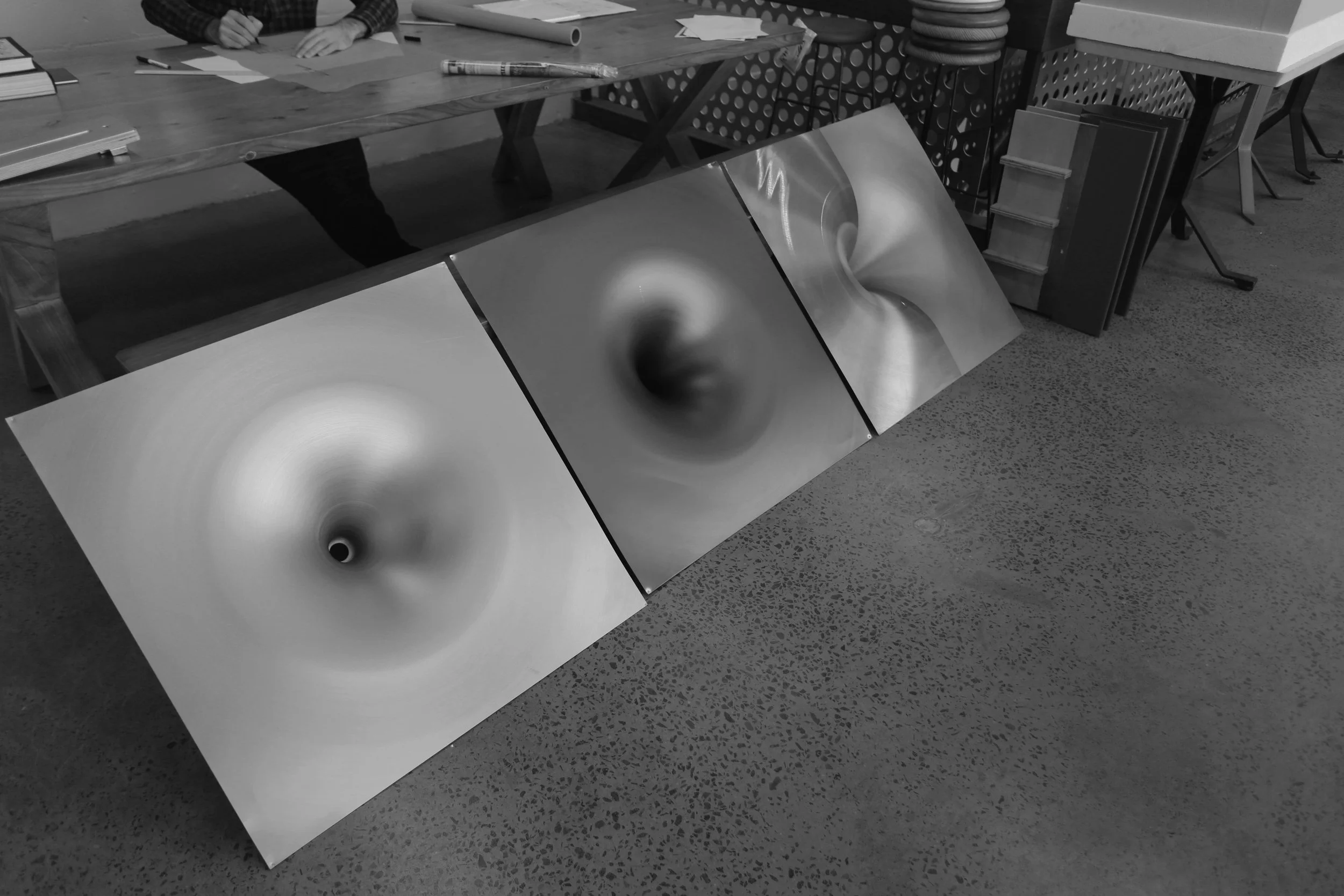
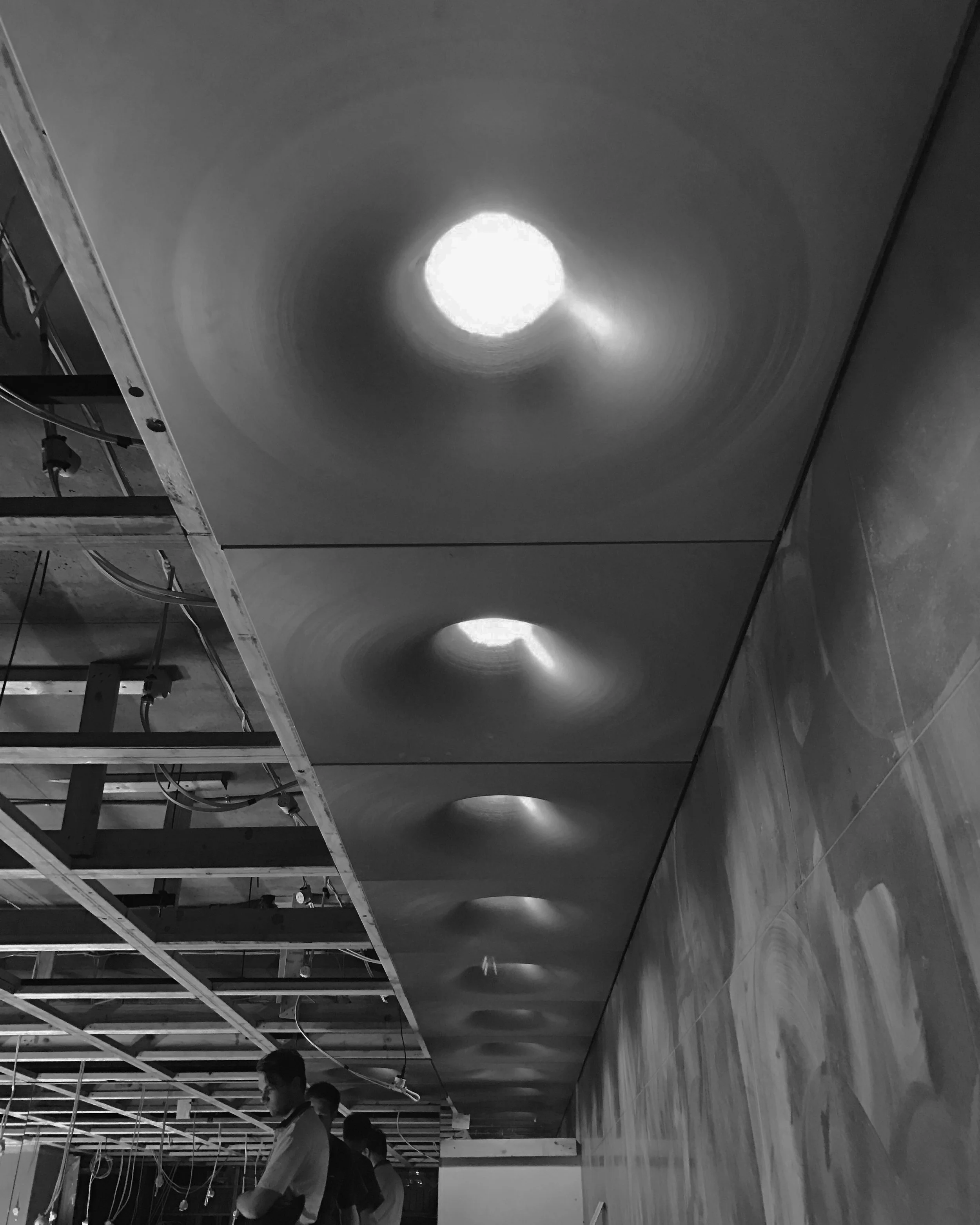
‘The foyer replaces the existing ceiling with a grid of custom spun gold aluminium tiles that temper acoustics from the street’
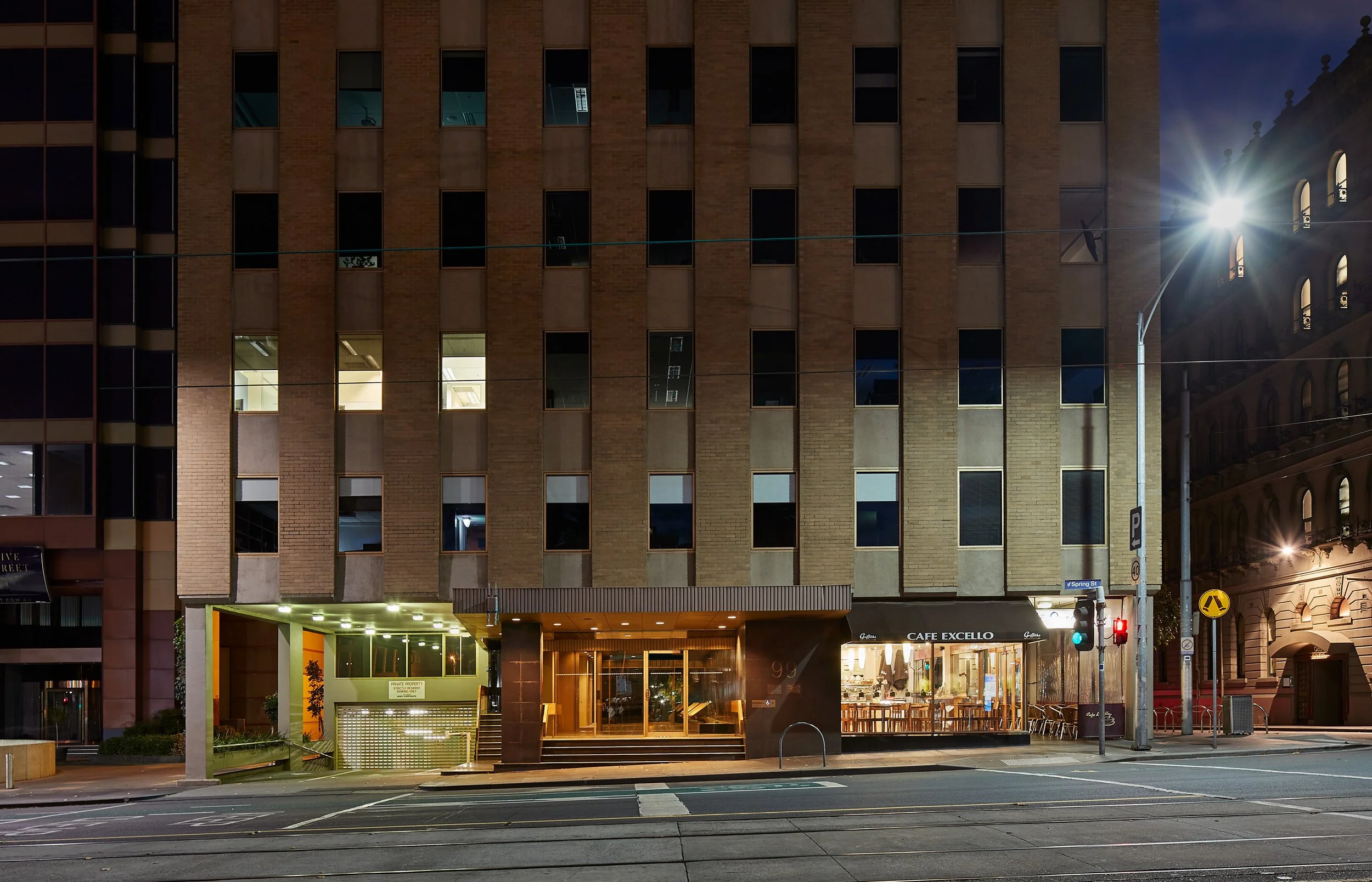
99 Spring Street, Melbourne, is a robust 1970s concrete and brick structure, originally designed by Moore & Hammond and recognised as Melbourne’s first post-tensioned slab high-rise. Positioned at the edge of the city grid overlooking Victoria’s Parliament, it was once known as the ‘Tower of Power’ for its influential residents and remains home to a diverse community today.
March Studio has maintained a longstanding relationship with the building, undertaking maintenance and restoration works for the Owners Corporation, alongside the design of the award-winning Apartment 172. The studio holds a particular regard for the 1970s as a period of irreverent optimism across architecture, music and design, recognising that buildings of this era warrant careful restoration rather than erasure.
During the 1980s, the original foyer was removed and replaced with moulded timber panelling and heavy wool carpet. In a gesture emblematic of the time, the timber was hand-painted to resemble pink marble, reportedly at the direction of then-resident Kerry Packer, aligning the foyer with his personal taste. The result was a labour-intensive and ultimately impractical finish, requiring ongoing repair and repainting after routine wear.
The carpet proved equally unsuitable, frequently stained and difficult to maintain. With a steady flow of VAT-69 deliveries and an open-door culture that blurred the line between lobby and living room, the space took on a life of its own. It was not uncommon for exhausted businessmen to be found asleep on the floor by morning, while loose lobby furniture had a tendency to migrate — occasionally discovered halfway down Spring Street or, on more ambitious evenings, floating in the fountain across the road. The foyer, in short, bore the marks of constant use and a certain lack of restraint in both material and security.
Our approach was to return the building to first principles. The original drawings had been lost, but a close familiarity with the tower meant we understood both its history and its construction. The building is defined by a restrained palette: concrete, exposed pebble mix and gold anodised aluminium, the latter framing every window and shaping the street presence. Melbourne’s bluestone footpaths became a fourth material. Already present at the entry, it suggested a continuity that may have predated the later carpet insertion.
At the time, we had been experimenting with gold anodised aluminium in a series of coffee tables, drawn to its depth and reflectivity. The question became simple: what could be achieved using only bluestone and gold anodised aluminium?
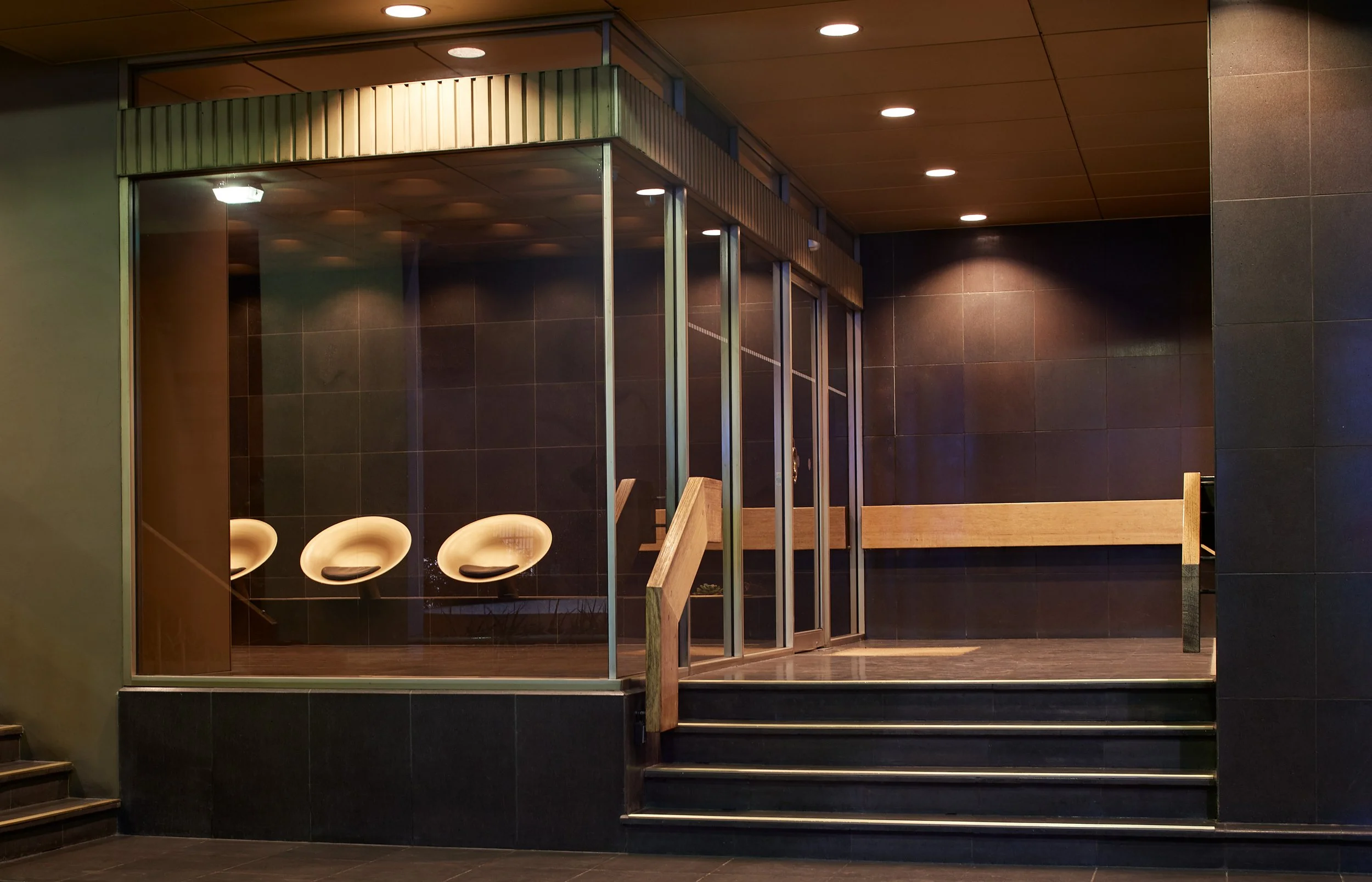
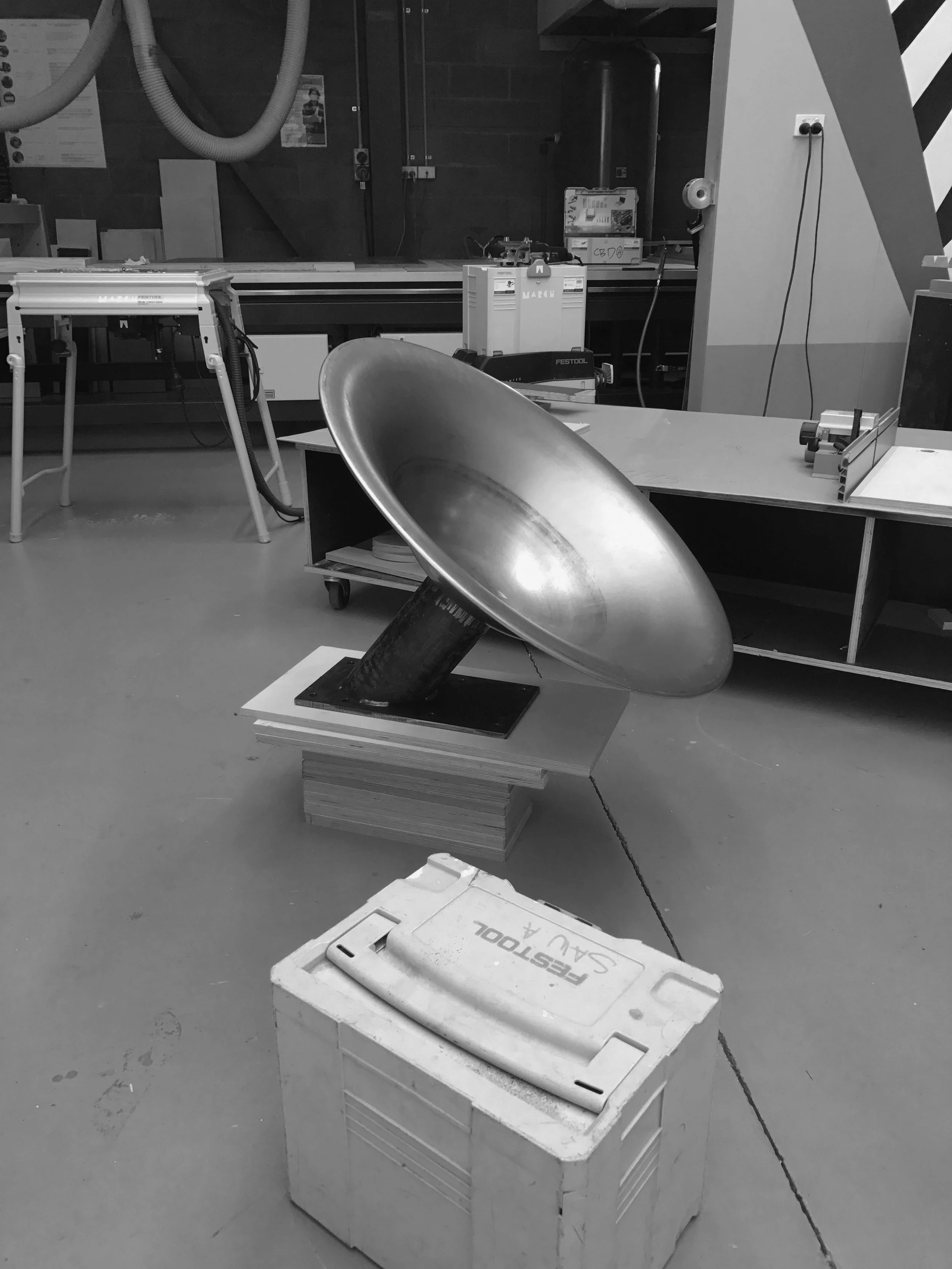
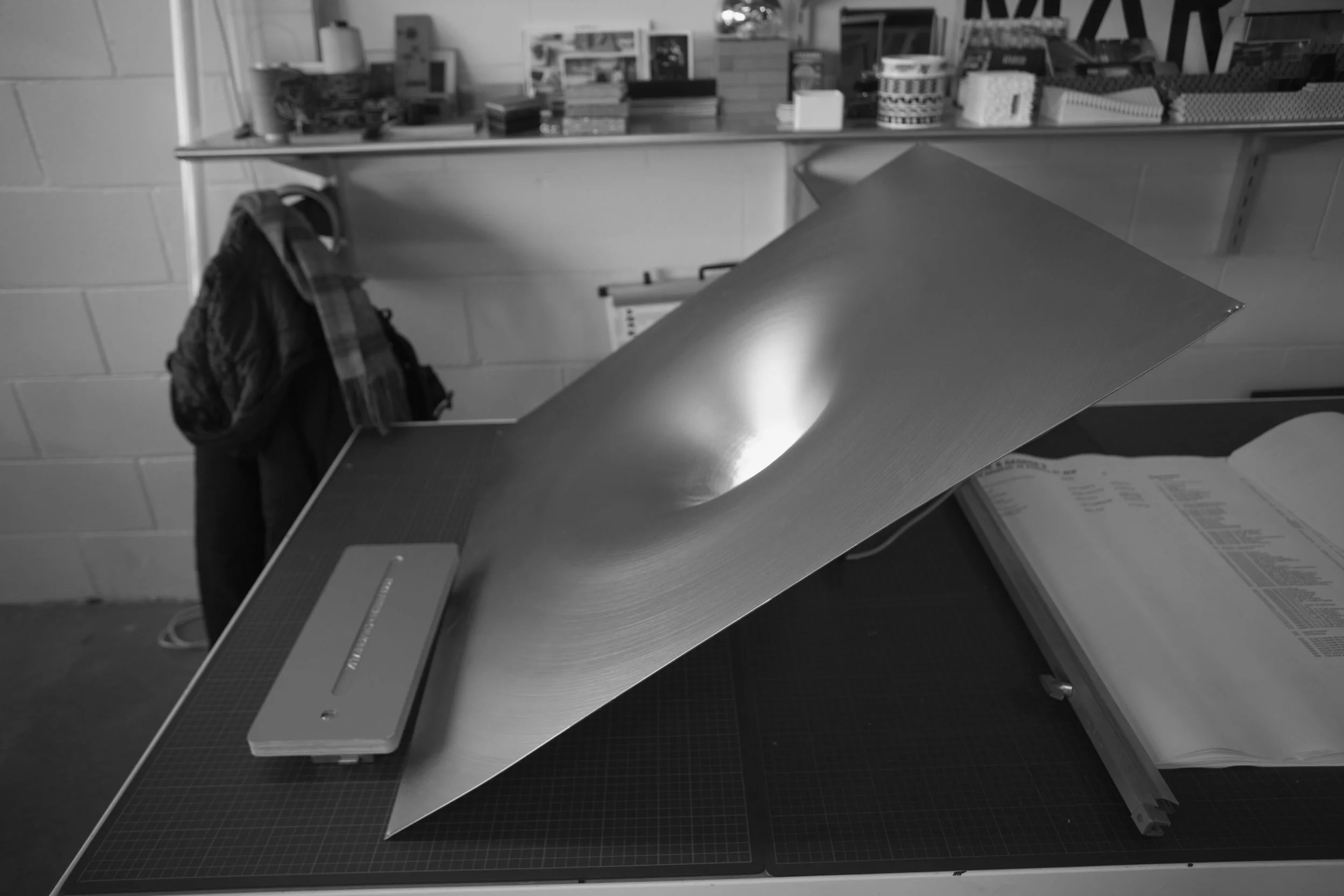
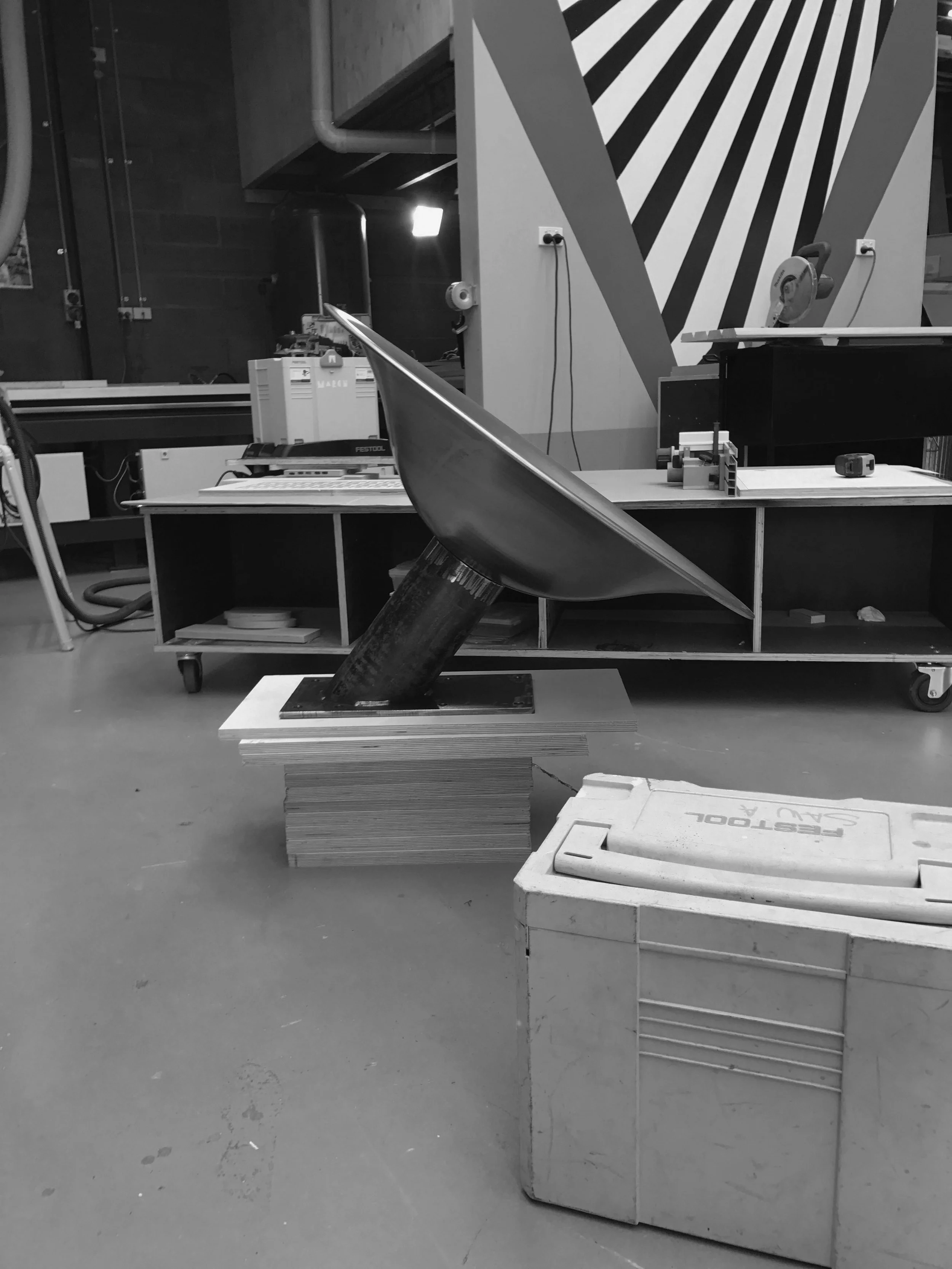
Bluestone was drawn into the lobby, grounding the space and extending the logic of the street. In parallel, aluminium was spun into new forms, producing seating and a ceiling system that reinterprets the building’s material language.
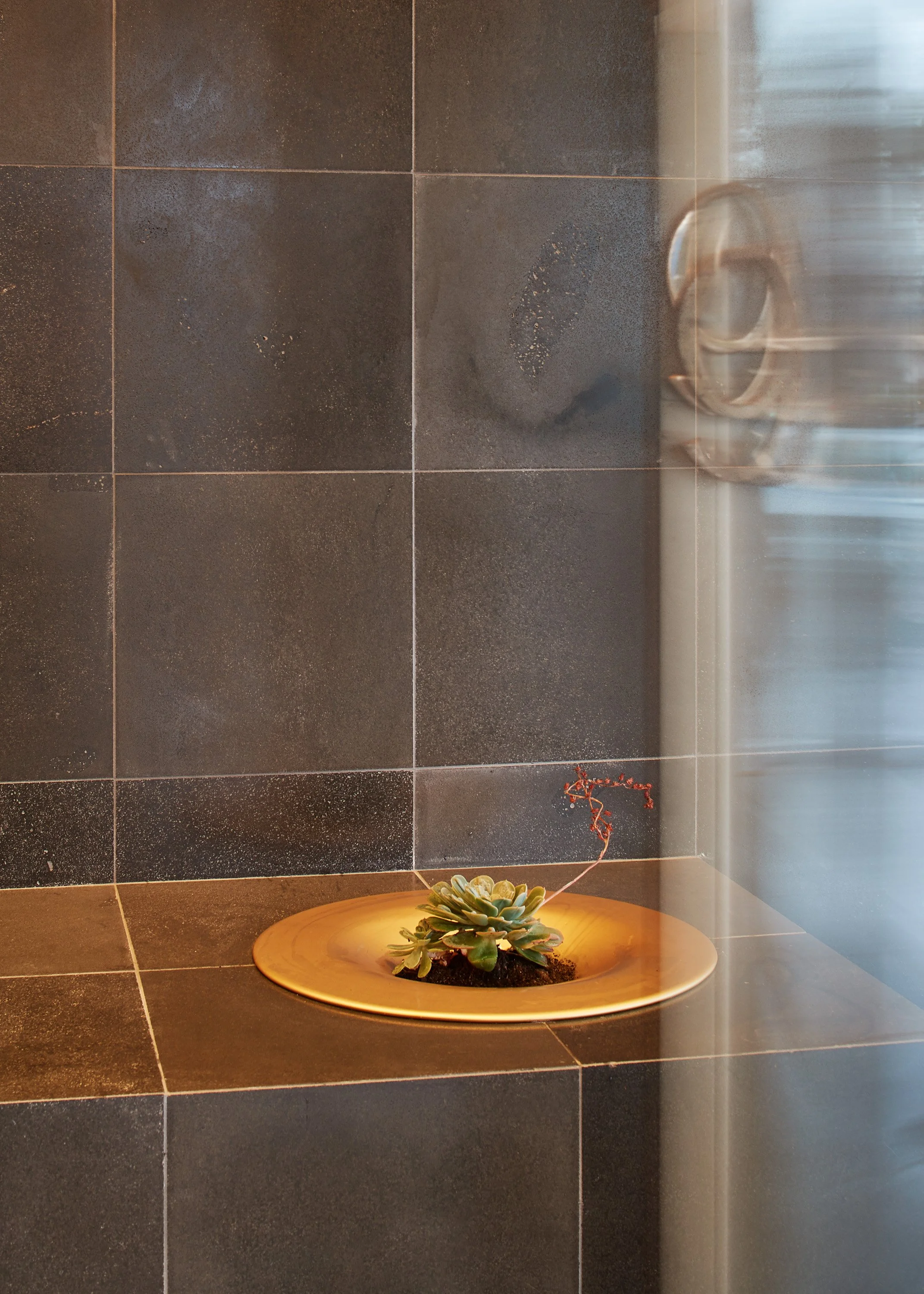
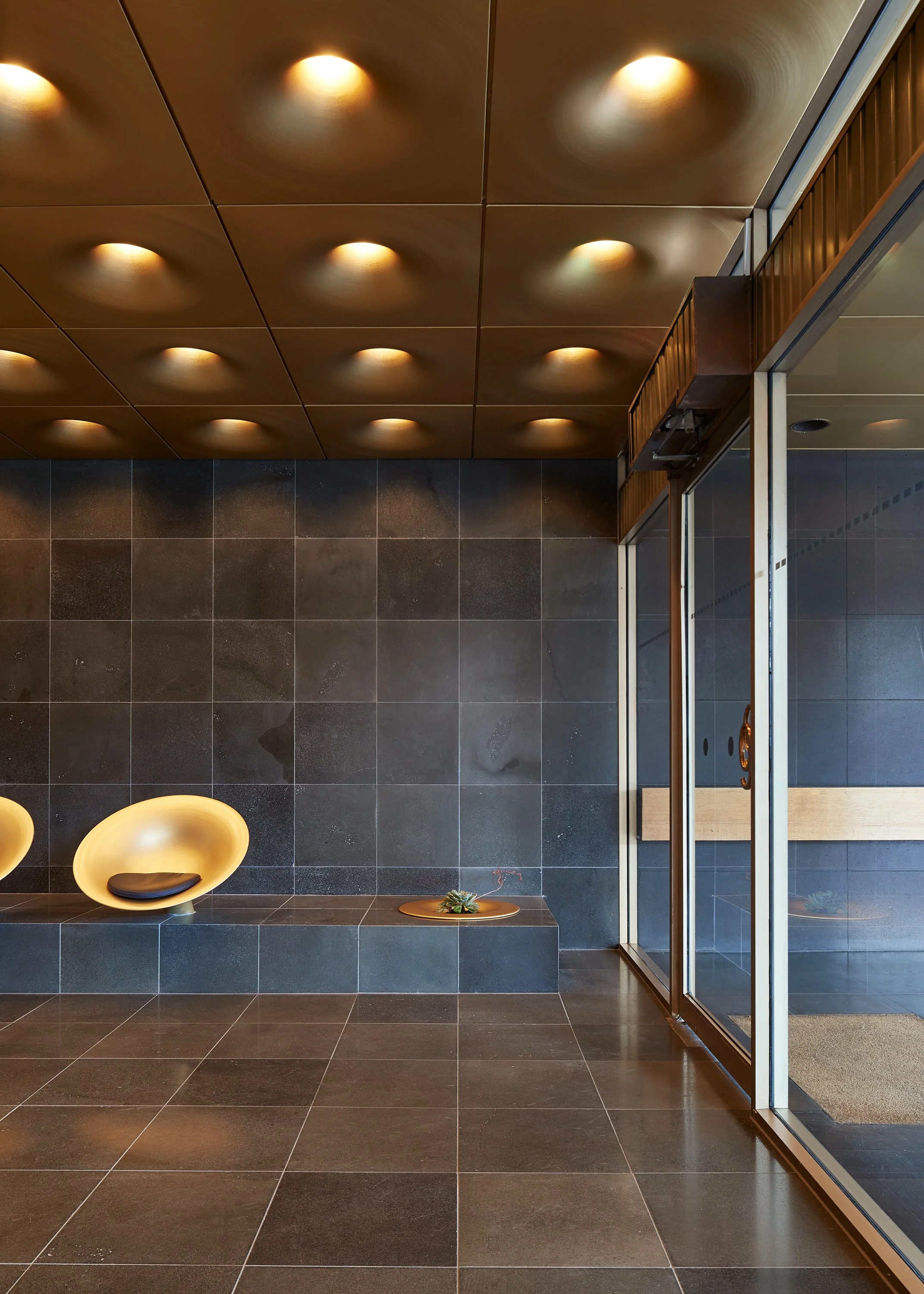
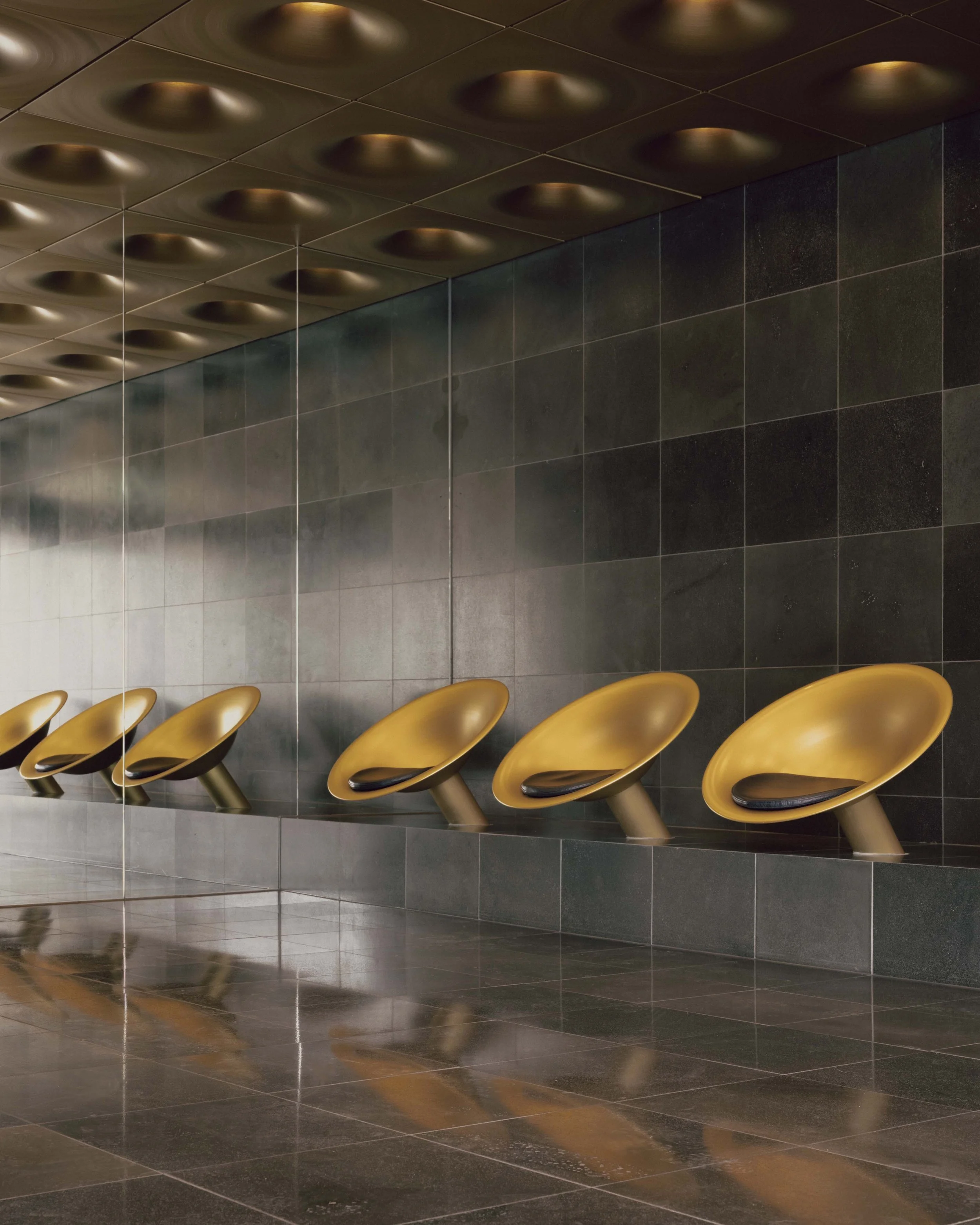
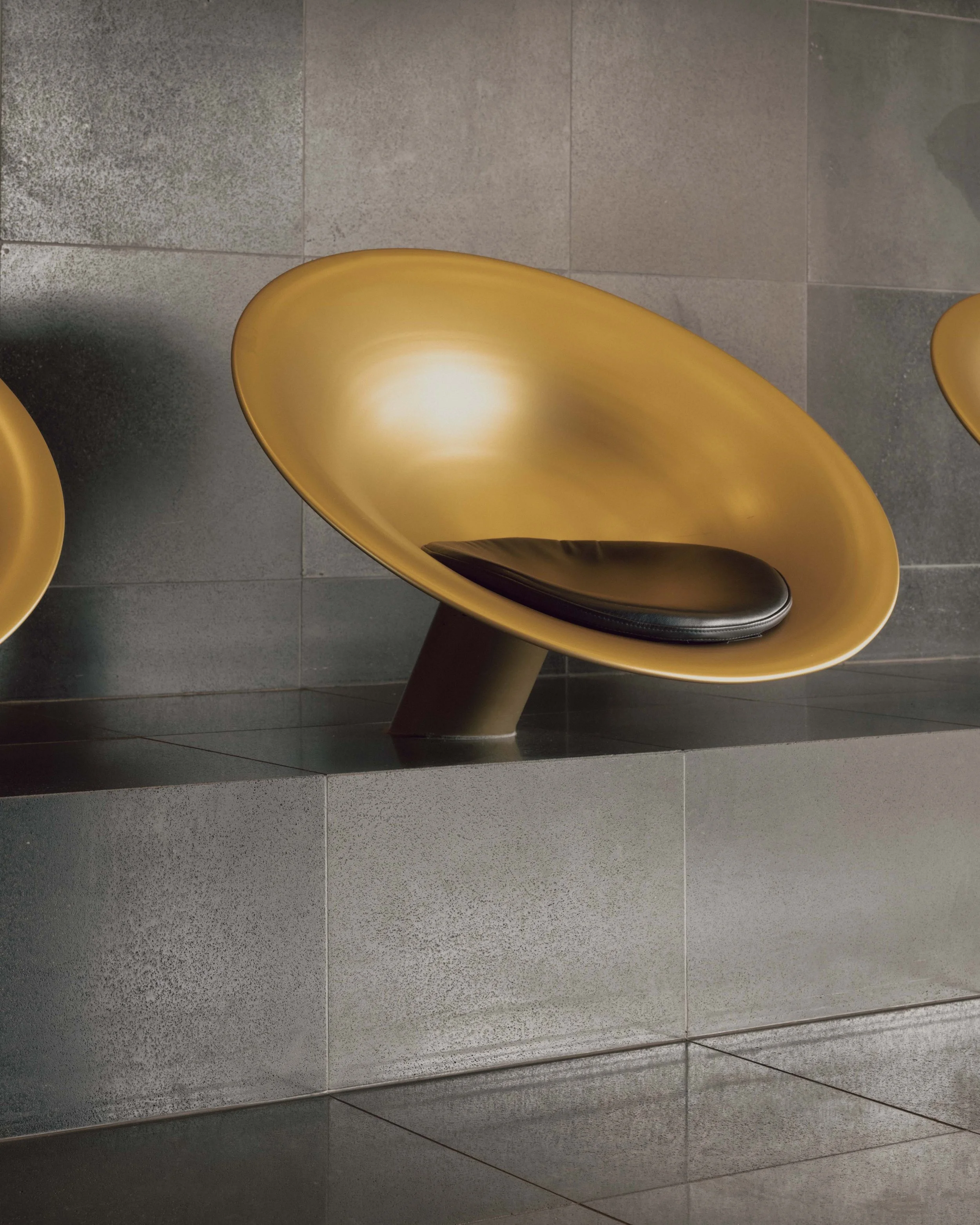
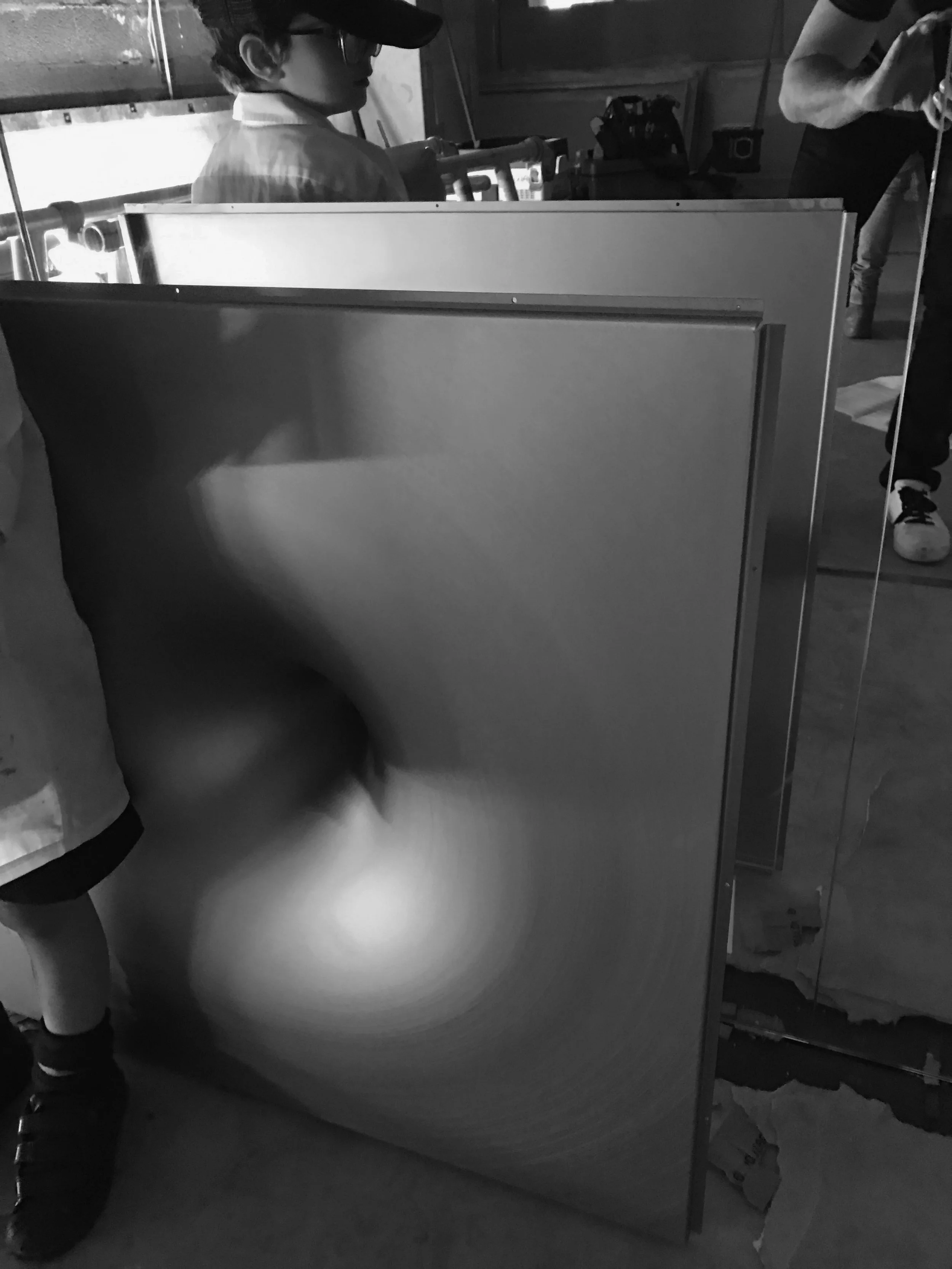
The foyer replaces the existing ceiling with a grid of custom spun gold aluminium tiles that temper acoustics from the street while integrating concealed lighting and updated services. Bluestone tiles extend across the floor and up the entry wall, forming a plinth that supports a series of custom spun aluminium cones carrying a fine brown leather seat. The intervention is deliberate and restrained, establishing a clear threshold between city and interior.
This ground-floor transformation set the tone for the building’s broader rejuvenation, aligning its 1970s heritage with a more precise and contemporary expression of tower living.
In 2022, when 99 Spring Street was identified for a heritage overlay, one of the key attributes noted was the ‘remarkably intact foyer,’ (the very one we had completed in 2016!)
-
HERITAGE | FOYER
-
COMPLETE | 2016
-
WURUNDJERI | MELBOURNE | VICTORIA
-
BUILDER | CBD CONTRACTING
-
PHOTOGRAPHY | PETER BENNETTS AND DAN PRESTON
FILM | DAN PRESTON FOR EST LIVING -